SI Image Generation
SI image generation typically relies on deep learning models trained on large datasets. The technology lets users produce visuals from text prompts or parameters. First, an SI model is trained on an extensive dataset of images spanning many artistic styles.



How does SI image generation work?


SI image generation typically relies on deep learning models trained on large datasets. The technology lets users produce visuals from text prompts or parameters. First, an SI model is trained on an extensive dataset of images spanning many artistic styles. By analyzing this data, the model learns a wide range of visual features and stylistic patterns.
The user enters a description, and the SI draws on what it learned during training to generate an image that matches it. This process holds the potential to create a nearly unlimited number of unique visuals and is already used across art, design, and entertainment. The technology carries genuine disruptive potential, particularly in digital art and advertising.
What are the challenges of generating images with SI?


While SI image generation offers many advantages, it also comes with real challenges. Producing high-quality visuals requires very large and diverse datasets. Collecting and processing that data, and training the model on it, can be time-consuming and costly. Legal questions such as copyright also pose a risk, especially for models that may learn from protected works.
Another challenge is that SI models sometimes produce unexpected or unwanted results. The quality and diversity of the data a model encounters during training directly affect the accuracy and aesthetics of the images it generates. This can become a problem when trying to imitate specific artistic styles or reproduce complex visual details.
Which tools can you use to generate images with SI?


A range of SI-powered tools now transforms creative workflows by generating visuals from text descriptions. Here are some of the most popular tools in the space:
- DeepArt: A platform that transforms uploaded photos using the styles of famous artworks. It runs on SI algorithms and produces results that are artistically and aesthetically rich.
- DALL-E: Developed by OpenAI, this tool creates imaginative and detailed visuals based on text descriptions. It is especially strong at producing surreal and fantastical imagery.
- Artbreeder: This platform lets users blend images through genetic algorithms and create new visual variations. It is particularly useful for character design and evolving artistic works.
- This Person Does Not Exist: A website that uses GAN (Generative Adversarial Networks) technology to create realistic human faces. It is a striking demonstration of how lifelike SI-generated faces have become.
- Ideogram: An innovative SI image generation platform that lets users visualize their own artistic vision through SI. It works across a variety of artistic styles and techniques, appealing to a broad user base.
Which SI image generation tools are popular on the market?
SI image generation tools have become remarkably popular in the technology and art worlds in recent years. One of the most prominent and widely used is DALL-E; developed by OpenAI, it takes text descriptions and produces striking, detailed visuals based on them. DeepArt, meanwhile, recreates users’ photos in the style of different artworks, adding a distinctive artistic touch.
How do you create high-quality visuals with SI?


The key to generating high-quality visuals with SI lies in strong datasets and advanced algorithms. To begin, your SI model needs to be trained on large datasets containing a wide variety of images and artworks.
Learning from this data, the model comes to recognize different styles and visual elements. High-resolution, diverse data is essential for quality output. Continuously updating SI models and training them on new visual styles also enables more detailed and realistic imagery. Finally, human input remains an important factor in refining and improving the model’s output. This process strengthens the artistic side of the technology while expanding its technical capacity.
Generating visuals with Ideogram
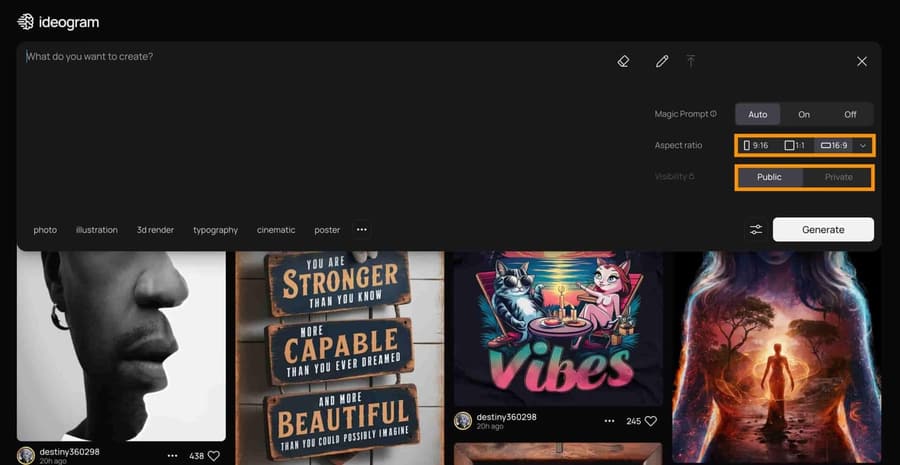
When generating a visual on the Ideogram website, start by describing the image you want in full detail. Once you provide every detail, the platform generates a visual that matches your brief.
After entering the image description, you need to select the output dimensions. Once the size is set, you decide the visibility of the image by answering one question: “Will this image belong only to you, or can any user make use of it?” After these steps, press the “Generate” button to start creating your visual.
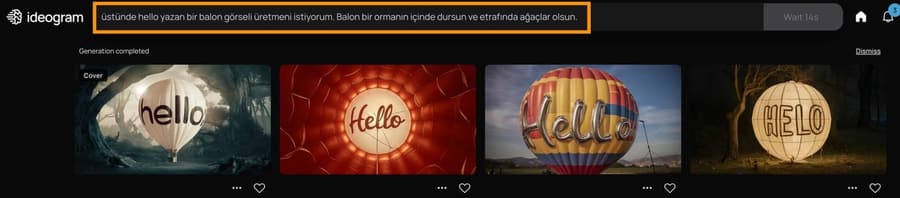
Based on the brief provided, the platform generated visuals that met the specified conditions. You can select the image that matches your goals and complete the download.
What is the future of SI image generation?
The future of SI image generation is moving in a bright, innovative direction. As the technology continues to reshape the art and design world, it will only grow in importance as demand for personalized and customized visual content rises.
In the future, SI tools will become more intuitive and accessible, allowing users to bring their creative vision to life more effectively. SI may also collaborate with human artists in the creative process, opening the door to entirely new artistic movements. As the technology matures, generating visuals with more complex and emotional expression will become possible, cementing SI’s place among the tools of artistic expression.
What are the latest trends in SI image generation techniques?
The latest trends in SI image generation span both technological advances and an expanding range of creative expression. Today, models such as Generative Adversarial Networks (GANs) stand out for their capacity to produce highly realistic, detailed visuals. These models consist of two competing networks: one generates realistic images while the other evaluates whether those images are real.
Neural Style Transfer (NST) technology takes the style of an artist’s work and applies it to other visuals, enabling the creation of unique pieces. The technique builds a bridge between art and photography through SI.
Another recent trend is language-based models that let users create complex visuals with nothing more than a text prompt. Tools such as OpenAI’s DALL-E and Google’s Imagen can produce high-quality images directly from text descriptions. These technologies push the boundaries between text and image, taking creativity and user interaction to new levels.