Generative Engine Optimization.
Make your content source-worthy for AI-powered search engines. An end-to-end GEO program that positions your brand as an authoritative node inside ChatGPT, Google AI Overviews, Gemini, and Perplexity answers.
What is Generative Engine Optimization?
GEO is the next evolution of search engine optimization. The goal: make content suitable not only for people, but also for the large language models that compile the web while generating answers to user queries.
Generative Engine Optimization is the process of optimising content so that AI-powered search engines can use it more effectively and cite it as a source. Unlike traditional SEO, GEO targets the content-discovery and answer-generation loops of LLM-backed generative engines.
The rapid evolution of AI and machine-learning algorithms makes this kind of optimisation inevitable. GEO boosts the linguistic accuracy, semantic richness, and topical depth of your content so that algorithms can understand it.
AI-powered engines analyse and rank content differently from classical search engines. GEO covers the techniques needed to speak these new engines' language and present content in the format they prefer. Every page is positioned as a stand-alone authoritative reference source.
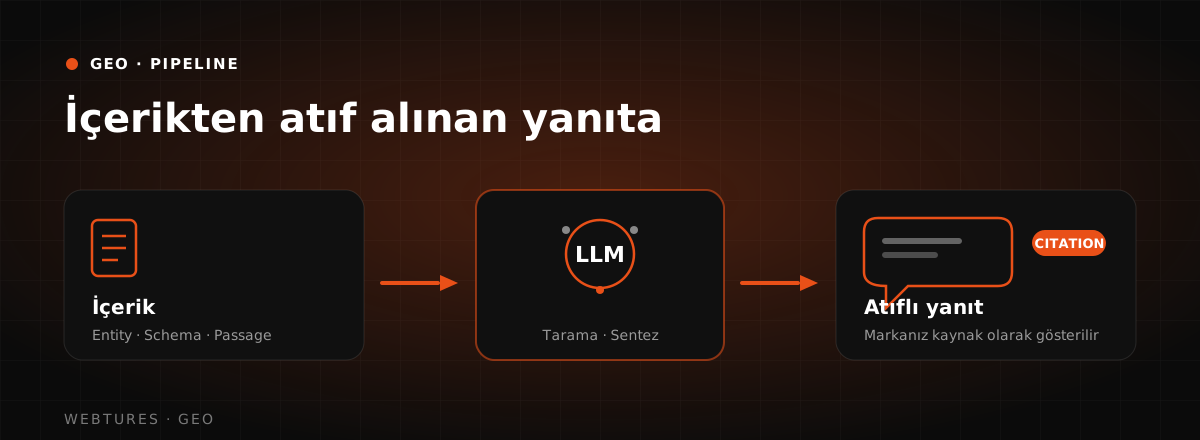
GEO approach for different AI platforms.
Every AI engine retrieves, evaluates, and cites content differently. GEO applies a distinct optimisation logic per platform — there is no one-size-fits-all approach.
ChatGPT GEO Service
◆ OpenAIGoogle AI Overviews GEO Service
◆ AlphabetGemini GEO Service
◆ Google DeepMindPerplexity AI GEO Service
◆ Research engine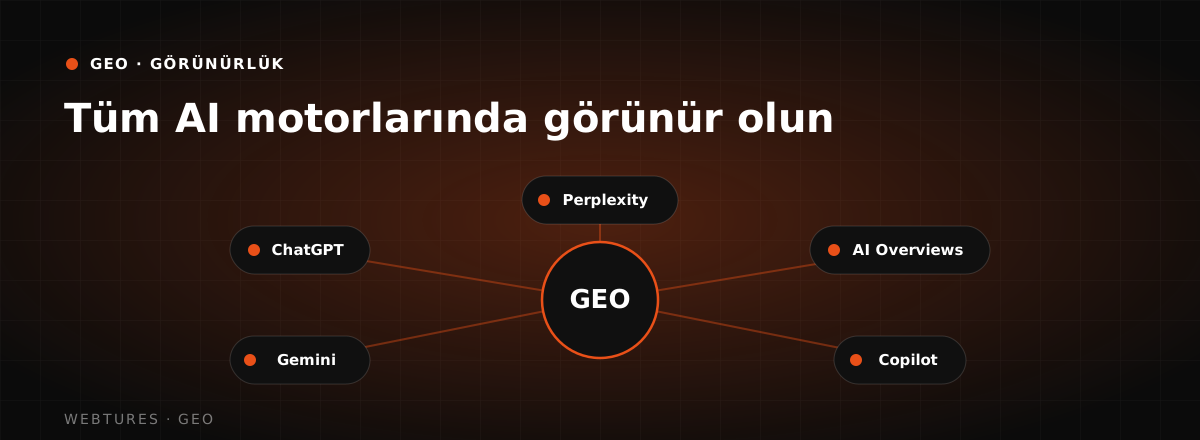
How it differs from traditional SEO.
Both disciplines share foundations (crawlability, authority, quality) but diverge in format, measurement, and intent modelling.
| ◆ Feature | Traditional SEO | Generative Engine Optimization |
|---|---|---|
| Primary goal | Rank in search results | Get surfaced in AI answers |
| Target engines | Google, Bing, Yahoo | ChatGPT, Gemini, Perplexity, AI Overviews |
| Success metric | Keyword rankings, organic traffic | Citation frequency, AI reference share |
| Content format | Keyword-focused pages | Entity-rich, authoritative, structured content |
| Link building | Critical for authority | Less central; source credibility matters more |
| Technical focus | Crawlability, indexing, Core Web Vitals | Structured data, knowledge graph, citations |
| Update cycle | Months for ranking shifts | Continuous — models update often |
| Target audience | Humans clicking blue links | AI engines selecting trusted sources |
| Brand visibility | SERP position drives it | Earning citations as a trusted answer source |
| Ideal use | Drive clicks to the website | Build authority in AI-first discovery |
Our GEO implementation framework.
Every GEO program runs as four phases. If the outer layer is broken the inner work wastes — that's why we don't skip the order.
AI Visibility Audit.
We start with a full audit of how your brand and service pages show up inside AI-generated answers today. Which queries produce citations across ChatGPT, Google AI Overviews, Gemini, and Perplexity; which competitors dominate in your space; and where the content gaps live. This benchmark shapes every decision that follows.
30 daysEntity & Semantic Coverage expansion.
We map the entity gaps in your content so AI models can actually find you. With schema markup, entity-graph expansion, and internal-link optimisation we systematically expand your semantic footprint — so the model can identify you as who does what.
45 daysLLM Citation Optimisation.
Earning citations demands content that reads like an authoritative source. We restructure existing pages with citation-ready formats: answer-first openers, clean definition blocks, structured comparisons, and expert-commentary sections. Every page becomes a stand-alone reference an AI will quote with confidence.
OngoingMonitoring & Reporting.
AI visibility is not static — models update, competitors adapt, query patterns shift. We continuously track which platform, which query, and which answer context cites your brand; monitor lost and won citations; and data-update your strategy.
Weekly · Monthly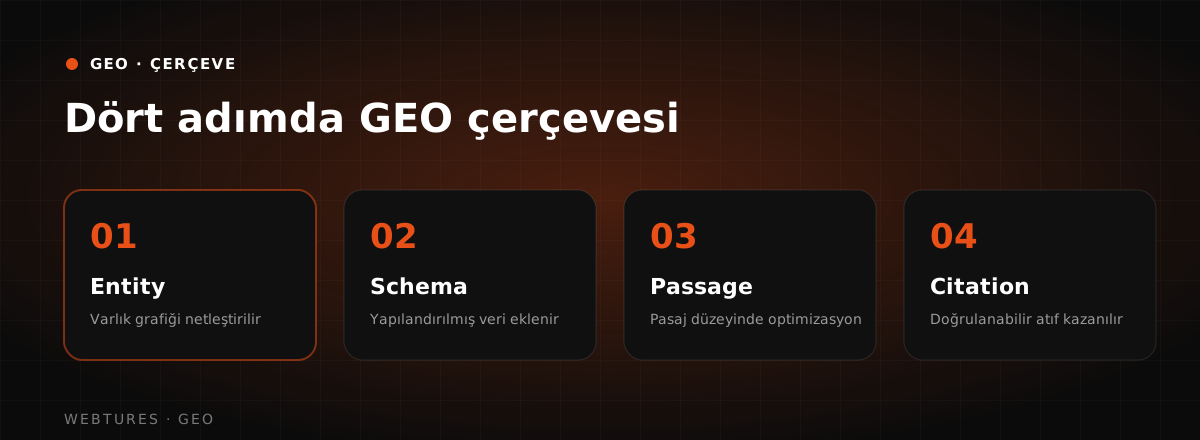
What do you receive with Webtures GEO?
Every framework phase produces concrete outputs. Which deliverable arrives when and how it's measured is spelled out below.
The Webtures GEO approach.
By taking an innovative stance in digital marketing we've turned our GEO expertise into next-generation optimisation strategies for our clients.
Analysis-driven foundation.
We analyse existing content for linguistic accuracy, semantic richness, and user focus. Content that hasn't been analysed stays out of the GEO strategy.
Custom strategy development.
We identify the improvements needed to align content with AI algorithms and develop a custom roadmap for your industry and competitive environment.
Continuous monitoring & adaptation.
We evaluate strategy effectiveness through data-driven decisions, measure content performance and engagement with advanced analytics, and adapt to model updates.
Frequently asked, carefully answered.
Everything you want to know before starting your GEO project — from our approach and pricing to reporting, team structure, and contract terms. From the people who do the work.
01 How does the GEO (Generative Engine Optimization) process make content AI-friendly?
02 What are the differences between traditional SEO and GEO, and why do they matter?
03 What are the future expectations for GEO technology?
04 What are the long-term effects of GEO on digital marketing and content production?
05 How can efficiency be improved using Generative Engine Optimization?
BRANDS GROWING WITH US
Brands growing with GEO.
A selection of brands we've partnered with on GEO.
Childgen
During our collaboration with Webtures, we achieved remarkable success in organic traffic and advertising performance. In our partnership approaching 1 year, we captured a 516% organic traffic incr...
Explore
Kiperin
Since we started working with Webtures, we have experienced a truly visible transformation on the digital side. To be honest, we did not expect to achieve this level of results in such a short peri...
Explore
BKM Kitap
For BKM Kitap, SEO efforts resulted in a 102% increase in organic traffic and a 467% growth in organic keywords. Ongoing optimization supported sustained performance over the year.
Explore
CaddeYıldız Mobilya
With the cooperation we started in 2014, we entrusted all SEO work on our website to the Webtures team. As CaddeYıldız, we would like to thank the qualified Webtures team for the upward momentum th...
ExploreLet's map where your brand sits across AI-powered search experiences and lay out a 90-day concrete GEO roadmap. A strategy lead reaches back within one business day.
Get in touch