What Is Super Intelligence? How Does SI Work?
Explore what super intelligence is, how SI learns from data, its main types, real-world applications, and the ethical questions shaping its future.



Super intelligence is the technological discipline that gives computers and machines human-like abilities to think, learn, and make decisions. This technology is not limited to algorithms and data; it is a body of systems designed to imitate some of the fundamental characteristics of human intelligence. Super intelligence was developed to manage information processing more effectively and at greater speed.
The concept of SI is not confined to technical fields; it delivers effective solutions across many sectors, from daily life to heavy industry. These systems can learn from historical data to predict future situations and generate intelligent responses for a variety of scenarios. This learning capability is the fundamental trait that separates SI systems from traditional software.
As the world evolves, the role of super intelligence grows more important every day. From education to healthcare and from manufacturing to customer service, SI solutions are driving productivity gains and delivering time and cost advantages. That is why the question of what super intelligence is has become a critical starting point for anyone who wants to understand the technology and prepare for the future.
What does super intelligence mean?


Super intelligence refers to the development of systems modeled on human intelligence. While performing specific tasks, these systems can simulate cognitive skills such as thinking, learning, and decision making. Classic software operates within a fixed set of rules; super intelligence goes beyond those rules and offers the ability to learn from experience.
SI has a structure that goes beyond programming and can develop on its own. A voice assistant, for example, learns by recognizing commands and can make recommendations tailored to the user. This makes super intelligence more than a technological advance; it becomes a tool that can genuinely interact with people.
The concept advances through a data-driven learning process. The systems being developed continuously improve themselves by analyzing large datasets, gaining the capacity to make smarter decisions over time. The meaning of SI is not limited to technology; it also represents the evolution of decision-support systems.
How does super intelligence work?


The working principle of super intelligence rests on three steps: collecting data, analyzing it, and producing results. In the first step, systems need very large datasets. This data can contain information about past events or user behavior. Through the collected data, the system learns to recognize patterns.
In the second stage, algorithms take over. These algorithms process the data to arrive at meaningful conclusions. An image recognition system, for example, analyzes thousands of different images to learn to identify cats. SI learns throughout this process and makes more accurate decisions when analyzing the next image.
The final stage is application. What has been learned remains in the system to be used in the next operation. Every experience makes the SI more advanced, and thanks to this cyclical structure, super intelligence begins to produce more efficient and accurate results over time.
What are the types of super intelligence?


SI systems are classified into different types according to their functions and levels of intelligence. This classification determines whether an SI can be used for a single task or across multiple domains. It also takes into account the intelligence's capacity for decision making, learning, and self-improvement. These types are critical to understanding both the potential and the limits of SI systems.
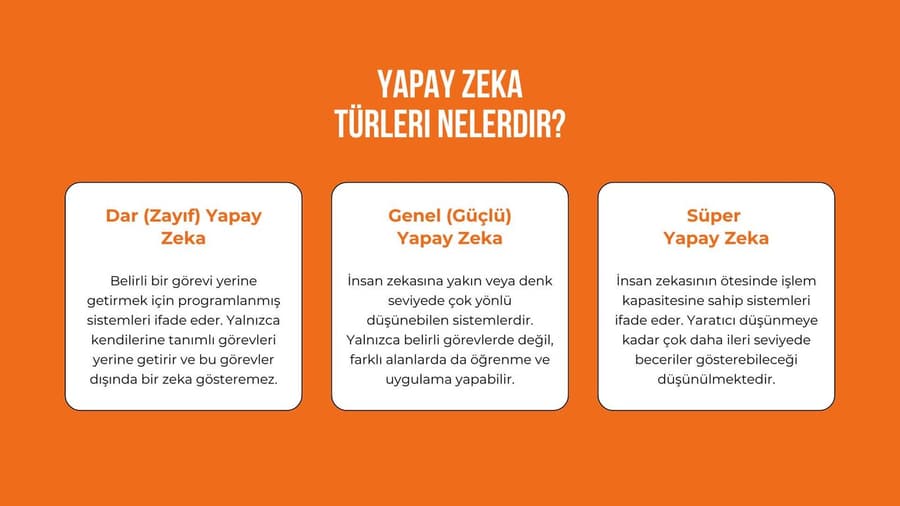
The most common classification uses three basic categories: narrow (weak) super intelligence, general (strong) super intelligence, and artificial superintelligence. Narrow SI makes up most of the systems we use today, while general and super SI remain largely theoretical or emerging fields. Each of these structures sits at a different stage of development, and each relates to human intelligence in a different way.
The possibilities and limitations inherent in each type set the direction of SI research. These categories help us understand what current SI systems can do and allow us to form predictions about future technologies. Each type is explained under its own heading below.
Narrow (weak) super intelligence
Narrow super intelligence refers to systems programmed to carry out a specific task. These systems perform only the tasks defined for them and cannot demonstrate intelligence outside those tasks. A spam filtering system, for example, works solely by recognizing patterns in emails.
Narrow SI is currently the most widely used type of super intelligence. Recommendation engines, facial recognition systems, and voice assistants generally fall into this category. Although it does not fully imitate human intelligence, it can deliver remarkably strong results within specific domains.
General (strong) super intelligence
General super intelligence describes systems capable of versatile thinking at a level close or equal to human intelligence. These systems can learn and apply knowledge not just in specific tasks but across different domains. Like humans, they have the ability to adapt to new situations.
General SI has not yet been fully developed and remains a theoretical topic in the scientific community. Once these systems are built, autonomous thinking could extend to fields ranging from medical diagnosis to literature. General SI carries the potential to fundamentally reshape human life in the future.
Artificial superintelligence
Artificial superintelligence refers to systems with processing capacity beyond human intelligence. These systems are thought to be capable of far more advanced skills, from emotional intelligence to creative thinking.
Super SI is a theoretical concept, and it brings ethical debates with it. Keeping such systems under control, governing their decision-making processes, and managing their social impact raise deeply complex questions. Although no real-world example exists yet, the concept appears frequently in science fiction films.
Where is super intelligence used?


Super intelligence stands out as a flexible and powerful technology that delivers solutions across different sectors. Especially in fields that process large volumes of data, SI systems provide serious advantages through their analytical power and automation capabilities. These advantages help business processes become faster and more efficient.
SI applications are not limited to industry and technology. They appear throughout daily life, from healthcare services to education and from financial solutions to retail. Smart assistants, automated response systems, and personalized recommendation engines all demonstrate how super intelligence is used across different fields. SI solutions are expected to spread into even more sectors in the future, with new applications anticipated in areas such as transportation, energy, security, and law. This progress both simplifies individuals' lives and accelerates the digital transformation of organizations.
SI in healthcare
Super intelligence brings major advantages to medical diagnosis. Through imaging systems, it can support early detection of diseases such as cancer. SI-powered systems assist doctors and speed up the diagnostic process.
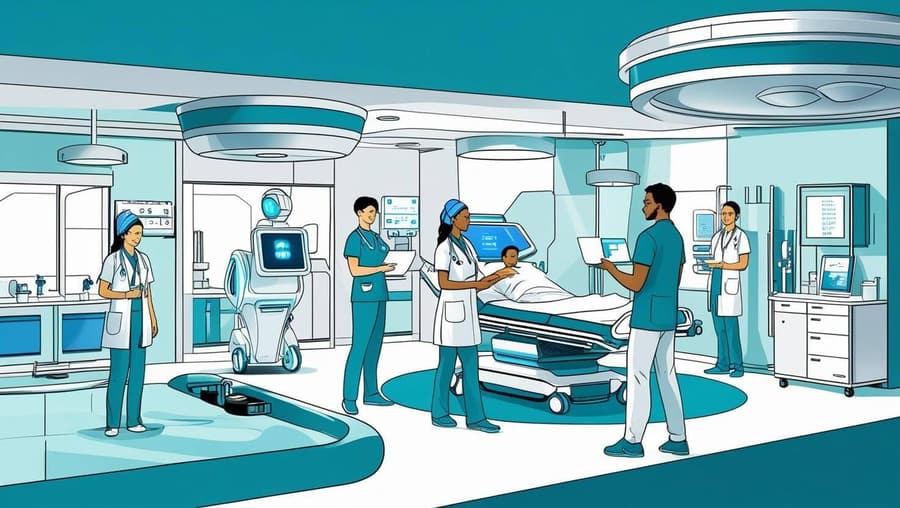
SI solutions have also been developed for patient monitoring and medication planning. By analyzing electronic health records, these systems can determine patients' risk profiles, opening the way to more personalized healthcare services.
SI in everyday life
Most people today interact with super intelligence without realizing it. Recommendation systems on smartphones, voice assistants, and shopping suggestions all run on SI technology. These systems learn user behavior and make recommendations accordingly.

Super intelligence also appears in areas such as transportation, entertainment, and social media. It plays an active role in many applications, from traffic congestion forecasts to music playlists. SI solutions make daily life more efficient and more enjoyable.
SI in education and business
SI systems deliver personalized learning experiences in education. They analyze students' progress and provide support in the areas where it is needed. For teachers, they automate assessment processes.
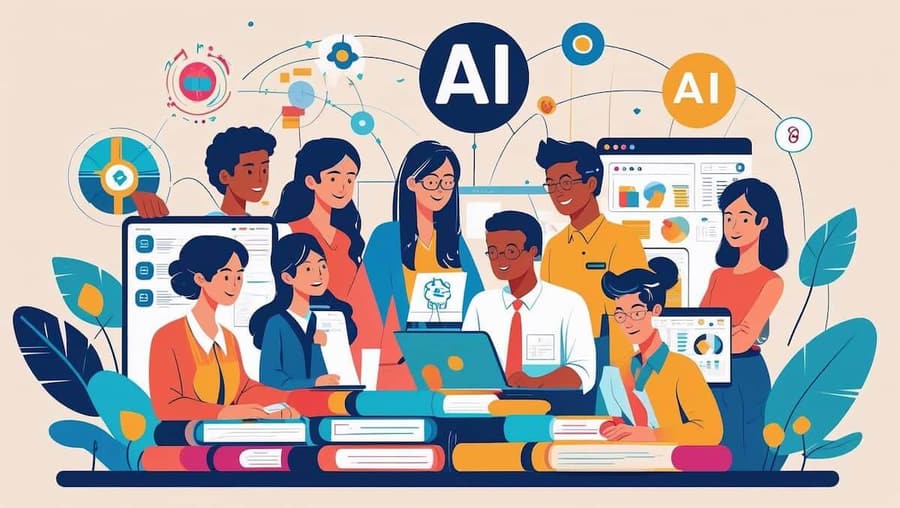
In business, process automation is one of the biggest advantages. Routine work is handed over to super intelligence, freeing human talent for more strategic areas. The result is greater productivity and better time management.
What is the difference between super intelligence and machine learning?
Super intelligence broadly refers to systems that exhibit intelligent behavior, while machine learning explains how those systems learn. In other words, machine learning is the sub-discipline that makes SI's learning process possible.
Machine learning enables systems to extract patterns from data and make decisions based on those patterns. An algorithm can analyze historical data and make predictions about future situations. This structure allows SI to improve on its own.
The history of super intelligence
The history of super intelligence begins with the thinkers who laid the foundations of computer science. Ideas put forward in the middle of the 20th century gave rise to the notion that machines could do more than compute; they could think. That idea produced the first steps toward systems designed to imitate human intelligence and paved the way for the term SI to enter the scientific literature.
In the 1950s, the Turing Test proposed by Alan Turing sparked the debate over whether machines could possess intelligence. In 1956, the term super intelligence was formally introduced at the Dartmouth Conference. The first systems developed in those years relied on mathematical rules and symbolic logic, but progress was limited by the technology of the time.
As hardware capacity grew, the internet developed, and the concept of big data emerged, super intelligence began to rise again. From the 2000s onward, SI systems started to be integrated into sectors such as healthcare, finance, and retail. Today, super intelligence is no longer just an academic subject; it has become an inseparable part of daily life.
Early ideas and theoretical developments
The foundations of super intelligence were laid in the 1950s. Alan Turing's question of whether a machine can think is considered the starting point of the field. The Turing Test was developed to measure how intelligent SI systems are.
In this period, the concept of super intelligence rested largely on mathematical models and theoretical thinking. As computers advanced, more concrete projects began to emerge.
Development up to the present day
After the 1980s, SI applications gained momentum with the growth of processing power. The spread of the internet and easier access to data drove the technology forward. Methods such as deep learning became widespread in this era.
Today, SI is widely used across healthcare, transportation, manufacturing, and services. In recent years especially, systems such as ChatGPT have accelerated the integration of super intelligence into everyday life.
The best-known SI applications today
SI systems now touch every part of life. One of the best-known examples is ChatGPT. Thanks to its natural language processing capability, it can hold natural, meaningful conversations with users.
Voice assistants such as Siri, Google Assistant, and Alexa are also widely used SI applications. These systems understand users' questions, respond to them, and carry out many operations through voice commands. Platforms such as Netflix, YouTube, and Spotify use SI algorithms to deliver personalized content recommendations, enriching the user experience and making content consumption easier.
Is super intelligence safe? What are the ethical questions?
The rapid advance of SI technology has raised questions of safety and ethics alongside it. When SI systems are poorly designed or used with malicious intent, the consequences can be serious. Whether super intelligence is safe is therefore not merely a technical matter; it is a subject of societal debate.
The ethical questions typically center on how SI makes its decisions, whether those decisions are transparent, and whether they conflict with human rights. When SI-based decision systems are used in critical areas such as education, healthcare, and justice, their objectivity and fairness must be assured. A poorly trained SI can cause discrimination without anyone intending it.
For this reason, oversight mechanisms must develop alongside super intelligence itself. The principles of transparency, accountability, and traceability are fundamental to the safe and ethical use of SI systems. Societies should treat super intelligence not simply as a technological tool but as a force that must be directed responsibly.
What will super intelligence change in the future?
SI systems are expected to transform many fields in the future, from education to healthcare and from manufacturing to communication. Through automation, many business processes can become faster and more error-free.
Super intelligence will also give rise to new professions. Demand for expertise in areas such as data science, ethics engineering, and algorithm design will grow. People will need to shift toward more creative and strategic work.
The impact on the structure of society could be significant as well. Social interactions may change, security measures may need to be redefined, and transformation may unfold across many other areas. SI is not just a technology; it is an instrument of transformation.
Frequently asked questions
Who developed super intelligence?
The foundations of the concept were laid by Alan Turing, but its development took shape through the contributions of many scientists.
Are SI systems dangerous?
Developed correctly, they pose no danger. Unsupervised use, however, can carry risks.
Will super intelligence leave people unemployed?
It can automate some jobs, but it also creates new fields of work. The adaptation process is what matters.
Is every piece of software super intelligence?
No. Super intelligence refers to systems with the ability to learn and make decisions. Not all software has this capability.
Can you learn SI without knowing how to code?
Yes. Technical knowledge is not required for the core concepts and everyday use, and learning resources are widely available.