Agent-Native Transformation: The 2026 Agentic Commerce Guide
Prepare for agentic commerce: GEO rules, the ACP, UCP and AP2 protocol map, measurement with the GA4 AI Assistant channel and a 12-week agent-native roadmap.

Digital commerce's 30-year "search and browse" era is over. We have entered the agent-centric economy, where consumers no longer hunt for products themselves and AI agents make decisions on the user's behalf. This guide is a roadmap built on Webtures' global market research and hands-on technical work: it explains how your brand becomes selectable in the agentic commerce world, which protocols you need to deploy and which metrics define success. On top of the first version published in August 2026, we have added where the protocols and measurement tools stand within 2026.
The macro shift: the delegation economy and generative intent
In traditional e-commerce the user was a "searcher"; today they are a "delegator". Webtures market research shows generative intent now accounts for 37 percent of digital interactions. Users no longer want a list of links; they expect a strategy, a solution or a direct decision.
The critical asymmetry in Turkey
- Consumer adoption: Turkey is among the markets where generative AI assistants are used most intensively relative to population; the consumer side is ready.
- Business readiness: AI adoption among Turkish SMEs sits at just 6.6 percent (TUIK).
- Strategic opportunity: The gap between consumer demand and business supply creates an asymmetric growth opportunity for the brands that complete their agent-native transformation first.
What is GEO, and how does it differ from SEO?
AI engines (ChatGPT, Perplexity, Gemini, Claude) now generate the answer themselves. The discipline of getting recommended inside those engines is called GEO (Generative Engine Optimization). According to Google's official guidance, AI Overviews and AI Mode rest on the core Search ranking systems, so on Google's side "optimising for AI" is largely good SEO. For multi-engine visibility, each engine's source pool is managed separately.
GEO's golden rules and the 13-plus word rule
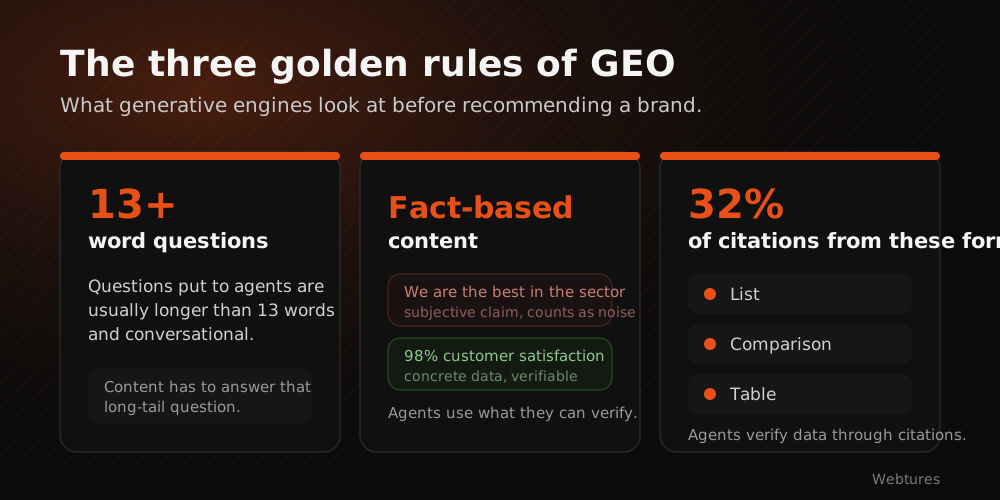
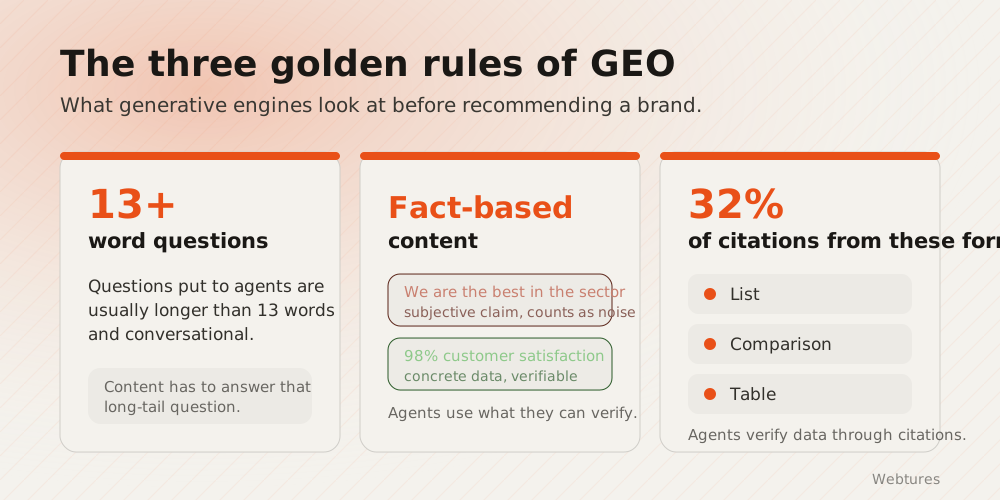
- Query structure: Questions asked of agents typically run longer than 13 words and use natural conversational language. Your content must answer these long-tail questions.
- Fact-based content: Subjective claims like "we are the best in the industry" register as noise to agents. Offer concrete data instead, such as "98 percent customer satisfaction" or "300-thread weave density".
- Citation management: Agents cite sources to verify information. 32 percent of citations come from content formatted as lists, comparisons and tables.
Technical architecture: protocols and machine-friendly data
A website is agent-native when autonomous systems can process it at full capacity. You can benchmark where your site stands today with our AI Agent Readiness scan.
The 2026 protocol map
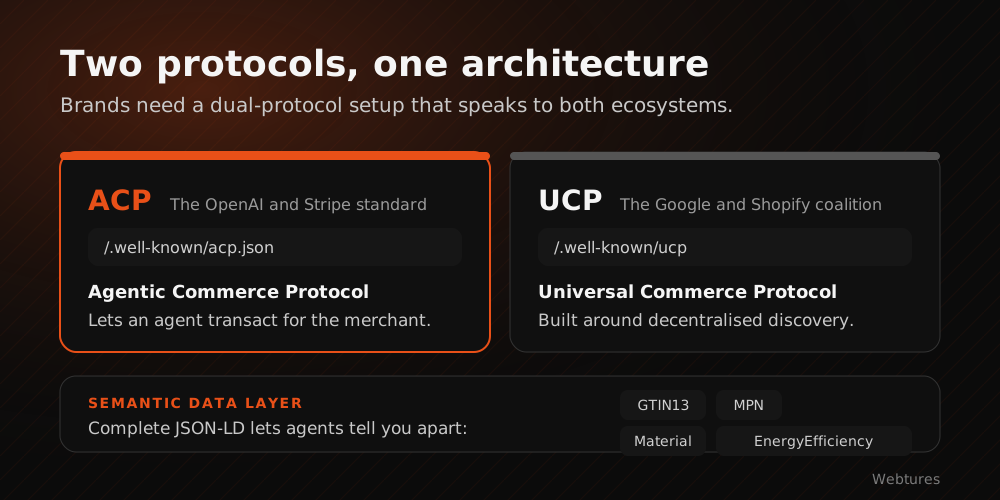
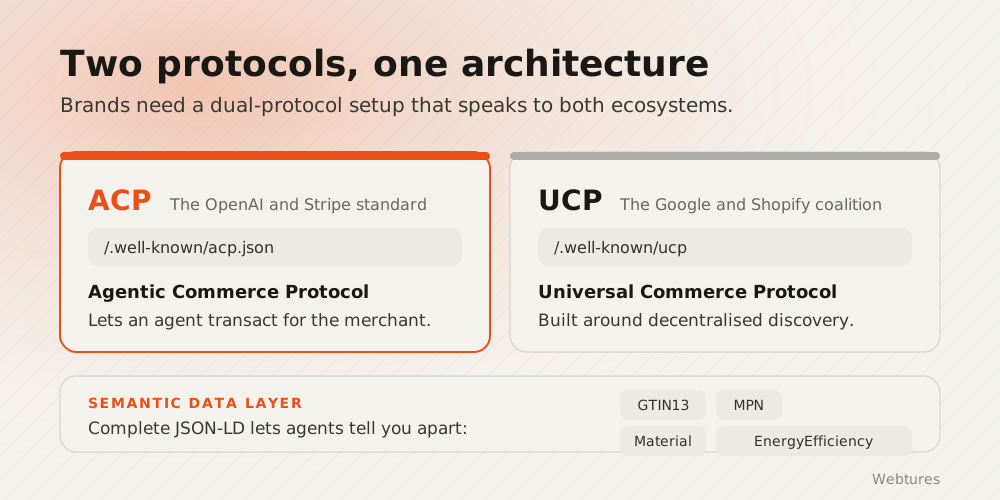
Brands should deploy a dual-protocol setup that serves both ecosystems. As of 2026 the picture looks like this:
| Protocol | Who | What it does | Where it is set up |
|---|---|---|---|
| ACP (Agentic Commerce Protocol) | OpenAI + Stripe | The agent builds a cart and starts payment on the merchant's behalf; purchases inside ChatGPT | /.well-known/acp.json, product feed |
| UCP (Universal Commerce Protocol) | Google + Shopify coalition | Decentralised discovery and purchase; Gemini and Google surfaces | /.well-known/ucp |
| AP2 (Agent Payments Protocol) | Google + payment networks | The agent carries payment authority as a signed payment mandate | Payment provider integration |
| MCP / A2A | Open standards | Tool use by agents and agent-to-agent communication | API layer |
For definitions of the terms, see the agentic AI and agentic commerce glossary.
The semantic data layer
For agents to distinguish you from competitors, fields such as GTIN13, MPN, material and energy efficiency must be marked up completely in JSON-LD. The product feed and the on-page structured data must come from the same source; when an agent finds an inconsistency between the two, it does not add the product to the cart.
Measurement: dark AI traffic and the new KPIs
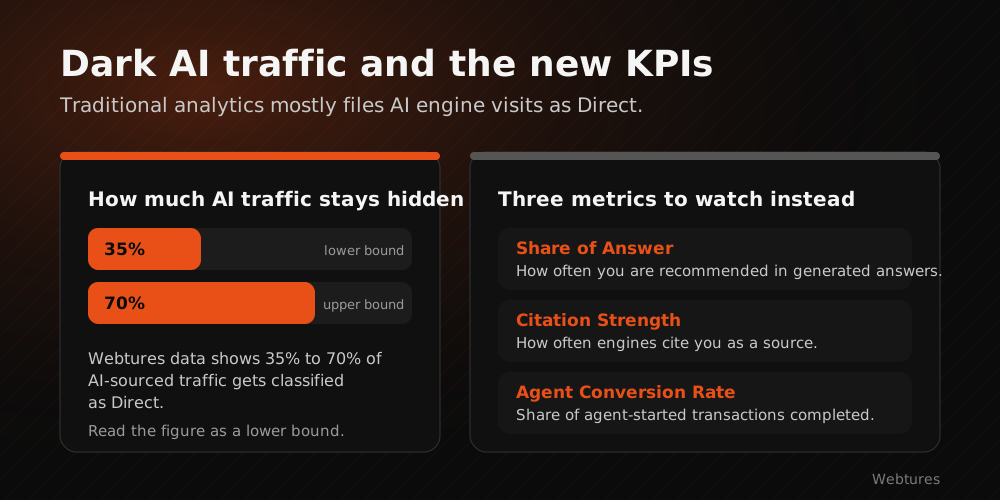
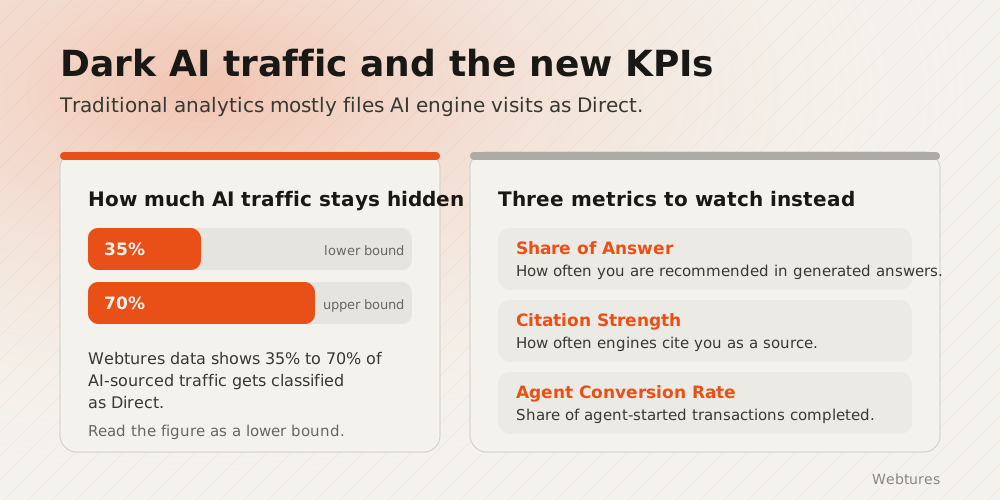
Traditional analytics tools mostly classified traffic from AI engines as Direct; Webtures data showed 35 to 70 percent of AI-driven traffic hidden this way. The built-in "AI Assistant" channel added to GA4 on 13 May 2026 separates sources such as ChatGPT, Gemini and Copilot; a custom channel definition is still needed for sources like Perplexity and Claude. We cover server-side measurement in Google Tag Manager in the agent era.
| Metric | What it measures | Source |
|---|---|---|
| Share of Answer | How often AI-generated answers recommend your brand | Brantial, per-engine query set |
| Citation Strength | How frequently AI engines verify claims by citing your brand | Brantial, Search Console generative AI report |
| Agent Conversion Rate | The share of transactions initiated and completed by non-human agents | Server-side event logs, protocol logs |
| AI Assistant session share | AI-sourced sessions as a share of all sessions | GA4 AI Assistant channel |
Security and trust: KYA (Know Your Agent)
As of 2026 a growing share of commerce runs agent to agent (A2A). That is where security protocols come in.
- The KYA protocol: A system for verifying the identity and financial authority of the agent executing a transaction; the payment mandate in AP2 is its payment leg.
- Agent allowlisting: If bot protection treats shopping agents like malicious bots, you lose sales; build an allowlist keyed on agent identity.
- Negotiation algorithms: Your brand's agent can negotiate real-time discounts with the user's agent in loyal-customer or bulk-purchase scenarios; the authority limit must be written down.
The asymmetric trade window in cross-border e-commerce
Agentic channels are still limited in Turkey's domestic market but active in export markets such as the US, the UK and the EU. Turkish exporters can use this technology gap in target markets to leapfrog giant brands with an agent-friendly data structure. Agents dislike complexity; they pick the brand that hands them the cleanest data.
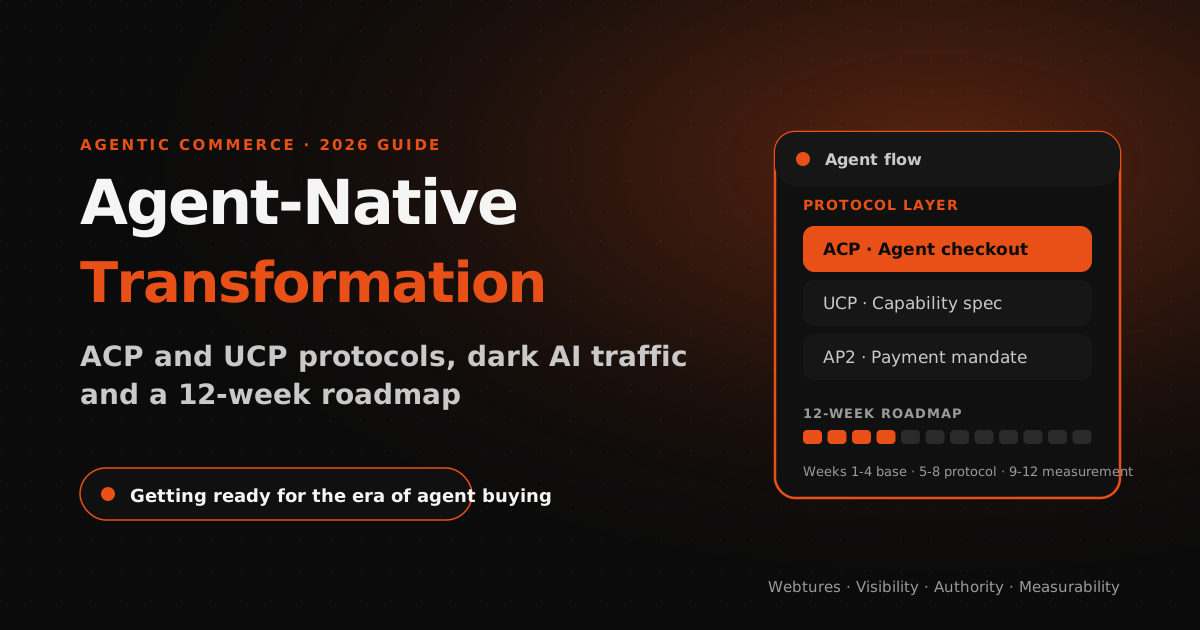
The 12-week implementation and maturity model
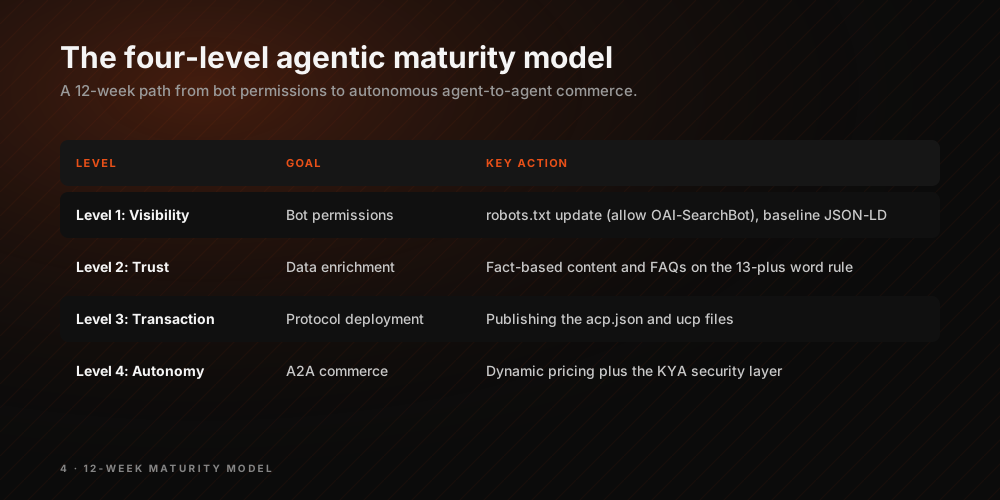
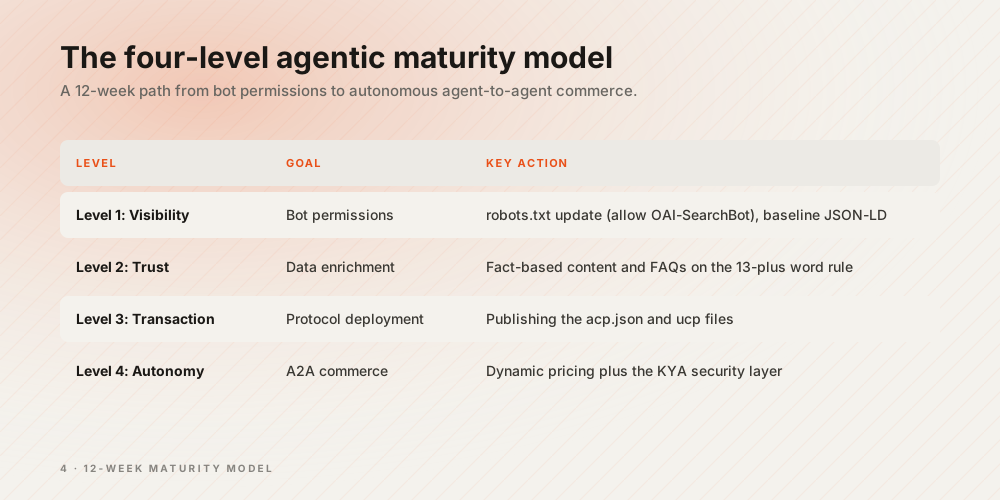
| Stage | Goal | Key action |
|---|---|---|
| Level 1: Visibility | Bot permissions | robots.txt update (allow OAI-SearchBot), baseline JSON-LD |
| Level 2: Trust | Data enrichment | Fact-based content production and FAQs built on the 13-plus word rule |
| Level 3: Transaction | Protocol deployment | Publishing the acp.json and ucp files, feed matching |
| Level 4: Autonomy | A2A commerce | Dynamic pricing, AP2 payment authority and the KYA security layer |
If you want to audit these four levels item by item, our GEO and agent readiness checklist includes the evidence and score weight for every step.
Conclusion: becoming the default brand of the new era
In agentic commerce, findability is not the success criterion; the real prize is selectability. AI agents dislike ambiguity. The more structured and verifiable data you give them, the more your brand becomes the default choice.
At Webtures, our vision is to help businesses complete this transformation as agent-native players in global markets. The future belongs to brands that can speak with agents. To map out your own transformation roadmap, see our Agentic Commerce Readiness service.