GEO Guide for the Automotive and Spare Parts Industry (2026)
GEO for automotive and spare parts sites: compatibility data, schema fields, topic clusters and agent readiness to become the brand AI assistants recommend.

The automotive and spare parts industry sits at the top of e-commerce for technical detail and data complexity. The way users search for parts has changed: instead of typing "Fiat Egea front bumper" and clicking through links, they put "Which front bumper fits my 2023 Fiat Egea Cross, is easy to install and matches the original part?" directly to ChatGPT, Gemini or Perplexity. In 2026 there is one more step: the shopping agent does not only ask the question, it verifies compatibility and builds the cart itself. In this landscape the competition is not search rankings; it is the race to be the brand AI models and agents recommend and verify.
What an automotive parts site means in the GEO era
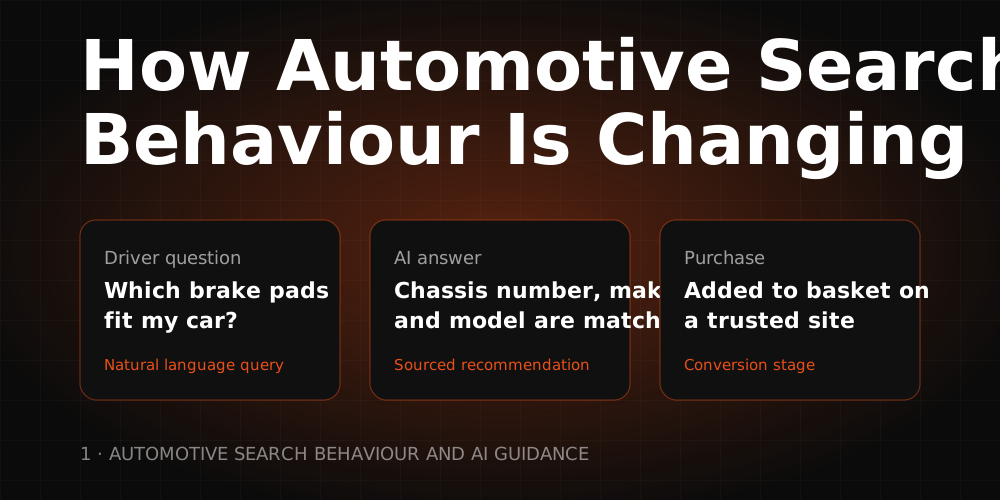
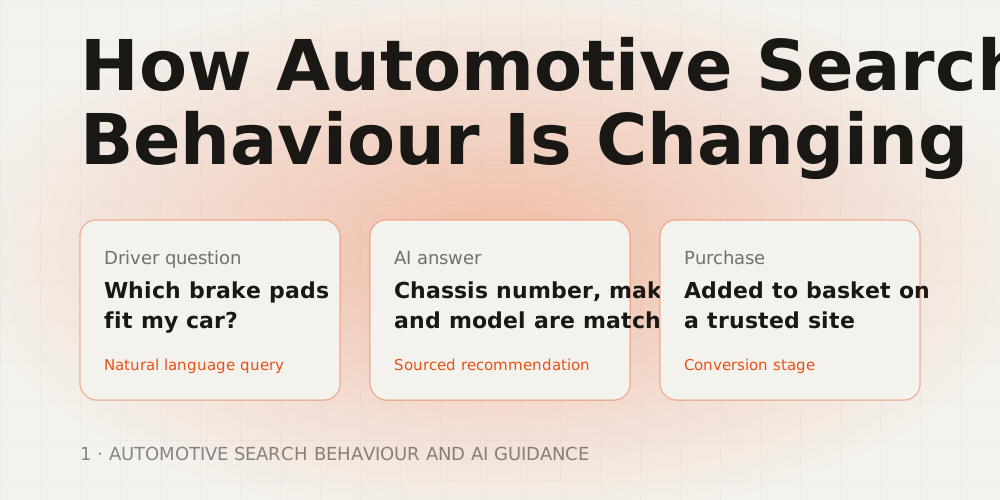
From a GEO perspective an automotive e-commerce site is not a catalogue of listed products; it is a truth source and a data library for large language models (LLMs) and shopping agents.
Automotive is a sector where a part mismatch carries costly consequences. That is why AI models need reliable, structured data in this vertical more than almost any other. Your site's purpose is not only to sell, but to prove to the model and the agent which vehicle, which chassis range and which technical specification each part fits.
Why restructure around GEO instead of classic search?
According to 2025 data, AI conversations replaced 25 percent of traditional queries in global search volume and the zero-click rate reached 69 percent. In technical sectors like automotive, users expect the assistant to bring the exact part rather than leaving them among thousands of products. We measured the picture brand by brand in our automotive AI visibility report.
- Query complexity. Users describe the problem or the need, not the part number. GEO is the ability to match those natural-language queries to the right product.
- The trust gap. AI models reference the most authoritative source to avoid hallucinating. According to Webtures analyses, sites enriched with technical diagrams and compatibility tables are cited 40 percent more often in AI answers.
- The agent experience. Instead of filtering on your site, the customer asks the assistant "Does this part fit my car?" GEO makes the answer "Yes, and you can buy it here"; agent readiness lets the agent complete that purchase with you.
Entity and context optimisation on product pages
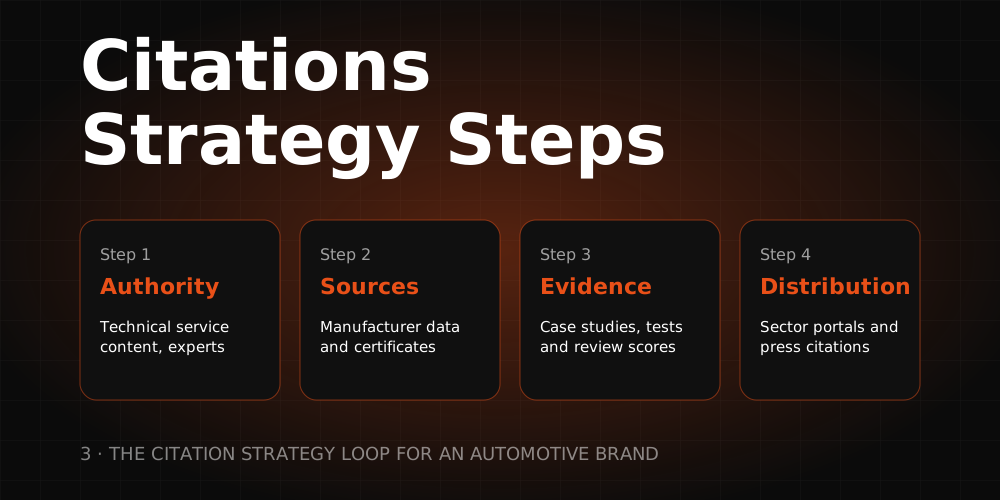
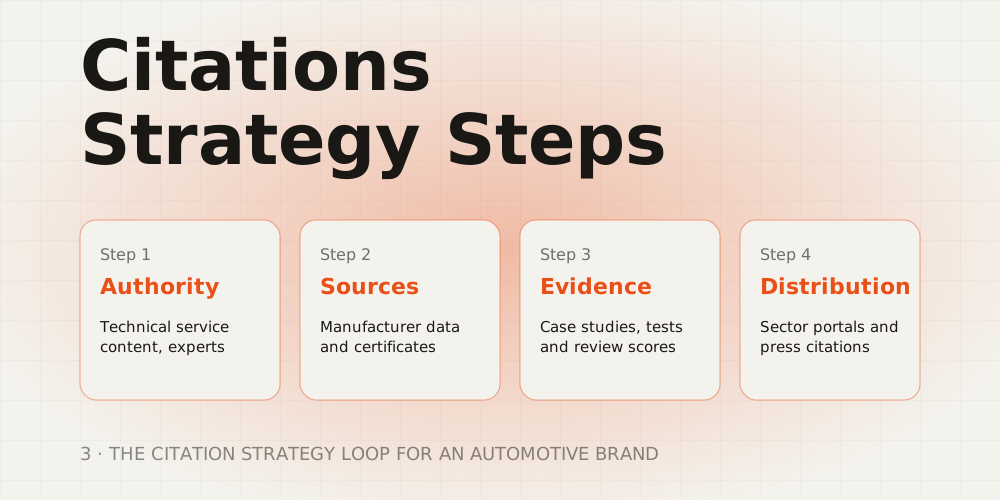
AI models scan context and entities, not words. On automotive sites, product pages should be built with the clarity of a technical document. For the model and the agent to treat you as the reference, meet these standards:
1. Q&A and problem solving
Integrate the questions users are likely to put to an assistant into the product page. Clear, concise expert answers to "Will this brake pad squeal?" and "Does installation need extra hardware?" belong on the page, marked up with FAQPage schema.
2. Visual analysis and metadata
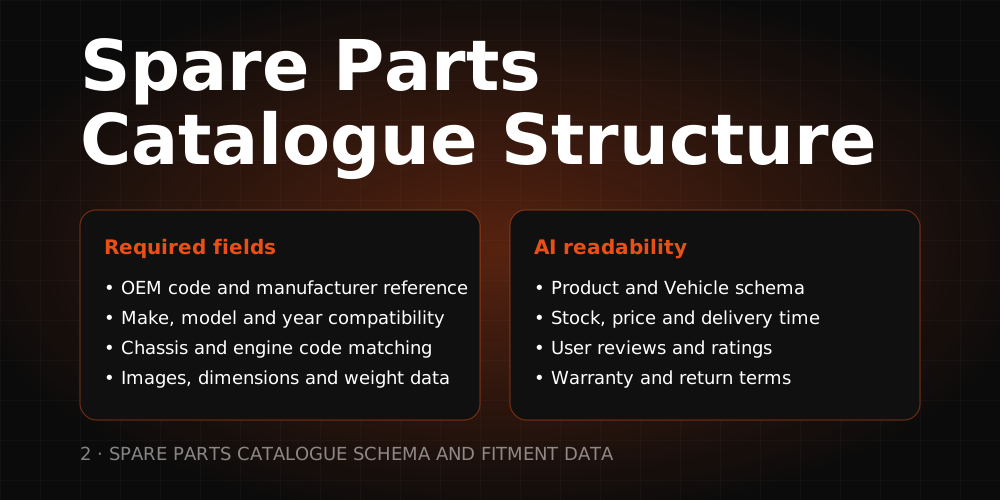
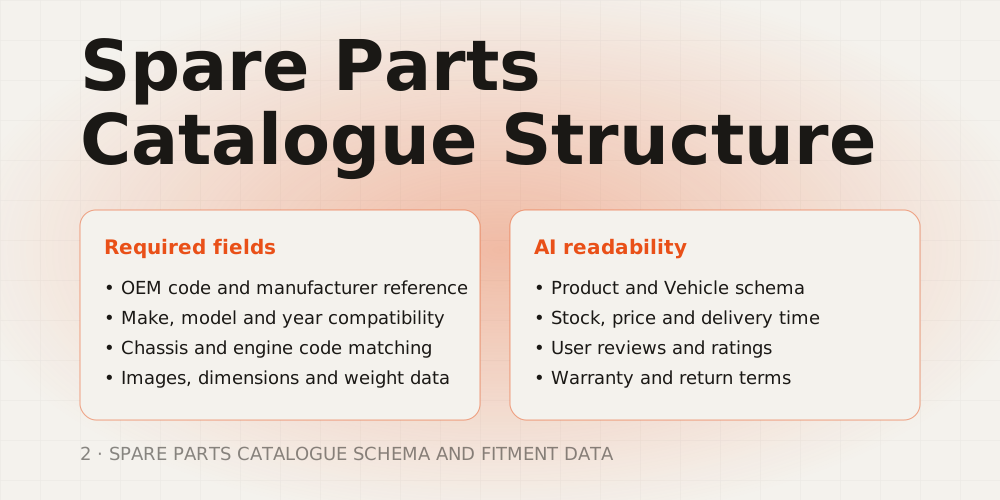
Models analyse images too. Product photos should carry technical detail in their content, not only meet size requirements: technical drawings, mounting diagrams, connection points. Every image's alt text should carry the part name, OEM number and compatible models.
3. Compatibility data: the fields an agent can verify
The agent takes the answer to "does it fit" from structured data, not from prose. The following fields should be both visible on the page and present in JSON-LD:
| Field | Schema equivalent | Why it matters |
|---|---|---|
| OEM / manufacturer part number | mpn, gtin | The agent matches parts by number, not by name |
| Compatible vehicle list | isAccessoryOrSparePartFor (Vehicle: make, model, year, engine) | The source of the "does it fit" answer |
| OEM versus aftermarket | brand, additionalProperty | The right class in comparison questions |
| Stock, price, delivery | offers (availability, price, shippingDetails) | The agent builds carts only from in-stock items |
| Returns and warranty | hasMerchantReturnPolicy, warranty | The agent's trust signal against mismatch risk |
A compatibility database aligned with industry standards such as TecDoc in Europe and ACES/PIES in the US feeds all of these fields from one source; the product feed produced for agent protocols (ACP, UCP) comes from the same source.
Topic clusters instead of category trees
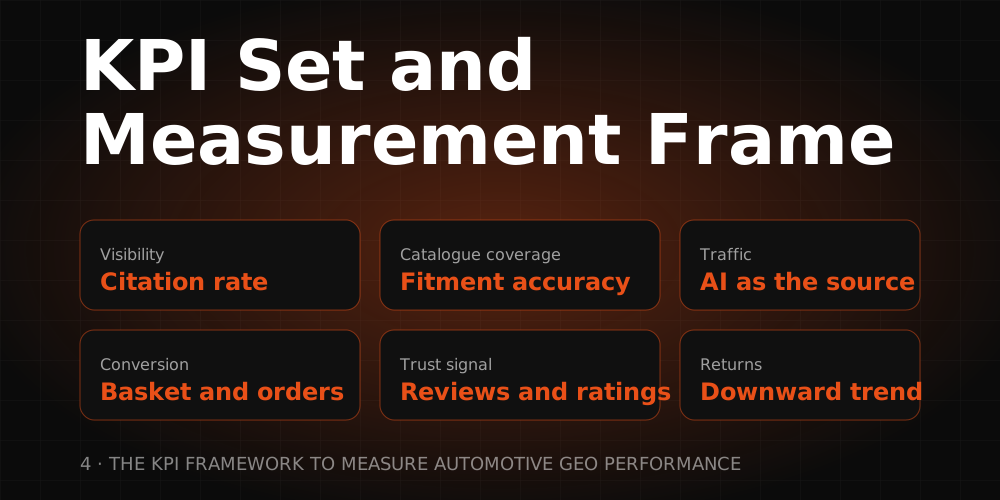
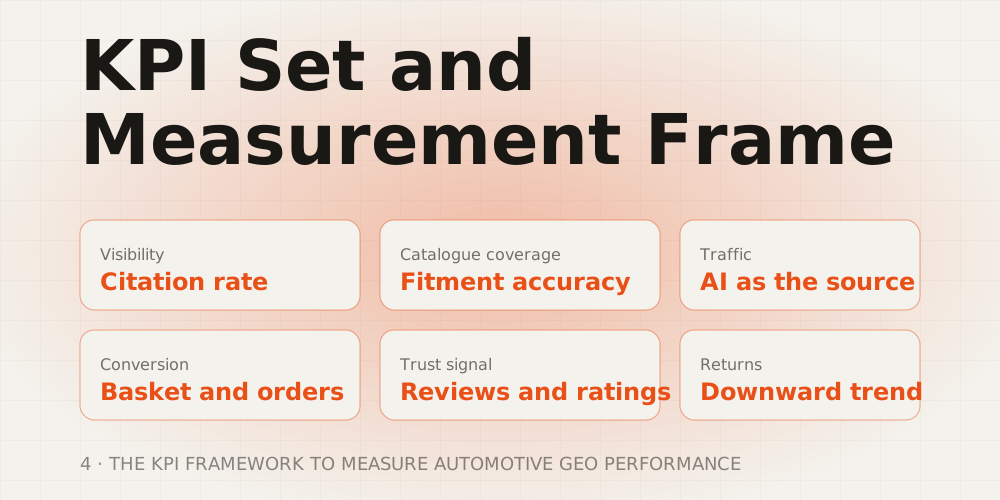
Hierarchical category trees (Vehicle > Model > Part) used to be enough; in the GEO era topic clusters are what matters. AI does not browse categories, it pulls knowledge. Your architecture should present the relationship between vehicle models and parts like a knowledge graph.
- Model-based authority pages. Instead of a plain "Dacia Duster spare parts" page, a "Dacia Duster 2023 maintenance and parts guide": chronic issues, most-replaced parts, service intervals.
- Comparison content. "OEM versus aftermarket" is the most valuable data an assistant can present at the decision stage; show your expertise with concrete data.
- Context-free paragraphs. Every compatibility statement should be quotable on its own: vehicle, year, engine code and part number in one sentence.
From visibility to recommendation, from recommendation to transaction
In automotive and spare parts the future is not ranking first; it is standing as the single valid recommendation in the user's conversation with an assistant, and letting the agent turn that recommendation into a transaction with you. In 2026 the second step became concrete: purchases inside ChatGPT, agentic commerce protocols and agent payments. How accurately and reliably brands serve their own data to AI platforms is decisive; turning your site from a sales channel into the sector's most trusted technical data bank is the critical strategy for market leadership.
Two outputs of this structure must be measured. Which part, model and compatibility queries your brand is recommended for, and where competitors pull ahead, is tracked with Brantial; whether agents can read your site and transact on it is measured with the AI Agent Readiness scan. For the full setup, see our Agentic Commerce Readiness service.