B2B GEO: Managing Enterprise Visibility in the AI Era
Grow your business with B2B GEO strategies: learn how Webtures positions enterprise brands as cited authorities across AI assistants and answer engines.

In an era when global trade knows no borders, the rules of digital visibility have changed at the root. The traditional concept of "searching" is giving way to the experience of "finding answers," and in the B2B (business to business) world, the relationship between customer and supplier now runs through AI and large language models (LLMs), beyond algorithms. The 25% contraction Gartner projected for traditional search volume is now playing out in practice; a significant share of B2B decision-makers start their research with an AI assistant.
At Webtures, we define this transformation not as a mere technology shift but as the beginning of the GEO (Generative Engine Optimization) era. The goal is now far more than being listed on a search engine results page (SERP); it is to appear as "the single trusted authority" in the final answer AI assistants deliver.
What is B2B GEO?
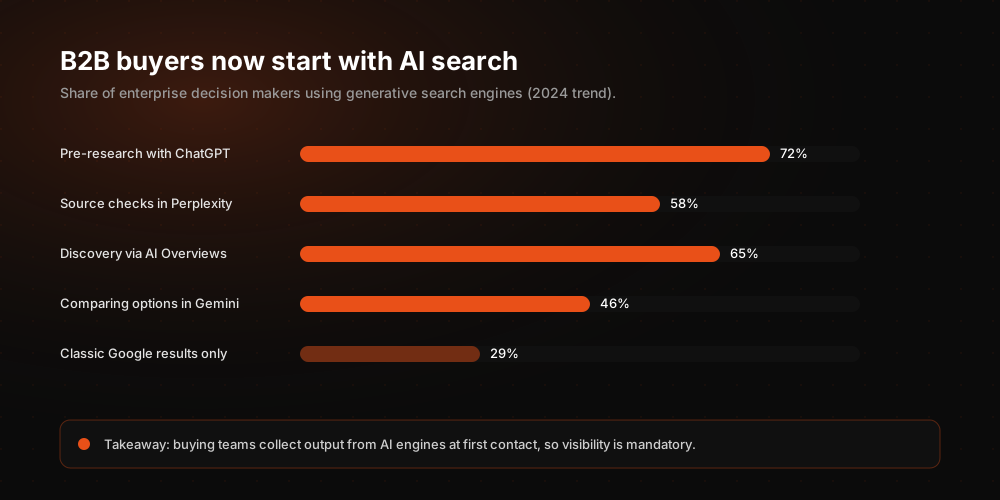
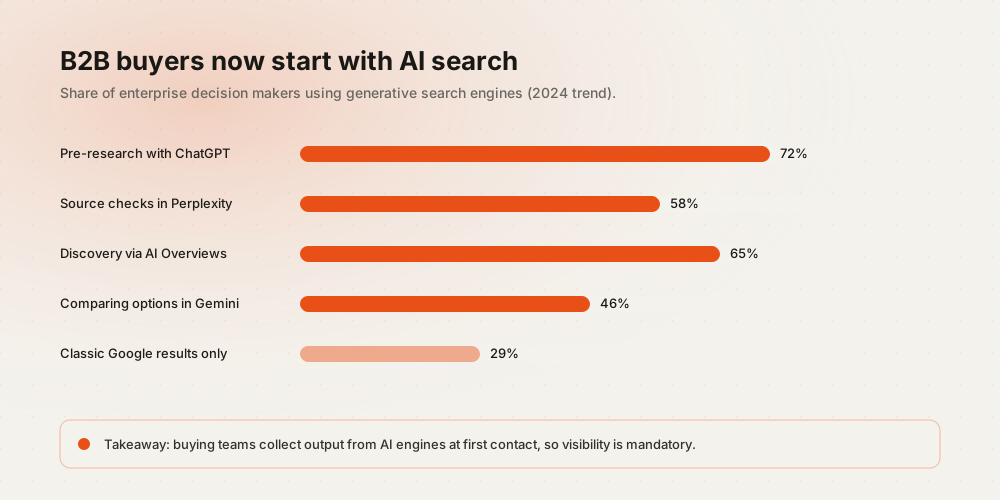
B2B GEO (Generative Engine Optimization) is the strategic optimization process that gets enterprise brands referenced in generative AI systems and answer engines such as ChatGPT, Claude, Perplexity, and Google AI Overviews. B2B here means commerce between companies: the relationships between suppliers, resellers, and enterprise buyers that typically run on long evaluation cycles and high contract values. Precisely because of that structure, a single AI recommendation in B2B can be worth more than thousands of clicks in B2C.
In traditional SEO the goal is to send the user to a website; in GEO the goal is for the AI model answering the user's question to recognize and recommend your brand as its "information source." With zero-click searches reaching roughly 70%, B2B buyers now consume AI-synthesized summaries rather than clicking links. Being invisible in this ecosystem means not existing for potential customers.
How do you build a B2B strategy for the AI era?
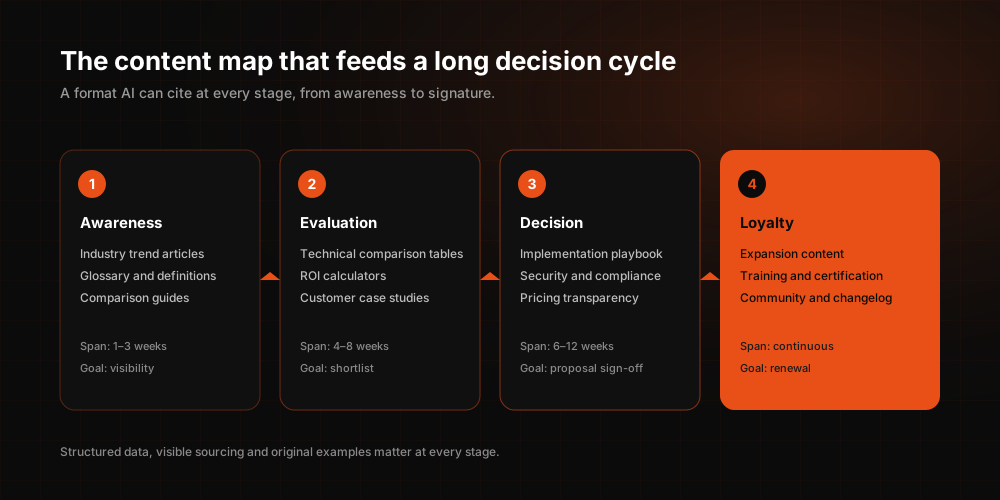
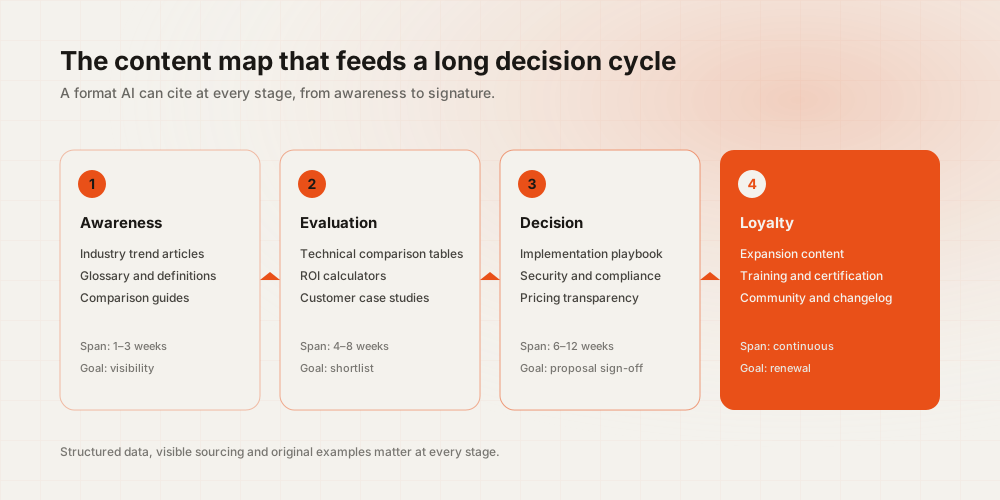

Beyond an ordinary digital marketing strategy, a B2B GEO strategy is built on "algorithmic authority" and closing the brand trust gap. From the Webtures perspective, the parameters that drive success in this process are:
1. From keywords to prompt engineering
Where the target used to be a two or three word search like "accounting software," today you have to analyze the complex prompt structures decision-makers put to AI. Queries grow longer every year, and question patterns (for example: "What are the best integrated ERP solutions for a mid-sized manufacturing company, and what are their cost advantages?") now dominate search.
Your strategy should be built on content that understands and answers these complex intents and contexts rather than single keywords.
2. AI agents as decision-makers
In B2B processes, the target audience is no longer just the HR manager or the procurement director. AI agents acting as these people's assistants are the digital gatekeepers making the first cut. In line with the "agentic web," your brand's data (price lists, technical specs, success stories) should be published in a structured format that AI agents can easily crawl and interpret. A table or list on your site raises the odds of being cited by AI (the citation rate).
3. Digital footprint and mention management
The new success metric in B2B GEO is not ranking but share of voice and citation rate. LLMs build a trust score for your brand by looking at what is being said about it across the web (Reddit, LinkedIn, industry reports, news sources).
- Strategic move: Getting your brand into authoritative industry sources, comparison lists, and academic or technical discussions in a positive context directly affects the odds that an AI model recommends you.
Giving queries the best answer: becoming a truth engine
The biggest risk with AI models is hallucination, the generation of false information. The point we emphasize at Webtures is positioning your brand as a truth engine.
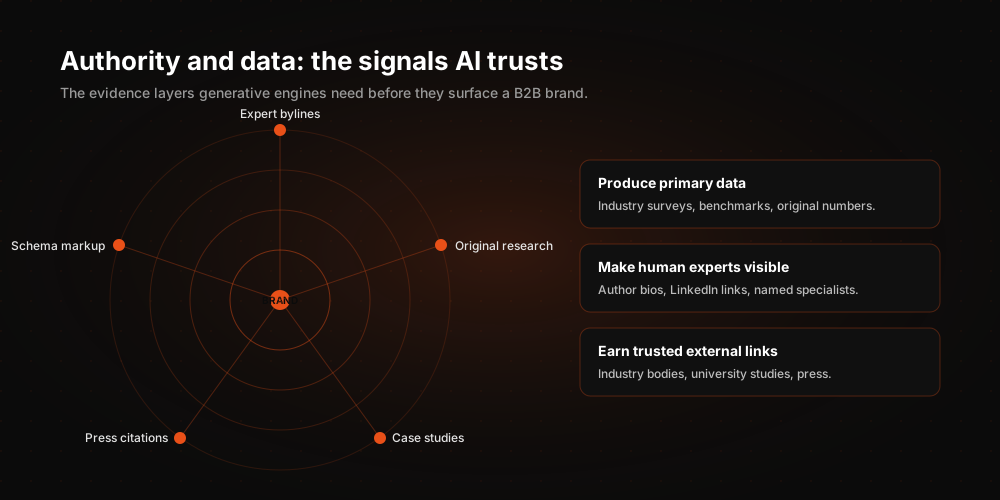
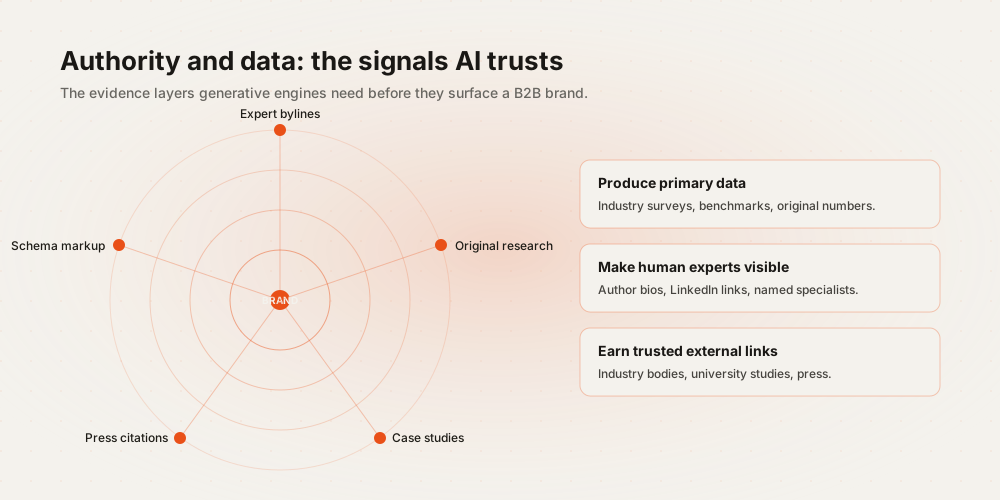
When a user searches for a B2B service, AI wants to serve the most accurate, most current, most evidence-based information. In your content:
- Clear statistics,
- Verifiable case studies,
- Explicit references to industry regulations (for example KVKK in Turkey or GDPR compliance),
- Structured data (schema markup),
all help AI models label your content as real, trustworthy information. Keep in mind that being cited in an AI answer carries far higher conversion value than the first position in traditional search.
Why is B2B GEO a critical investment?
The structure of digital traffic is changing at the root. The traffic reaching your website no longer consists of casual browsers; it consists of users with direct purchase intent who have already been convinced by AI. Fewer but far more qualified visitors are redefining the top of the B2B sales funnel.
A B2B GEO investment is not a fix for today alone; it is insurance protecting your brand's future digital presence. With traditional SEO you speak only to search engines; with GEO you speak directly to the AI mind shaping your customers' decisions. In a world where visibility runs on AI mentions and recommendations, aligning your brand with the language of AI (LLMO, Large Language Model Optimization) is not a preference; it is a commercial necessity.
This is where Brantial AI comes in, turning that digital transformation into a manageable strategy. Brantial.ai makes the invisible visible by analyzing how AI models perceive your brand, in which contexts they reference it, and how they present it to potential customers. It does more than report your current state; through deep LLM insights, it guides you in shaping your content into a structure algorithms will trust and prioritize. With the analytical power Brantial.ai provides, you can place your brand at the center of AI-driven buying journeys and build your digital future today rather than leaving it to chance.