ChatGPT Shopping and the New Interface of Commerce: Agentic Commerce
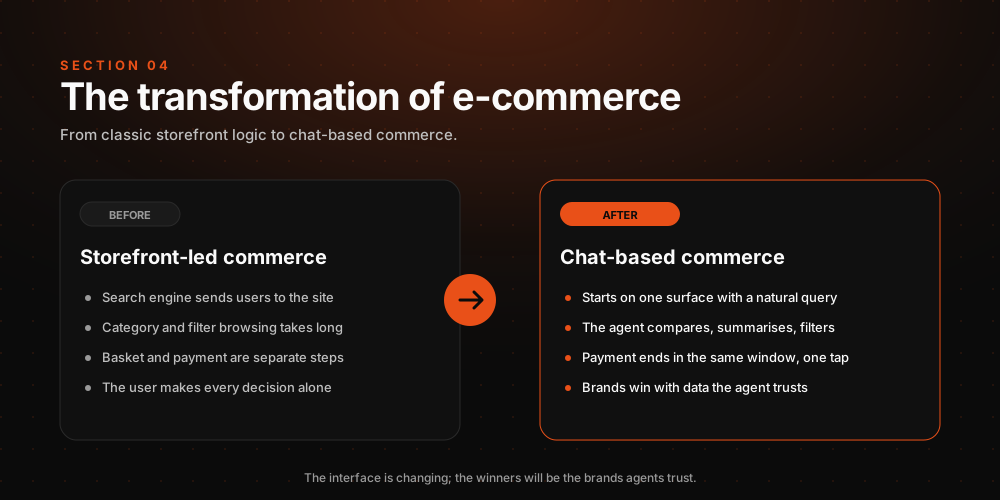
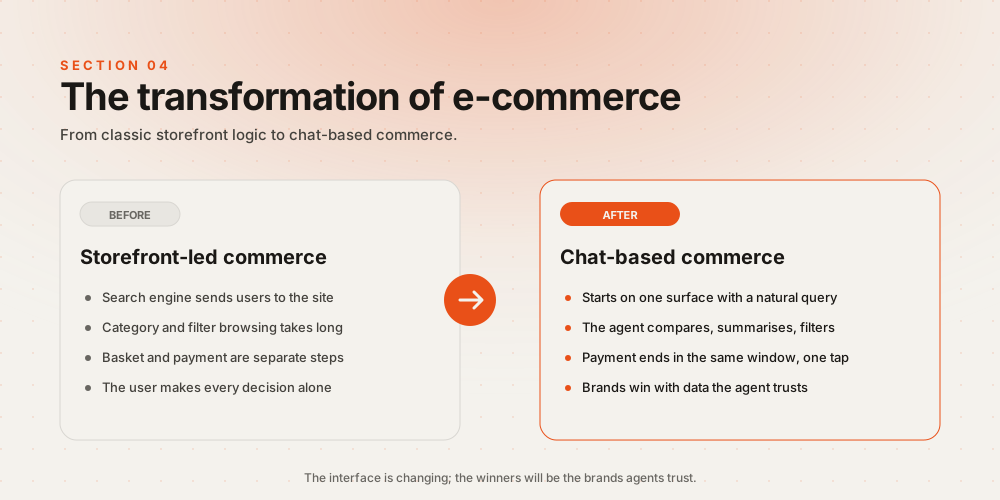
AI assistants have fundamentally transformed not just the "search" layer of digital commerce but its "decision" and "purchase" stages as well.

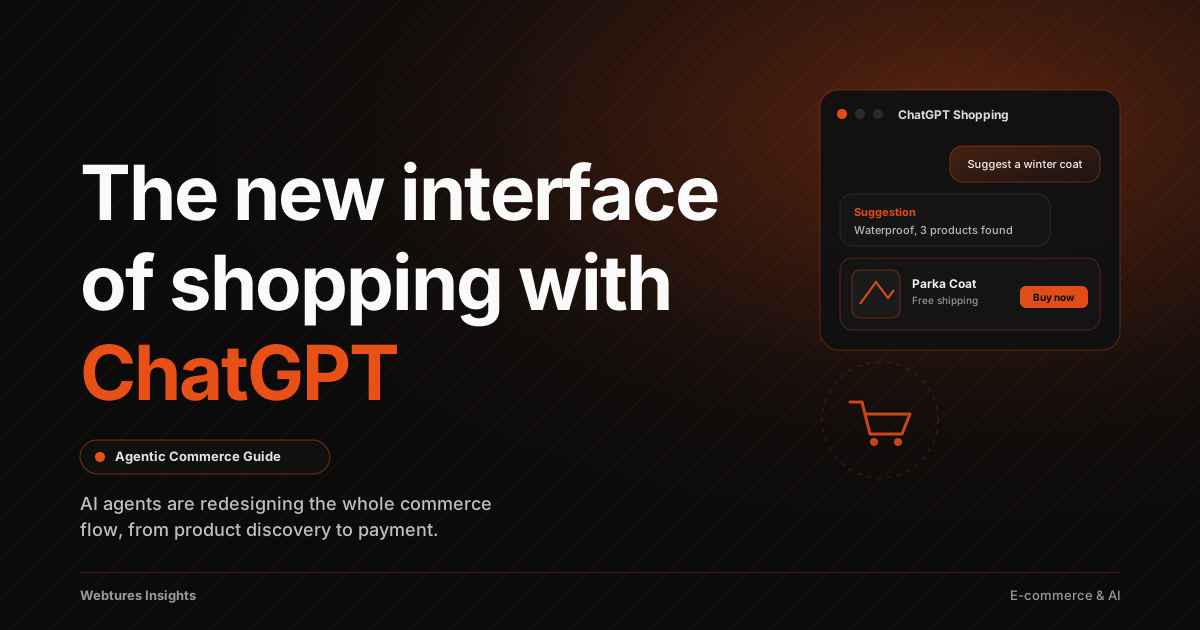
AI assistants have fundamentally transformed not just the "search" layer of digital commerce but its "decision" and "purchase" stages as well. ChatGPT's Shopping feature retires the old routine of opening dozens of tabs to compare products; it understands intent, weighs the options, and presents the best fit as a single answer, opening the era of Agentic Commerce. In this new ecosystem, a brand's survival depends not on link rankings but on being recognized by Large Language Models (LLMs) as a trusted authority and a preferred entity.
The shopping experience through a GEO lens: an answer, not a search
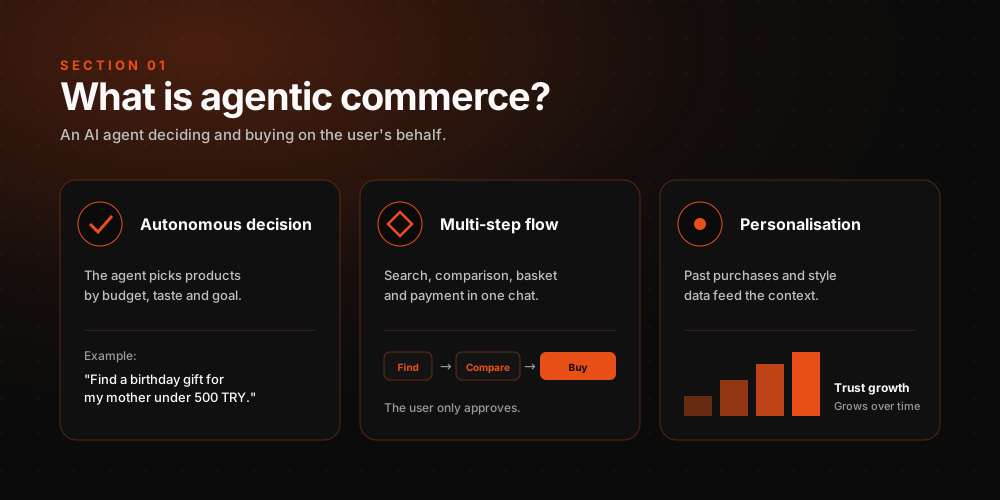
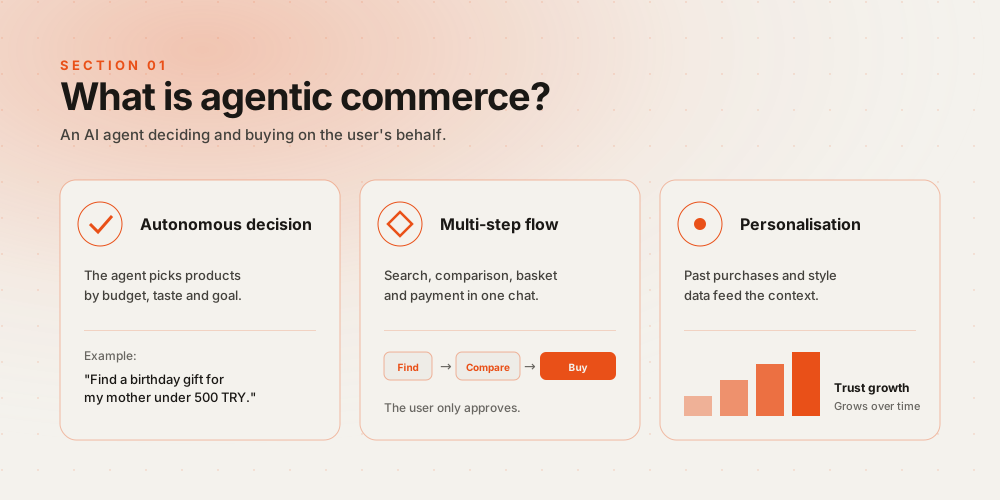
Instead of typing "red running shoes" and clicking through blue links, users now ask questions like "I run on asphalt three days a week, which shoe under 5,000 Turkish lira offers the best price-to-performance without punishing my knees?" While processing this complex query, ChatGPT synthesizes the technical data on a brand's website, user reviews on independent platforms, and the current state of its social proof within seconds.
Our observation at Webtures is this: being visible in this process no longer means ranking first for a keyword. Visibility means appearing inside the AI's synthesized answer as the recommended product. That requires a brand's digital footprint to carry the semantic clarity that Large Language Models can actually parse.
Redesigning the shopping funnel with Generative Engine Optimization (GEO)
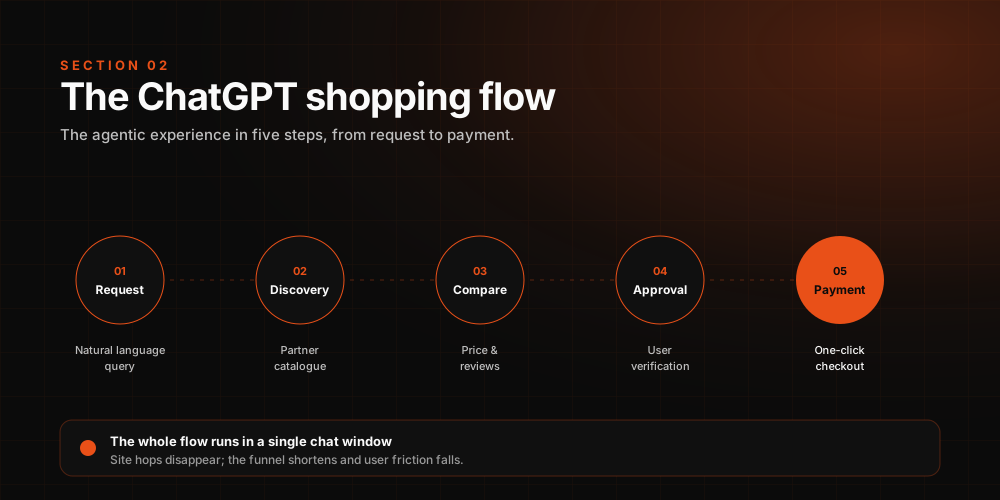
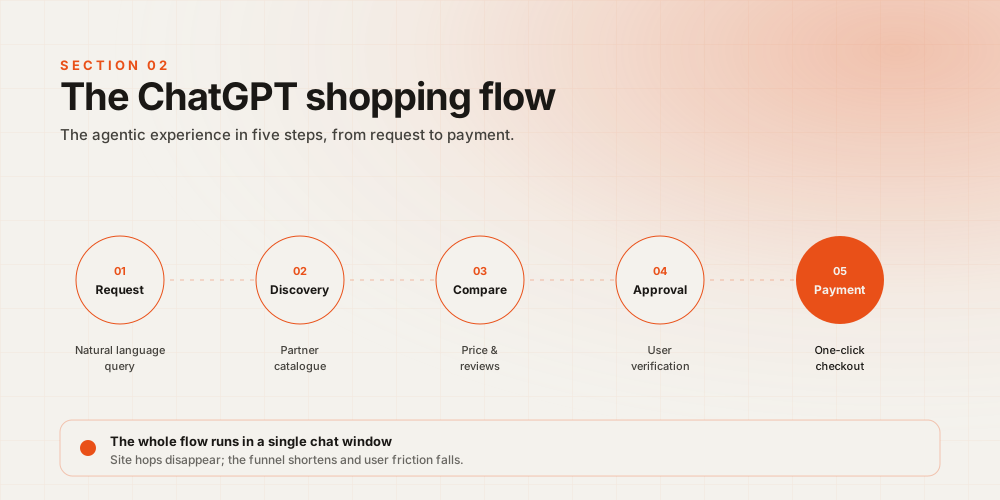
Traditional conversion funnels (Awareness > Interest > Decision > Action) have given way to real-time dialogues with AI assistants. Gartner's forecast of a 25 percent decline in traditional search engine volume by 2026, alongside zero-click rates reaching 69 percent as of May 2025, proves that the target is no longer traffic but the answer itself.
1. Entity authority and digital trust
To avoid the risk of hallucination when recommending a product, models like ChatGPT gravitate toward sources with proven accuracy. Your product pages must be marked as trusted entities, carrying not only technical specifications but also warranty terms, return policies, and brand history. As we emphasize in Webtures strategies, the more solid your brand's position in the Knowledge Graph, the more likely an AI assistant is to recommend you.
2. Structured data and real-time integration
AI works on data, not guesswork. For your products to appear in the ChatGPT Shopping interface with accurate prices, stock status, and variants, your Schema Markup and Merchant Feed structures must be flawless.
- Stock status: To avoid disappointing its user, the AI steers away from recommending out-of-stock products.
- Dynamic pricing: When answering a "best-priced" query, the model must be able to read the live data on your site.
- Contextual metadata: Data on not just what a product is but who it is for (for example, "for beginners" or "for professional use") sharpens the AI's matching ability.
3. The "Share of Smart Model" (SoSM) concept
Traditional market share and Share of Voice metrics are giving way to Share of Smart Model. This metric expresses the percentage of queries in a category (for example, "best robot vacuums") in which the AI presents your brand as the primary recommendation or a comparison benchmark.
- Citation management: How often, and in what context (positive or negative), your brand appears on Reddit, technology review sites, and trusted news sources shapes ChatGPT's "opinion" of you.
- Sentiment analysis: AI analyzes not only product features but the emotional tone of user feedback. A brand tagged with "poor customer service" can be filtered out by the AI even when its technical specifications are excellent.
Agent-oriented content architecture
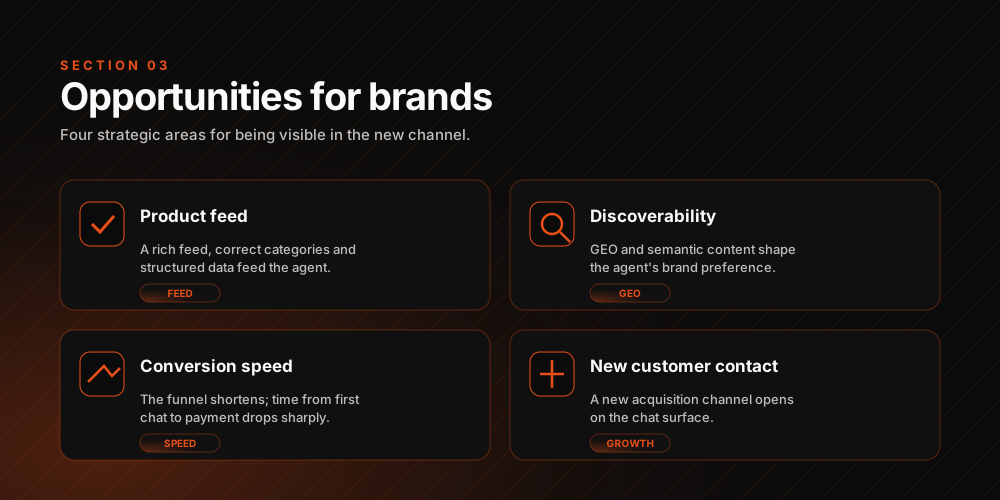
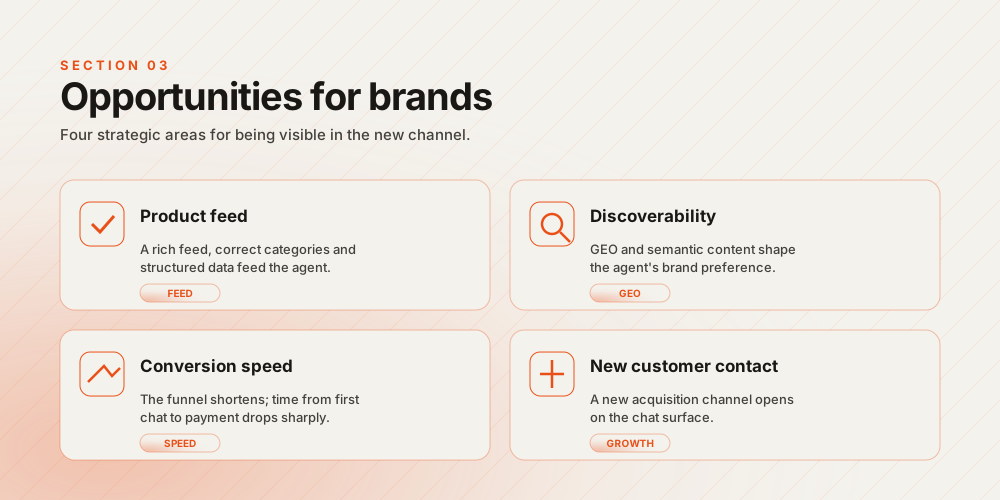
Content must now go beyond being readable by humans; it must be processable by machines. When ChatGPT's shopping module crawls your site, it ignores marketing flourishes and focuses on pure information gain.
A direct-answer structure
On product pages and in blog content, you should answer potential customer questions (prompts) directly, clearly, and with evidence.
- Format: Tables, bulleted lists, and pros-and-cons comparison sections make it easier for LLMs to extract the data and serve it to the user, driving citation rates 30 to 40 percent higher.
- Contextual relevance: Describing your product through use cases rather than specifications alone helps the AI answer the question "In which situation should this product be bought?"
Visual search and multimodal optimization
ChatGPT and comparable models (Gemini, Claude) can also analyze images (multimodality). The alt text of your product images, their file names, and any text within the visuals are critical data for the AI to recognize the product. When a user uploads a photo and asks "Find me a jacket like this," brands with unoptimized visual data are out of the game.
Measuring success: GEO metrics
Click-through rates (CTR) and organic traffic are no longer the sole indicators of success in the AI era. The new KPI sets we advise the brands we work with at Webtures to focus on are these:
- Brand Citation Score: How frequently your brand is cited as a source in AI answers.
- Sentiment Score: How positive the adjectives are (reliable, fast, expensive, and so on) when AI answers mention your brand.
- Entity Trust: How consistent your brand data (address, price, specifications) is across platforms, and how much the AI treats that data as definitive.
Our recommendation for your next step
In an era when AI assistants dominate shopping behavior, would you like to analyze your brand's Share of Smart Model score? By identifying how ChatGPT and other generative engines perceive your current digital assets and on which intent queries you trail your competitors, we can build a GEO (Generative Engine Optimization) roadmap tailored to your brand.