10 Critical GEO Metrics for AI Brand Visibility
Measure your brand's AI visibility with the 10 GEO metrics that matter most, from Share of Model to citation authority, compiled by the Webtures team.

In a 2025 landscape where AI-driven search engines (Perplexity, ChatGPT Search, Gemini) have fundamentally changed how people reach information, digital performance can no longer be measured through clicks and rankings alone. The new goal for brands goes beyond being listed as a link: it is being cited by Large Language Models (LLMs) as a trusted source of truth. Generative Engine Optimization (GEO) demands a new generation of metrics that measure how AI perceives, recommends, and presents your brand.
How are GEO metrics measured? AI visibility analysis with Brantial
Traditional SEO tools are structurally incapable of measuring GEO metrics. Metrics such as Share of Model, citation authority, sentiment score, and prompt matching are evaluated through LLM answers and contextual references, not links, clicks, or rankings.
This is where Brantial positions itself: a next-generation GEO and AI visibility platform built to measure a brand's real footprint across the AI ecosystem. Across generative engines such as ChatGPT, Perplexity, Gemini, and Claude, Brantial tracks:
- Which prompts mention your brand
- The contexts in which it is cited
- The balance of positive and negative sentiment
- Your Share of Model against competitors
- Visibility differences across platforms
and analyzes each of these signals systematically.
This moves GEO beyond gut feeling and manual prompt testing into a measurable, comparable, and reportable strategy. Brantial's data answers not only the question “Are we visible in AI?” but also “Why does AI recommend us, or why does it not?”
Why are GEO metrics different?
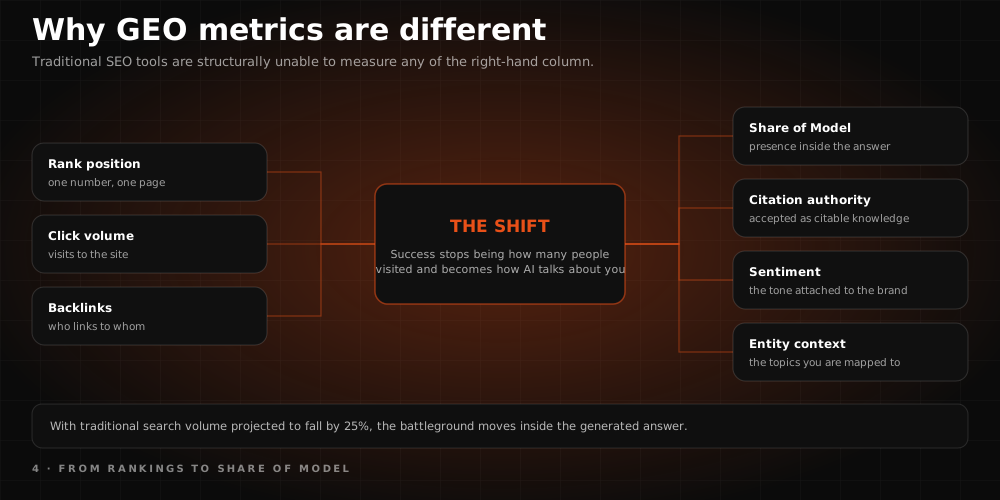
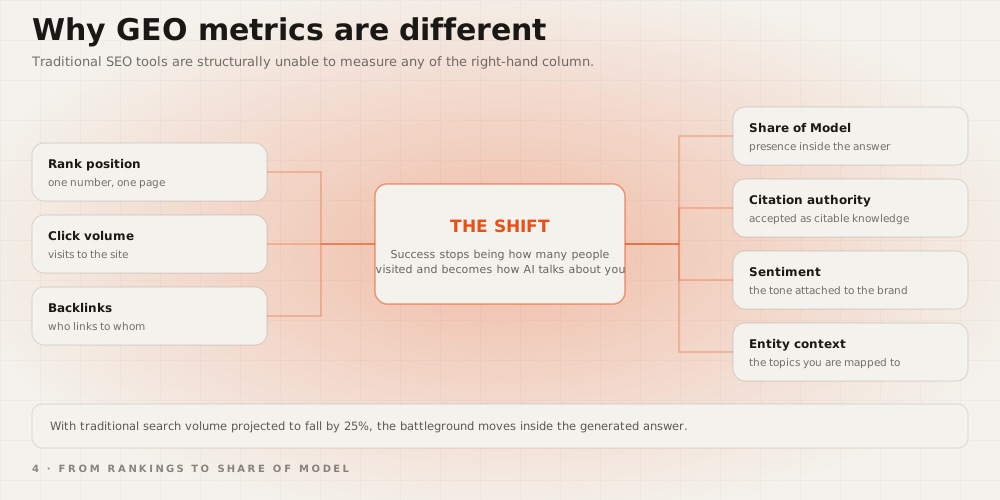
In the traditional world, a website's success was measured by how many people visited it; in the GEO world, success is measured by how accurately and favorably AI talks about your brand. With Gartner projecting a 25 percent drop in traditional search volume, the real battleground is earning a place inside the answers AI models generate (Share of Model).
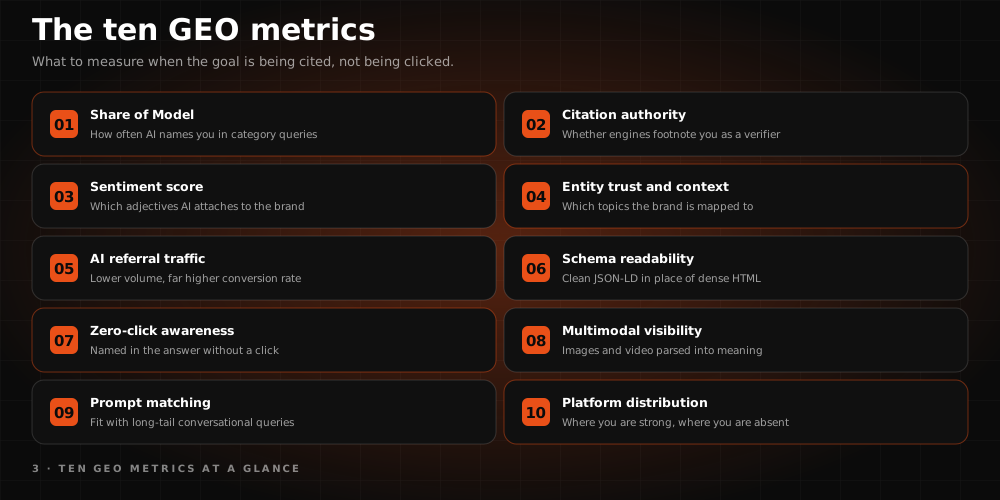
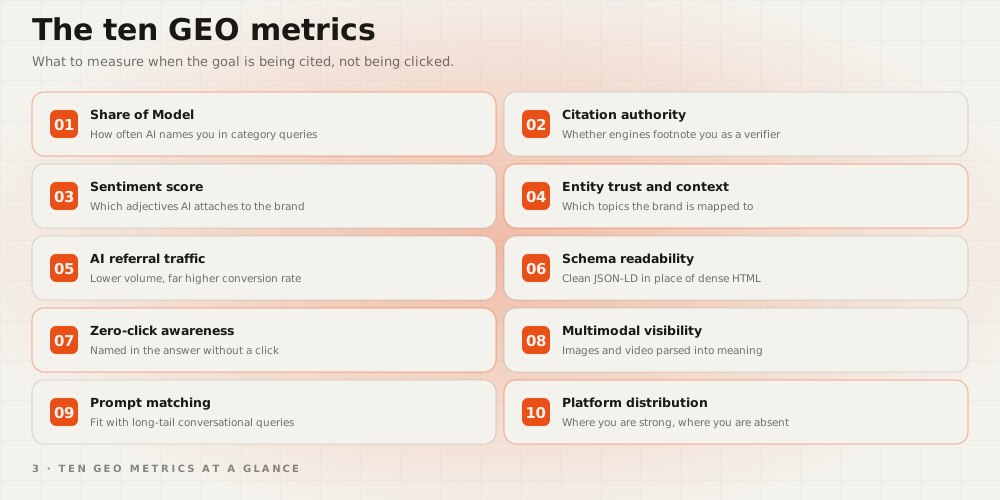
Below we have compiled the 10 most critical GEO metrics for measuring your brand's digital health in the AI era.
1. Share of Model
Share of Model replaces the traditional concepts of market share and ranking: it expresses how often AI mentions your brand in industry-level queries. For example, when ChatGPT or Gemini answers the prompt “Which are the most trusted digital marketing companies in Turkey?”, does the Webtures brand appear in that answer? If it does, in which position and in what context? This metric shows where your brand sits in the memory of LLMs.
2. Citation authority
In the GEO world, the backlink has evolved into the citation. The difference is that the connection is no longer just a link; it is a verifier of information. Do engines like Perplexity or Copilot add your site as a footnote to support their answers? Citation authority measures whether AI accepts your content as citable knowledge. In markets like Turkey, digital PR coverage in news outlets and recognized industry sources feeds this metric directly.
3. Sentiment score
Which adjectives does AI use when it talks about your brand? “Expensive”, “slow”, and “unreliable”, or “innovative”, “leading”, and “solution-oriented”? In GEO, the factor that influences conversion most is AI's sentiment toward your brand. LLMs scan user reviews, complaint platforms, and social media data to form a sentiment score. A negative sentiment score is what causes AI to leave you out of its recommendations.
4. Entity trust and context
Much like Google's Knowledge Graph, LLMs define brands as entities. This metric measures which topics your brand is associated with. When a user asks about “cross-border e-commerce consulting”, does AI map that concept directly to your brand? The structural integrity of your About and service pages is critical for AI to categorize you correctly (disambiguation).
5. AI referral traffic
The new form of organic traffic is qualified traffic from AI assistants. It occurs when a user reads ChatGPT's answer and then clicks your source link for more detail. The volume may be lower than traditional search, but the conversion rate is far higher, because the visitor arrives already convinced by AI.
6. Structured data (schema) readability
Machine readability of data has taken the place of the site speed metric. Are your product prices, stock levels, and service details marked up in JSON-LD to Schema.org standards? Rather than drowning in HTML, LLMs prefer clean, structured data. The higher your readability score, the more likely AI relays your data, such as current pricing, to the user correctly.
7. Zero-click brand awareness
69 percent of users now take the answer and leave without clicking a single result. In this scenario, the metric is whether your brand appears inside the answer itself. Even without a click, AI saying “According to the Webtures report, the answer is as follows...” creates brand awareness that is hard to price. Evaluate this metric through a visibility-to-engagement ratio.
8. Multimodal visibility (image and video analysis)
Models like GPT-4o and Gemini 1.5 no longer interpret text alone; they can see and reason about images and video. Are your product images, infographics, and videos being parsed by AI into meaning, along the lines of “This image shows the sole construction of brand X's trail shoe”? AI-friendly alt text and video transcripts help you stand out in multimodal, search-by-image queries.
9. Prompt matching and answer relevance
Keyword density has given way to prompt intent matching. Users no longer type “red shoes”; they ask for “a waterproof, budget-friendly red shoe recommendation for weekend hiking”. Your content's ability to satisfy these long-tail, conversational queries is the foundation of GEO success.
10. Platform-based visibility distribution
Where the focus used to be Google alone, every AI platform is now its own ecosystem.
- ChatGPT: general knowledge and recommendations.
- Perplexity: cited, current, research-driven answers.
- Claude: deep analysis and coding. Analyze how visible your brand is on each platform. You can be strong on one (for example on Claude, thanks to your technical documentation) and weak on another (for example on Perplexity, due to missing current pricing data). Balancing this distribution is a strategic necessity.