Test Your GEO Knowledge: A Self-Assessment Guide
Assess your GEO readiness with a 7-part self-evaluation covering content structure, query matching, and measurement, built by the Webtures GEO team.

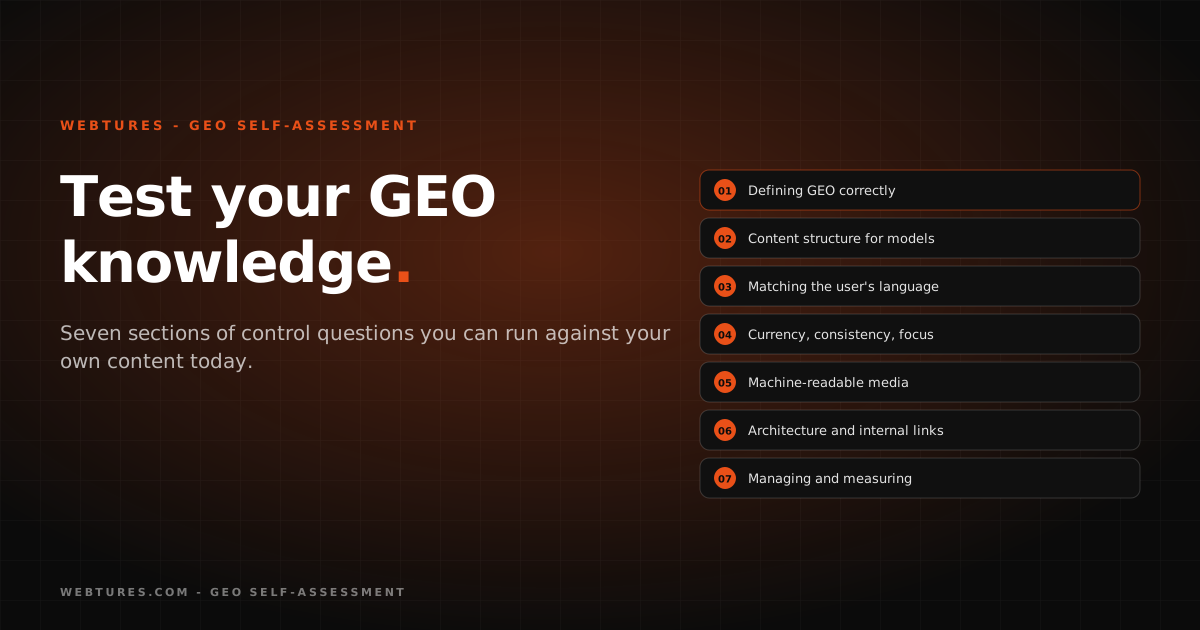

The healthiest way to measure your GEO (Generative Engine Optimization) knowledge is to ask the right questions of your own content. This guide is a self-assessment tool that condenses GEO's core principles into seven sections. Each section opens with a clear answer, followed by control questions you can apply to your own site. If you can answer most of the control questions positively, your content is ready to be selected as a source on AI answer surfaces; if not, this guide shows you exactly where to work.
Are you defining GEO correctly?
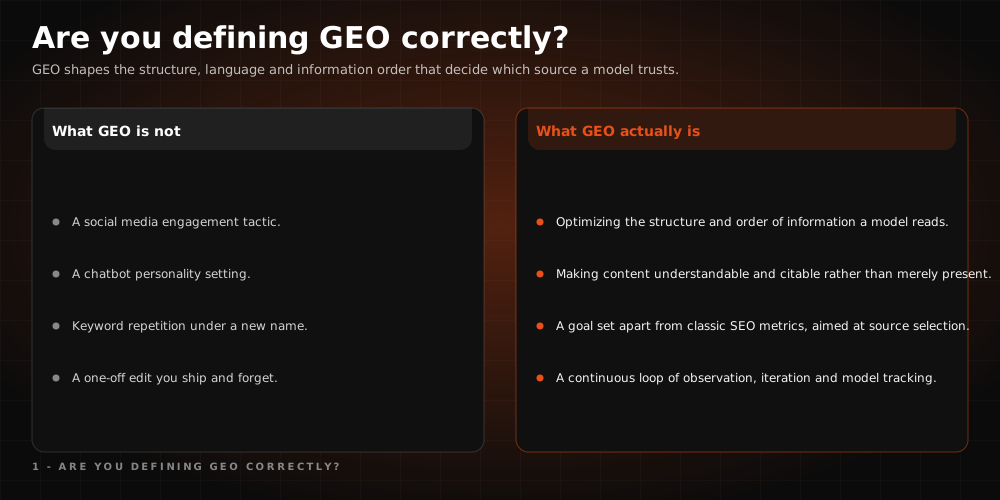
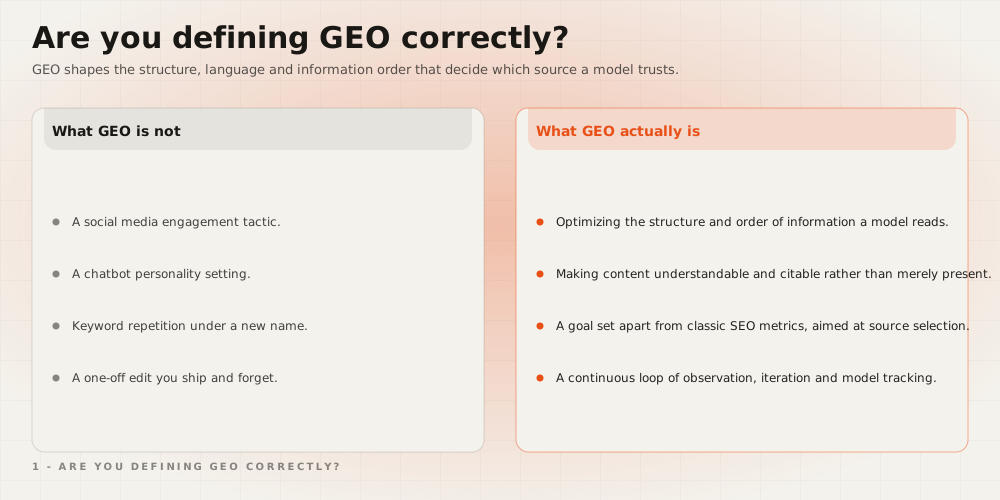
GEO is the optimization of structure, language, and information order that influences which content AI systems select as a trusted source when generating answers. It is not a social media engagement tactic or a chatbot personality setting. Internalizing this definition matters, because GEO work focuses not on keyword repetition but on making content understandable and citable for the model.
- Have you defined your GEO strategy with a goal separate from classic SEO metrics?
- Does your team know the objective is being selected as a source, not ranking?
Is your content structure readable for models?
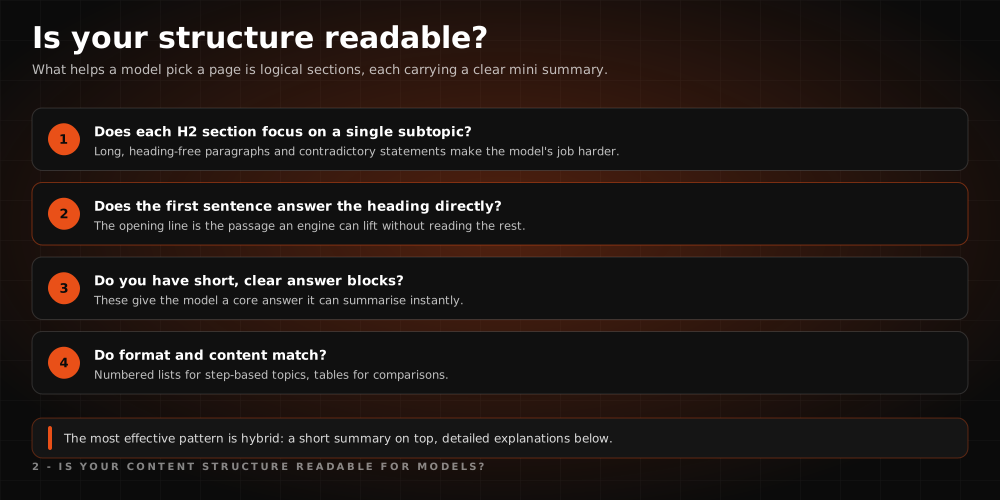
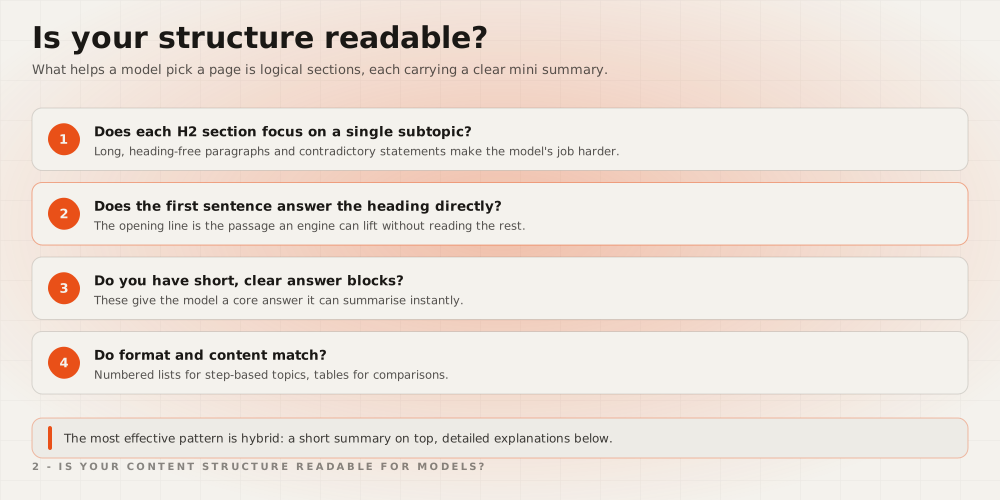
What most helps a model choose a page as its core explanatory source is content divided into logical sections, such as definition, process, causes, and outcomes, with each section carrying a clear mini summary. Long, heading-free paragraphs, contradictory statements, and unstructured text make the model's job harder. The most effective pattern is hybrid: a short summary on top, detailed explanations below, with a table or step list where needed.
- Does each H2 section focus on a single subtopic?
- Does the first sentence of each section directly answer the question in the heading?
- Do you have short, clear answer blocks? These give the model a core answer it can summarize instantly.
- Do you use numbered lists for step-based topics and tables for comparisons?
Do you match the user's language?
If a brand never appears in AI answers on a given topic, the logical first step is to check whether the content actually answers the relevant question and whether its terminology matches the language the model associates with the query. When the exact questions users pose to AI appear verbatim in the content, the model can map query to passage directly. Overly generic phrasing is risky for the same reason; models usually prefer specific, context-rich answers.
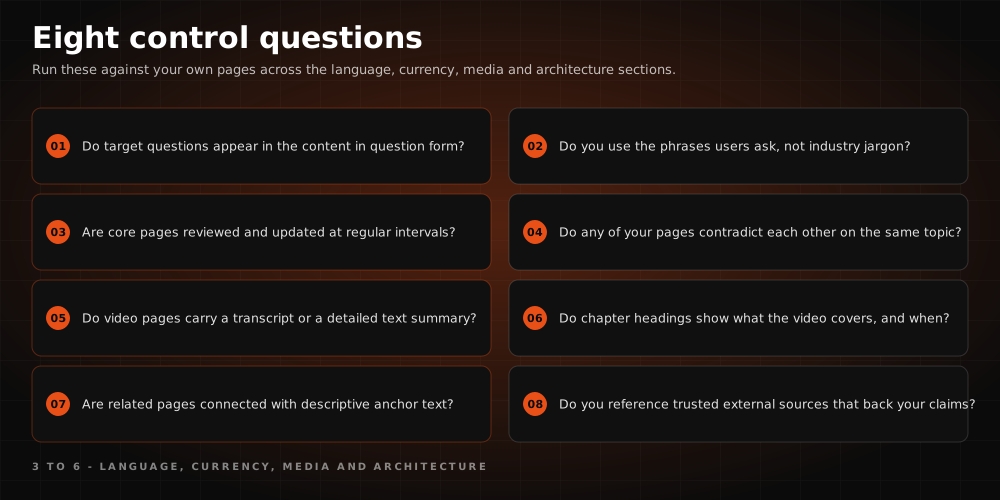
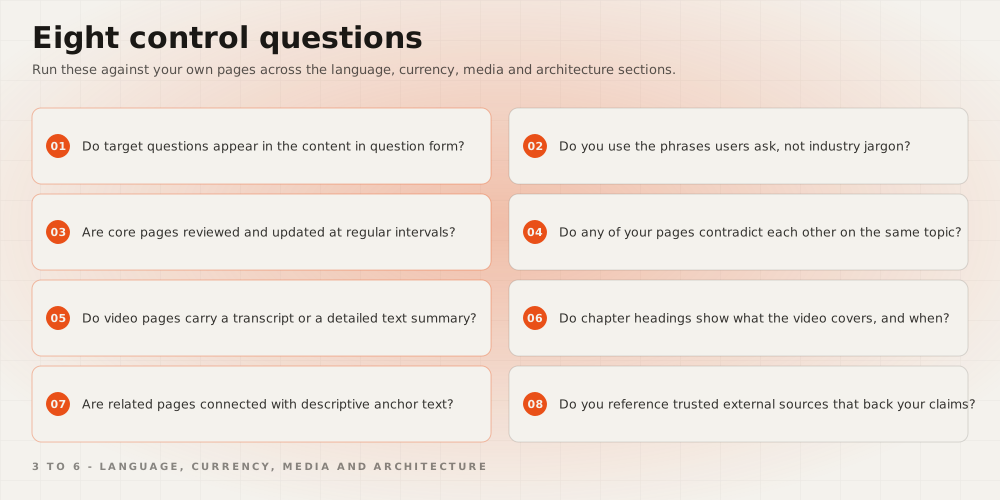
- Do your target questions appear in the content in question form, as headings or text?
- Do you use the phrases users actually ask instead of industry jargon?
- On topics where you are invisible, do you audit the question-answer match of existing content instead of blindly adding pages?
Is your information current, consistent, and focused?
The most critical factor for visibility on AI answer surfaces is information that is current, consistent, and structurally clear. Models may prefer the most recent version of a piece of content, because updated versions are usually more consistent, cleaner in structure, and free of contradictions. A page with high source potential focuses on one topic instead of sprawling across several, and explains without contradicting itself. Beyond findability and summarizability, bounding ambiguity clearly is also critical: content should state openly what it covers and what it does not.
- Are your core pages reviewed and updated at regular intervals?
- Do any of your pages contradict each other on the same topic?
- Does each page explain a single topic, or does it sprawl across several?
Are your video and image assets machine-readable?
What makes video understandable to AI is not just dropping in an embed code; it is providing a detailed summary, a transcript, and chapter headings. Text-free image walls are largely invisible to models. Even on visual-heavy pages, the core information must exist as text.
- Do your video pages carry a transcript or a detailed text summary?
- Do chapter headings show what the video covers at which minute?
Do your site architecture and links build context?
Clear headings and easy readability are not just a user experience concern; they let models split content into the right passages. Internal links help models understand your content architecture by showing which page is the center of which topic. Linking out to trusted external sources adds credibility and contextual depth; far from harming GEO, it supports it.
- Are related pages connected with descriptive anchor text?
- Are your topic clusters organized into hub pages and supporting pages?
- Do you reference trusted external sources that back your claims?
Are you managing and measuring the process?
Assuming that well-written content will inevitably be discovered by models is not enough; without accounting for structure, technical accessibility, and each model's data coverage, visibility cannot be guaranteed. GEO is not a one-off edit; it is a continuous process of observation, iteration, and tracking model behavior. AI visibility is a measurable field: with AI visibility tools like Brantial, you can analyze which brands and pages get selected as sources for specific queries.
- Do you technically audit AI crawler access?
- Do you regularly measure which queries you appear in?
- Do you run a loop that updates content based on measurement results?
How should you read your result?
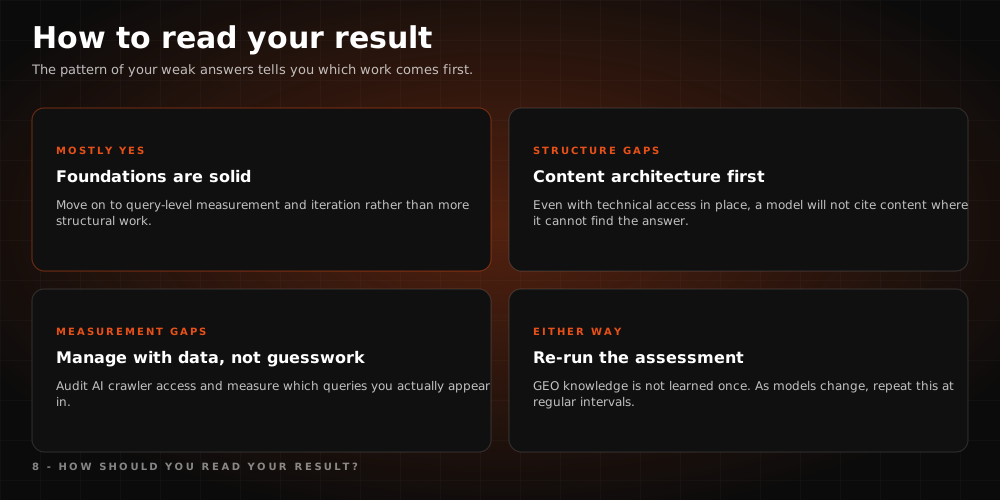
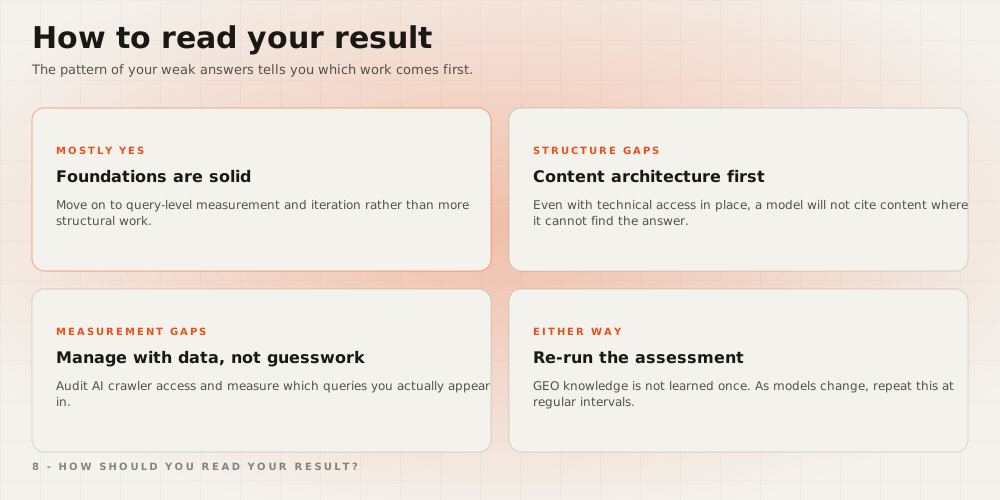
If you can answer most of the control questions across the seven sections positively, your GEO foundations are solid; you can now focus on query-level measurement and iteration. If you struggled with the structure and language-matching sections, your priority should be content architecture, because even with technical access in place, a model will not cite content where it cannot find the answer. If you struggled with the measurement section, it is time to manage visibility with data instead of guesswork. GEO knowledge is not learned once; as models change, repeating this assessment at regular intervals is the most reliable approach.