What Was Google SGE? The Search Experience That Became AI Overviews
Learn how Google SGE evolved into AI Overviews in May 2024 and what the shift means for your GEO strategy, content structure, and measurement approach today.

Google is reshaping the search experience with AI-powered answers, summaries, source links, and more interactive discovery flows. At the center of this transformation today sit AI Overviews, AI Mode, query fan-out, retrieval-augmented generation, and answer experiences that help users decide faster. For brands, visibility is no longer limited to appearing in classic search results; being selectable as trustworthy, accessible, citable information carries strategic weight of its own.
From a GEO perspective, Google's AI-powered search experience directly affects how content is produced, how it is delivered technically, how a brand's authority signals appear across the web, and how performance is measured. In this article, we look at the logic behind Google AI Overviews and AI Mode, the shift in user behavior, the content preparation process, and the actions brands should prioritize.
How does Google's AI-powered search experience work?
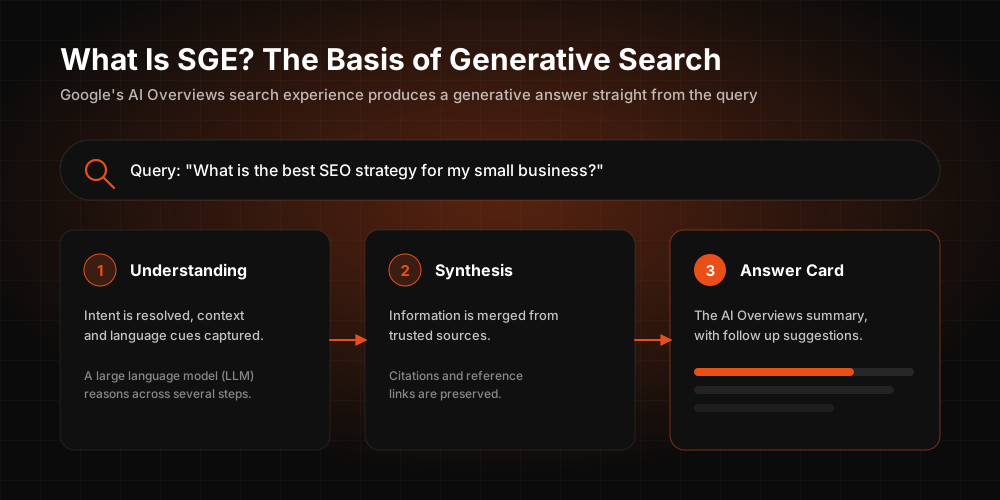
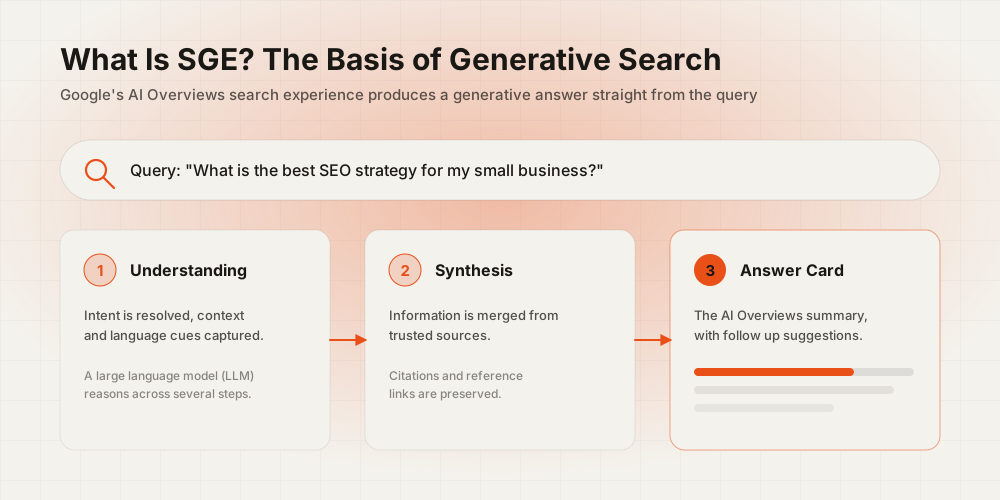
Google's AI-powered search experience does not evaluate a query by keyword matching alone. It analyzes the query's intent, its context, its likely sub-questions, and the additional information the user may need, aiming to produce more comprehensive answers.
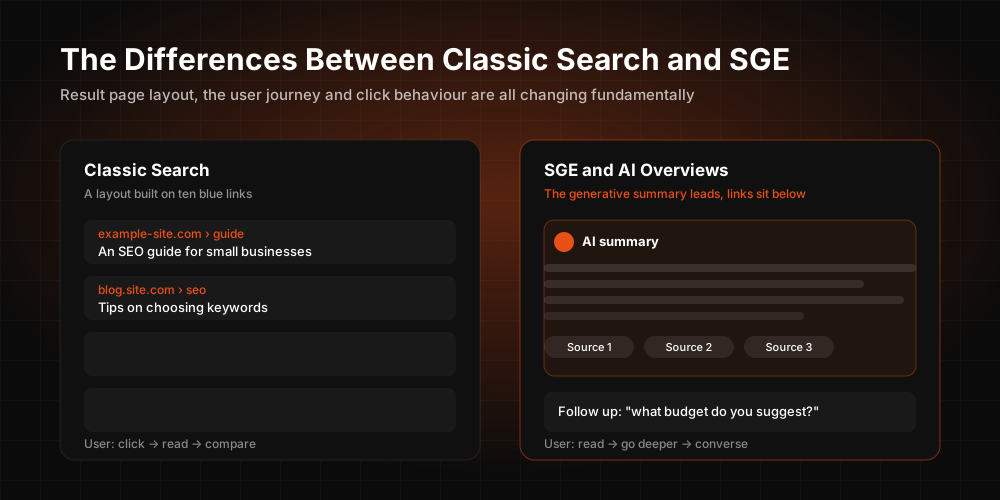
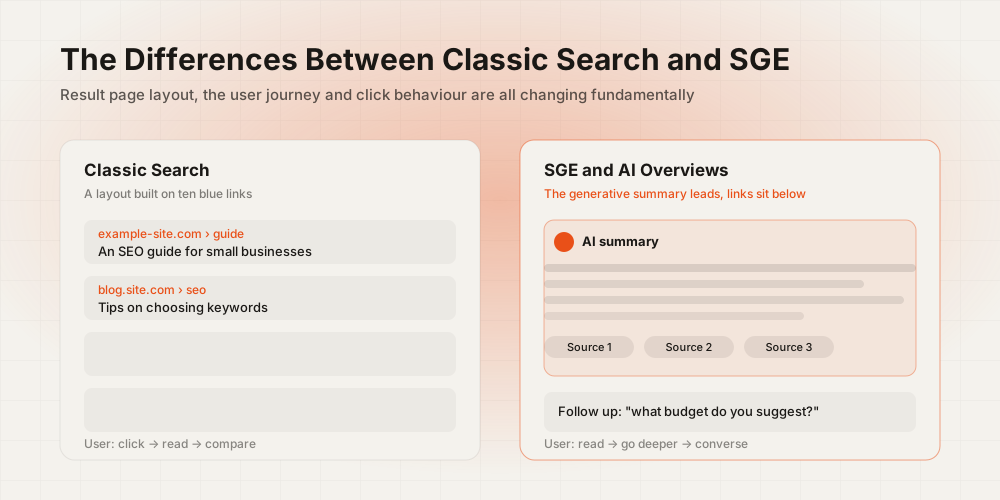
In experiences such as AI Overviews and AI Mode, Google can draw on suitable sources from the Search index to serve summarized answers, supporting links, and information flows that expand discovery. This structure creates a new visibility surface for websites: content must not only be listable, but also selectable as a source that supports the answer.
The logic of query fan-out
Query fan-out means a single user query is broken into multiple related sub-queries. When a user asks “which CRM is best for small businesses?”, the system may separately evaluate sub-topics such as pricing, ease of use, integrations, sales automation, team size, alternatives, and user reviews.
Content strategies should therefore be planned not around a single core phrase but around question clusters, comparison intents, problem-solving scenarios, decision-stage queries, and likely follow-up questions.
RAG and grounded answer generation
Google's generative AI features draw on current, relevant web sources to improve answer quality. In this approach, pages need to be crawlable and indexable, eligible for snippets, and written so their content answers the user's question clearly.
For GEO, this means content should not merely be long or comprehensive; it needs clear definitions, verifiable information, original expert commentary, an open heading structure, source links, entity consistency, and an LLM-readable format.
Results shaped by context
Google's AI-powered search features can surface different sources, sub-topics, and answer formats depending on the context of the query. Short summaries work better for some queries, step-by-step explanations for others, and product, local business, or comparison information for others still.
One-size-fits-all content is therefore not enough. Definitions, guides, comparisons, lists, tables, FAQs, product information, local information, expert opinion, and fresh data should each be structured around the user's intent.
Safety, quality, and source reliability
Google aims to serve reliable, helpful answers in its AI-powered search features. That makes content accuracy, source quality, expertise signals, freshness, and genuine user value essential.
Inaccurate or shallow content is especially risky in sensitive areas such as health, finance, law, technology, and B2B decision processes. In these areas, expert input, transparent references, current dates, correct terminology, E-E-A-T signals, and editorial control become even more critical.
Where can you access AI Overviews and AI Mode?
Google's AI-powered search features can vary by country, language, device, account type, and Google's staged product rollout. Users in some markets see AI Overviews directly in Google Search, while more interactive experiences such as AI Mode may have different access conditions in specific regions or user groups.
Do not assume everyone gets the same experience at the same time. Check current availability against your target market, device, language, and Google's official announcements.
Supported browsers and platforms
Experiences such as AI Overviews and AI Mode can be delivered through Google Search and the Google app. Availability may vary by device type, browser, region, and Google account settings. For site owners, the real focus is less about accessing these features as a user and more about ensuring their content is crawlable, indexable, and eligible to be evaluated as a source by Google.
User account and region factors
Google's new search experiences may go live at different times across countries, languages, or user accounts. When planning any consulting engagement or content strategy, verify AI Overviews and AI Mode access for the target market separately.
Is any setup required?
Users need no special setup; for site owners, however, technical readiness matters. Pages must be crawlable by Google, indexable, eligible for snippets, unblocked by robots.txt or noindex, and backed by quality content. Google's generative AI features work in connection with the core Search systems.
AI search and GEO consulting
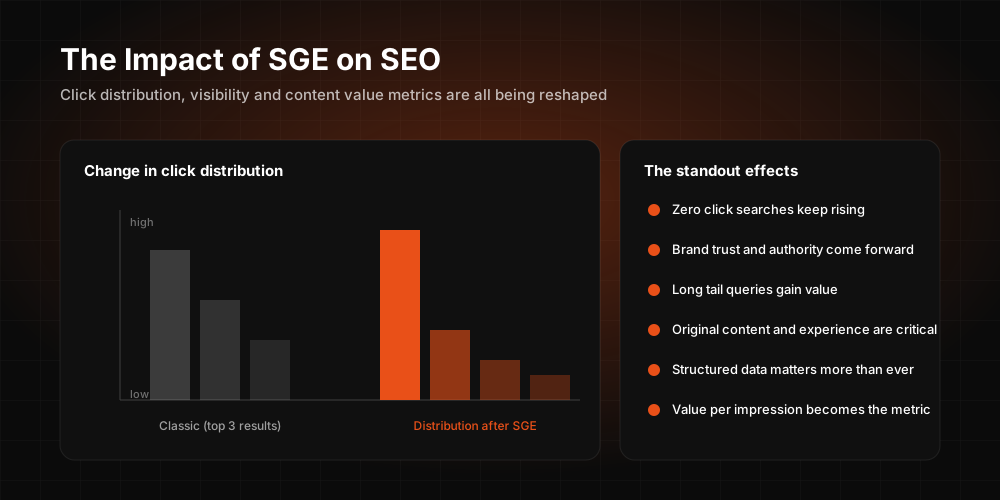
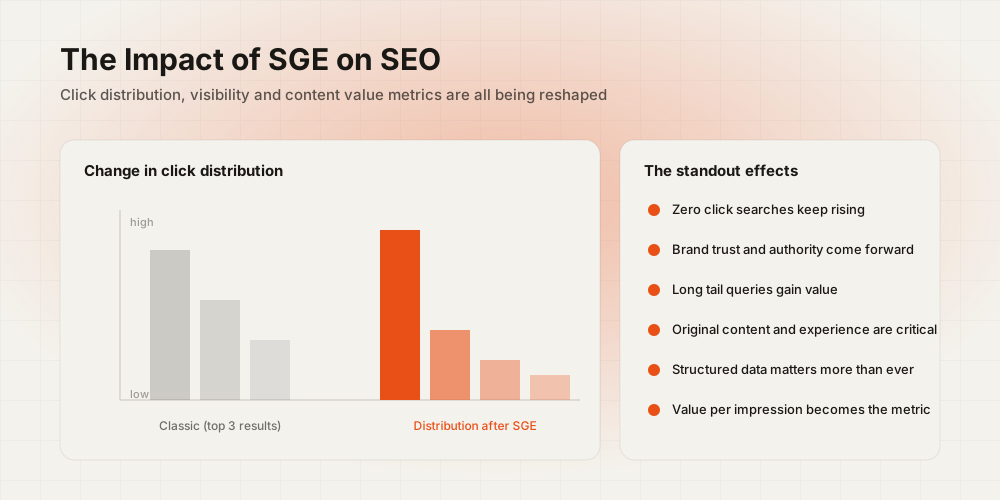
AI search and GEO consulting covers the strategic work that makes brands more understandable, trustworthy, and citable across Google AI Overviews, AI Mode, ChatGPT, Perplexity, Gemini, and other answer engines. This is not just content production; technical accessibility, entity clarity, brand authority, digital PR, references, structured data, content architecture, and measurement must be handled together.
A GEO consulting engagement analyzes current content performance, brand mentions, competitors' AI search visibility, topical authority, Search Console data, content gaps, and technical blockers. The goal is not just traffic; it is having the brand perceived as a reliable source of information on its topic.
How is Google's AI search experience changing content strategy?
Source selectability matters more
In features such as AI Overviews and AI Mode, being visible is not enough. The page must answer the user's question directly, clearly, and credibly. To be selected as a supporting source, content needs to be current, precise, expertise-driven, and technically accessible.
The focus is therefore not “producing artificial content for AI” but creating clear, trustworthy, current, citable content that delivers real value to users. GEO treats content, technical structure, authority, and measurement as one system at this point.
Query and prompt strategy is expanding
Content creators now need to answer not only short queries but also users' more complex, conversational questions. Content should be structured with definitions, context, examples, steps, comparisons, pros and cons, references, and FAQ blocks.
Query patterns such as “how to”, “what is”, “which is better”, “comparison”, “price”, “advantage”, “risk”, “alternative”, and “review” should each be evaluated separately in the content plan. This structure builds stronger source potential in AI search answers.
Technical accessibility becomes a baseline requirement
On the technical side, crawl and index control, canonical tags, sitemaps, robots.txt, page speed, mobile compatibility, clean HTML, structured data, and internal link structure all remain important. For AI search visibility, content being accessible to Google is the baseline condition.
Visible content and structured data must stay consistent, important text should not be left only in late-loading or inaccessible areas, and source pages should not be excluded by noindex or faulty canonicals.
Backlinks, mentions, and the authority picture are widening
In the AI search era, backlinks remain a valuable authority signal, but they are no longer sufficient on their own. Source reliability, link context, brand mentions, visibility in third-party publications, expertise signals, and content that is genuinely citable all become more critical.
From a GEO perspective, a strong authority structure should be supported by quality backlinks, digital PR, mentions in industry publications, a consistent brand entity, expert author profiles, and user trust signals. Random or irrelevant link building produces little value in this period.
Measurement logic is changing
Because experiences such as AI Overviews and AI Mode change how users reach information, the measurement approach must change too. Alongside classic traffic and click data, track AI visibility, brand mentions, appearances as a source inside answers, Search Console performance data, referral traffic, and conversion quality.
Google states that performance from AI features is reported under the web search type in Search Console. Reporting should therefore not stay focused only on position and traffic; evaluate it together with source visibility, topical authority, AI answer representation, and conversion impact.
How should content be prepared for AI Overviews and AI Mode?
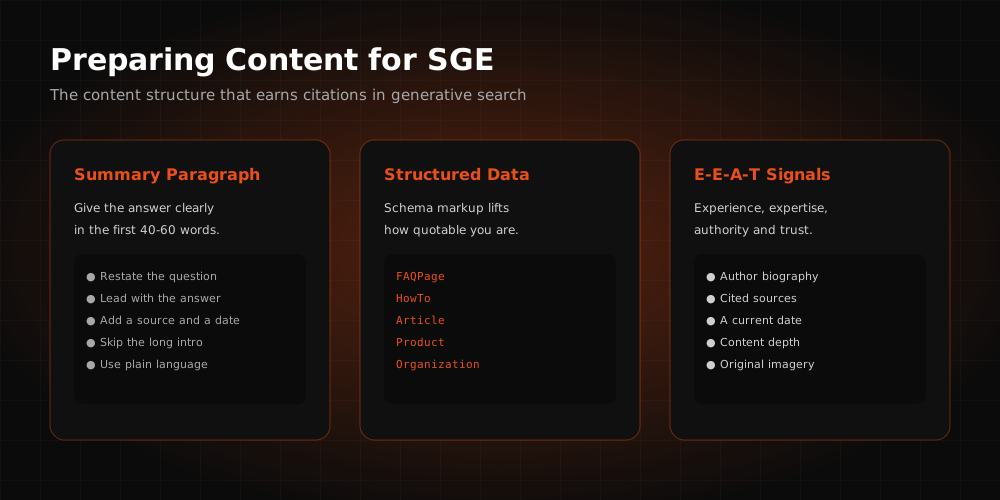
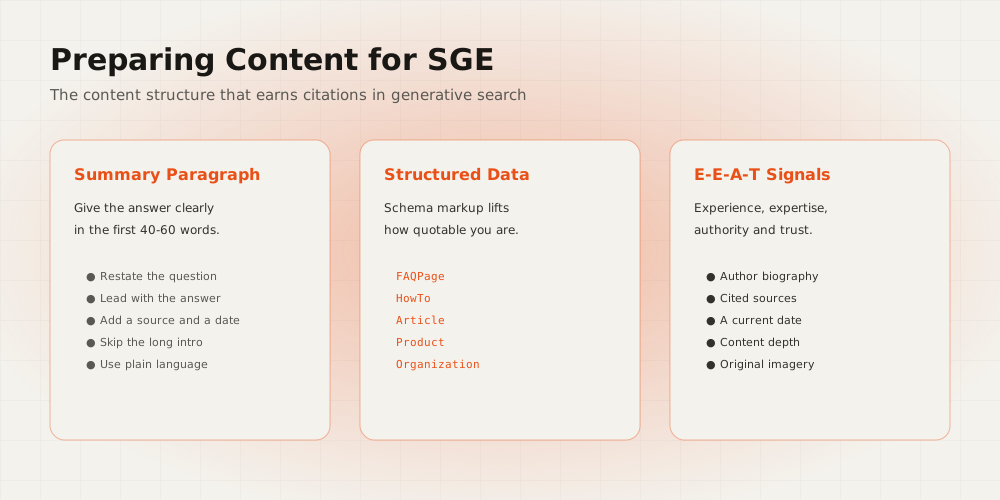
Instead of hunting for a special “quick hack”, success in AI search experiences comes from the fundamentals of quality, accessibility, and source trust. The approach Google recommends is producing helpful, reliable, original, people-first content that is technically accessible.
- Structure content around user intent.
- Use definition, example, step, table, comparison, and FAQ blocks.
- Check accuracy and freshness regularly.
- Strengthen expertise, experience, and source trust signals.
- Make sure pages are accessible for crawling and indexing.
- Use structured data for content clarity and eligible display surfaces; do not expect a special “AI schema”.
- For product, local business, and publisher content, keep Merchant Center, Google Business Profile, and the relevant Google surfaces up to date.
- Do not split content into unnecessary pages just to multiply query fan-out variations.
- Plan text, image, and video content together so it delivers real value to users.
A GEO-focused AI search checklist
- Are your important pages crawlable and indexable by Google?
- Are pages eligible to show snippets?
- Do robots.txt, noindex, canonical, and sitemap structures support clean source URLs?
- Does content offer short, clear, citable answer blocks for user questions?
- Are sub-topics, comparisons, and follow-up questions covered for query fan-out?
- Is structured data consistent with visible content?
- Are brand, author, product, service, and location entities clear?
- Does the content contain original experience, expert commentary, and current information?
- Are brand mentions and digital PR visibility tracked across third-party sources?
- Is AI search visibility measured through Search Console, Analytics, prompt testing, and competitor source analysis?
Misguided approaches to avoid
As AI search visibility grows, so do the quick-fix proposals around it. Not every proposal aligns with how Google actually works. Chunking content purely for AI systems, trying to win Google visibility through special files, manufacturing artificial mentions, or publishing low-value automated content does not produce sustainable results.
The right approach combines a strong technical foundation, people-first content, genuine expertise, reliable sources, brand authority, entity consistency, and measurable performance tracking.