What Is a GEO Specialist? How to Become One
Learn what a GEO specialist does and how to build a career in generative engine optimization, with the 8 core steps mapped out by the Webtures team.

In this guide we explain how to become a Generative Engine Optimization (GEO) specialist and how to plan your career around it in the AI era.
What is a GEO specialist?
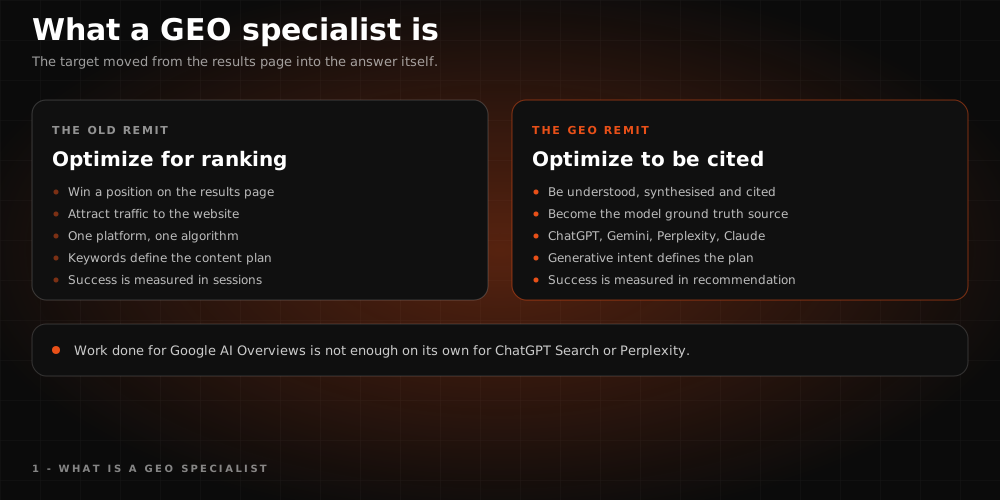
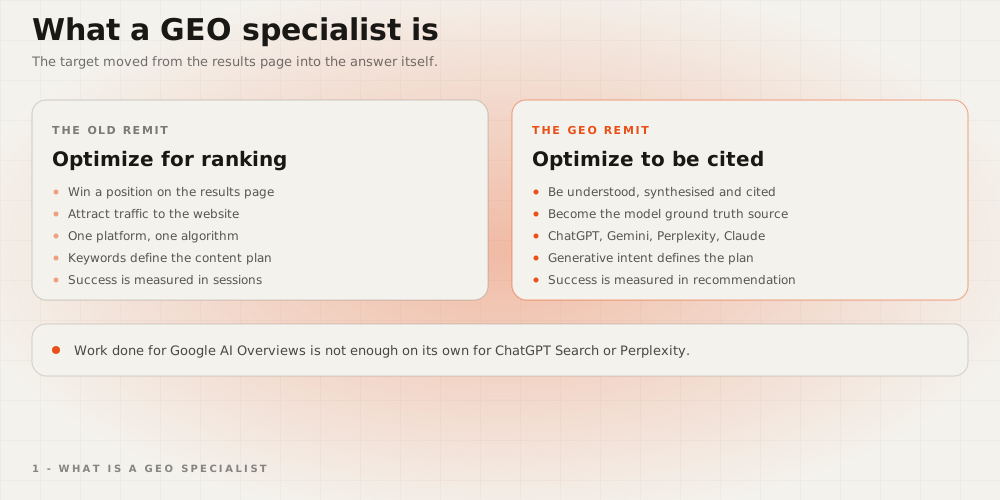
A GEO specialist is the person who grows a brand's visibility across large language models and AI-powered answer engines through an effective data and content strategy. Their job is to position the brand as the recommended source in ChatGPT, Gemini, Perplexity, and similar AI systems.
Put simply, a GEO specialist optimizes websites and digital assets not just to attract traffic, but to be correctly understood, synthesized, and cited by AI models. The goal is not visibility alone; it is becoming a trusted source inside the AI's answer-generation process.
An AI and answer engine specialist
GEO is not tied to a single platform; it is practiced across different AI models. Users now turn to answer engines such as ChatGPT, Perplexity, Claude, and Gemini to reach information.
Every AI model processes and presents information differently. Work done for Google AI Overviews may not be enough on its own for ChatGPT Search or Perplexity visibility. This is why the new generation of specialists works to position the brand not merely as a result, but as the AI's ground truth source.
How is GEO done?
- Opening the technical stack to AI agents: Making the website crawlable and understandable for AI bots. This covers
robots.txt, sitemaps, structured data, clean HTML, an accessible content structure, and where relevant, source-guidance files such asllms.txt. - LLM-friendly content: Arranging content around the way AI reads. Clear summaries, bullet points, question-and-answer formats, an explanatory heading structure, and easily chunkable information blocks all strengthen this process.
- Generative intent analysis: Analyzing what the user wants the AI to produce. Prompts such as “build me a plan”, “prepare a comparison table”, or “recommend the best option” should sit at the center of the content strategy.
- Schema and knowledge graph markup: Marking up the brand's pricing, inventory, services, products, organization, and expertise with Schema.org. This approach lets AI read your data cleanly instead of guessing at your brand.
- Vector context and internal linking: Connecting content semantically. For AI models to map the relationships between topics, the internal link structure should be designed like a knowledge network.
- Citation authority: Off-site visibility evolving from earning links to earning citations and references. Accurate brand presence on Reddit, Quora, G2, news outlets, industry reports, and trusted platforms builds AI source trust.
How do you become a GEO specialist?
Becoming a GEO specialist starts with mastering how AI models learn, synthesize, and select sources. The journey begins with learning to turn websites into readable datasets not only for users but for AI agents. A GEO candidate should treat the working principles of large language models, technical approaches such as llms.txt, and registering the brand as an entity in the knowledge graph as core disciplines.
Beyond technical skill, it is critical to focus strategically on generative intent and to analyze the commands users give AI. A successful GEO specialist manages brand reputation across trusted external sources, monitors how the brand is represented in AI answers, and regularly measures the contexts in which AI recommends the brand.
Which skills must a GEO specialist have?
A GEO specialist should be fluent in large language models, generative AI, answer engines, prompt analysis, AI visibility tools, generative-intent queries, citation building, on-model optimization, entity management, Schema.org, JSON-LD, and data analysis. They should also follow the sources AI systems treat as trust signals, including Reddit, Quora, industry reports, news outlets, and comparison platforms.
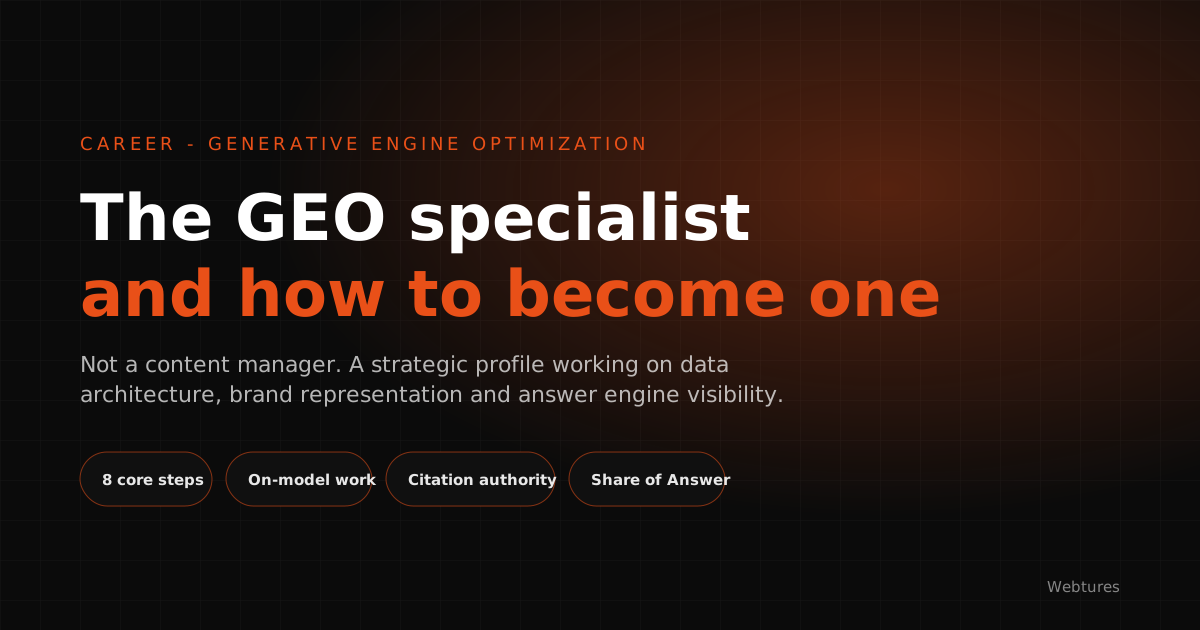
The skill list for a generative engine optimization specialist can be extended much further, but the real requirements are experience, analytical thinking, and the ability to solve problems within the probabilistic nature of AI. Today's GEO specialist is not merely a content manager; they are a strategic profile working on data architecture, brand representation, and answer engine visibility.
8 core steps to becoming a GEO specialist
If you want to become a GEO specialist but do not know where to start, these are the foundational steps of the profession:
On-model optimization
On-model optimization covers the work that makes a website and its data structure easier for AI models to read. llms.txt, schema markup, data hygiene, semantic chunking of content, and a clear information architecture are the building blocks of this step.
Citation authority
Citation authority work covers the citation and reference visibility that happens off-site. It evaluates the brand's presence in sources AI treats as trustworthy, its sentiment, and its share of answer compared with competitors.
Content and data optimization
Alongside technical audits, data-driven content work plays a major role. Here you analyze how readable the content is for AI, its knowledge graph connections, its citability, and the accuracy signals that reduce hallucination risk.
Prompt and intent analysis
Prompt research helps you understand the generation commands your current and potential users give AI. Instead of single keywords, the targets are answer sets that solve user problems and content that supports decisions.
AX (Agent Experience) optimization
A website should be designed for AI agents as well as people. Technical accessibility, clean code, structured data, and content architecture are optimized so agents can read the site quickly, accurately, and in context.
Share of Answer analysis
Throughout GEO work, you must accurately analyze how much space competitors occupy in AI answers. Choosing the wrong competitors or the wrong intents can derail the entire program. To make sense of these datasets and turn them into strategic insight, a specialist can lean on professional AI Visibility Tool technologies such as Brantial AI.
A GEO specialist must be patient
One of the most important things to remember about GEO is patience. GEO work does not lift your impact overnight; it takes time for an AI model to learn your brand, verify it across different sources, and recommend it in the right context. A GEO specialist should track data consistently, avoid rushed interpretations of change, and account for model updates.
Stay on top of GEO changes
GEO is not a fixed discipline, and its principles can shift over time. Large language models change their capabilities, data processing, and answer behavior throughout the year. Part of a professional GEO specialist's job is following these changes, model updates, system cards, and AI search news on a regular basis.
What are a GEO specialist's responsibilities?
The most important duties of a GEO specialist or manager are:
- Defining the generative content and data-feeding strategy.
- Running prompt research and Share of Answer analysis.
- Carrying out advanced on-model optimization work.
- Building citation authority and running digital PR.
- Optimizing website data and API connections.
- Continuously reviewing competitors' AI visibility.
- Increasing the conversion rate of qualified traffic arriving from AI.
- Advising on site structure and AX.
The benefits of becoming a GEO specialist
- Makes brands more visible in AI search results. By understanding how generative engines process content, a GEO specialist helps the brand get recommended more often across ChatGPT, Gemini, and Perplexity.
- Ensures LLMs interpret content correctly. Well-structured pages, a clear entity setup, and an LLM-friendly content flow raise the brand's chances of being cited in answers.
- Creates a forward-looking competitive advantage. As information seeking on AI platforms accelerates, a GEO specialist helps the brand move ahead of competitors in this new visibility arena.
- Strengthens strategic decision-making. Insights drawn from prompt volumes, LLM answer patterns, and intent analysis let the brand produce content and experiences better matched to its audience.
- Makes the brand's digital presence sustainable. Because the AI ecosystem changes fast, a GEO specialist tracks updates and keeps the brand consistently present across generative engines.
More impact with a GEO specialist
Being recommended for specific prompt groups and appearing as a source in AI answers increases qualified visits. Even when traffic volume is lower in some scenarios, a visitor arriving via AI often carries stronger decision intent.
Large organizations today are allocating bigger budgets to GEO. The reason is direct: positioning as a trusted source inside AI-assisted search experiences shapes brand perception, demand generation, and conversion quality.
A GEO specialist can act as a strategist who defines the roadmap, or as an active operator managing the brand's data architecture, content visibility, and AI answer representation. If you own a website and lack deep knowledge of AI visibility, working with a credible GEO specialist with verifiable references is the right move.