How to Do Keyword Research: The Shift to Prompt Analysis
Move from keyword research to prompt analysis: extract long-tail prompts, understand prompt volume, and measure GEO visibility with Brantial in this guide.

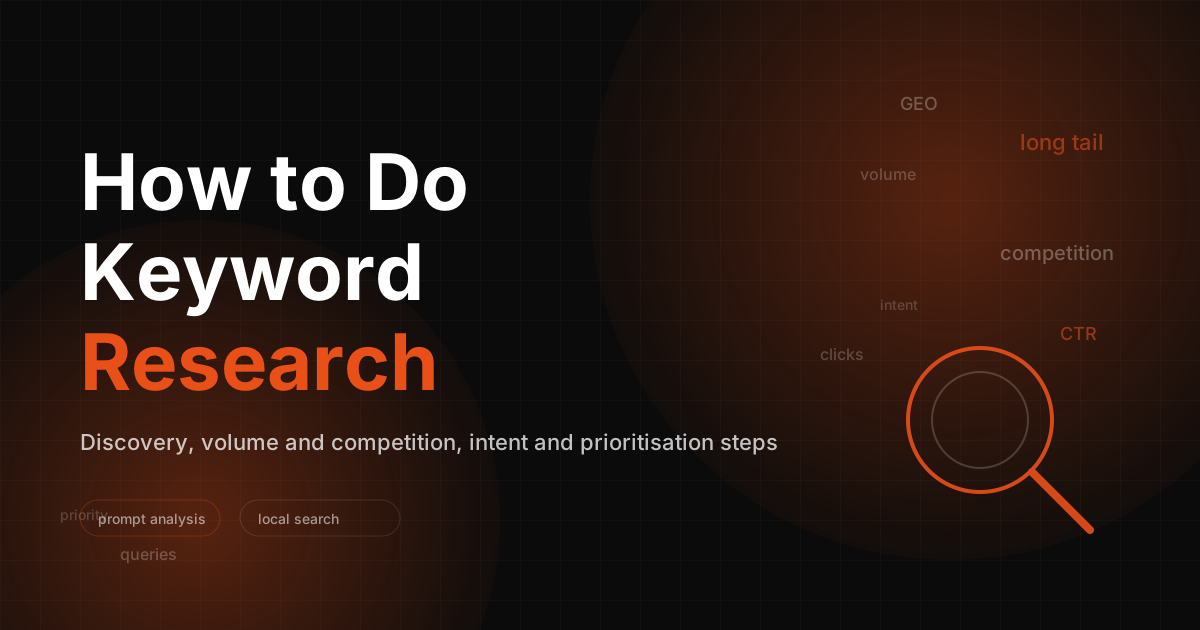
Search has evolved from individually typed keywords into questions asked in natural language. Instead of typing "mortgage interest rates", users now ask an AI "which bank offers the most suitable mortgage for my salary, and at what rate?" Classic keyword research is therefore giving way to prompt analysis. This is not a rupture but a handover: traditional keyword research still produces the raw data, and you convert that data into long-tail phrases and prompts. In this guide, we cover how to move from keywords to prompts, what prompt volume means, and Brantial, the tool we built to measure it.
What is prompt analysis, and what does prompt volume mean?
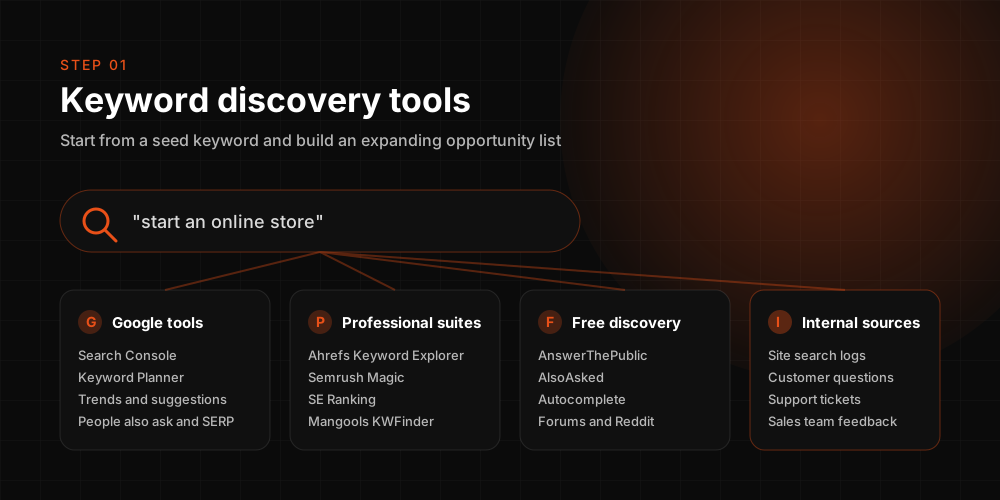
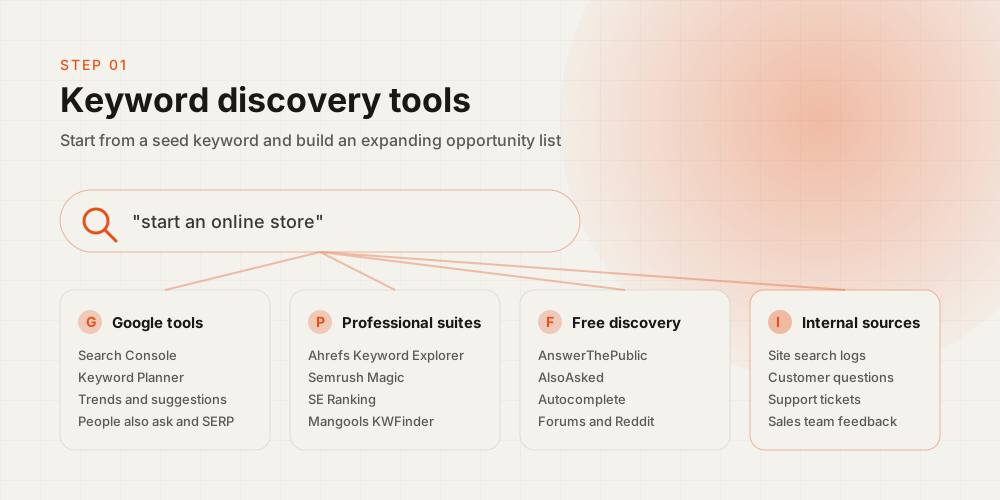
A prompt is a question a user asks in natural language on systems such as ChatGPT, Gemini, Claude, or Perplexity. Prompt volume is an estimate of how often a specific question is asked on these platforms each month. In short, prompt volume is the AI counterpart of search volume in classic search.
There is one important difference: search volume is measured directly, while prompt volume is still modeled. Because AI platforms do not publish their query data, these figures rely on estimation. Prompt volume points you in the right direction, but it is not enough to build a strategy on its own.
Why traditional keyword research is still the foundation
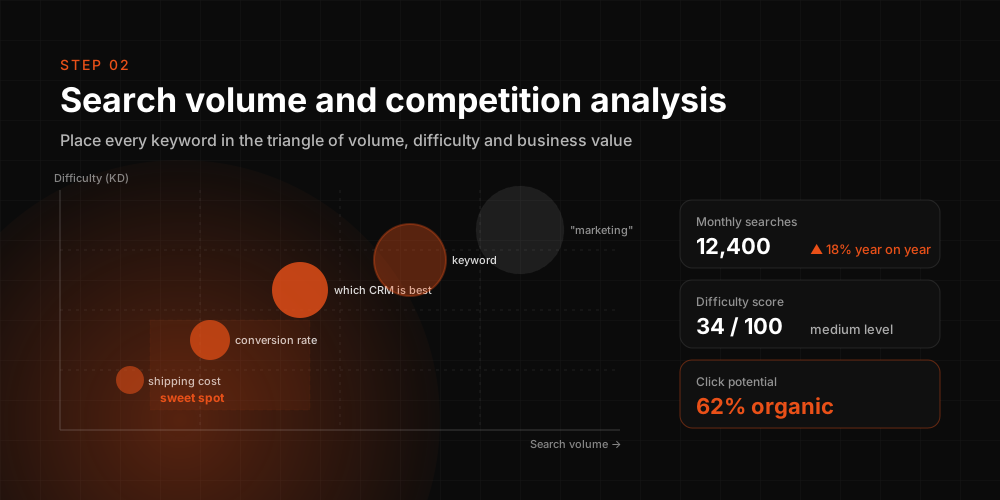
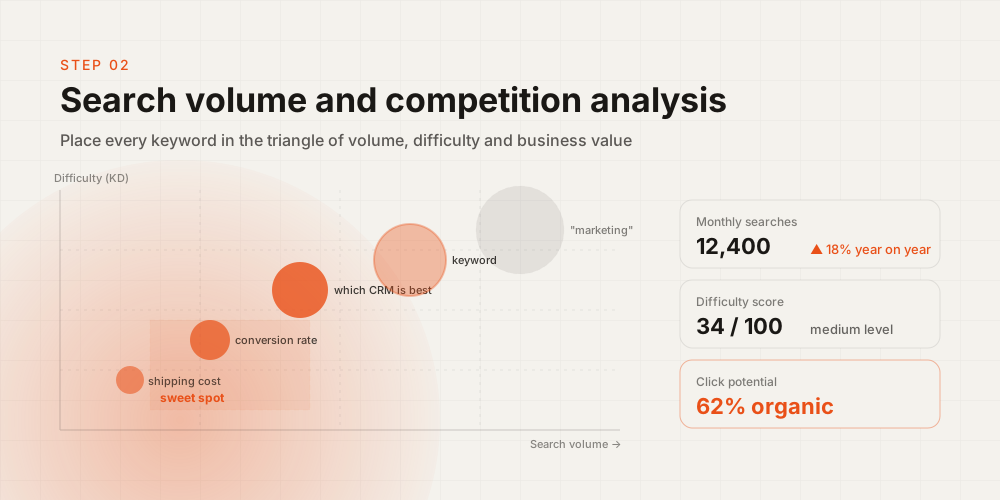
Most AI queries reflect the same underlying demand. If a user searches "best CRM software" on Google, they will most likely ask ChatGPT about the same need in a different sentence. That is why classic keyword research is the raw material of prompt analysis.
Keyword data gives you two things: which topics attract real demand, and the intent behind each search. In prompt analysis, the goal is to translate that demand into natural-language questions and contexts.
Extracting long-tail phrases and prompts from keywords
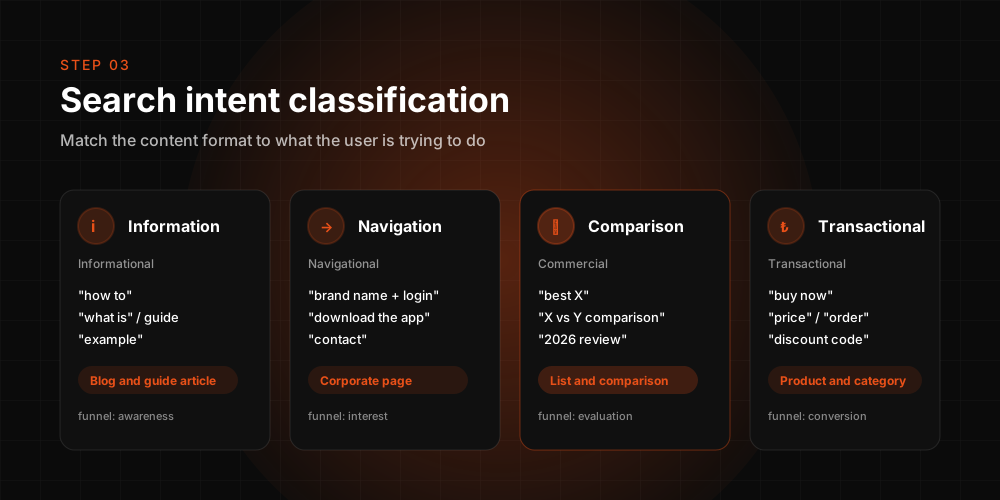
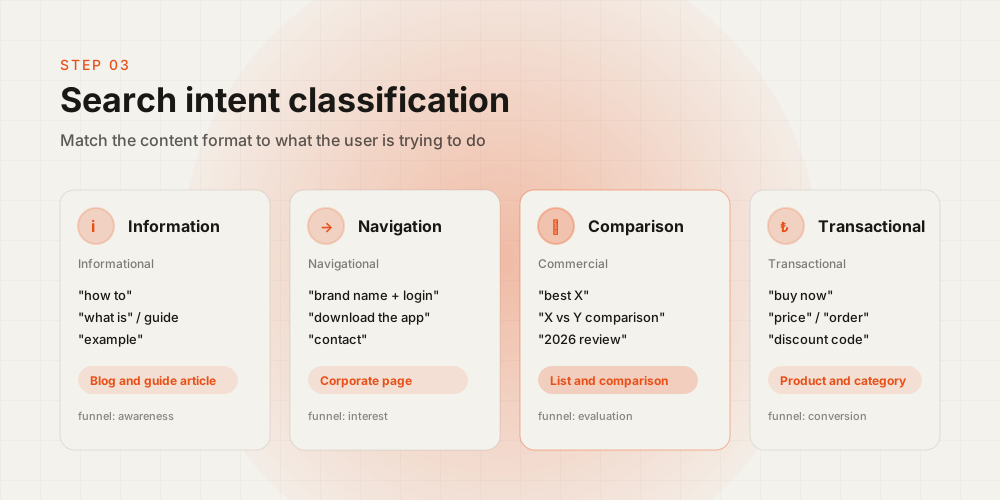
The classic methods you already use are sources for generating prompts. You can build the bridge as follows:
- Autocomplete, related searches, and "People also ask": These Google features directly surface the questions users ask in natural language. They are the closest signals to a prompt.
- Long-tail keywords: Long-tail phrases ("first-time buyer mortgage requirements at low rates") convert into a natural-language prompt far more easily than short, generic terms ("mortgage").
- Google Trends and Keyword Planner: These show the demand and seasonality of a topic. They remain the classic baseline for validating which prompts carry real volume.
- The intent layer: Sort every keyword into intents such as informational, comparison, or transactional; then turn each intent into a question. "best X" becomes a comparison prompt, while "how to do X" becomes an informational prompt.
In practice, the process is this: find the keyword, identify its intent, phrase it as a natural-language question, then add the follow-up questions it evokes. This way, a single keyword produces an entire prompt cluster.
How to use prompt volume, and how not to
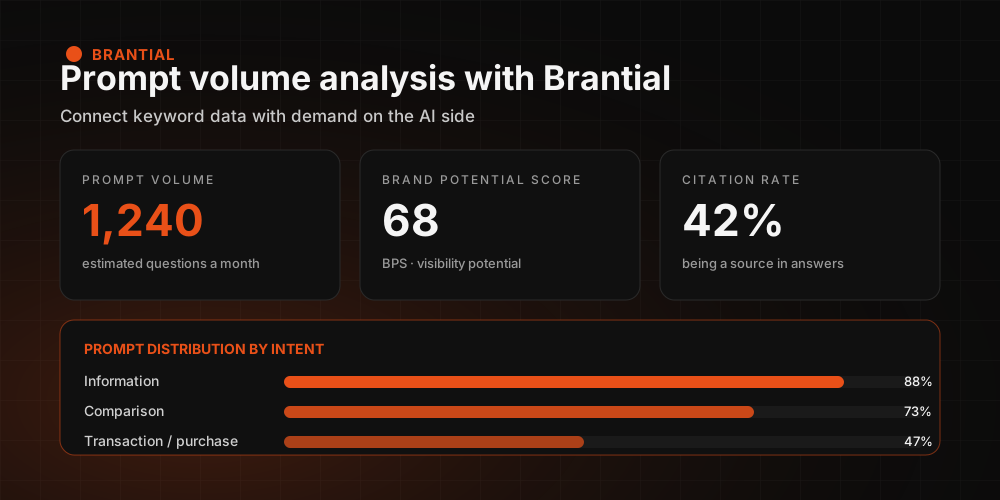
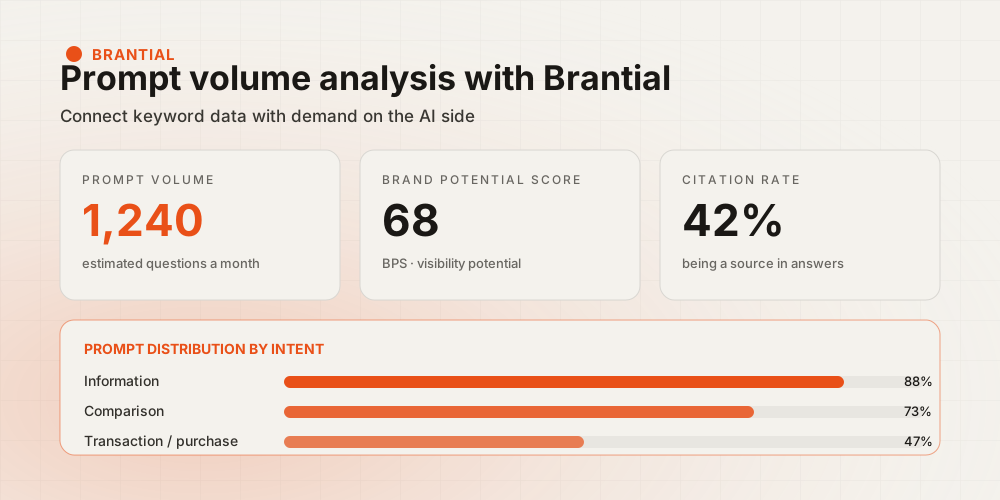
Prompt volume is a strong directional signal, but not a metric to chase blindly. A study published in early 2026, which tested 2,961 prompts with 600 participants, found that the probability of two answers to the same question listing the same brands was below 1 percent. AI answers change with the user, the moment, and the context.
The right approach is to read three data sets together:
- Keyword volume (classic search demand),
- Prompt volume (estimated demand on the AI side),
- The real questions and pain points of your ideal customer profile.
The strongest signal is not an estimate modeled by a tool; it is the question your customer actually asks. Prompt volume completes that picture, but never defines it alone.
Prompt and query volume analysis with Brantial
Classic keyword tools cannot see demand on the AI side. The AI Search Visibility module in Brantial fills exactly that gap and makes prompt analysis measurable:
- Prompt volume: Shows what users in your industry ask AI systems and the estimated demand behind those questions.
- Brand Potential Score (BPS): Summarizes your brand's visibility potential across these prompts.
- Intent and competition layer: Breaks down the intent behind each prompt, the level of competition, and country targeting.
- Source breakdown and competitor benchmarking: Shows which sources AI systems cite for these prompts and where your competitors stand out.
You can then place your keyword data next to Brantial's prompt data and see clearly which questions you own and where you fall short.
The Webtures approach
Keyword research is not finished; it has matured. The right method today is to draw on classic keyword data to extract natural-language prompts, then measure them alongside AI visibility. At Webtures, we combine traditional search demand with prompt analysis, content architecture, and measurement discipline, so your brand stays visible both in classic search and in AI answers. Explore our Generative Engine Optimization (GEO) service for the details, or continue with our guide on how to earn citations in AI search.