How to Increase Domain Authority and What It Does for Brand Awareness
Domain authority describes how trustworthy, citable and topically strong a website is perceived to be within the digital ecosystem. In the past, the concept was mostly evaluated through backlink scores or tool metrics.

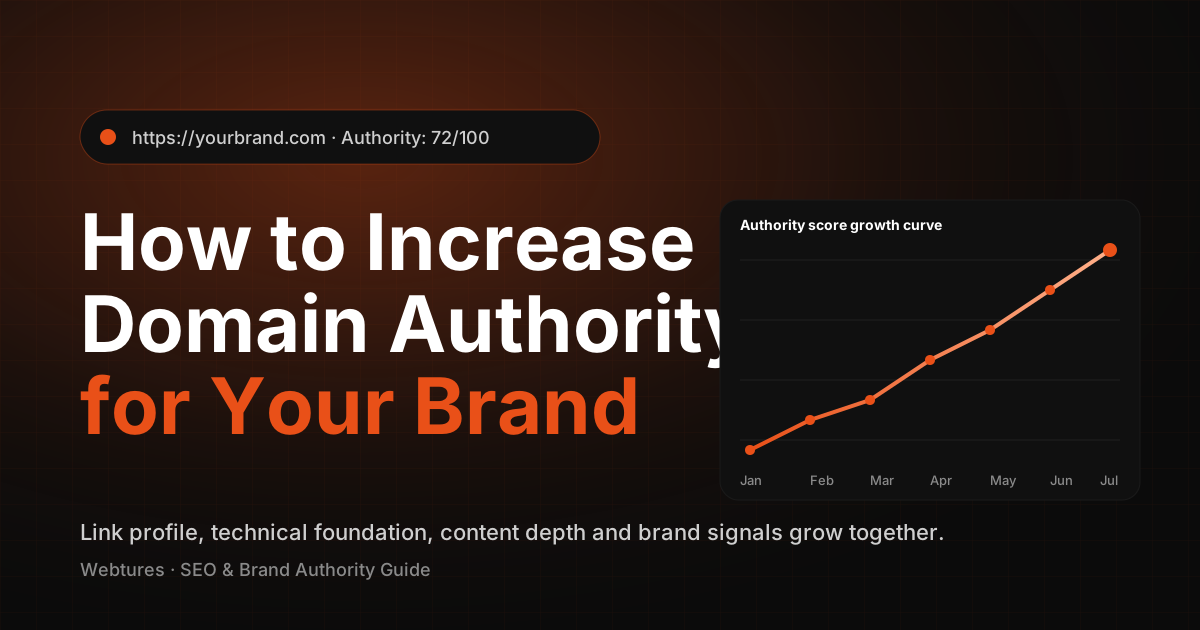
Domain authority describes how trustworthy, citable and topically strong a website is perceived to be within the digital ecosystem. In the past, the concept was mostly evaluated through backlink scores or tool metrics. Today, viewed through GEO and AI Search, it carries a much broader meaning. A domain's authority should be assessed alongside quality references, brand mentions, entity clarity, content accuracy, technical accessibility and the potential to be used as a source by answer engines.
That is why domain authority cannot be explained by asking "what is your DA?" or "what is your DR?". The scores from tools like Moz, Ahrefs and Semrush are valuable for comparative analysis, but whether the brand appears in AI answers, gets mentioned by trusted sources, produces citable content and delivers clear answers to user questions is part of the authority assessment too.
What is domain authority?
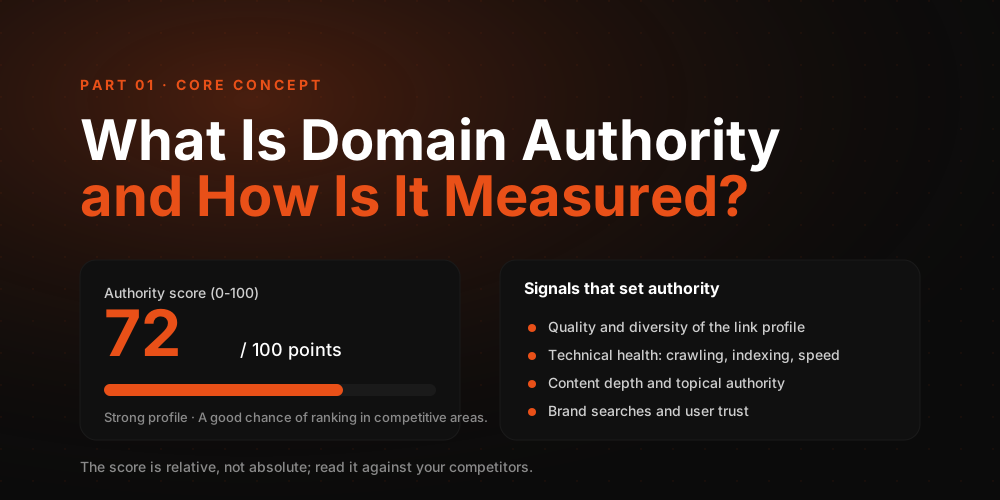
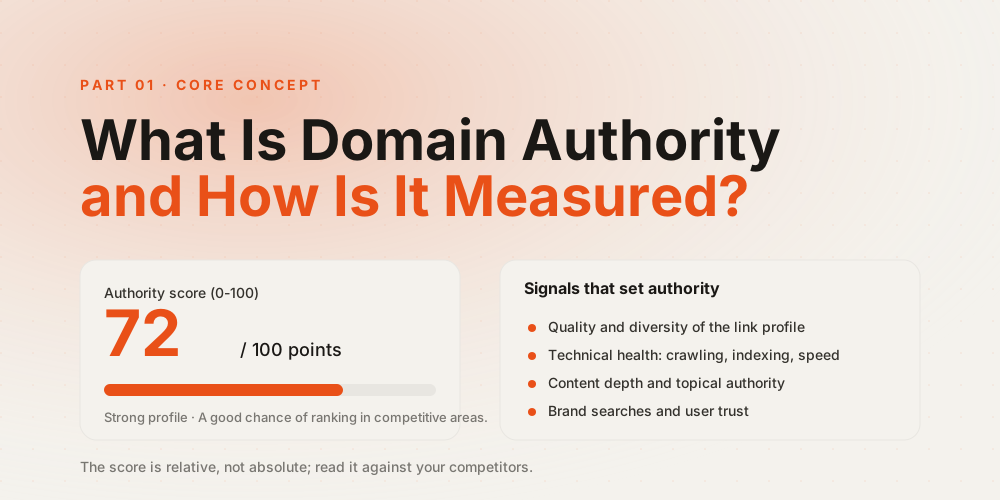
Domain authority is a general evaluation approach for understanding how strong a digital resource a website is within a specific topic, industry or service area. The evaluation interprets many signals together: the links a domain earns, the quality of those links, the trustworthiness of its content, brand awareness, technical structure and visibility across third-party sources.
Here is the critical point: domain authority is not a single, official score published by Google. Metrics like DA, DR or Authority Score are comparative scores produced by third-party tools using their own databases and models. These scores can be useful indicators, but they should never be treated as a guarantee of success, trust or visibility on their own.
The difference between Domain Authority, Domain Rating and Authority Score
The metrics you will encounter most often in domain authority analysis are Moz Domain Authority, Ahrefs Domain Rating and Semrush Authority Score. They serve similar purposes but do not measure the same thing.
- Domain Authority (DA): A 1-100 metric developed by Moz that attempts to predict how well a domain can compete in search results.
- Domain Rating (DR): Ahrefs' metric showing the relative strength of a website's backlink profile on a 0-100 logarithmic scale.
- Authority Score: A composite authority metric used by Semrush that evaluates backlink strength, estimated organic traffic and spam indicators together.
These metrics can be used for competitor comparison, backlink quality evaluation and authority trend tracking. But from a GEO perspective, the real goal is not just to raise the score. It is to make the brand a trustworthy, consistent, citable source on specific topics that AI systems can understand.
Why does domain authority matter for GEO?
In GEO work, domain authority is one of the trust layers that influences whether a brand gets selected as a source in AI-powered answer systems. When AI Search systems generate an answer, they weigh more than the text on the page: the credibility of the source, the accuracy of the content, the brand's relationship to the topic, third-party references and whether the content is technically accessible all matter.
Strong domain authority makes it easier for a brand to be associated with a specific topic cluster. If a brand consistently appears in industry reports, news sources, expert content, comparison articles and trusted directories, that supports both user trust and how AI Search systems perceive it as a source.
At this point, domain authority needs to answer three fundamental questions:
- On which topic is this domain seen as a trusted source?
- How do third-party sources mention the brand in relation to that topic?
- Can AI crawler types and answer engines technically access this content and understand it in the right context?
The core signals that shape domain authority
The signals that shape domain authority go well beyond backlink counts. Quality links still matter, but the current approach evaluates topical relevance, source trust, brand mentions, content quality, technical accessibility and entity consistency together.
Backlink and referring domain quality
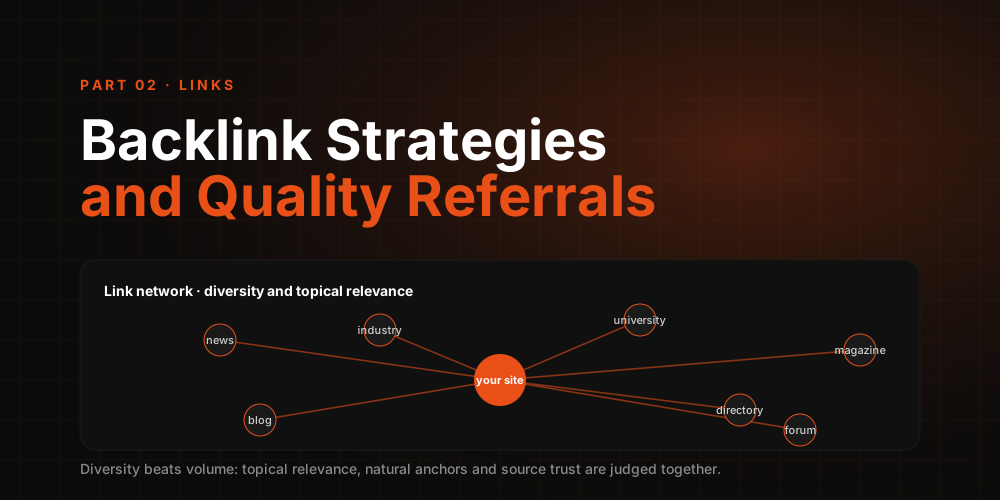
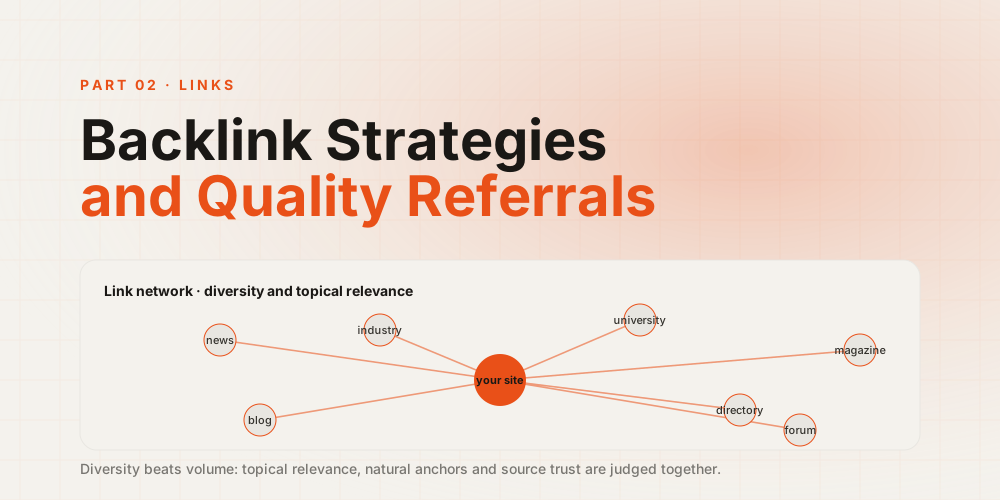
The backlink profile remains one of the strongest indicators of domain authority. But the deciding factor is not raw link volume. The trustworthiness of the linking site, its relevance to your industry, its traffic potential, its editorial quality, the anchor text structure and how natural the link looks all need to be weighed together.
Links earned from sources in the same industry, with a real audience, high publishing standards and a correct contextual reference to the brand are worth more. Irrelevant, low-quality or manipulative links may move tool scores in the short term, but over time they weaken the trust signal.
Brand mention and citation signals
Domain authority should now be considered alongside unlinked brand mentions, not just linked references. When a brand consistently appears in trusted publications, industry reports, expert lists, news, podcast notes or research content, its perceived digital authority strengthens.
Citation signals matter especially for GEO. For a brand to be preferred as a source in AI answers, its name, area of expertise, service category, location and core value proposition need to appear consistently across different sources.
Entity clarity and topical authority
Entity clarity helps AI Search systems understand a brand, person, product or organization in the right context. The brand name, founder information, service area, areas of expertise, address, social profiles, author information and third-party profiles all need to stay consistent.
Topical authority, meanwhile, comes from producing comprehensive and consistent knowledge in a specific field rather than surface-level coverage. Topic clusters, guides, comparisons, data-driven content, case studies and frequently updated knowledge pages support authority far more strongly than isolated blog posts.
Content quality, freshness and E-E-A-T
Content quality is the sustainable side of domain authority. Content that is accurate, current, directly answers the user's question, demonstrates expertise and cites sources where needed has far greater potential to earn references.
The E-E-A-T approach matters here. Content needs to carry experience, expertise, authoritativeness and trust signals: clear author information, claims backed by sources, visible update dates and genuine decision support for the user.
Technical accessibility and AI crawler compatibility
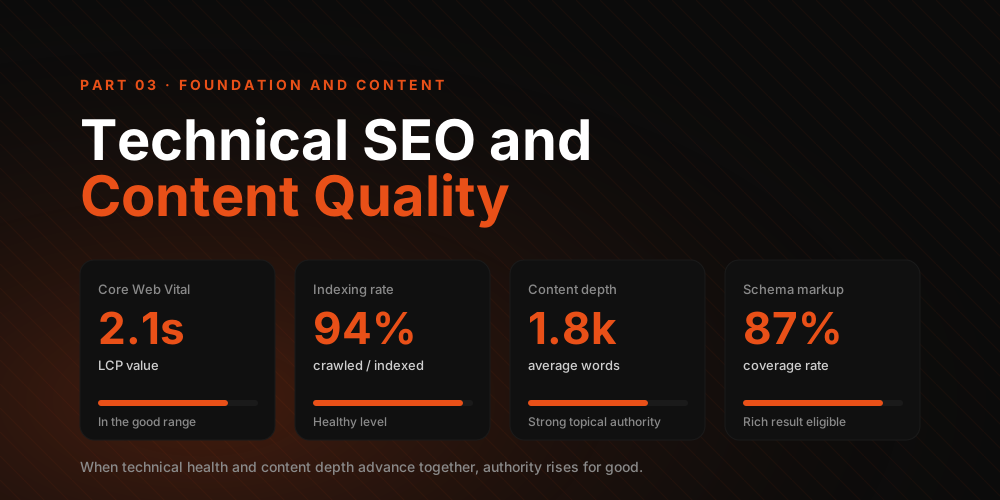
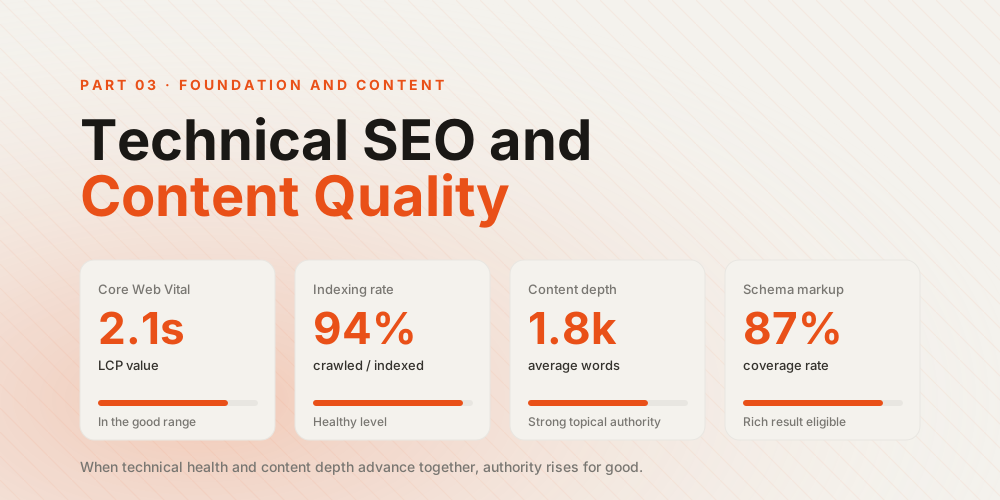
Strong content and a quality backlink profile may not deliver the expected impact if technical accessibility is weak. Robots.txt, noindex, canonicals, sitemaps, redirects, JavaScript rendering, server responses, structured data and internal link architecture should be checked regularly.
AI crawler types and classic crawler systems need to reach the main body of the content, correctly understand the page's source URL and find consistency between structured data and visible content. Pages that are blocked, slow to load or incorrectly canonicalized weaken source selectability.
How do you strengthen domain authority?
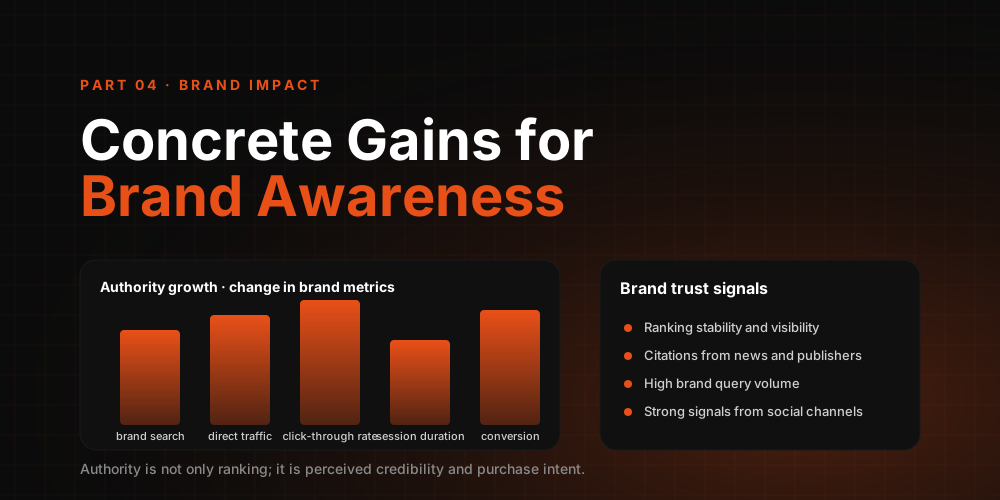
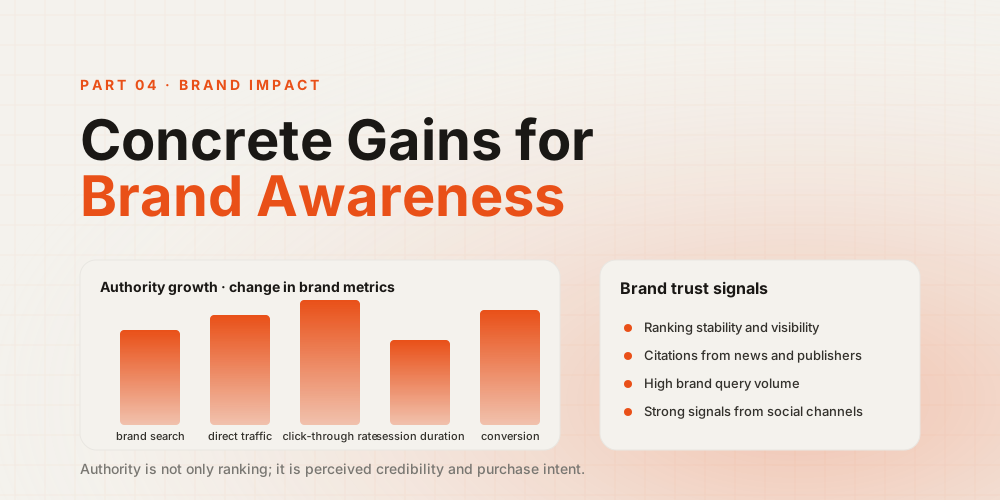
Strengthening domain authority means managing link earning, content production, technical structure, brand visibility and GEO signals together. A healthy strategy goes beyond raising tool scores and positions the brand as a trusted source on specific topics.
Earn quality, relevant backlinks
Earning quality backlinks is one of the foundations of domain authority. Expert content in industry publications, research reports, data-driven resources, case studies, guides and digital PR work all serve this purpose.
The goal of link earning should never be manipulating scores. The right approach is producing content that genuinely deserves to be referenced and letting that content gain natural visibility across relevant sources.
Increase digital PR and third-party trust signals
Digital PR is a powerful lever for both domain authority and GEO visibility. News coverage, industry lists, expert commentary, success stories, research outputs and data reports help the brand get mentioned more credibly across third-party sources.
These publications should clearly state the brand name, category relationship, service scope and area of expertise. That way you earn more than links: you strengthen the entity signals that help AI systems match the brand to the right topic.
Build citable content assets
The most valuable content for domain authority is content others want to cite. Research, benchmark reports, industry statistics, original charts, templates, checklists, glossary content and comprehensive guides all serve this goal.
From a GEO perspective, these assets should be built in an LLM-readable structure. Clear definitions, short answer blocks, tables and lists, current data, source links, expert commentary and summary sections help AI systems understand the content more easily.
Strengthen topic clusters and internal link architecture
Working with topic clusters instead of isolated content pieces generates expertise signals for the domain in a specific field. Core guide pages, supporting subtopic content, comparison articles, use cases and question-focused content should be connected through logical internal links.
Internal link architecture helps both users and crawler systems understand topic relationships. Important pages should never be orphaned, anchor text should stay natural and descriptive, and the category-service-blog relationships should be clearly established.
Audit technical health regularly
For domain authority to be sustainable, the technical structure needs regular checks. 404/410 errors, redirect chains, incorrect canonical usage, faulty noindex tags, broken sitemap files, slow server responses and structured data inconsistencies can all erode the authority effect.
In technical audits, producing an error list is not enough. Each issue should be prioritized by its impact on source URL clarity, crawler access, user experience, internal link flow and AI Search source potential.
Keep brand profiles consistent
Brand profiles are important trust signals supporting domain authority. Brand information should stay consistent across Google Business Profile, social media accounts, industry directories, news profiles, author pages, company pages and third-party platforms.
Inconsistencies between the brand name, website URL, description text, service category, location, logo, contact details and social links can weaken entity perception. A consistent profile structure supports both user trust and the brand-topic matching done by AI Search systems.
How do you develop domain authority through competitor analysis?
Competitor analysis for domain authority should not be reduced to finding the sites your competitors get links from. Take the wider view: analyze which sources mention your competitors, which of their content earns references, which topic clusters they are strong in and in which contexts they appear in AI answers.
Examine competitor backlink profiles
With tools like Ahrefs, Moz and Semrush you can analyze competitors' referring domain sources, anchor text distribution, most-linked pages, lost and gained links, spam signals and topical relevance.
The goal of this analysis is not to copy a competitor's links one by one. The real value is identifying which publication types generate trust in your industry, which content formats earn references and where your brand can become the stronger source.
Map competitor mention and citation sources
Look at competitors' unlinked mentions, not just their linked references. News sources, industry lists, podcast content, comparison articles, company directories and community platforms can all produce important signals for brand authority.
Mapping these sources reveals which platforms your brand is missing from, which topics it needs stronger association with and which digital PR angles can win visibility.
Check competitor visibility in AI Search answers
GEO-focused competitor analysis should also check AI Search answers using different prompt and query sets. Note which questions competitors get cited for, which product or service categories they get associated with, which sources feed those answers and which claims they position around.
This work makes the domain authority development process more strategic, because the brand focuses on becoming visible and trusted in answer engines, not just in tool scores.
Mistakes that weaken domain authority
Some of the tactics used to raise domain authority produce short-term score movement but long-term trust loss. Authority work should be built on sustainable trust, not manipulation.
Buying spam backlinks
Low-quality, irrelevant, artificial or mass-produced links create risk instead of strengthening domain authority. Google's spam policies explicitly classify link practices aimed at manipulating rankings as risky behavior.
A healthy backlink profile is built on topical relevance, editorial value, natural anchor text distribution, trusted sources and a real audience.
Chasing scores
Over-focusing on metrics like DA, DR or Authority Score leads to the wrong priorities. A domain can carry a high score, but if its content is outdated, the brand is poorly positioned, technical access is broken or user trust is low, the real authority effect stays limited.
Use scores as decision-support data. The real targets are topical authority, trusted source visibility, quality traffic, conversions and AI Search source selectability.
Publishing copied, thin or outdated content
Copied or thin content erodes a domain's perceived expertise. Stale statistics, outdated methods, unverified claims and repetitive pages reduce both user trust and the potential to be used as a source by answer engines.
Audit content regularly: refresh outdated information, improve weak pages, consolidate similar content and strengthen the citable blocks.
Ignoring technical access
Incorrect robots.txt rules, faulty noindex usage, broken canonical structure, missing sitemaps, redirect chains, server errors and main content that loads late through JavaScript can all reduce the visible impact of domain authority.
In GEO-focused work, technical access is not just a crawlability issue. It is a baseline requirement for AI crawler types to see the content, understand the source URL and place the content in the right entity context.
How should domain authority be measured?
Domain authority should never be measured with a single score. DA, DR and Authority Score trends can be tracked, but the data needs to be interpreted alongside brand visibility, backlink quality, citation signals, user behavior and AI Search performance.
Metrics to track
- DA, DR and Authority Score trends
- New and lost referring domain counts
- Topical relevance and trust level of backlink sources
- Spam or manipulative link indicators
- Growth in brand mentions and citations
- Changes in branded search demand and direct traffic
- Referral traffic and conversion contribution
- Internal link and backlink distribution of key content
- Brand and source visibility in AI Search answers
- Technical accessibility, index status and structured data consistency
The difference between DA and PA
DA expresses the overall authority potential of a domain, while PA shows the authority potential of a specific page. A domain can be strong overall, but if a specific page lacks sufficient internal links, content depth or reference support, it may not earn the visibility you expect.
From a GEO perspective this difference matters even more. AI Search systems usually evaluate the single page best suited to a question as the source, not the whole domain. So beyond domain-level authority, you need to increase the source strength of your strategic pages.
A GEO-focused domain authority checklist
- Are the brand name, service area and category relationship consistent across all digital profiles?
- Can AI crawler types access your key content?
- Do robots.txt, noindex, canonicals and sitemaps support source URL clarity?
- Is the brand mentioned in the right context by trusted third-party sources?
- Are backlink sources industry-relevant, editorial and natural?
- Is the content citable through short answers, definitions, tables, FAQs and source blocks?
- Are author, organization, product and service entity details clear and consistent?
- Is outdated content refreshed regularly?
- Are competitors' AI Search visibility and citation sources being monitored?
- Are authority metrics interpreted together with traffic, conversions and source visibility?