GEO for Real Estate and Investment Brands
Learn what real estate and investment brands must get right in GEO, from schema markup to AI visibility monitoring, with this practical Webtures guide.
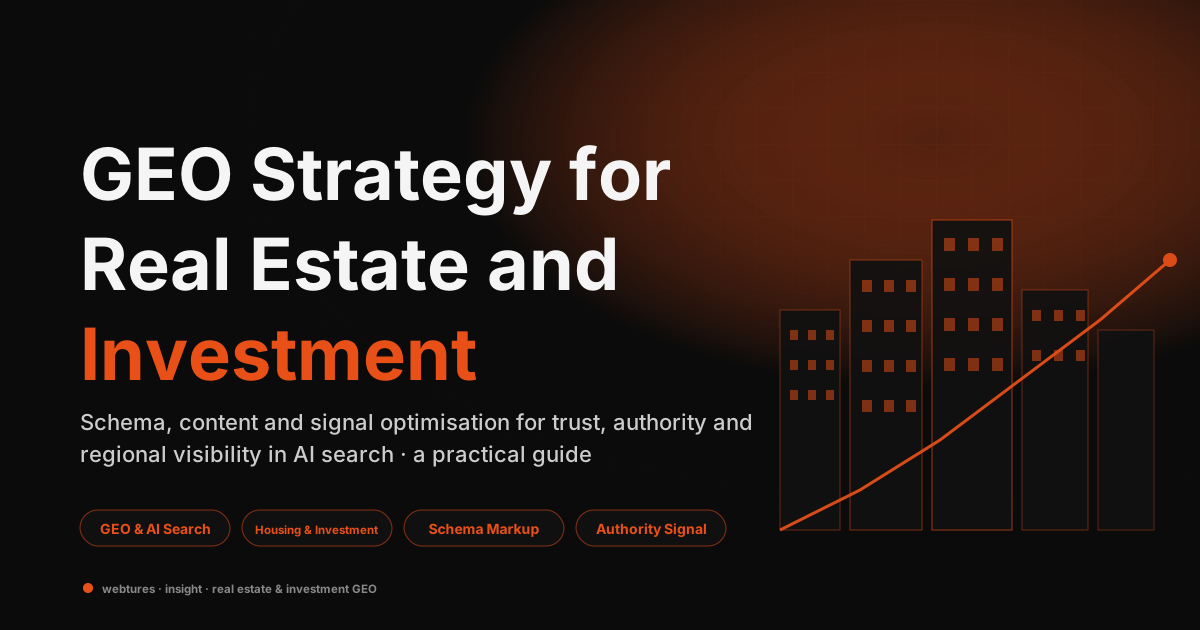

Post-pandemic economic shifts and global inflation have turned real estate from a basic housing need into a strategic wealth-preservation asset. As interest from both local and international investors grows, particularly in the Turkish market, the rules of digital competition have changed quietly but fundamentally.
According to Gartner, traditional search engine volume is expected to drop by 25 percent by 2026. Instead of getting lost among links in classic search engines, investors now consult AI assistants like ChatGPT, Gemini, and Perplexity. The era of "apartments for sale in Istanbul" is closing; the AI era begins with questions like "Which districts hold their value against inflation and pay back in under 15 years?"
For real estate brands in this new era, the answer lies in GEO (Generative Engine Optimization) strategies that go beyond classic SEO.
Not competitor analysis, but "data source" analysis
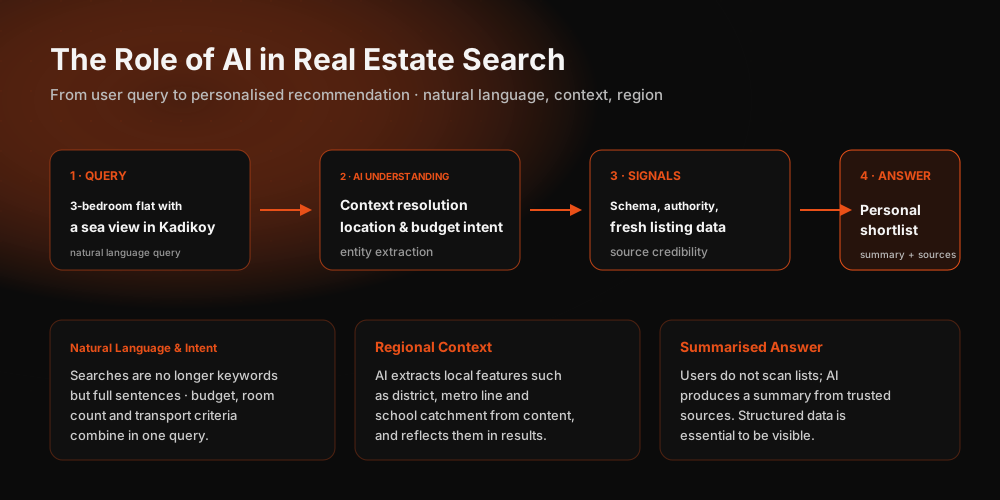
In traditional digital marketing the competitors are obvious: massive listing platforms and other construction and real estate brands. In the GEO world, however, competition is not about who captures the traffic; it is about who the AI cites as a reference.
Large language models (LLMs) generally treat listing portals as mere "aggregators". Your advantage as a real estate brand is the ability to become a topical authority. When an AI produces an in-depth analysis of a district's investment potential, it does not cite shallow listings; it cites expert brands that publish data-driven reports and truly know the area.
The goal of the new strategy is therefore to get AI algorithms to recognize your brand as a trusted source of information.

From keywords to user intent
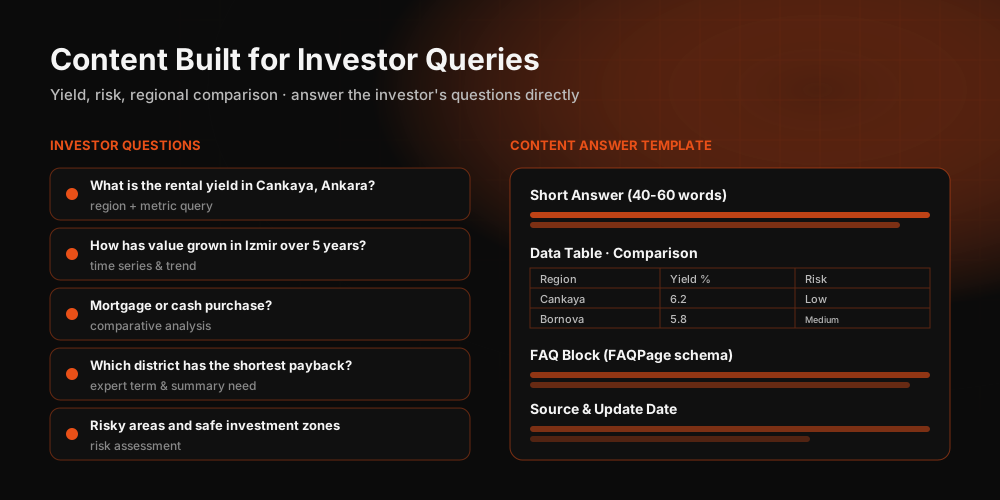
Where the old playbook centered on keywords like "luxury villa", GEO strategy centers on prompt engineering and user intent. Investors no longer search for phrases; they negotiate solutions to their problems.
AI assistants excel at interpreting user intent, so your content strategy must give clear answers to questions such as:
-
"What are the legal steps for projects eligible for citizenship by investment?"
-
"In which locations does the rent multiplier favor the investor?"
Structure your content to answer these complex prospect questions with direct, precise, statistically supported responses. In the zero-click world, when the AI lifts the answer from your site and hands it to the user, your brand's digital reputation and recognition grow.

Structured data markup: a common language with AI
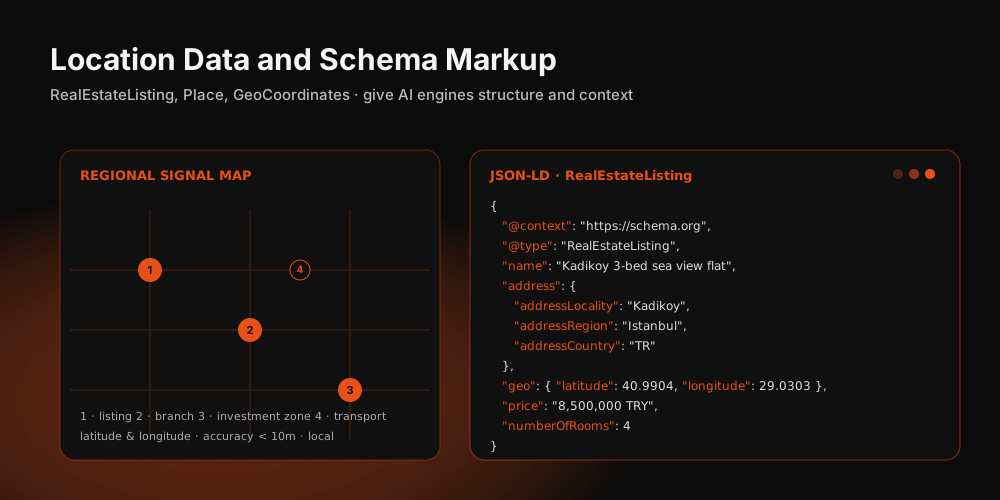
The most reliable way to communicate with AI models is to speak their native language: schema markup (structured data). The technical structures critical to GEO success in real estate are:
1. Event schema
Mark up your project launches, open house days, and webinars with Event Schema. When an investor asks their AI assistant "Is there a project launch I can visit this weekend?", the assistant can recommend your event with the date and time.
2. Organization schema
In a sector built on high-value investments, trust is everything. Encoding your brand's address, tax ID, awards, and contact details with Organization Schema ensures AI recognizes your brand as a verified entity rather than a potential hallucination.
3. FAQ schema
Marking up the questions on investors' minds, such as "Who pays the title deed fees?" and "What are the current mortgage rates?", with FAQ Schema on your project pages maximizes the chance that AI cites your site directly when generating an answer.
Measurement: AI visibility monitoring
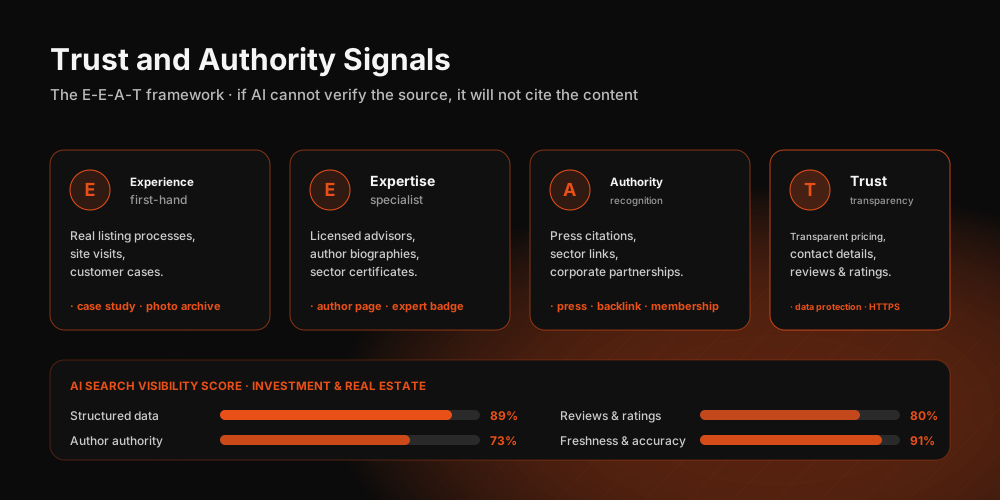
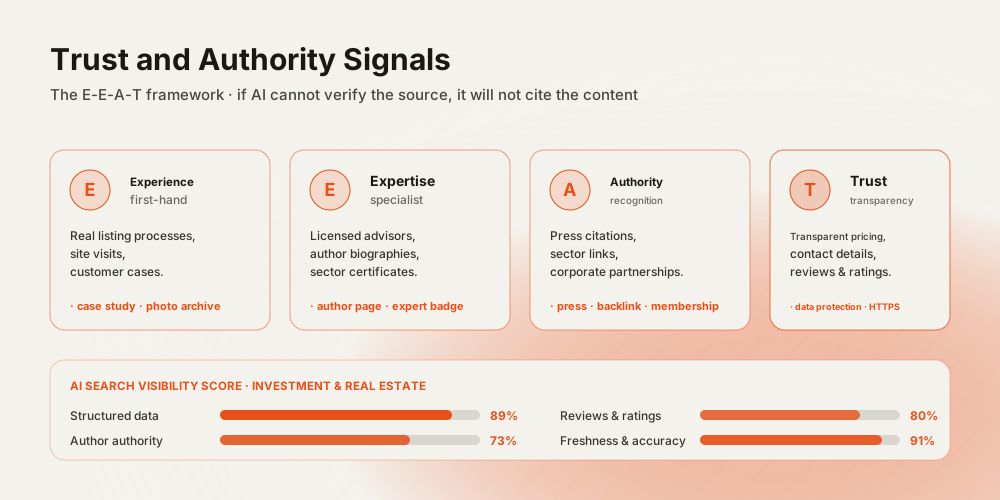
Classic SEO asked "Where do I rank on Google?" In the GEO world the real question is: "How is AI talking about my brand?"
To measure success in this new era, put AI Visibility Monitoring processes in place. Track which investment questions surface your brand, your share of answers compared to competitors, and the sentiment AI attaches to your brand.
In the AI era you cannot optimize what you cannot manage. The way to remove that uncertainty is a data-driven monitoring infrastructure. Brantial, the technology we use within the Webtures ecosystem, takes your brand's digital pulse inside AI models, revealing with hard data which questions you answer and how AI encodes perception of your brand. Running strategy on this visibility intelligence rather than intuition delivers an unfair competitive advantage.
Real estate is one of the sectors experiencing digital transformation the fastest. The goal is no longer just to appear in search results; it is to be the project an investor's smart assistant recommends with confidence. Brands that put GEO strategies into practice today will position themselves in tomorrow's real estate market not as one option among many, but as the single source of truth.
Growth & GEO