The Shopify GEO Strategy Guide
Turn your Shopify store into a trusted data source for AI assistants with eight GEO strategies covering schema, reviews, brand mentions and 301 hygiene.

Shopify offers one of the strongest data foundations for building an e-commerce ecosystem in the AI era. When you launch an online store today, the goal is no longer just to be listed on search engine results pages (SERPs); it is to become the single correct answer that AI assistants like ChatGPT, Perplexity, Gemini and Claude serve to their users.
At Webtures, we go beyond the traditional SEO playbook to examine how your brand can become a cited authority inside generative engines. Below, we have compiled the critical GEO (Generative Engine Optimization) strategies for turning your Shopify store into a data source aligned with the 2026 vision.
Shopify and AI-driven visibility (GEO)
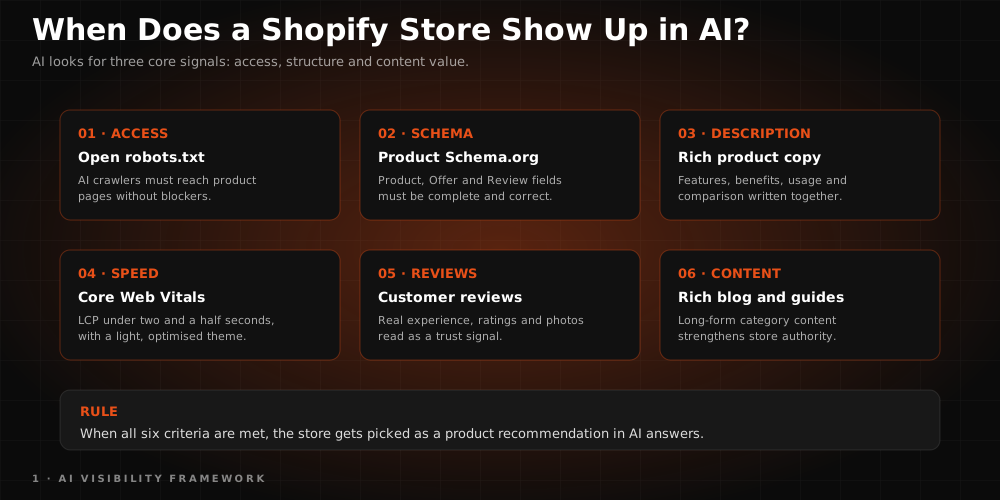
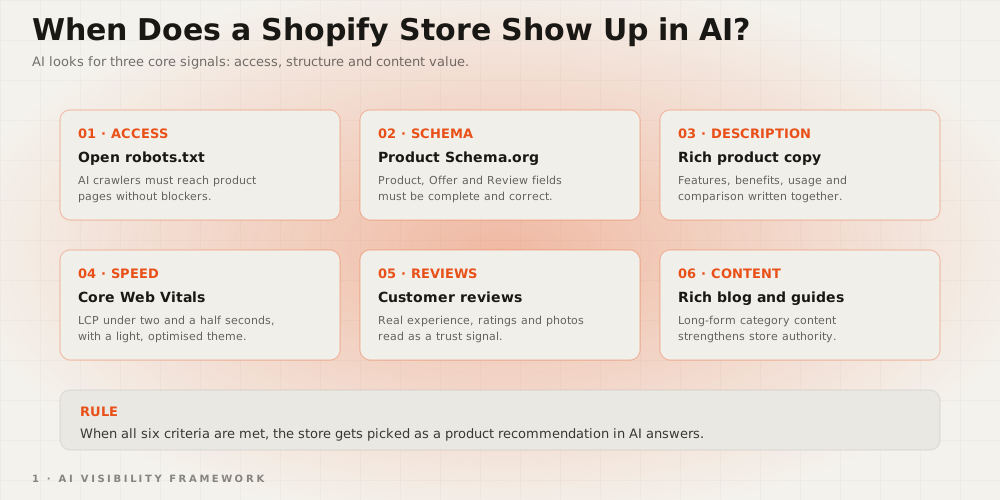
Thanks to the structured-data flexibility it offers, Shopify lets you position your store not just as a sales channel but as a clean information source for Large Language Models (LLMs).
When AI assistants answer user questions like "Which is the most durable running shoe?", they crawl websites as if they were reference libraries. To keep your Shopify infrastructure ahead in that process, the following advantages are critical:
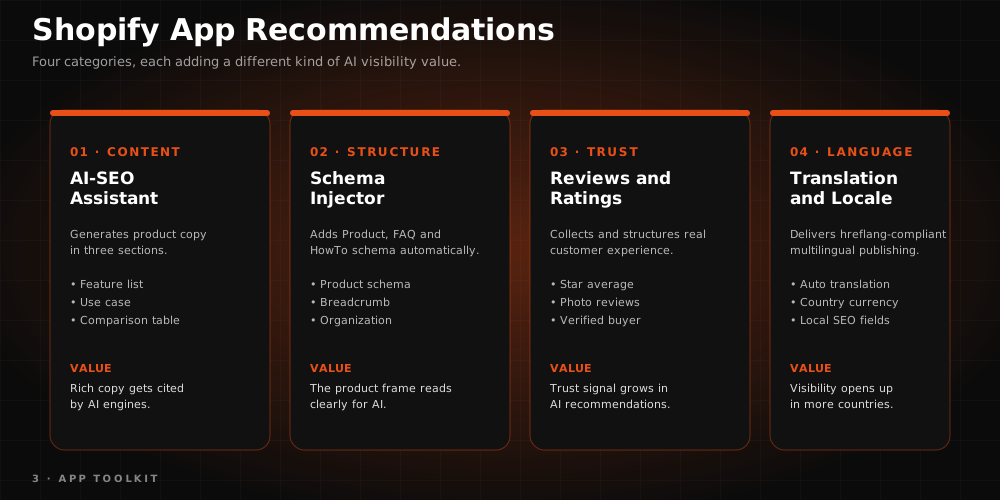
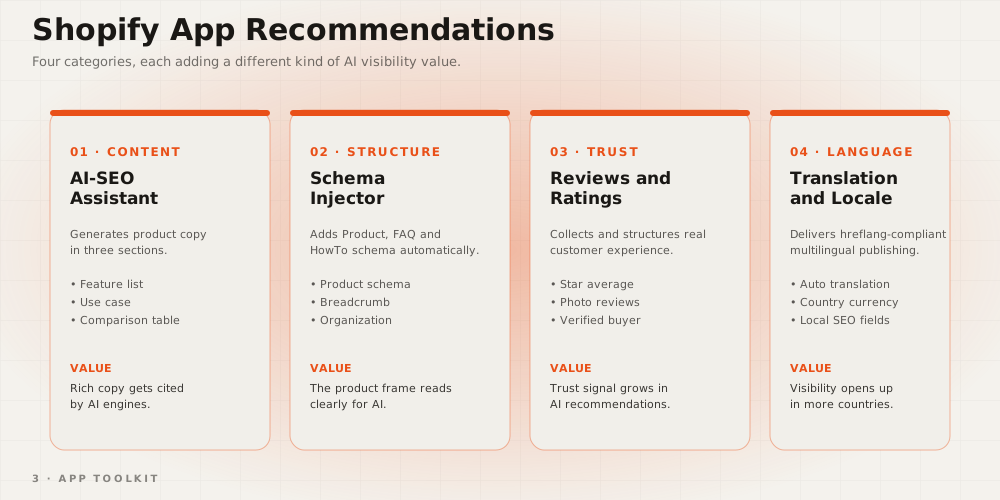
- Structured data (schema) integration: Speaking the technical language (JSON-LD) that LLMs need in order to "understand" your products, without friction.
- Speed and access: An infrastructure optimized so AI bots (GPTBot and others) can crawl your content in real time and serve it to users.
- Semantic integrity: The ability to enrich product descriptions with context for AI, with no coding knowledge required.
GEO (Generative Engine Optimization) strategies for Shopify
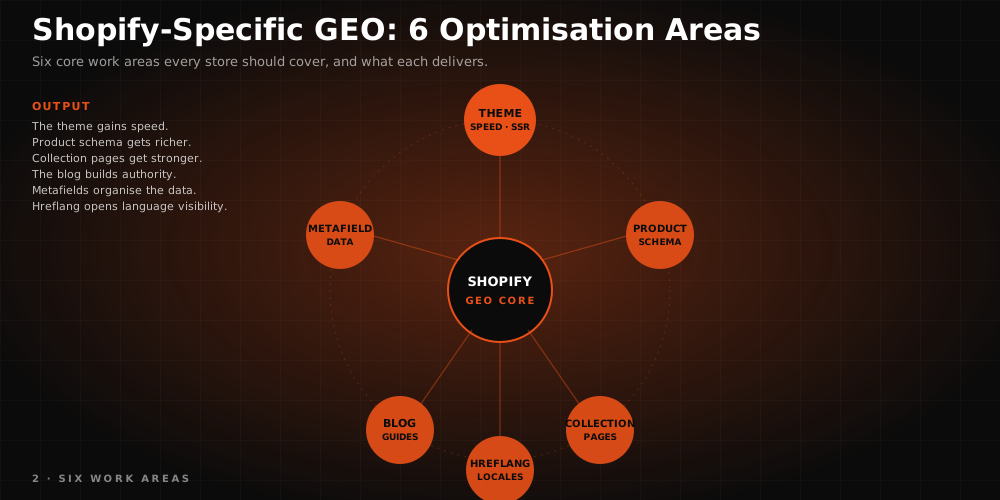
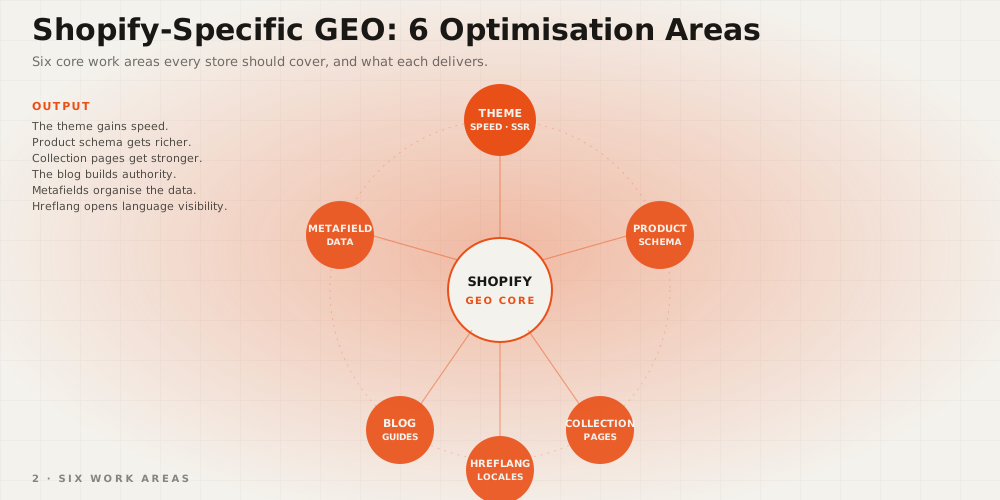
In the AI-driven search world, simply "optimizing" pages is not enough; you have to turn them into trustworthy evidence for AI. Beyond the tools, the strategic moves aligned with Webtures' Digital Trust vision are these:
1. Content clarity and the single source of truth principle
In traditional SEO, duplicate content was a ranking problem; in the GEO world, it is a hallucination risk. When AI models find multiple, conflicting pieces of information about the same product, they can flag your brand as an unreliable source and leave you out of their answers.
- Strategy: Avoid stock manufacturer copy in your product descriptions. Write original, experience-based descriptions with contextual detail so LLMs (Large Language Models) can tell your brand apart.
- Action: Mark similar product pages on your site with canonical tags so you tell the AI, in effect, "this is the primary source you should reference".
2. Entity-focused title and meta configuration
The era of keyword matching has given way to intent matching. Your titles and descriptions need to be clear enough to help AI understand user intent.
When editing under Online Store > Preferences, focus not just on the keyword but on what the product is and who it is for.
- Old approach: Men's Sneakers – Cheap Running Shoes » Brand
- GEO approach: Shock-Absorbing Men's Running Shoe for Marathon Runners: Model and Specifications » Brand
This structure lets AI match your product and its attributes (shock-absorbing) when building an answer to the query "best shoe for a marathon".
3. Build your homepage as an authority hub
AI assistants read your homepage hierarchy to understand what a brand sells and where its expertise lies. Positioning your key collections and hero products prominently on the homepage signals to LLMs that "this brand is the primary provider of these products".
In an order where the share of zero-click answers keeps growing, homepage authority is critical for getting your product recommended by an AI assistant even when the user never enters your site.
4. Technical GEO: open your doors to AI bots
Technical SEO is no longer just for Googlebot; it is an invitation to GPTBot, ClaudeBot and the other AI agents. As the site owner, you should verify the following:
- AI bot access: Allow AI crawlers in your robots.txt file. If your data cannot be crawled, you are effectively nonexistent in AI answers.
- Merchant Center integration: Google's Shopping Graph is the single most critical channel for getting your products listed inside AI Overviews.
- Detailed schema markup: Fill in schema data completely, including product price, stock status, shipping details and review scores. AI prefers processing structured data over parsing prose.
5. Optimize reviews for sentiment analysis
The Product Review apps in your Shopify store are no longer just social proof; they are a Sentiment Analysis dataset for AI.
When users ask "which coffee machine do people complain about most?", the AI scans reviews. According to Webtures strategy, five-star ratings alone are not enough; instead of "Great product", encourage detailed reviews like "The battery lasts 12 hours and it charges very fast". Those specifics let AI recommend your product for concrete attributes.
6. Build a knowledge base, not just a blog
Shopify's blog feature should be used to produce the answer-engine content that AI assistants draw on as training and grounding data.
- Format shift: Move beyond the classic blog-post format toward Q&A pieces, how-to guides and comparison tables.
- Example: Instead of "Choosing Winter Boots", produce content with citation-ready technical depth, such as "Thermal Insulation Differences Between Gore-Tex and Leather Boots".
7. Brand mentions and digital PR instead of link building
In the GEO world, the mention has replaced the backlink. AI models learn how trustworthy your brand is from conversations across the wider internet: Reddit, Quora, news sites and industry forums.
Aim for your brand name to appear in industry reports, news coverage and expert commentary, not just in links. AI does not click a link to decide a brand is an authority; it looks at how often, and in what context (co-occurrence), the brand is mentioned.
8. Product lifecycle and 301 management
Generative AI may have been trained on outdated data. A product that no longer exists on your site (a 404) is a breach of trust in the eyes of AI.
Always redirect discontinued products to the most relevant current model with a 301. This does more than guide the user; it tells the AI model "here is the current equivalent of that old information" and fills the gap in its Knowledge Graph.
What the Webtures team sees in the field
On Shopify projects, the most common GEO gap sits in the collection and information layer rather than the product page. When a product description is nothing more than a specification list, an AI assistant has no way to connect that product to a use case.
The e-commerce work we ran for BKM Kitap started from exactly that point. We built a content layer that answered search intent at category and subcategory level, then connected the product pages to it. Organic traffic rose 102 percent and organic revenue rose 467 percent. The same structure later produced a citable surface for AI answers, because every paragraph still made sense when read out of context.
The pattern we see most often is this: when the homepage and collection copy do not state clearly what the brand sells, technical GEO fixes on their own produce little.