SI Training
SI training guide: modules, levels, how to choose the right programme, certificates and EU AI Act Article 4, with current guidance for individuals and teams.


SI training is the umbrella term for programmes that teach people to use super intelligence tools at work correctly, safely and measurably. In 2026 the scope of these programmes changed: writing prompts now counts as the entry level, while agents, workflow redesign, data security and measuring results have moved to the centre. This guide covers the modules of the Webtures SI Specialisation Programme, how to work out your level and how to choose the right programme.
If you are looking for training for your team or company, see our corporate SI training page, with role-based programmes and 90-day measurement.
The SI Specialisation Programme is a professional training process for individuals who want to learn generative SI technologies in depth. Its goal is practical and theoretical proficiency with SI tools, among the most in-demand skills today.
What is SI training?


SI training is a learning process that covers data analysis, algorithms, machine learning and generative SI tools. It enables both technical and non-technical users to use current SI tools effectively.
The programme covers SI applications in business and the solutions they offer to real-world problems in detail. Participants experience SI in practice, not only in theory.
SI training prepares people who want to keep pace with digital transformation for the future and contributes directly to career development.
Why does SI training matter?
Tool use has spread faster than training:
- According to Microsoft’s Work Trend Index 2024, a survey of 31,000 people in 31 markets, 75% of knowledge workers use generative SI tools at work.
- In the same survey, 78% of users bring their own tools to work, while only 39% have received training on it from their company.
- According to the World Economic Forum’s Future of Jobs Report 2025, 59 in every 100 workers will need training by 2030, and SI and big data is the fastest-growing skill.
In other words, most people already use these tools; what is missing is using them with the right method, within safe limits and in a measurable way.
Purpose and goals of the programme
The main goal is to help participants become solution-oriented people who can use generative SI applications, producing fast, effective and creative answers to rapidly changing business needs.
Participants are also supported to integrate SI into their own processes through project-based learning, which benefits entrepreneurs and corporate employees alike.
Why an SI specialisation programme?


It goes beyond transferring knowledge and prepares participants with hands-on learning and real-world scenarios. It offers a practice-based set of modules running from fundamentals to advanced level.
Throughout the training, industry mentors, project-based progress and group work keep the format interactive. Graduates can build SI-based solutions in personal projects and within organisations.
The programme also provides references recognised in business and makes it easier for participants to reach their career goals.
How has the scope of SI training changed in 2026?


First-wave courses mostly taught how to write a good prompt. Today a good programme covers five areas together:
- Defining the task: writing a complete task with goal, context, sources, constraints, output format and acceptance criteria.
- Verifying the output: checking sources, calculations, missing information and uncertainty.
- Agents and automation: deciding what an agent can access, which actions need approval and how it is tested.
- Safe use: knowing which data may be shared and which decisions must go through a person.
- Measurement: showing progress with a pre-test and a post-test on the same task.
Tool makers support the entry level with free resources. Anthropic’s AI Fluency curriculum, published under a Creative Commons licence, groups this competence into four areas: deciding whether a task goes to SI or to a person (delegation), stating the request clearly (description), evaluating the output (discernment) and taking responsibility for the result (diligence). Resources like these are a good start; what makes a programme valuable is practice and feedback tailored to your own work.
Our SI training programmes


The SI Specialisation Programme consists of modules ranging from fundamental skills to advanced applications. Participants learn the theory and practise on real projects. Each module approaches generative SI from a different angle and supports well-rounded development.
The curriculum covers content production, visual design, video production, data processing and SI-supported decision-making. Modules are taught with user-friendly platforms and current tools, so participants follow technological developments while gaining practical skills that raise their productivity.
The programme is shaped around sector needs. Department-specific SI solutions, time efficiency, advanced algorithms and prompt engineering let participants specialise in the areas most relevant to their role.
Fundamental prompt engineering
This module teaches the logic and techniques of giving SI accurate and effective prompts, with practice on getting better answers from models such as ChatGPT and Claude.
Participants learn to structure prompts for content production, automation and SI-supported decision-making.
Visual creation with SI
Participants learn to create compelling visual content with the image generation features of ChatGPT and Gemini and tools such as Midjourney. It is a highly useful module for people working in graphic design and digital content.
Participants learn how to strengthen brand communication with visuals and produce personalised designs.
Time efficiency with SI
This module presents ways to save time and resources by integrating SI into business processes, with a focus on productivity strategies for corporate tasks.
Participants learn to get faster results by setting up SI-supported automation in their daily work.
Data preparation and processing
The cleaning, formatting and transformation steps needed when preparing data for SI systems are taught. It is a core module for anyone stepping into data science.
Participants learn to build reliable, analysable datasets for data-driven decisions.
Content production with SI
How to produce text-based content such as blog posts, product descriptions and social media posts with SI is covered in detail, including how LLM tools like ChatGPT contribute to marketing processes.
Participants save time in content production while learning to produce original, search-friendly content.
Audio and video production with SI
Techniques for creating media content with SI-powered audio and video tools are taught, including video scriptwriting, voice-over and editing.
The module includes hands-on work for anyone preparing podcasts, promotional films or ad content.
Department-specific training
SI solutions for the specific needs of departments such as sales, marketing, product management and customer service are explored through department-based case studies.
Participants raise efficiency by developing SI applications specific to their own teams.
Advanced SI techniques
Advanced topics such as machine learning, natural language processing and deep learning are covered in this module, designed for participants with a technical background.
Participants gain the ability to solve complex problems by going deeper into the technical side of generative SI solutions.
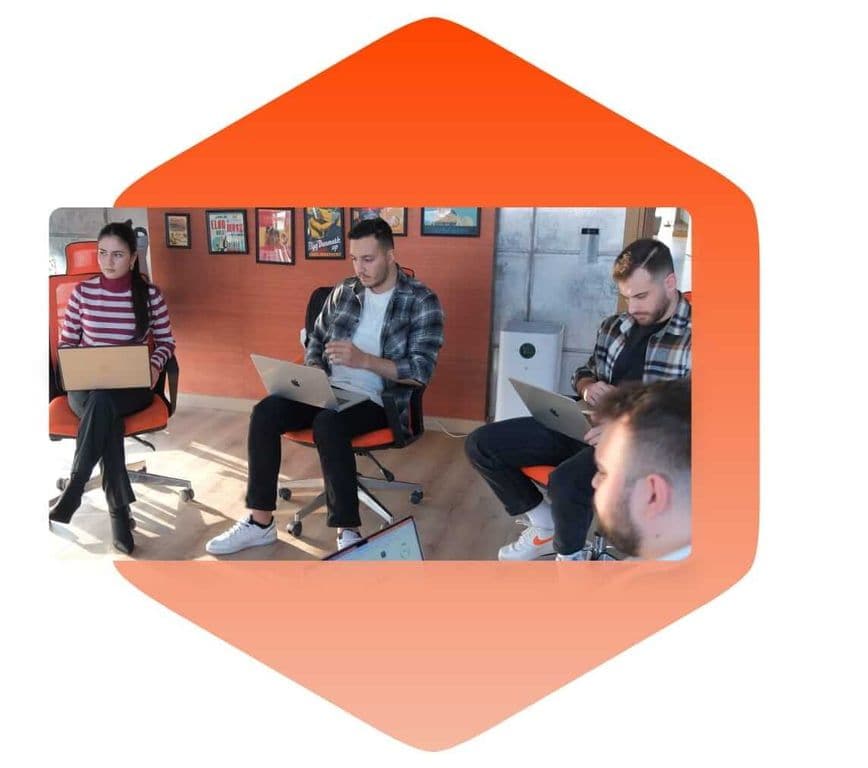
Which level should you start at?
Not everyone needs to reach the same level. The four steps below show which modules to start with:
| Level | A person at this level | Suitable modules |
|---|---|---|
| 1. Awareness | Knows what SI can and cannot do, and where its use should be limited | Fundamental prompt engineering |
| 2. Safe use | Defines the task fully, verifies the output, respects data limits | Fundamental prompt engineering, Content production, Visual creation |
| 3. Workflow application | Redesigns their own process with SI and measures the gain in time and quality | Time efficiency, Data preparation, Department-specific training |
| 4. Design and scale | Designs assistant and agent workflows and spreads them across the team | Advanced techniques, Department-specific training |
How do you choose the right SI training?
Most promises on training pages stay generic. When choosing a programme, turn every promise into a concrete question:
| Common promise | The question to ask |
|---|---|
| “Be future-ready” | Which skill will improve, in which role? |
| “Learn hundreds of tools” | Which tool will I use for which task in my own work? |
| “Fully hands-on” | What share is practice, on which task, producing which output? |
| “Tailored to you” | How is it customised by sector, role and goal? |
| “Multiply your productivity” | In which process, measured against what? |
| “Certified training” | Does the certificate show attendance or skill? |
| “Learn to build agents” | Are the agent’s permissions, tests and human approval covered? |
The mark of a good programme is that it states clearly what you will have afterwards: tested task templates, an application plan for your own work and the result of a pre-test and post-test on the same task.
Benefits of SI training
Productivity: optimise your workflows and raise efficiency. Do more with fewer resources using SI technologies.
Competitive advantage: use SI technologies to get ahead of the competition and stand out by adopting SI-supported strategies.
Innovation: transform your business with innovative SI solutions. SI adds value to your processes; lead that change.
Time efficiency: speed up workflows and save time with SI. Complete daily work faster and more effectively.
SI training process and schedule
The SI Specialisation Programme develops participants’ knowledge and skills step by step through a planned learning journey. It consists of foundational training, project work, advanced technical modules and an internship period, each stage built to support the move to the next level.
The programme opens with core SI knowledge; sector applications and individual projects then come to the fore, so participants grow in both individual and team work. It ends with a capstone project and an optional internship period.
Sessions can run live (synchronous) on weekday evenings or at weekends. For people with busy schedules, flexible modules are supported by asynchronous video lessons to keep learning continuous.
Programme stages
The programme has four main stages: foundational training, applied modules, advanced technical training and completion. Each stage can be shaped to participants’ level and interests, so everyone can follow their own development path efficiently.
The first stage delivers the theory; the following stages add practical training supported by project development, mentoring sessions and team work. Participants complete the programme by presenting a capstone project.
Duration and format
Total duration depends on the scope chosen. Training is mainly delivered as one-day intensive sessions and can be extended to 2 or 3 days for more comprehensive content, giving a flexible, goal-oriented experience for individual and corporate needs.
Training is offered online and in hybrid format. All sessions are recorded to allow asynchronous participation, which makes it easier for people with different learning habits to keep up.
Certificates, the EU AI Act and data protection
An attendance certificate shows that you completed the training; what shows skill is a pre-test and post-test on the same task. Certificates issued by Webtures Academy can be checked on the certificate verification page.
For employers operating in the EU, a training record is a concrete compliance element. Article 4 of the EU AI Act has applied since 2 February 2025; with the Digital Omnibus amendment that entered into force on 27 July 2026, the article became a provision requiring measures that support staff literacy. According to the European Commission, no certificate is required and an internal training record can be kept; enforcement sits with national authorities from 2 August 2026. In Türkiye, the Personal Data Protection Authority (KVKK) published its guide “Generative Artificial Intelligence and the Protection of Personal Data (in 15 Questions)” on 24 November 2025. This section is for information only and is not legal advice.
SI training for organisations
In companies the need differs from individual training: instead of the same curriculum for everyone, organisations need a shared foundation and programmes split by role. The board focuses on strategy and risk decisions, managers on finding use cases in their teams, departments on scenarios taken from their own work and internal champions on spreading adoption. Whether training reaches day-to-day work is measured at 30, 60 and 90 days.
For individual participation see the Webtures Academy programmes; for teams and companies, see our corporate SI training page.
Growth & GEO