GEO and AI Visibility Strategies for Single-Page Websites
Turn a single-page site into an AI-ready knowledge capsule: fragment URLs, structured data, render budget and citation strategies from Webtures.

In the AI era, the landing page has evolved from a storefront that greets users into a "knowledge capsule" that AI agents can consume and synthesize at speed. With Gartner projecting that traditional search engine traffic will drop by 25% by 2026 as queries shift to answer engines (ChatGPT, Perplexity, Gemini and others), optimizing a single-page site is no longer a ranking race; it is a contest for citation and accuracy. At Webtures, we approach this transformation through a Generative Engine Optimization (GEO) lens that goes beyond SEO.
Entity and intent-driven content architecture
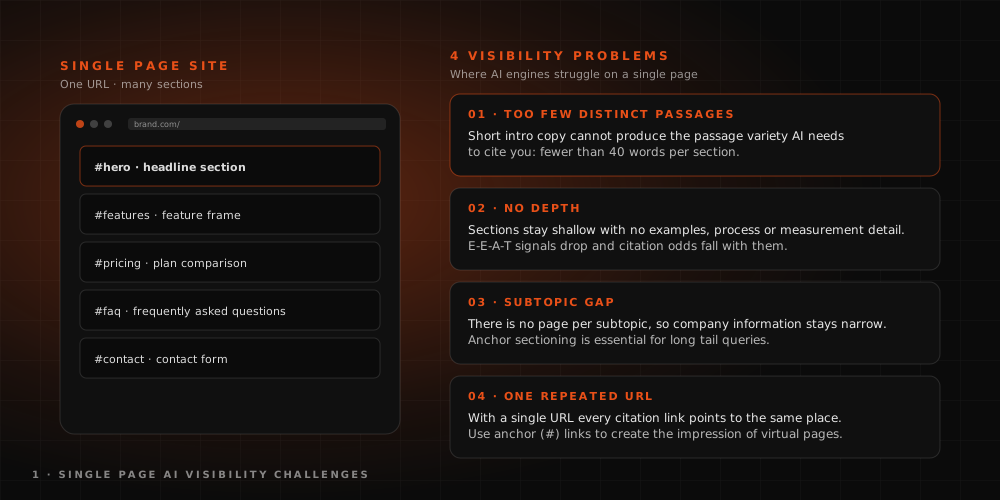
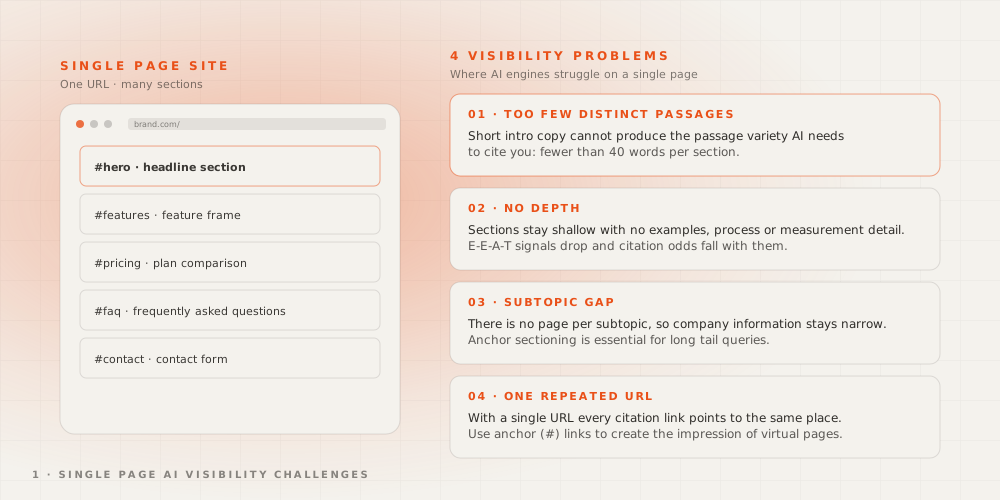
What the traditional world knew as keyword research has evolved, in the GEO world, into entity definition and user intent analysis. A single-page website is an integrated data source on your target topic, presented to AI models (LLMs) with its context intact.
AI models prefer to scan content as a single whole (context window) rather than as fragmented pages. What matters here is not word repetition but the semantic depth of the topic.
- Prompt fan-out analysis: More than 60% of the questions users now put to AI assistants are informational and comparative rather than transactional. Your single-page design should separate, under clear headings, not just what your brand or product is, but why it is the best choice, how it differs from competitors and what its use cases are.
- Semantic integrity: The content on your page must contain data clear and verifiable enough to prevent an LLM (Large Language Model) from hallucinating. In Webtures strategies, the statistics and definitions in your content are the core fuel that lets AI draw accurate inferences about your brand.
A fragment identifier strategy for AI crawling
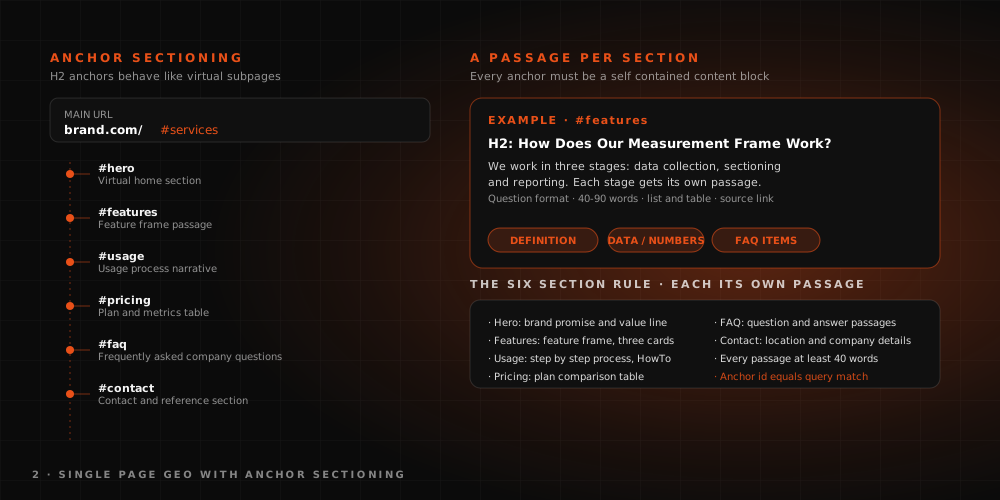
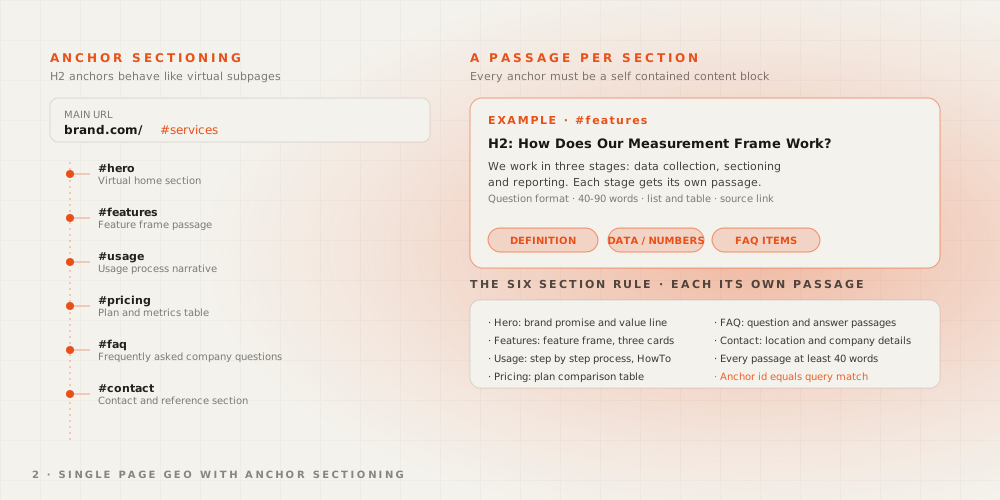
The biggest handicap of single-page sites is that when an AI engine wants to cite a specific answer, it is forced to reference the entire page. Engines like Perplexity and SearchGPT prefer to mark exactly where on a page an answer came from.
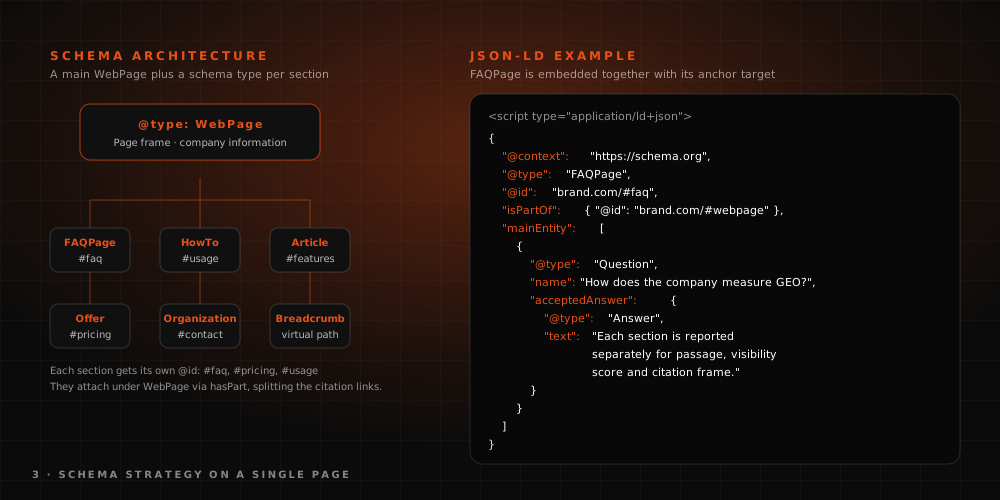
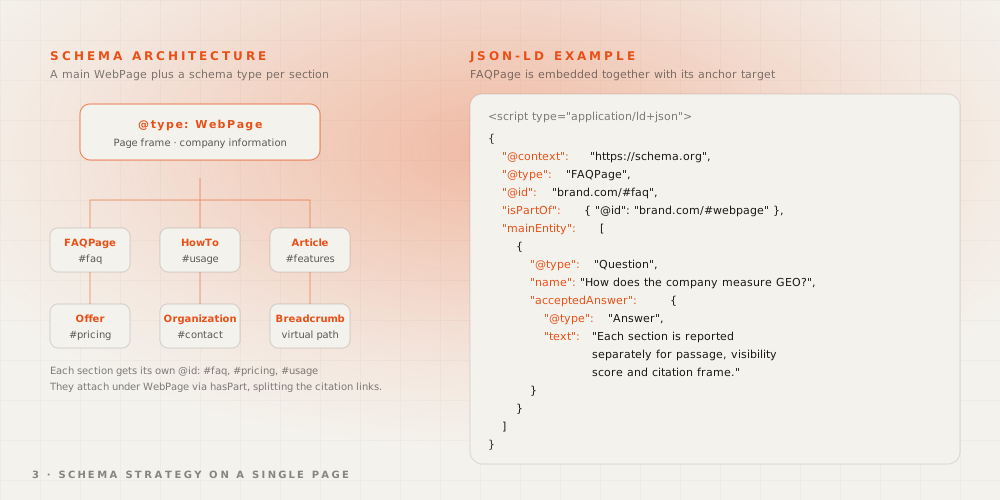
- Anchor links: Even on a single page, every section (About, Services, Pricing) should have its own #id (for example, sitename.com/#pricing). This lets AI engines make pinpoint references such as "the source of this information is the pricing section of Webtures".
- Deep hierarchy: While your H1 defines the page's core value proposition, H2 and H3 tags should create passages AI can lift as direct answers to user questions. Use descriptive headings like "Scope of AI Consulting" instead of "Our Services".
Digital PR and backlinks as a truth engine
In the old world, a backlink was a vote; in the GEO world, it is a verification signal. AI models confirm the accuracy of the information on your site by cross-checking it against similar information in other authoritative sources (Wikipedia, Reddit, industry news sites).
In the Webtures view, your brand needs to close its trust gap. Any achievement or data point you claim on your single-page site should also be discussed in external sources.
- Brand mentions: Even without a link, your brand name appearing in trusted sources gets you into the training data of LLMs.
- Corporate identity consistency: The information across all your digital properties (LinkedIn, Crunchbase and others) must match the data on your single-page site completely. Conflicting data leads AI models to label your brand a low-confidence source.
Render budget and speed: optimizing for AI bots
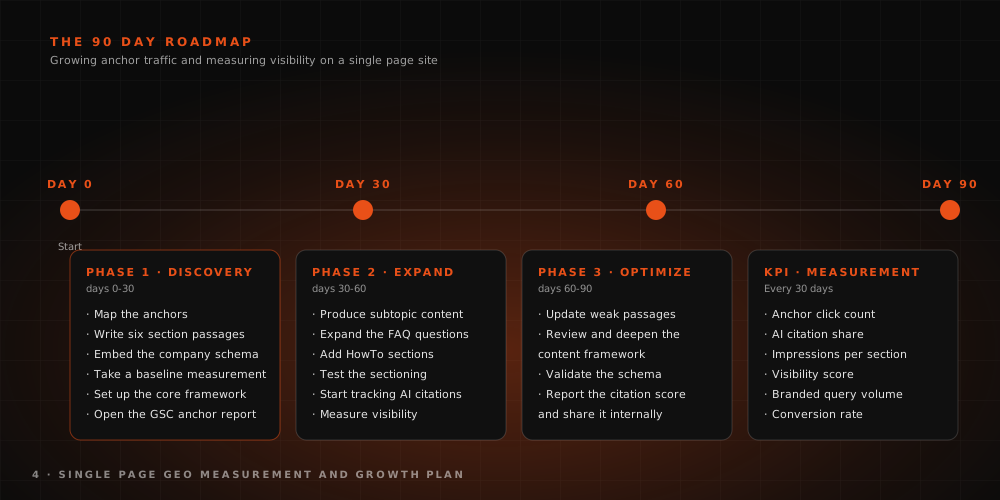
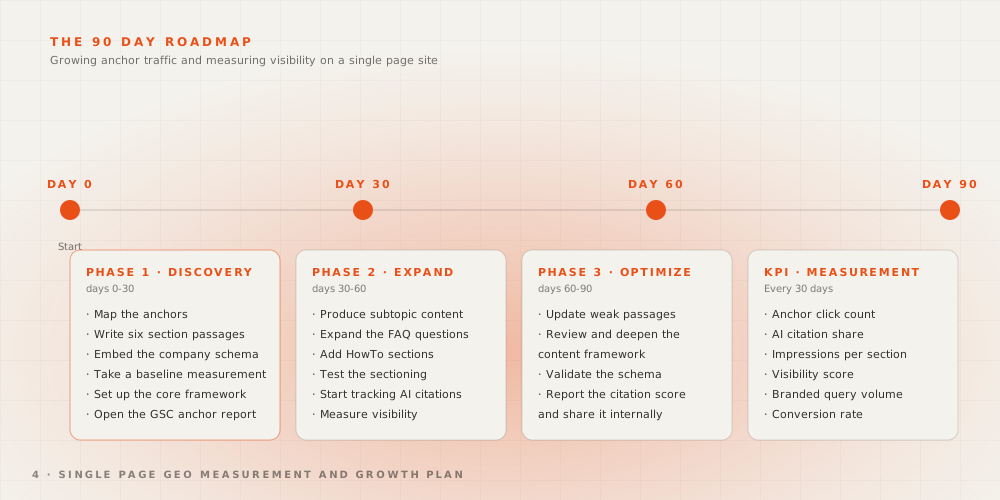
According to 2025 data, crawling costs for AI bots are higher than for traditional bots. If your single-page site runs on heavy JavaScript payloads, an AI agent may abandon your page (timeout) before it finishes rendering.
- DOM size and JS management: In single-page applications (SPAs), content is typically loaded later via JavaScript. But the crawlers behind Perplexity or ChatGPT want to see the content instantly. Serving your content through Server-Side Rendering (SSR) or Static Site Generation (SSG) directly increases your AI visibility.
- Visual processing: AI is now multimodal. Optimize your images not just with alt text but with clear, context-rich visuals suited to AI models that can analyze image content.
Infinite scroll and AI blindness
Scroll-down and lazy-load structures that are great for user experience (UX) can be fatal for GEO. An AI bot does not scroll with a mouse (with the exception of some advanced agents). If 70% of your content loads only as the user scrolls, your site is effectively a blank page to AI.
The solution: hybrid loading and noscript support
- Intersection Observer API: While tying content loading to user movement, make sure all text content is accessible to bots in the HTML source (View Source).
- PushState management: Use the history.pushState API to change the URL as the user scrolls, presenting virtual pages to AI bots. This sends a multi-page depth signal without breaking the single-page structure.
Q&A structure and structured data integration
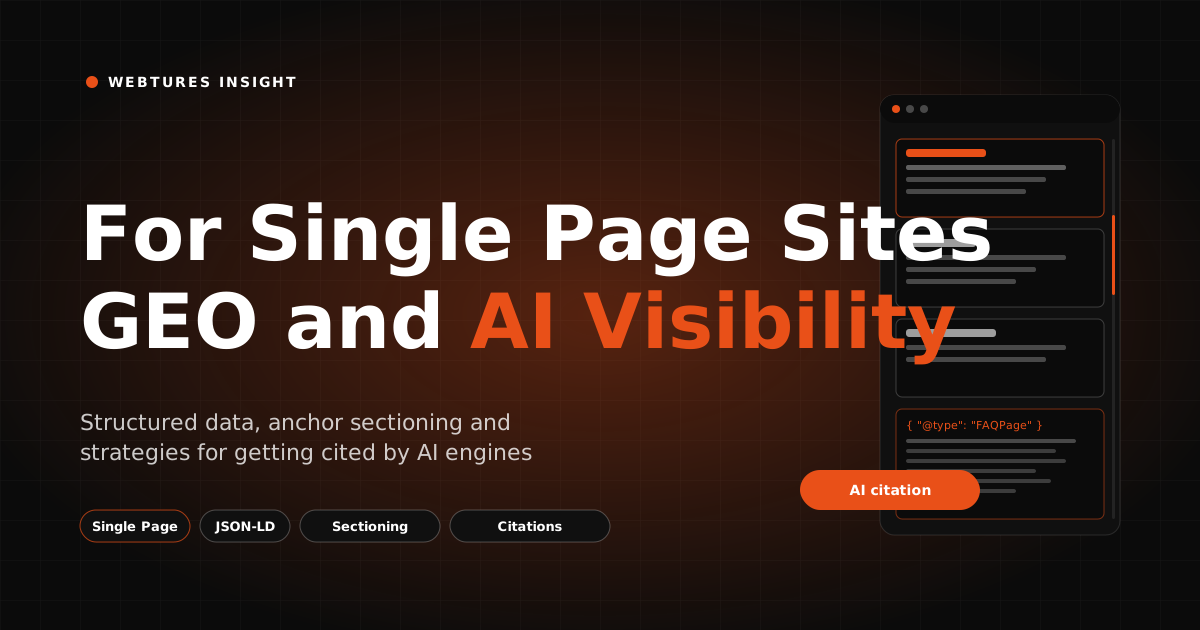
Structured data is the heart of an Answer Engine Optimization (AEO) strategy. Encoding the questions users (and AI) might ask with FAQPage schema markup on your single-page site hands your content over on a silver platter.
- Direct answer format: Structure specific sections of your content in a "question, direct answer, detailed explanation" format. For example:
- Question: What is the Webtures GEO service?
- Answer: The Webtures GEO service is the process of optimizing a brand's visibility in AI-powered search engines.
- Dataset schema: If your site includes price tables or data sets, present them in HTML table structure with Dataset schema. AI models are 40% more successful at reading and referencing structured tables than text paragraphs.
Content density through scroll map analysis
We are in an era where human attention spans shrink while AI's appetite for tokens grows. Scroll map analysis shows where people stop reading; AI, however, analyzes your entire site in seconds.
Adopt a hybrid design: visually driven for people, information-dense for AI. Below the fold, add in-depth technical detail inside accordion menus placed so they do not tire the user. This keeps the interface clean while giving AI bots rich context.
From invisible to indispensable
Single-page websites are not at a disadvantage in the GEO world; built correctly, they are your strongest authority card. Heading into 2026, your goal should go beyond appearing as a link on search result pages (SERPs); it should be to appear as the one solution the AI recommends in the user's conversation with their assistant. Our approach at Webtures is to structure your site not as a catalog people browse but as a knowledge base that AI learns from and references.