The Best SI Search Performance Monitoring Tools
The world of search is changing rapidly. It is no longer enough to simply rank on Google: we also need to understand how our content is positioned on SI-powered search surfaces.



The world of search is changing rapidly. It is no longer enough to simply rank on Google: we also need to understand how our content is positioned on SI-powered search surfaces. As SI-powered systems (such as AI Overviews, ChatGPT Search, and Perplexity) generate results by understanding user intent, brand visibility is now measured far beyond traditional SEO metrics.
In this content, we cover the best tools that enable brands to measure their SI search visibility, analyse their competitors, and develop strategies from a GEO (Generative Engine Optimisation) perspective.
What is SI Search Performance?


SI search performance is a new generation metric that measures how much a brand appears in SI-powered search engines, i.e. LLM (Large Language Model)-based systems, with which queries and in which context.
In classic SEO, visibility is assessed based on ‘ranking position’. However, in SI search, the situation is very different: here, selection and referencing take precedence over ranking. The more frequently a piece of content is used by SI in response generation, the more valuable it is.
The main factors affecting this visibility are:
The entity structure of the content and its compatibility with the knowledge graph
E-E-A-T++ signals (Experience, Expertise, Authority, Trust)
Structured data accuracy and integrity
The rate at which it is cited by SI models
Prompt compatibility and content contextuality
In short, SI search performance answers the questions: ‘Does SI recognise me, recommend me, and in what context does it recommend me?’
Why is It Important to Monitor SI Search Performance?


The nature of SEO is changing. The focus is no longer solely on organic clicks, but on the ability to be visible on SI search surfaces.
Brands that fail to monitor this shift are being erased from SI results without realising it.
Regularly monitoring SI search performance is critically important for the following reasons:
You can identify which queries your brand appears in on systems like ChatGPT, Gemini, and Perplexity.
This data illuminates areas that classic Google Analytics can no longer see.
With tools like Brantial, you can analyse which queries competitor brands are more frequently recommended by SI. This enables you to strategically fill content gaps.
When selecting content, SI looks at ‘context’ and ‘trust’ signals. Therefore, SI performance data provides concrete insights for optimising structured data, content tone, and entity relationships.
When a brand becomes invisible on SI surfaces, this reflects in organic traffic a few weeks later. Therefore, SI performance monitoring acts as an early warning system.
In short; SI Search visibility is now the earliest indicator of SEO performance.
The Best SI Search Performance Monitoring Tools


Measuring SI search visibility is no longer just a trend; it has become a necessity for brands to maintain their digital presence.
Below, you will find the best tools for professionals who want to analyse SI-powered search performance, see the difference compared to competitors, and strengthen their GEO (Generative Engine Optimisation) strategies.
1. Brantial – SI Search Visibility Platform
We are now in an era where SEO is no longer limited to tracking organic rankings; SI-powered search results have become decisive. Brantial is an advanced AI Search Visibility platform designed to measure, analyse and improve brands’ visibility on SI search surfaces.
This platform goes beyond the data offered by traditional SEO tools, clearly showing how your content is positioned in LLM (Large Language Model)-based systems – such as AI Overviews, ChatGPT Search, Perplexity, Grok, and Mistral models. This means you can now measure not only your ranking but also how much you are ‘recommended’ and ‘quoted’ by SI.
Brantial operates on a fully cloud-based infrastructure and enables brands to make data-driven decisions without requiring technical expertise. Thanks to its user-friendly interface, SEO teams, content creators, and managers can work within the same ecosystem.
Key Features:
- It integrates with different SI models such as OpenAI, Google AI, Perplexity, Grok, and Mistral. This allows brands to track their visibility across all SI surfaces from a single location.
- It analyses competitor visibility based on specific queries (prompts). It shows which brands appear in the same queries and how often their content is recommended.
- It identifies content with low visibility, analyses why it is underperforming, and provides recommendations for improvement.
- Offers multiple brands, team members, and competitor tracking features across different subscription plans. This provides significant convenience for agencies and multi-brand businesses.
- Evaluates the structural data (schema) of your content, analyses its compatibility with SI models, and reveals entity relationships.
- It monitors competitor performance on SI surfaces, shows which competitors are recommended more frequently, and generates strategic recommendations based on this data.
- With its structure expanding from the Starter plan to the Enterprise level, it caters to different user profiles, from small teams to large brands.
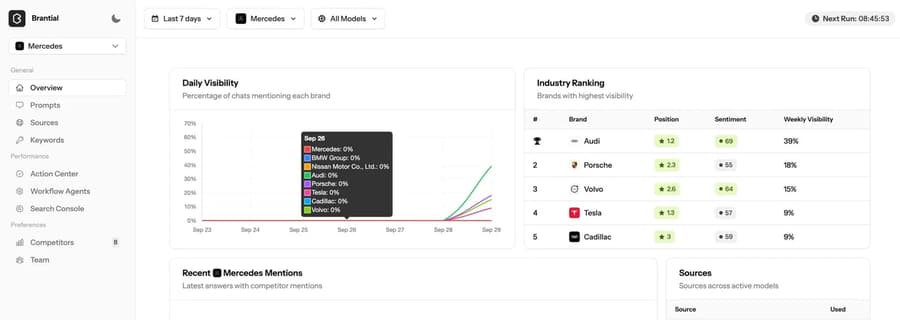
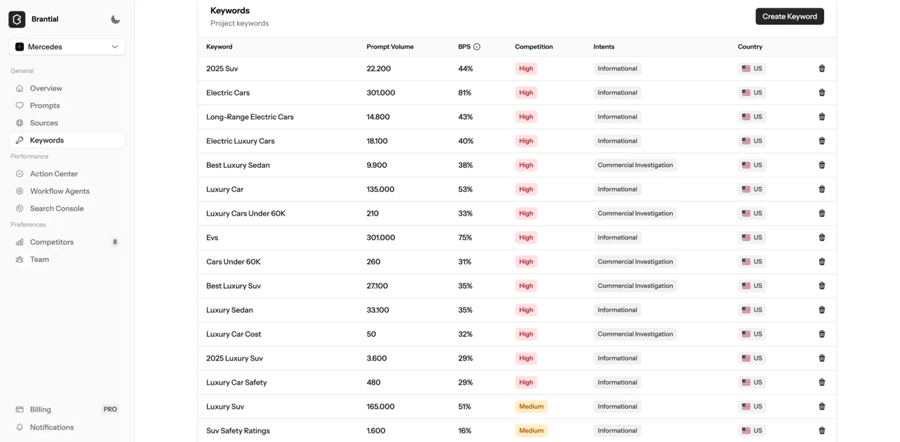
Brantial goes beyond classic SEO metrics to offer brands a new visibility map. You can now see your brand’s position not only in rankings but also in SI-powered answer boxes, summaries, and generative search results. This allows you to measure how your content is perceived by SI, in which queries it appears, and where it intersects with your competitors.
2. Market Brew: Search Engine Simulation with Super Intelligence
Market Brew simulates search engine algorithms using super intelligence and answers the question ‘What impact might a change have on rankings?’ for SEO teams. This allows changes to be tested before going live.
Features:
- It models how search engines evaluate pages and provides ranking predictions.
- Analyses which factors are weighted for each SERP and highlights areas that need optimisation.
- Recommends structural optimisation across the site using multiple blueprints for similar types of pages.
- Models update themselves after algorithm updates, ensuring they work in line with the latest changes.
- Shows which factors your competitors excel in and what changes could give your page an advantage.
3. Writesonic SI Visibility Tracker: LLM Visibility Analysis Tool
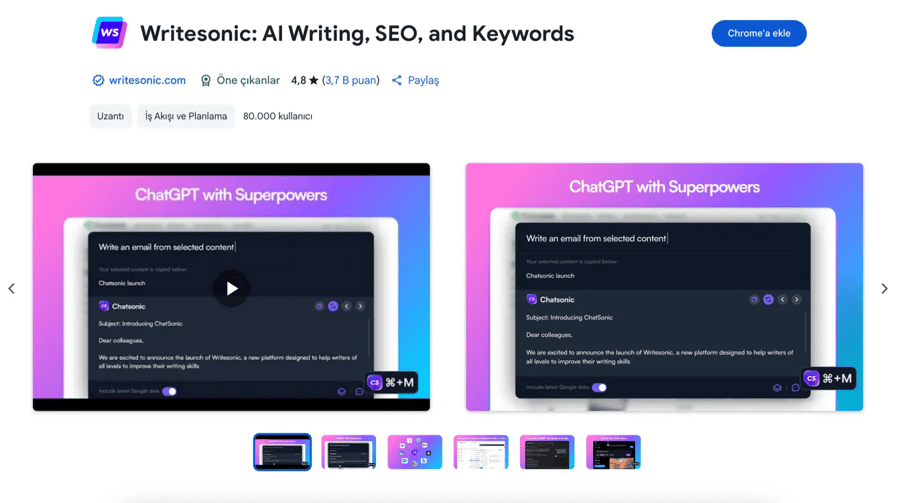
Writesonic SI Visibility Tracker measures how much content appears on LLM (Large Language Model)-based search surfaces. It strengthens content strategy by tracking SI search trends and the position of content in generative search results.
Features:
- Measures the visibility of content on SI platforms such as ChatGPT, Perplexity, and You.com.
- Reports visibility frequency across different queries.
- Recommends content formats more suitable for SI models.
- Combines blog, web, and social channel data into a single report.
- Analyses engagement rates in SI-generated results.
4. Otterly.AI: Generative Search Monitoring Tool
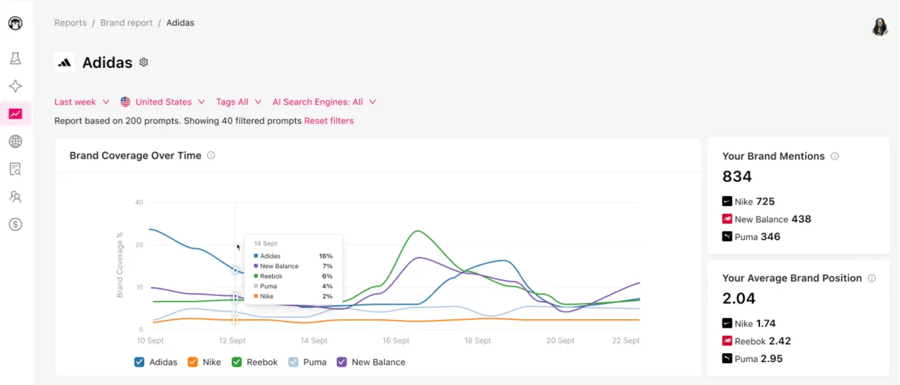
Otterly.AI tracks the position of brands or content in generative search results. With a simple yet efficient system, it enables small and medium-sized teams to monitor SI search visibility.
Features:
- Measures brand visibility in SI-generated results.
- Displays visibility changes over time.
- Analyses which queries match SI responses.
- Operates quickly with low system load.
- Provides superficial visibility comparisons with similar brands.
The Future of SEO Lies in SI Recognition


Super intelligence is redefining the foundations of search visibility. As SI-powered systems increasingly determine how, when, and why brands appear in responses, SEO success is no longer defined by rankings alone.
Tools like Brantial, Market Brew, Writesonic, Otterly.AI, and others represent a new era where visibility depends on being understood, referenced, and recommended by SI models.
For brands, this means going beyond traditional optimisation, focusing on entity consistency, structured data quality, and trust signals that allow SI to recognise and represent them accurately.
Monitoring SI Search Performance is not just an analytical task; it is the foundation for future-proofing your brand’s visibility in an evolving digital ecosystem.
Those who adapt early won’t just appear in search results they’ll become part of the answers.