GEO Guide for Tourism and Travel Websites
Learn how tourism and travel brands earn AI recommendations: entity authority, experiential content, structured data and GEO measurement from Webtures.

In an era when AI assistants and Large Language Models (LLMs) have fundamentally changed how people plan travel, tourism has become the most competitive front in digital marketing. Instead of generic searches like "Antalya hotels", users now plan their trips with complex, personalized prompts such as "Recommend a beachfront hotel for October with a vegan kitchen and a kids club". In this new ecosystem, visibility is no longer a battle over link rankings; it is the contest to become the AI's trusted recommendation.
Based on the data we observe at Webtures, the use of AI tools in holiday planning has exceeded 45% in 2025 projections. This obliges tourism brands to restructure their digital presence for generative engines that can perceive, process and reference it, rather than for classic search engines alone.
The tourism business as a digital entity
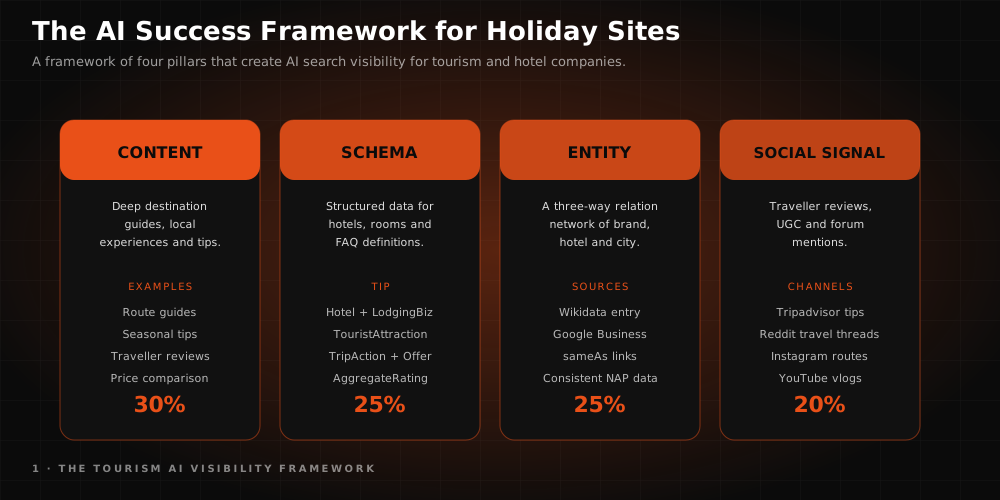
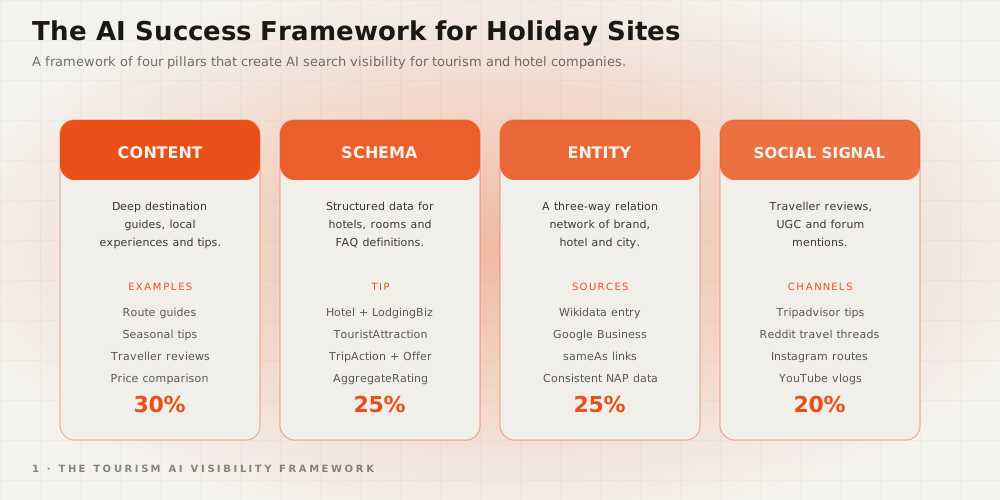
In the GEO world, a tourism website is not merely a booking platform; it is a vast data source that AI feeds on. As users design their holiday experience, your brand's digital presence must be defined as an entity.
Beyond seasonal dynamics, tourism and travel sites should be built as data structures that respond to the user's contextual needs. AI analyzes a hotel not only by its location but through the experience it offers, the sentiment in past guest reviews and its relationships with other local entities such as attractions and restaurants.
The GEO-focused optimization process in tourism
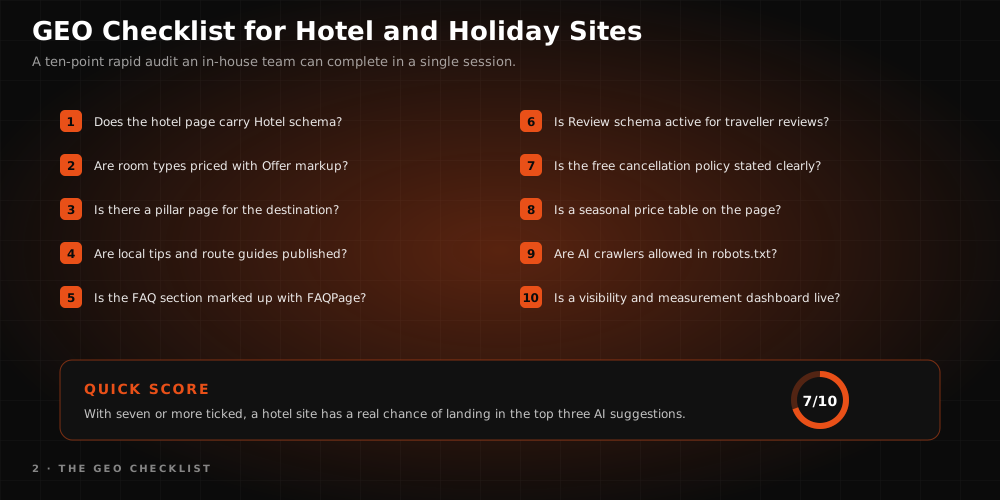
The core goal of Generative Engine Optimization (GEO) is to ensure that the information your brand provides is selected by LLMs as the authoritative, current and contextually most relevant piece of data. The critical optimization steps for tourism are as follows:
Machine readability and data accessibility
On tourism sites, the infrastructure must be as flawless for AI bots as it is for human eyes. It is vital that AI agents can pull dynamic data such as pricing, availability and amenities in real time (crawlability).
Beyond traditional speed metrics, the structural integrity of the data takes priority. Technical obstacles that LLMs hit while crawling your site can erase your brand from recommendation lists entirely.
- Dynamic content access: Serving price and availability data in formats bots can read, rather than hiding it behind JavaScript.
- Entity disambiguation: Providing clear definitions that prevent your brand name or location from being confused with other concepts.
- Data consistency: Keeping information aligned across platforms (your website, OTAs, map services); this is critical for the AI trust score.
Intent modeling and entity authority
Travel intent has evolved from single-word queries into multi-layered dialogues. Competitor analysis should focus not only on who ranks for which term but on how AI describes rival hotels or tour operators.
In Webtures strategies, we use brand mention and sentiment analysis data when analyzing your brand's digital footprint. To label a hotel as "family friendly", AI looks less at the copy on the hotel's own site and more at user experiences on third-party sources (forums, community sites, review platforms) and the intents that match the brand.
Experiential content and contextual depth
The biggest GEO mistake on tourism sites is generic, repetitive content. LLMs classify the standard "hotel amenities" lists found on thousands of sites as low-value information and leave them out of synthesized answers. The focus should instead be on experiential data.
Hotel and tour pages should be detailed and original enough to let users feel the experience before they live it.
- Hyper-personalized content: Instead of just saying "Antalya honeymoon hotel", in-depth content describing the specific experiences the hotel offers honeymoon couples, the atmosphere at sunset or the chef's signature menu.
- User-generated content (UGC) integration: Embedding guest reviews and experiences into the page structure as a meaningful data set. AI gives more weight to genuine user experience (social proof) than to corporate language.
- Question and answer formats: Answering the specific questions users might ask an AI (for example, "Can I bring my pet into the restaurant?") clearly within the content.
Knowledge graph and semantic markup
AI perceives the world through entities and the relationships between them. Integrating the data on your tourism site into the universal knowledge graph is the key to GEO success.
Structured data markup such as Schema.org and JSON-LD lets you present your content in AI's native language. This goes well beyond adding a basic Hotel schema.
- Relational connections: Semantically marking up the distance and relationship context between your hotel and nearby historical sites, beaches or event venues.
- Trip & Event schemas: Structuring your tours, events and seasonal packages in formats that can flow into AI assistants' calendars and recommendation engines.
- Fact-checking signals: Backing the claims in your content (star rating, certificates, awards) with verifiable sources.
Catching travel trends and localizing them
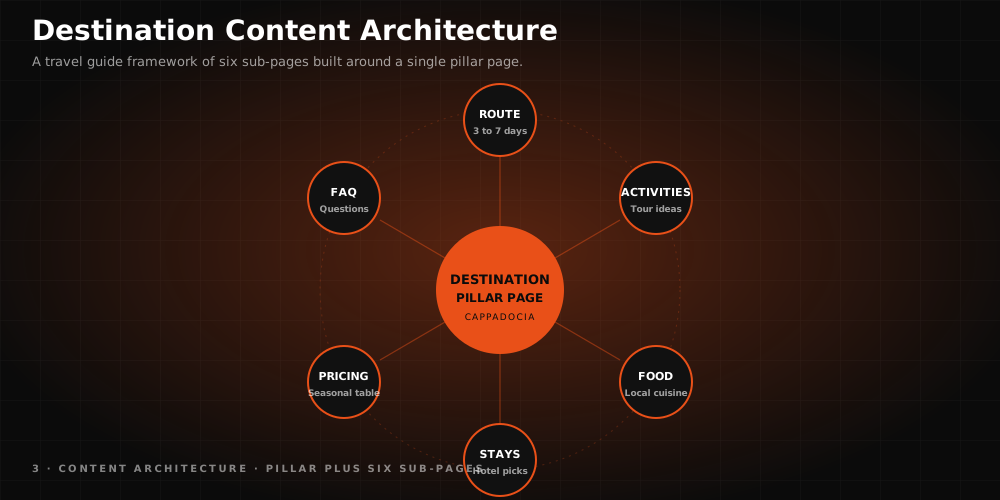
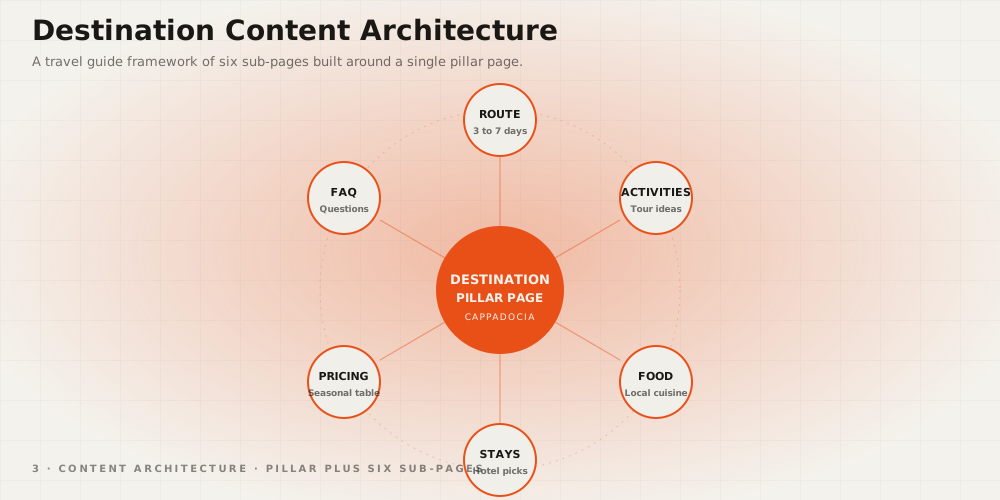
Travel behavior changes fast. AI models spot which destinations and experience types are rising early, through query data, social media trends and OTA reports. Covering trends like sustainable travel, workation or local discovery tourism in your content at the right time creates the chance to become the first authoritative source for that intent.
Trend content should be backed by data, not intuition. Numerical evidence such as "the most searched destination in the last 12 months" builds trust on both the user side and the model side. Remember that the same trend carries a different intent in queries from Istanbul and from London; content should be adapted to the target market's language and local expectations. Segment-based planning is part of that localization: separate sections and recommendations should be prepared for users looking for a family holiday, a honeymoon or a business trip.
Why is data freshness critical?
In tourism, information ages quickly: venues close, transport changes, seasonal prices expire. LLMs treat outdated data as a low-trust signal; when dated content like "summer 2025 season prices" goes stale, the brand's chance of being selected as a source drops.
A GEO strategy is therefore less a publishing process than an updating discipline. Content should be reviewed at regular intervals, volatile details such as opening hours and price ranges should be marked up with structured data, and exceptional situations (weather conditions, transport disruptions) should be reflected in content quickly.
How is GEO performance measured?
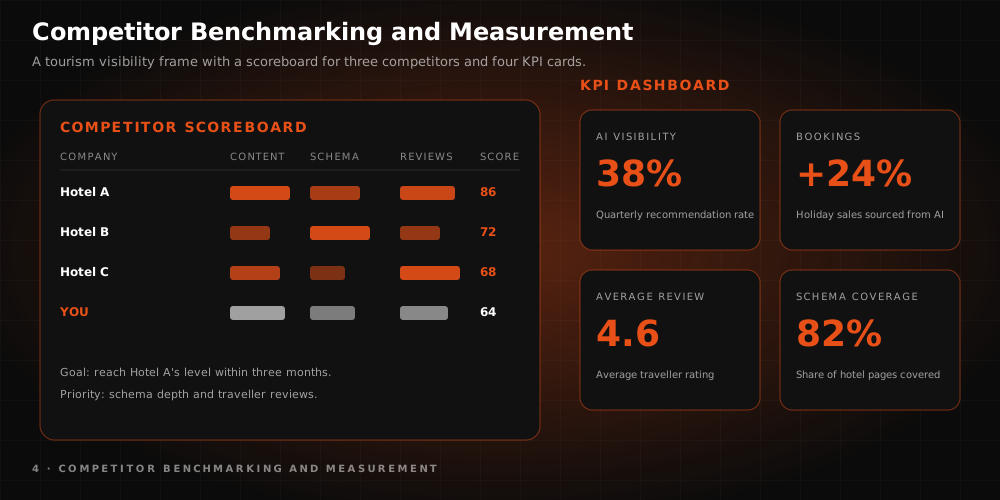
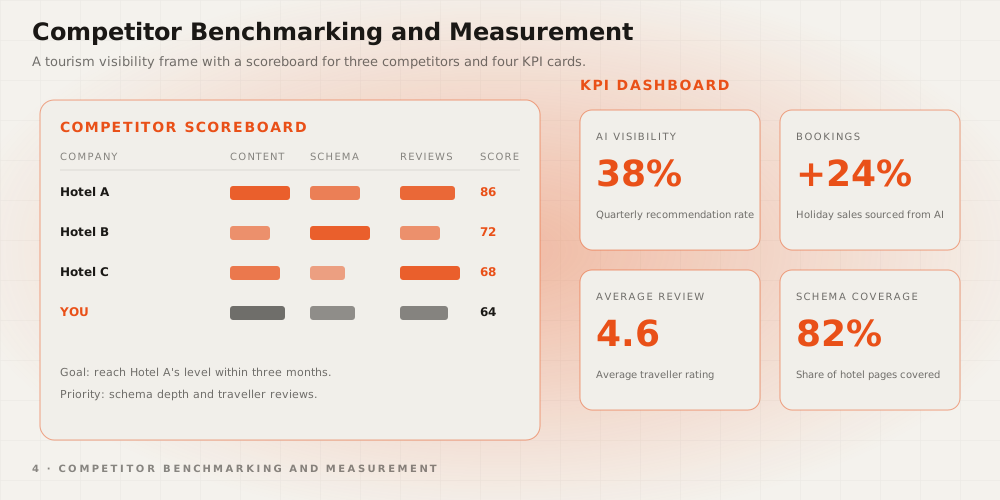
A strategy does not end at implementation; it must be measured and continuously optimized. The core indicators tourism brands should track are:
- AI-sourced visibility: How often, and in which contexts, the brand is recommended in AI answers.
- Intent-aligned traffic: The booking conversion rate of visits arriving from AI surfaces and search engines.
- Content health: Which pages are current, and which need to be merged or rewritten.
Based on this data, content is updated, weak pages are consolidated, and the loop is refined continuously through experiments with different headings and formats. GEO is a dynamic process; changes in the industry and in model behavior should be fed back into the strategy regularly.
Conclusion
Competition in tourism has moved beyond grabbing a spot on search result pages (SERPs); the goal now is to become part of the conversation users have with their personal AI assistant. In this new era, the tourism brands that structure their data best, feed their brand authority with experiential content and make their technical infrastructure conversational with AI will take the largest share of the booking market. At Webtures, we build data-driven GEO strategies to prepare your brand for this generative future.