What Is a Context Window? Why Memory Limits Matter in LLMs
Understand what a context window is, how it defines an LLM's working memory, and how RAG, summarization, and smart prompt design help you work within it.


Artificial intelligence, and large language models (LLMs) in particular, are advancing rapidly at understanding and generating text. Yet one of the most critical factors behind their performance is a concept that often gets overlooked: the context window.
Put simply, the context window is the amount of information a model can hold in mind at once. How much of a conversation or a passage it can remember, and which parts it can weigh when producing a response, are set by this limit. Too little memory capacity means the model forgets earlier points in long conversations; too much means higher cost and heavier processing load.
The context window: definition and core logic
When a language model interacts with a user, one of its most important needs is making sense of earlier messages and text. But a model cannot remember every past conversation without limit. This is exactly where the context window comes in.
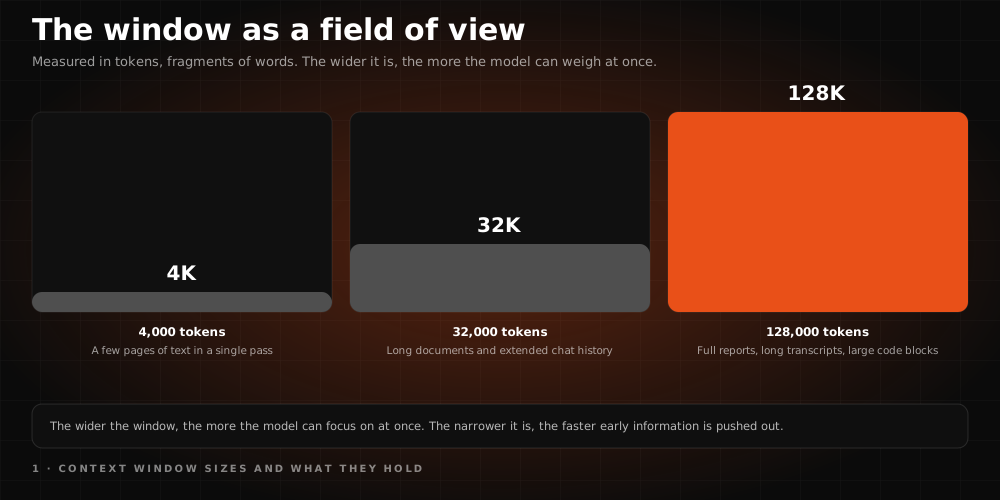
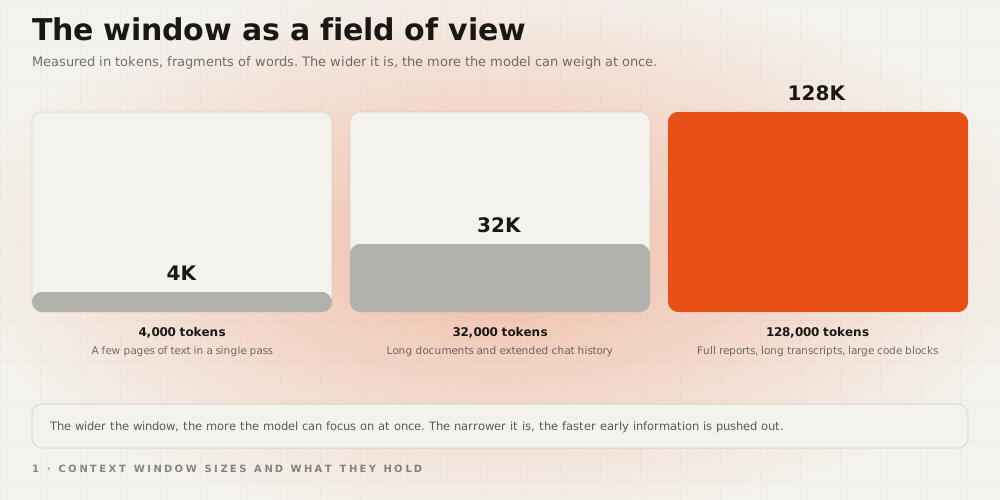
A context window is the maximum length of text a large language model can process and "remember" at one time. It is usually measured in tokens (fragments of words). A model with a 4,000-token context window, for example, can take a few pages of text into account in a single pass. Larger windows (32,000 or 128,000 tokens) can cover much longer documents, chat histories, or code blocks.
Think of the window as the model's field of view: the wider it is, the more information the model can focus on at once; the narrower it is, the faster earlier information gets "forgotten" and pushed out.
How does the context window work in LLMs?
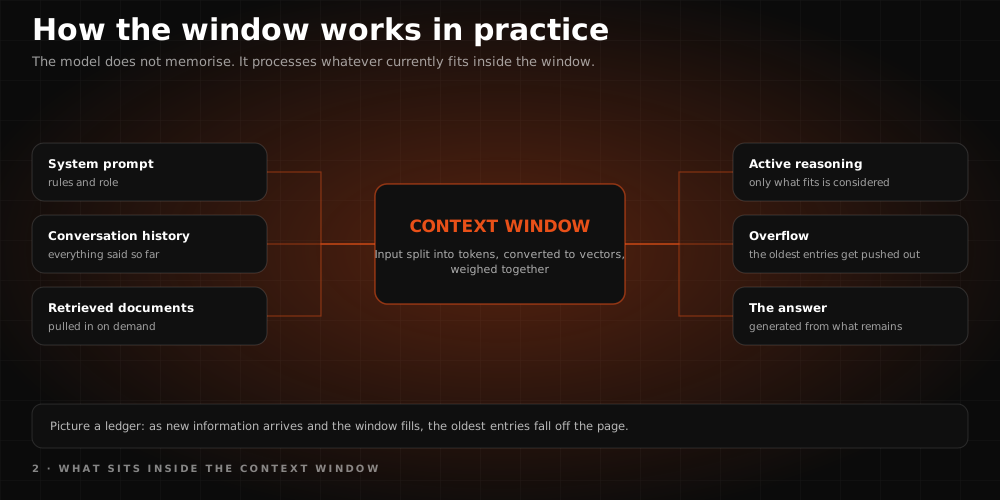
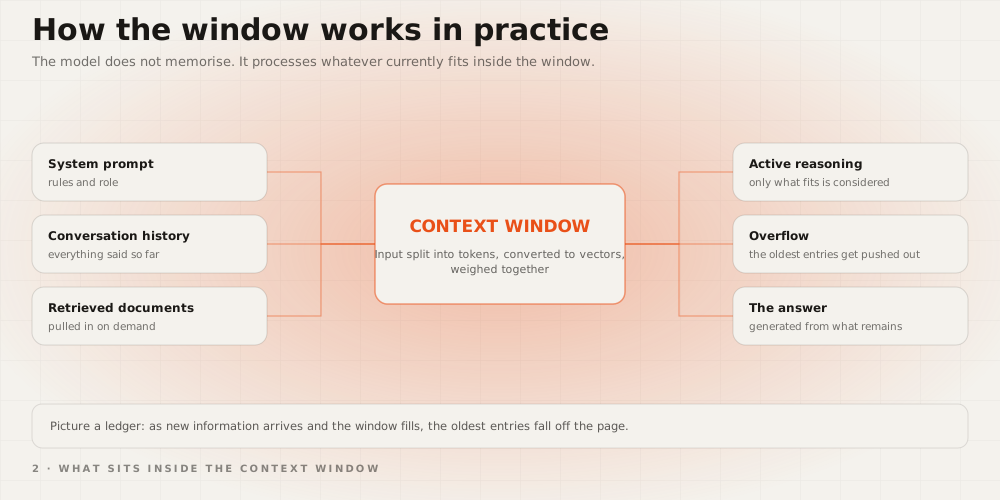
Large language models do not actually memorize earlier text; they process it within a statistical context. Given an input, the model splits it into tokens and converts each one into numerical vectors for processing. The maximum number of tokens the model can consider, its context window limit, is decisive here.
You can picture the context window as a kind of ledger. As new information comes in and the window fills up, the oldest entries get pushed out. The model can only actively evaluate what fits inside the window.
For example:
- In a model with a 4,000-token window, details from the start of a long conversation can fade by the end.
- In a model with a wider 32,000-token window, far more information is preserved, producing more consistent, cohesive answers.
That is why context window size plays a critical role in a model's consistency, its capacity to understand context, and the use cases it suits.
How memory limits affect model performance
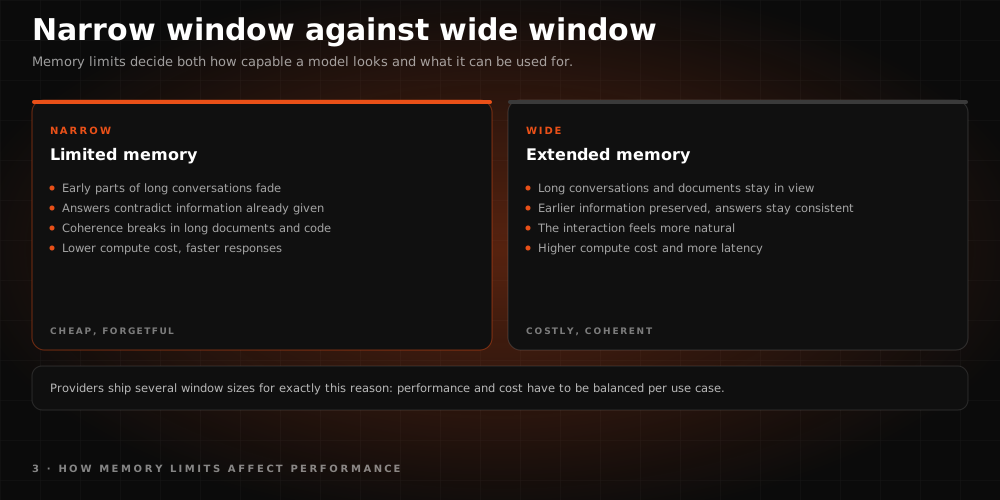
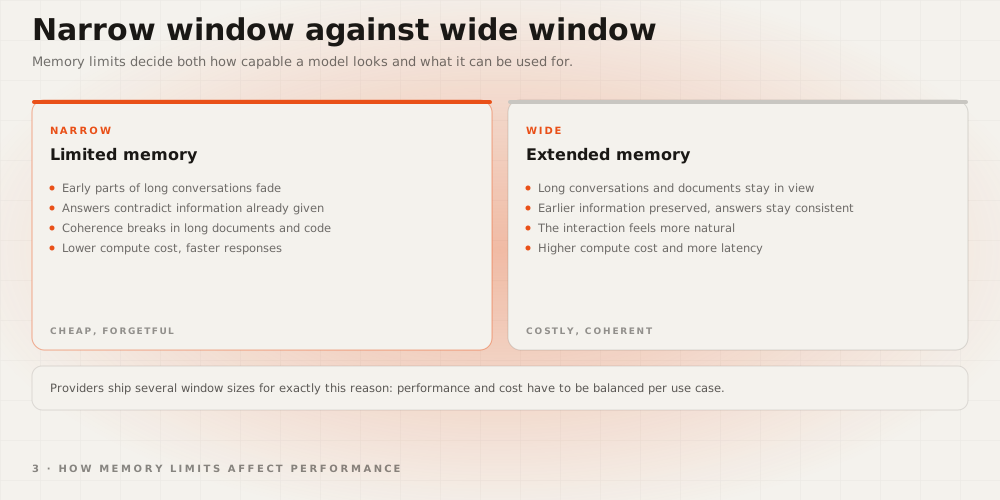
The accuracy and consistency of a language model's answers depend heavily on the width of its context window, because the model can only process the information that fits inside it.
With a narrow context window:
- The model "forgets" earlier parts of long conversations.
- Inconsistent answers can appear; information already given to the user may be ignored.
- Coherence breaks down in complex documents or long stretches of code.
With a wide context window:
- The model can follow longer conversations or documents.
- Earlier information is preserved better, producing consistent answers.
- The user experience feels more natural.
Wide windows have downsides too. Processing more information means higher compute cost and more latency. That is why providers offer context windows in different sizes to balance performance against cost.
In short, memory limits directly determine both how "smart" an LLM appears and which use cases it fits.
Methods and approaches for extending the context window
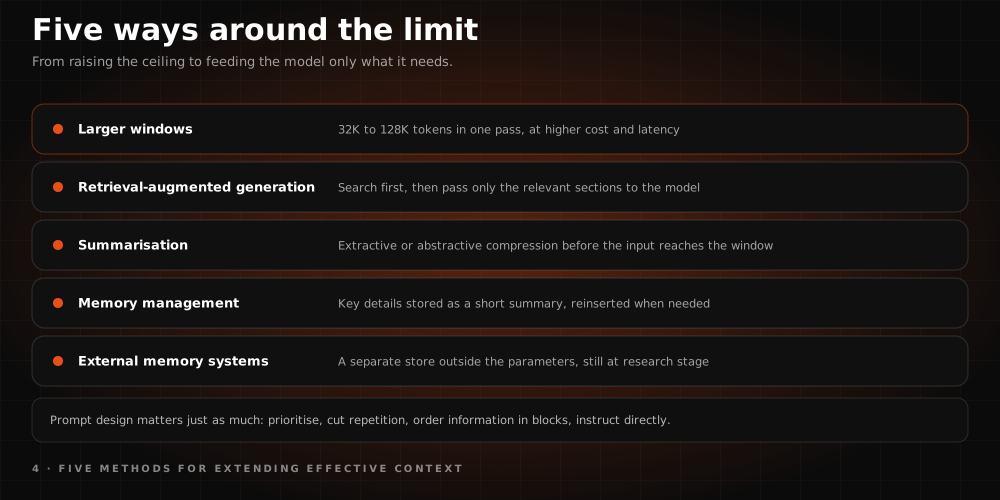
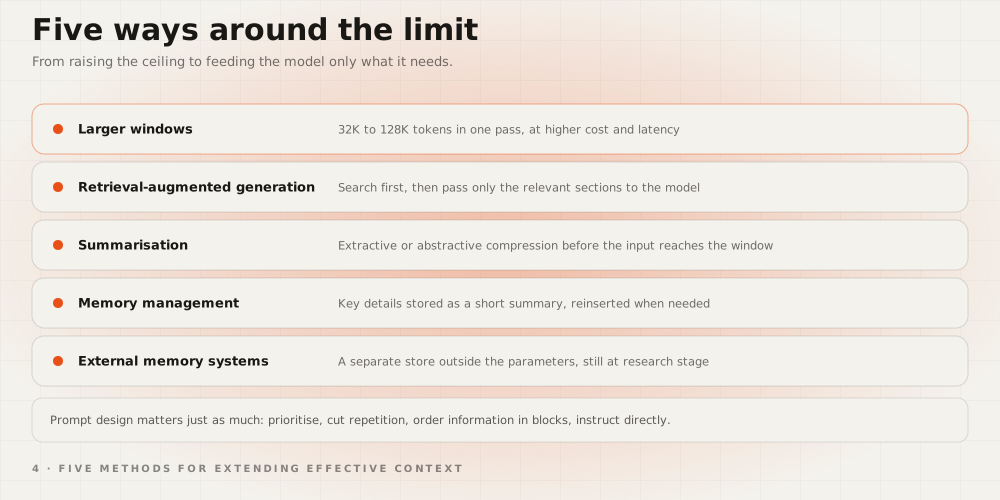
One of the most significant limitations of large language models is that they can only process text up to a certain length at once. Past that limit, the model "forgets" earlier information and loses the thread. Several methods have been developed to ease or work around this problem.
Models with larger context windows
The most direct solution is increasing context window capacity. Newer language models can now handle 32,000 or even 128,000 tokens of context, so very long documents or extensive conversations can be considered in a single pass. The major drawback is rising compute cost and slower response times, so in practice it is not the ideal answer for every use case.
Retrieval-augmented generation (RAG)
The RAG approach is built on the model consulting external knowledge sources on demand instead of loading everything into memory. When a user asks a question, the system first searches a database or document pool, then passes only the relevant sections to the model. The model can then operate as if it had access to a vast knowledge base despite a limited context window. The point to watch is the accuracy and relevance of what gets retrieved; otherwise the model's answer can be wrong.
Summarization and information compression
Another approach is summarizing long content in advance rather than feeding it to the model whole. Summaries can be built either by selecting the key sentences (extractive) or by rephrasing the material into a shorter text (abstractive). The model then works from a shorter input without missing the critical points. If the summarization is too shallow, though, the richness of the context is lost and the model produces more generic, less satisfying answers.
Memory management strategies
In chat-based applications especially, continuously loading the entire conversation into the model is inefficient. Instead, the important details are noted and stored as a shorter summary, which gets reinserted into the window when needed. The model can then stay consistent and personalized across a long-running interaction with the user. This method lets the AI behave as if it had a memory.
External memory systems
Still at the research stage, one of the most promising methods is backing models with external memory systems. Here the model has a separate memory store outside its own parameters. It recalls information from that store as needed and moves only the relevant parts into the context window. Once this approach matures, an AI will be able to carry conversations spanning years, or user-specific knowledge, without forgetting.
Writing effective prompts without exceeding the context window
One of the most common challenges when working with large language models is using the limited context window efficiently. Because the model can only consider what fits inside the window, prompt design plays a critical role. An effective prompt does not fill the window needlessly; it presents the right information, in the right order, in a form the model can parse.
The first step in effective prompt writing is prioritization. The information that answers the user's core need should sit at the start of the prompt, because models generally give more weight to the opening. Supporting examples and details can follow. This approach turns a limited window into a strategic asset.
The second key point is avoiding repetition and ornamentation. Long sentences, vague phrasing, or loosely related details only fill the context window and make it harder for the model to focus. Prefer short, clear, direct statements instead, so every token in the window carries maximum information density.
Another strategy is organizing information into blocks. Information in a prompt should follow a logical flow, not a random order. When the sequence runs definitions first, then conditions, then examples, the model processes the information more consistently. This prevents context from getting lost, especially in long, complex tasks.
Drawing on summarization techniques also works well. Instead of pasting a very long text into the prompt as is, a short summary or a list of the key points makes the model's job easier. The context window stays within bounds and the odds of an accurate answer go up.
Finally, giving clear instructions directly affects how efficiently the window is used. When the expected task is defined explicitly, there is no need to add extra explanation or repetition. Direct instructions like "write a short summary", "extract the key concepts", or "solve it step by step" deliver strong results without stretching the prompt.
In summary, writing effective prompts without exceeding the context window rests on prioritization, simplicity, logical information order, summarization, and clear instructions. Apply these strategies and the model produces far more accurate, more powerful answers within its limited memory. If you want to build your skills in this area and specialize in prompt engineering and AI applications, a structured AI training program is well worth the investment.