What Is a Keyword? How to Do Keyword Analysis
The keyword , one of the most important concepts in digital marketing, no longer refers only to the words users type into a search box.

The keyword, one of the most important concepts in digital marketing, no longer refers only to the words users type into a search box. Through a GEO lens, a keyword is one of the core data points used to understand user intent, prompt structure, topic scope, entity relationships, and which sources AI search systems are likely to prefer when generating answers.
Users today rarely run single-word searches. They ask detailed questions, request comparisons, use decision-support prompts, and pose contextual queries. Keyword analysis should therefore not stop at finding high-volume terms. A proper analysis also shows which question the user is asking, which supporting information they need, which sources they can trust, and how a piece of content can be cited in AI-powered answers.
What is a keyword?
A keyword is the word or phrase users enter to find information about a topic, product, service, or problem. From a GEO perspective, however, a keyword is not a standalone target; it is the starting point of a wider web of meaning. Behind every keyword sit user intent, a decision stage, an expected answer format, related entities, and follow-up questions.
Take “organic coffee”. The phrase describes more than a product category. The user behind it may want to compare coffee types, learn the best brands, understand health effects, make a purchase decision, or find an answer to a more personal prompt like “which organic coffee is right for me?”. That is why a keyword is where content production begins in GEO work; the real value emerges when that keyword is translated into the right questions and the right answer architecture.
Why does keyword research matter?
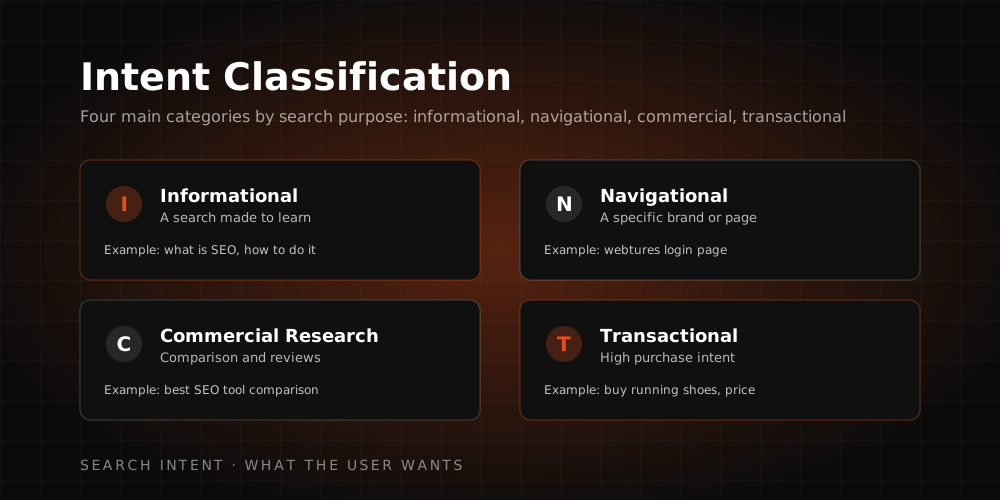
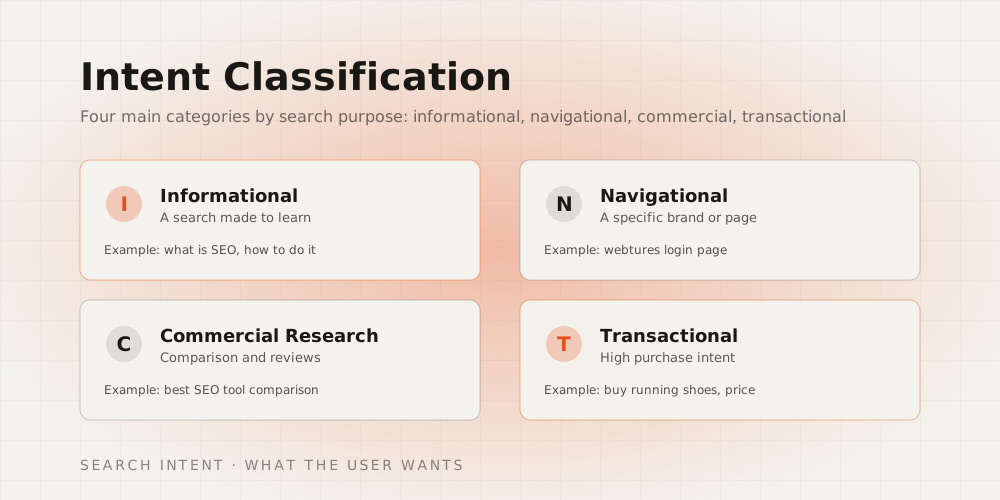
Keyword research helps you understand what your audience searches for, how, and in what context. Beyond popular queries, it surfaces the sub-questions users ask while deciding, their comparison needs, information gaps, and purchase or application intent.
In GEO, the core purpose of keyword research is making content more understandable, citable, and answer-ready for AI search systems. Word lists alone are not enough. Every keyword should be evaluated together with its prompt variations, user intent, content format, entity scope, source trust, and the need for quotable answer blocks.

What are the types of keywords?
Keyword types help you understand users' different information needs and decision stages. In GEO, these types are used to build prompt clusters and prepare content for different answer scenarios.
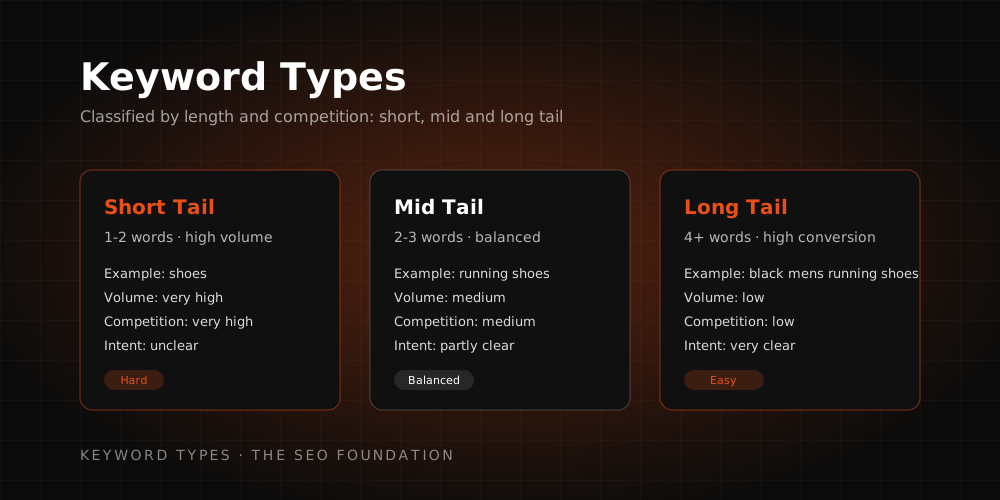
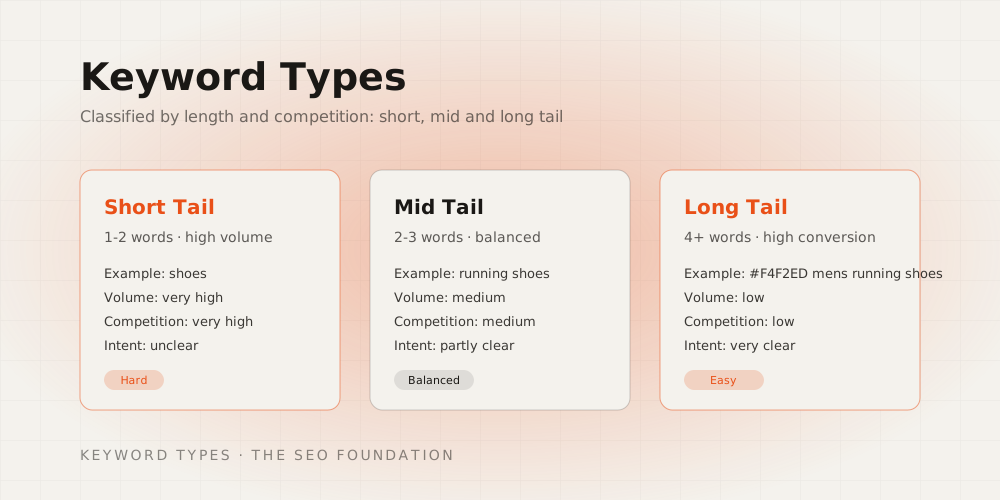
- Short-tail keywords are broad, typically high-volume phrases. Queries such as “coffee”, “CRM”, or “digital marketing” carry a wide spectrum of intent. In GEO, these terms define the core topic and entity space.
- Long-tail keywords are phrases reflecting more specific needs. Phrases like “CRM recommendations for small businesses” or “how to choose organic coffee” show far more clearly what the user wants to learn. They provide strong input for answer-focused content design.
- Question-based queries carry important signals for AI search visibility. Queries such as “how does it work?”, “which is better?”, “what is it for?”, and “who is it right for?” should be used to build directly answerable sections in the content.
- Comparison and decision queries show the user is weighing options. For queries like “Ahrefs or Semrush?” or “organic coffee versus filter coffee?”, use tables, bullet lists, criteria lists, and clear recommendation blocks.
- Negative keywords are used mainly in ad campaigns to exclude irrelevant queries. For GEO, this data helps you understand which contexts the user is not interested in and define your content scope more cleanly.
What role do keywords play in GEO work?
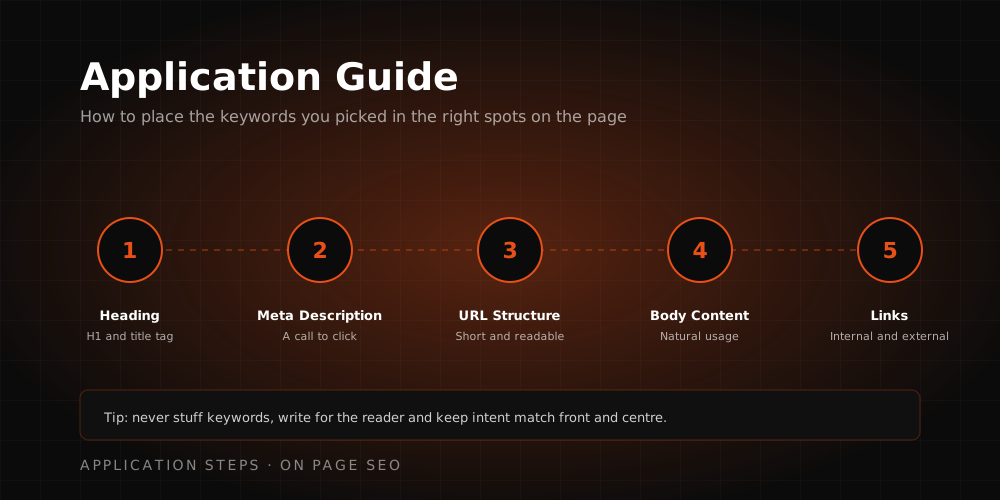
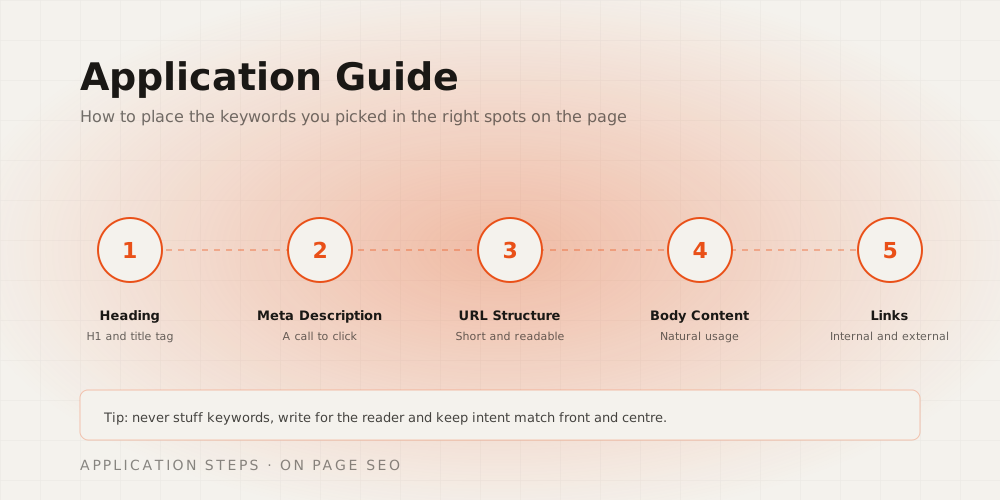
In a GEO strategy, keywords should be treated not as phrases to repeat verbatim but as signals for understanding user behavior and answer expectations. A keyword's real value lies in which prompts it turns into, which sub-questions it triggers, and which pieces of content answer engines are likely to treat as trustworthy sources.
When creating content, instead of targeting a single word, map the topic cluster it belongs to, the related entities, the user journey, and the clear answers the content must deliver. A well-structured piece brings together definitions, use cases, advantages, comparisons, examples, frequent questions, and reference-grade explanations, making it far more understandable for AI search systems.
How is keyword analysis done?
Keyword analysis starts with understanding which topics your audience researches and which phrases they use to ask for that information. In the first stage, map out your products, services, categories, and problem areas. Then identify the related short-tail terms, long-tail queries, question patterns, comparison phrases, and searches carrying purchase or application intent.
In GEO-focused analysis, the second step is converting these keywords into prompt clusters. The phrase “keyword analysis”, for example, can split into distinct prompts such as “how is keyword analysis done?”, “which tools are used?”, “how do you interpret search volume?”, and “how do you use keyword data for AI search?”. This approach lets the content serve not one query, but the different answer needs orbiting the same topic.
In the third stage, analyze competitor sources, existing answer surfaces, content gaps, and entity coverage. Examine which questions competitors answer clearly, which topics they leave shallow, which sources they use, and which content formats make them visible. The outcome is a content plan built not just for keyword targeting but for producing answers and earning citations.
Which tools can you use for keyword analysis?
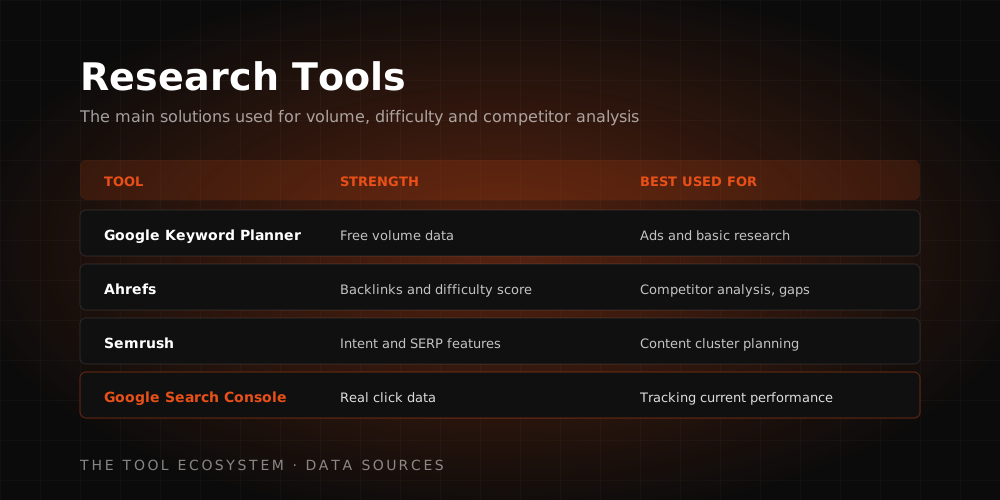
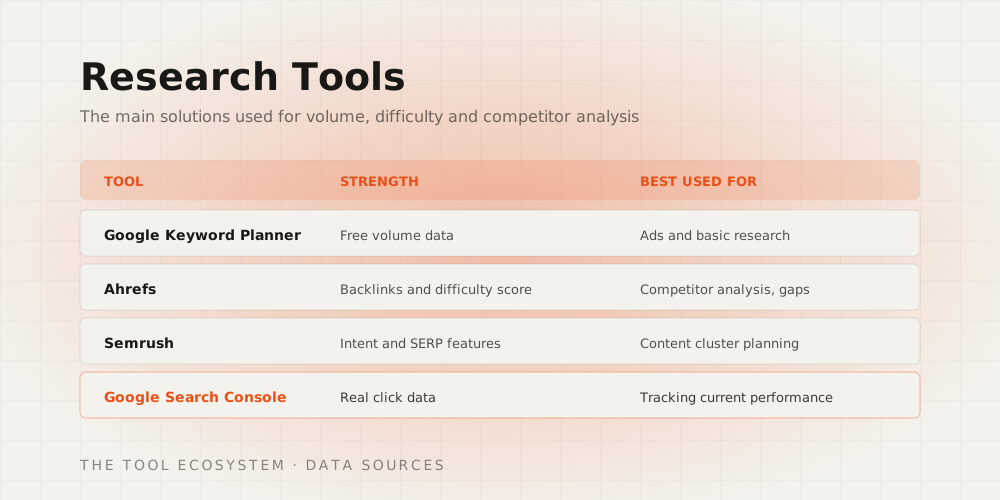
Keyword analysis tools are valuable not only for finding terms but for understanding user intent, trends, the competitive field, content gaps, and visibility opportunities. In GEO work, the data these tools produce should feed a prompt map and an answer architecture.
Google Keyword Planner offers new keyword ideas related to your products or services, search volume estimates, and ad cost signals. Google Trends helps you read seasonal shifts in interest and regional demand differences. Tools such as Ahrefs, Semrush, Similarweb, Moz, and KWFinder can be used to analyze competitor visibility, content gaps, link profiles, topic coverage, and market opportunities.
Some of the tools you can use in keyword research include:
- Google Keyword Planner
- Google Trends
- Semrush
- Ahrefs
- Keyword Surfer
- Keywords Everywhere
- Similarweb
- Moz
- KWFinder
Data from these tools should not be dropped straight into a headline or body copy. Interpret it first through the lens of search intent, prompt potential, user journey, and citable answer structure. That is how research output stops being a word list and becomes a content map serving the GEO strategy.
How do you build a keyword strategy?
A successful keyword strategy rests on your audience's needs, their decision stages, and the prompts they type into AI tools. The first step is defining the core topic and its sub-topic clusters. Then, for each topic, separate out the informational, comparison, evaluation, purchase, and support intents.
When building a GEO strategy, ask these questions for every keyword: What answer does the user expect from this query? Which entities is this topic related to? Which sub-questions should the content answer? What precise information could answer engines quote from this page? Which sources could strengthen the page's trust signals? These questions ensure content is not merely visible but understandable and citable for answer systems.
In execution, avoid keyword stuffing, needless repetition, and spinning up separate pages purely to chase variations. Build strong pillar resources instead, and support them with related sub-guides, comparisons, FAQ blocks, examples, and internal links.
Semantic coverage instead of keyword density
Keyword density describes how often a term appears in a piece of content. Chasing a specific ratio is no longer the right approach. Google and AI-powered search systems evaluate semantic coherence, how well the content satisfies user intent, entity relationships, and how comprehensively the topic is covered, far more than word repetition.
Instead of repeating the same term artificially, cover the topic through natural subheadings, illustrative examples, clear definitions, comparisons, and question-and-answer blocks. What matters for GEO is that the content can answer different prompts and be placed in the correct context by AI systems.
Covering prompt intent instead of targeting keywords
In traditional content plans, keyword targeting meant producing a page for a specific query. In GEO, targeting means covering the user's query and the prompt variations it can turn into. The goal is not simply using the phrase “types of organic coffee”; it is clearly answering the selection criteria, comparisons, usage recommendations, price-quality trade-offs, and frequent questions around that topic.
This approach frees the content from depending on a single term. The page becomes a resource offering definitions, scope, examples, comparisons, recommendations, and decision support. The result is content that is more useful to users, more understandable to AI search systems, and better positioned to be cited in answers.
How do you prioritize keywords?
Search volume alone is not enough to prioritize keywords. A healthier GEO prioritization weighs intent clarity, answerability, commercial value, contribution to topical authority, citability, and the content gaps competitors have left, all together.
- Visibility potential: High-volume queries can deliver broad reach, but low-volume queries with clear intent can offer more valuable opportunities in AI search answers.
- Answer gaps: Questions competitors treat superficially, answer incompletely, or fail to support with credible sources create strong content opportunities for GEO.
- Conversion intent: Queries carrying purchase, application, quote, comparison, or selection intent deserve priority.
- Entity contribution: Topics directly tied to the brand's area of expertise build stronger long-term source trust and topical authority.
- Prompt coverage: Analyze how many distinct user questions, sub-intents, and answer formats a keyword can turn into.
Where do your competitors appear as a source?
Competitor analysis is an important part of keyword research, but in GEO, knowing which keywords competitors rank for is not enough. Analyze which questions they surface as a source for, which comparisons they are named in, which content formats they use, and which information AI search answers associate them with.
- Competitor visibility analysis: Identify the keywords, question patterns, comparisons, and category queries where competitors stand out.
- Competitor answer analysis: Examine which sub-questions competitor content answers clearly, where it falls short, and which sources it uses to build trust signals.
- Entity and brand associations: Map which products, services, people, categories, industries, and problem areas competitors are associated with.
- Content format differences: Evaluate which formats, such as lists, guides, comparisons, tables, FAQs, case studies, and data-backed explanations, create the stronger perception of a source.
In the end, keyword analysis in GEO is far more than finding words. Done properly, it becomes a strategic research discipline that reveals user intent, prompt structure, topical authority, answer architecture, and a brand's potential to be recognized as a source in AI search systems.