What Is Deep Research?
Finding information has never been easier, yet producing reliable, in-depth research still demands serious time and effort. OpenAI's SI-powered research tool Deep Research was built to make that process dramatically faster and more effective.


Finding information has never been easier, yet producing reliable, in-depth research still demands serious time and effort. OpenAI's SI-powered research tool Deep Research was built to make that process dramatically faster and more effective. So what exactly is Deep Research, who can use it, and what advantages does it offer?
What is Deep Research?


Deep Research is an SI tool that can conduct in-depth research on complex topics and deliver comprehensive analyses. To help users reach detailed information on a given subject, it gathers data from a wide range of online sources, analyzes it, and summarizes the findings.
The technology is widely seen as a significant step in shaping the future of SI-assisted research. It goes beyond standard search engines, compiling trustworthy sources such as academic papers, news sites, technical documentation, and industry reports to present a well-rounded perspective.
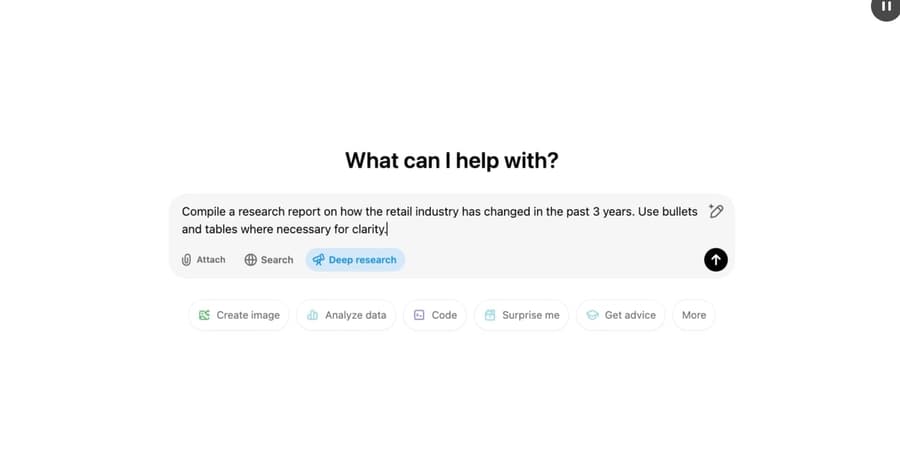
Key features of Deep Research


Deep Research offers several advantages over traditional research methods. Here are its most notable features:
1. Autonomous, in-depth research
Deep Research can independently run multi-step investigations into the topic a user submits. It does not stop at surface-level facts; it explores different angles of the subject and builds a comprehensive analysis.
2. Broad data coverage
While traditional web searches typically leave users relying on a handful of sources, Deep Research draws on a wide pool that includes academic papers, technical documentation, and industry reports.
3. Intelligent synthesis
The SI does more than collect data; it combines the findings into a coherent, detailed, and readable report. That eliminates the noise of irrelevant information for the user.
4. Cited, documented results
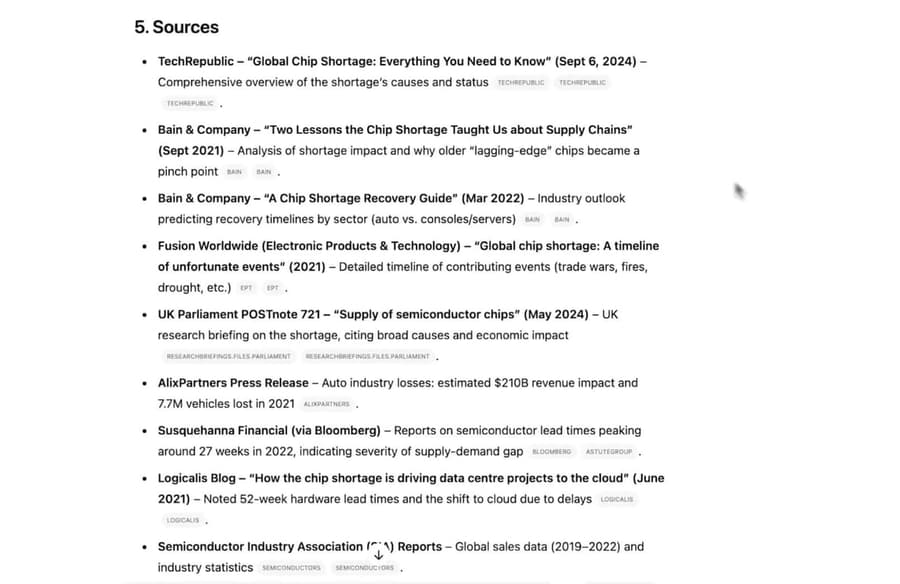
Deep Research systematically evaluates the sources it uses and includes them in its reports, so users can easily verify the reliability of the information it presents.
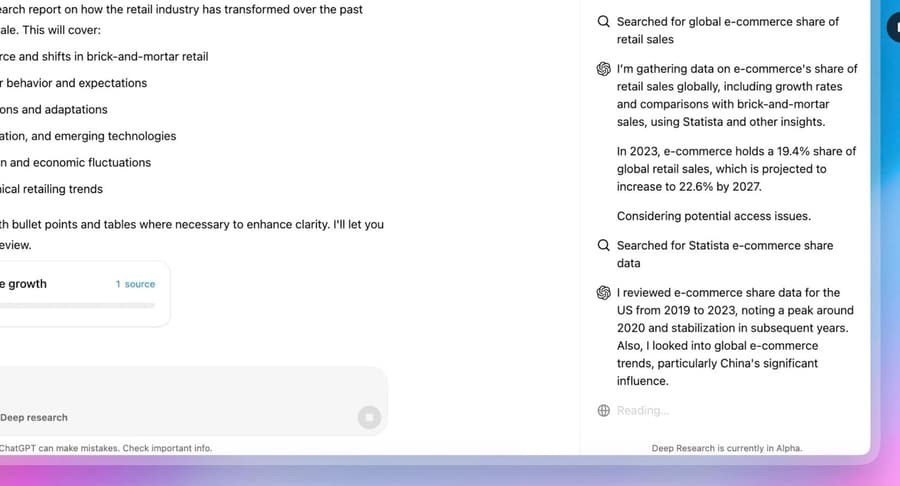
How to use Deep Research


- Sign in to ChatGPT.
- In the message box, select the "Deep research" option as you type your query.
- Add text, images, or files to give your research topic more context.
- If needed, the SI may ask you for additional parameters to gather more specific information.
What to keep in mind while using it
Depending on the complexity of the topic, Deep Research produces a comprehensive report within 5 to 30 minutes. You can get on with other work in the meantime and receive a notification when the research is complete.
The resulting reports include citations and detailed analysis. Still, it is important to remember that SI can occasionally return inaccurate or incomplete information, so review the results carefully before making critical decisions.
Who can use Deep Research?
Deep Research offers significant advantages for professionals and individual users alike. Here are the groups most likely to benefit:
1. Academics and students
For academic work such as research projects, theses, and papers, Deep Research provides fast access to comprehensive, reliable sources.
2. Business professionals
Executives, marketers, and strategists can use the tool for industry analysis and competitive research to make better-informed decisions.
3. Finance and investment analysts
Finance professionals can use Deep Research to gather detailed insights on stocks, cryptocurrency markets, or economic trends.
4. Consumers
Shoppers who want to do thorough research before a major purchase can use Deep Research to evaluate products and services more effectively.
Advantages of Deep Research


Compared with traditional research workflows, Deep Research saves time, surfaces more reliable information, and enables genuinely in-depth analysis. Here are its most important advantages:
1. Time savings and fast results
- Where traditional research can take hours or even days, Deep Research generates detailed reports within 5 to 30 minutes. Instead of manually combing through countless sources, users get pre-analyzed, summarized information they can use right away.
2. A broad, reliable source pool
- Standard web searches tend to stay limited to the popular results on the first few pages, while Deep Research goes much further. It gathers data from trustworthy, verifiable sources such as academic papers, technical reports, news sites, and industry analyses, and it supplies a bibliography so users can validate the information themselves.
3. Deep, analytical presentation
- Rather than offering surface-level facts, it details different aspects of the topic and runs comparative analyses. In an industry analysis, for example, it brings together the current market picture, historical trends, and future projections. By synthesizing information across perspectives, it delivers a richer set of insights.
4. User-friendly and easy to access
- Deep Research is accessible directly through the ChatGPT interface, with no complicated setup. Its user-friendly design means even people without technical backgrounds can use it comfortably. Access has been rolled out gradually to ChatGPT Plus, Pro, and Enterprise users.
5. A customizable research experience
- Users can highlight specific keywords, filter out unwanted sources, and request tailored analyses. For financial research, for instance, you can have it focus only on particular companies, sectors, or investment instruments.
6. Integrated, continuously updated information
- Deep Research does not rely on a static database; it pulls information from continuously updated online sources. The latest developments and freshest data flow directly into the research.
7. Multi-format support
- It is not limited to text; it can also analyze charts, tables, and PDF documents. That makes complex materials such as academic studies, market analyses, and technical reports far easier to understand.
8. Source and information transparency
- Deep Research clearly attributes the information it collects, allowing users to judge the reliability of the data. Thanks to source citations, users can reach the original content and verify the findings.
9. In-depth comparisons and summaries
- It presents information from different sources side by side to build a stronger analysis. For a product review, it compares offerings from different manufacturers along with their pros and cons. For a market analysis, it summarizes how the various players in the sector are performing.
10. The ability to offer forward-looking projections
- Working from current data, the SI can estimate future possibilities. For a given industry, for example, it can analyze which trends are likely to gain momentum over the next five years.
Sources
Growth & GEO