What Is a GEO Score and How Is It Calculated?
Learn what a GEO score is, how citation frequency, sentiment, and entity authority combine to calculate it, and how to raise your brand's AI visibility.

What is a GEO score (AI visibility score)?
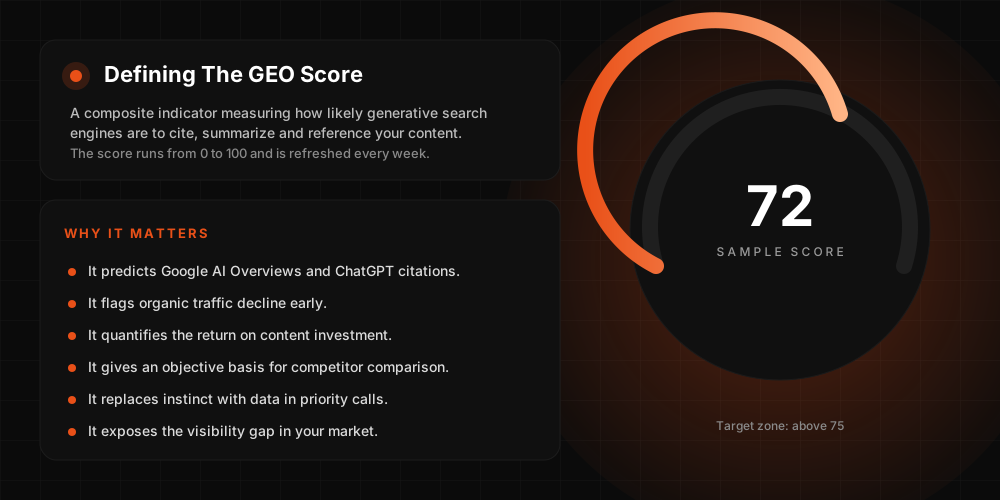
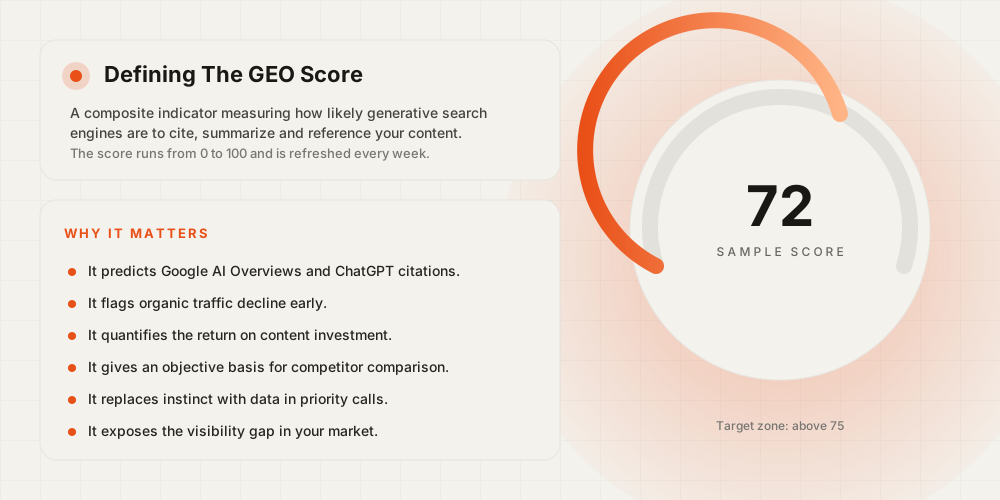
In the digital marketing ecosystem, the metrics that measured classic ranking success in search engines have given way to the GEO (Generative Engine Optimization) score, which is based on how often AI models (LLMs) reference your brand. Gartner's forecast of a 25% decline in traditional search volume by 2026 has redefined what success means. The GEO score is an integrated measurement that represents your brand's authority with answer engines such as ChatGPT, Perplexity, and Gemini, along with its technical accessibility, semantic depth, and the digital trust it holds with users.
The same concept is also known in the industry as GEO Rank: it expresses how often, and how favorably, answer engines cite your brand in the answers they generate for user questions. In an ecosystem dominated by AI, the success criterion is not being listed but becoming the very substance of the answer AI produces. Answer engines do not merely crawl web pages; they interpret, synthesize, and regenerate them. That is why the scoring criteria go beyond technical optimization and focus on semantic coherence.
How are GEO and citation scores calculated?
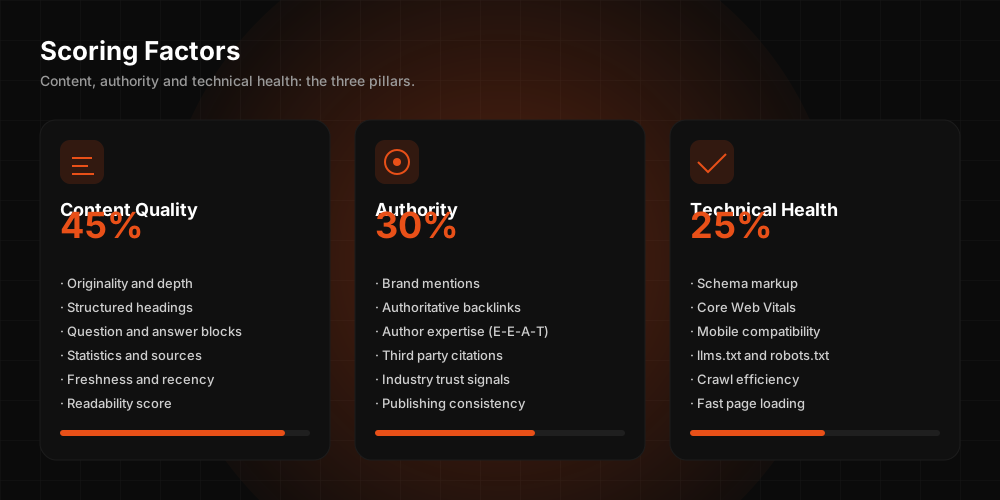
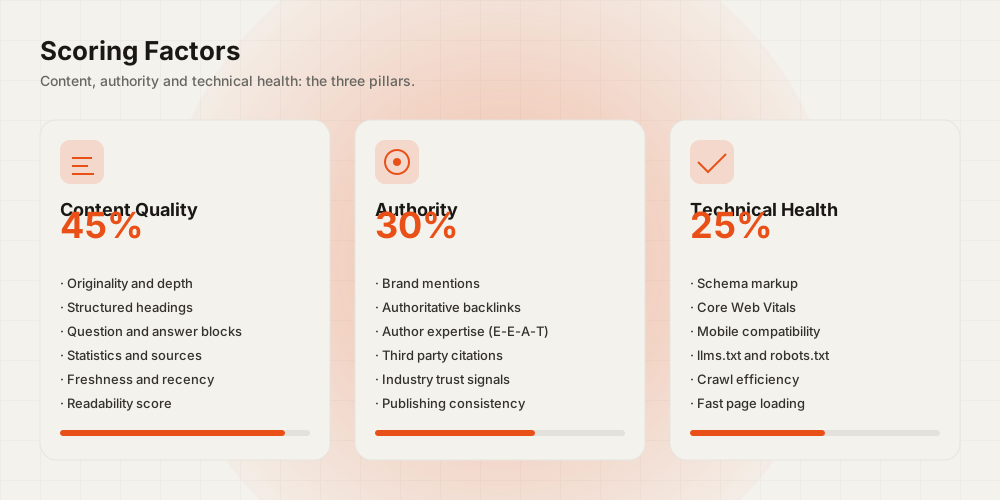
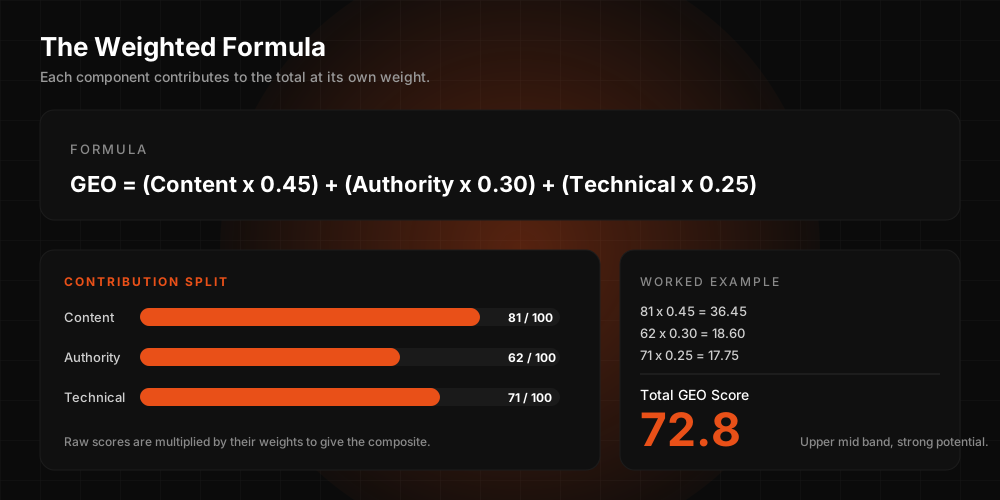
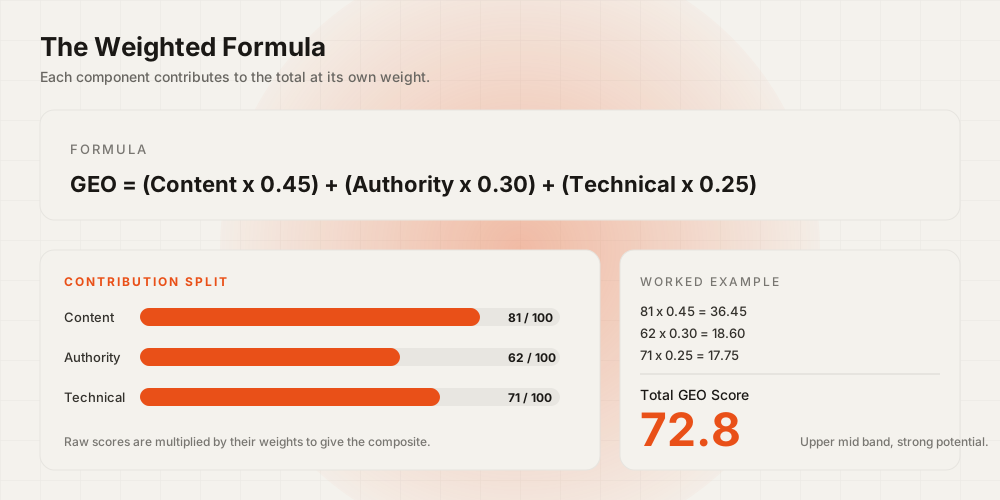
Unlike classic calculations, scoring in the AI era rests on how often your brand is accepted as the single source of truth. The calculation is a weighted average of these components:
- Citation Frequency: How often AI assistants show your brand's link or name as a source in the answers they give to user questions.
- Sentiment Analysis: The positivity of the adjectives AI models use when mentioning your brand (trusted, leading, innovative, and so on).
- Entity Authority: How clearly your brand is defined in the digital knowledge graph.
- Structured Data Depth and Contextual Relevance: How machine-readable the content is and whether it delivers clear answers that directly satisfy user intent.
Together, these metrics form your brand's algorithmic trust score in the AI ecosystem. For that score to create real value, it must be monitored continuously. Because AI models re-crawl content, links, and brand signals every day, authority levels shift dynamically. This is exactly where Brantial plays a critical role, measuring in real time how your brand is positioned across AI answer engines. Brantial's visibility analytics show you clearly which content produces the strongest authority signals, which pages AI references most often, and which digital assets need reinforcement to raise the score. That brings your brand one step closer to being recognized by AI as the single source of truth in next-generation GEO strategies that go beyond SEO.
How do you raise AI visibility?
Raising a GEO score requires building an information architecture aligned with how large language models (LLMs) work, rather than stuffing keywords.
LLM-friendly content optimization and information gain
As AI models scan billions of data points across the internet, they filter out information that merely duplicates other sources. Your content must deliver information gain.
- Structured Data Presentation: Analyses by Semrush and Profound show that content containing HTML tables and clear lists is 20% more likely to be cited by AI.
- Question-and-Answer (Q&A) Format: Content should be structured to answer directly the natural language (NLP) queries users pose to AI assistants.
- Contextual Depth: Instead of just writing "loan interest rates," produce deep, analytical content such as "how 2025 mortgage interest rates relate to inflation."
Beyond this, structure your product and service pages with knowledge graph logic: define what the entity is, what it does, and who it is for, in clear, concise sentences that machines can easily parse (NLU, Natural Language Understanding compatible). When AI builds an answer to "What is the best solution for industry X?", it should be able to quote your data directly.
Technical access and semantic infrastructure
Technical SEO has given way to technical markup that helps bots interpret your content. Your site's crawlability must now be optimized not only for Googlebot but for OpenAI (GPTBot) and other AI agents as well.
- Schema Markup (Structured Data): Clearly defining your products, services, and authors in machine language (JSON-LD) reduces the risk of hallucination (AI producing false information).
- Robots.txt and AI Access Control: AI bots' access to your site needs to be managed strategically. Allowing your content to be used as training data secures your brand a lasting place in future models.
- Speed and Render Performance: AI assistants want to compose the answer within milliseconds. Sites that load slowly or hide content behind JavaScript get excluded from the instant-answer mechanism. Clean HTML structures and JSON-LD data are prioritized; the faster you serve raw content to the bots, the higher your score climbs.
Multimodal and dialogue-ready experience
Users no longer interact only by typing; they use voice assistants, visual search, and chatbots. Mobile-friendliness has given way to dialogue-friendliness. Voice and chat-based searches are expected to exceed a 50% share of commercial queries after 2025. The closer your content sits to spoken language, the better your odds of appearing in both voice and text-based AI answers.
Digital trust and user signals
In a world where zero-click searches reach 60% levels, the user experience must be conversion-focused. AI reads the time and engagement users spend on your site as a trust signal.
- Navigation and Engagement: When a user finds the information they came for immediately, it signals to the AI model that this source answers the question correctly.
- Brand Mentions: Brand conversations in forums, community wikis, and social media (for example Reddit and LinkedIn) feed the training sets of AI models. In Webtures strategies, off-site reputation management is an inseparable part of the GEO score.
- Expert Author Identity: Proving through digital signatures that content is written by qualified professionals (doctors, engineers, and so on) increases AI trust in sensitive sectors (YMYL) such as health and finance.
The new rule for brand mentions is this: the link does not need to be clickable. Your brand name appearing in a positive context (co-occurrence) on a trusted platform (for example Wikipedia, Bloomberg, or industry reports) is enough for AI to recognize you as an authority. By contrast, manipulative link packages can wipe out your brand's trust score, thanks to AI models' spam detection capabilities. Only organic, high-reputation digital footprints hold value.
How do you track a GEO score?
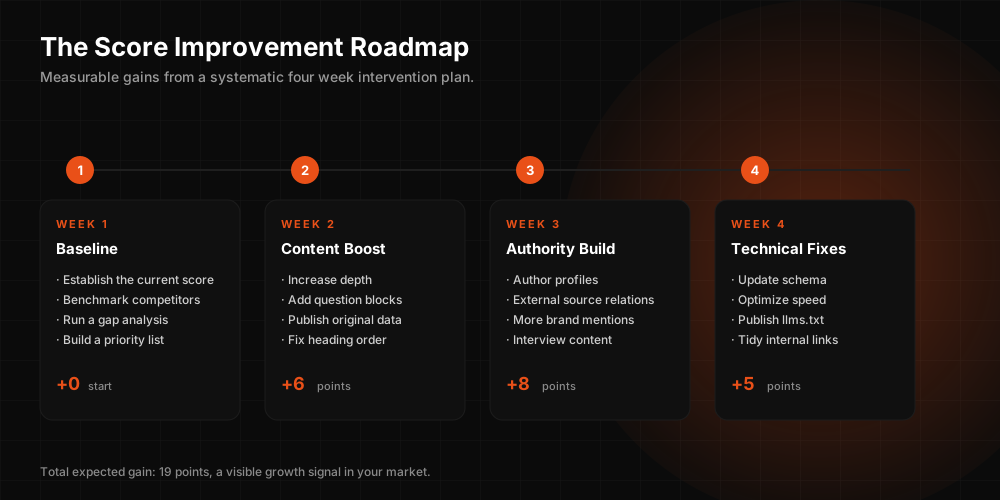
Raising the score sustainably requires not just taking action but measuring how those actions affect AI models. Tracking is built across four layers:
- Answer Engine Scanning: How your brand is answered across different LLMs using defined prompt sets, in which contexts it is referenced, and which competitors it is mentioned alongside.
- Prompt Volume and Visibility Mapping: Based on the real queries users pose to AI systems, in which intents your brand is part of the answer and in which critical areas it is entirely absent.
- Brand Mention and Co-occurrence Analysis: In which sources, alongside which entities, and in what sentiment context your brand name appears.
- Trust and Authority Score: Converting this data into a holistic score that shows your brand's recommendability level, independent of classic ranking metrics.
This measurement framework replaces guesswork with evidence-based decision making in GEO work. Without measuring how AI sees your brand, it is impossible to raise the score in any lasting way.
Conclusion
Optimizing the GEO score of your website and digital assets elevates you from being just another search result to being the information authority of the AI era. These four pillars, addressed through Webtures' truth engine vision (Citations, Content Architecture, Semantic Infrastructure, Digital Trust), will secure your brand sustainable leadership in the digital competition ahead. Remember, visibility on the internet of the future means being recommended, not just being searched for.