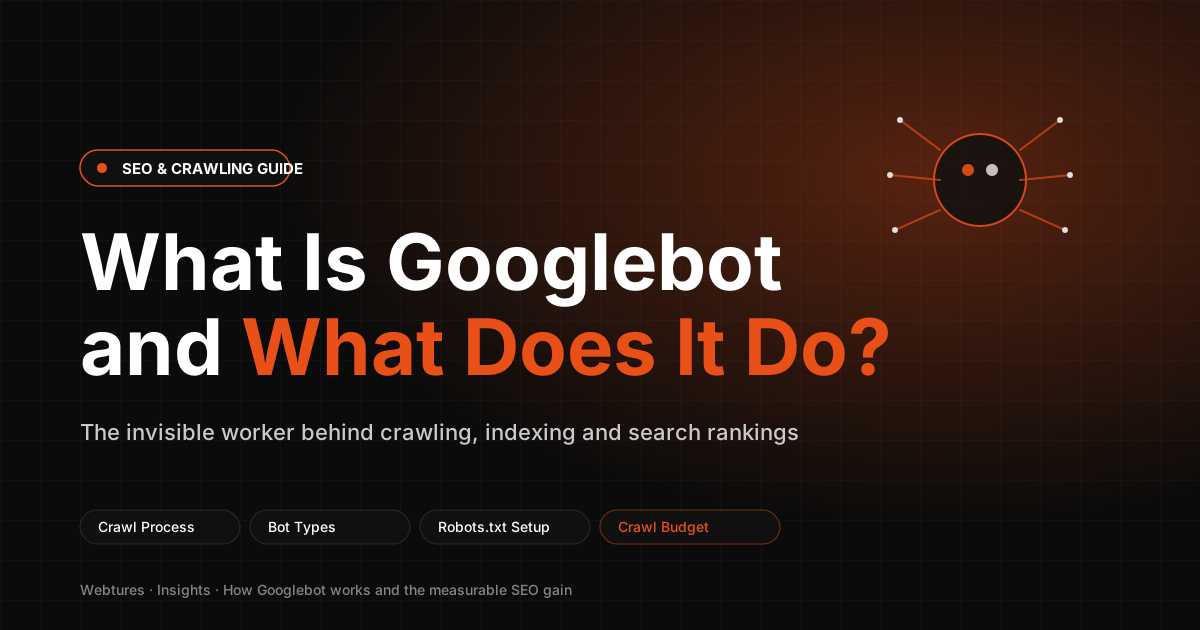
What Is Googlebot and What Does It Do?
Googlebot is the main crawler Google uses to discover web pages, crawl them, and pass them on to its indexing systems.

Googlebot is the main crawler Google uses to discover web pages, crawl them, and pass them on to its indexing systems. For a website to be considered as a source in Google Search, AI Overviews, AI Mode, and other AI Search experiences, its important pages must first be accessible, readable, and technically understandable to Googlebot.
From a GEO perspective, Googlebot should not be treated as a mere crawling tool. How Googlebot sees a page shapes the page's HTML structure, its mobile version, its canonical signal, its robots.txt status, its noindex usage, its structured data, its internal links, and its value as a source. That makes Googlebot accessibility one of the foundational technical layers for AI Search source visibility and citability in answer engine systems.
What is Googlebot?


Googlebot is the generic name for the web crawlers used by Google Search. Googlebot discovers new URLs through links, sitemaps, previously known URLs, and various discovery signals. It then crawls the page, processes the required resources, evaluates the technical signals in the mobile and desktop versions, and passes eligible content on to the indexing systems.
In our technical audits at Webtures, the most common Googlebot problem is not a block in robots.txt but pages the bot fetches and then discards because canonical and redirect signals contradict each other. We therefore read Search Console's exclusion reasons before touching crawl rules.
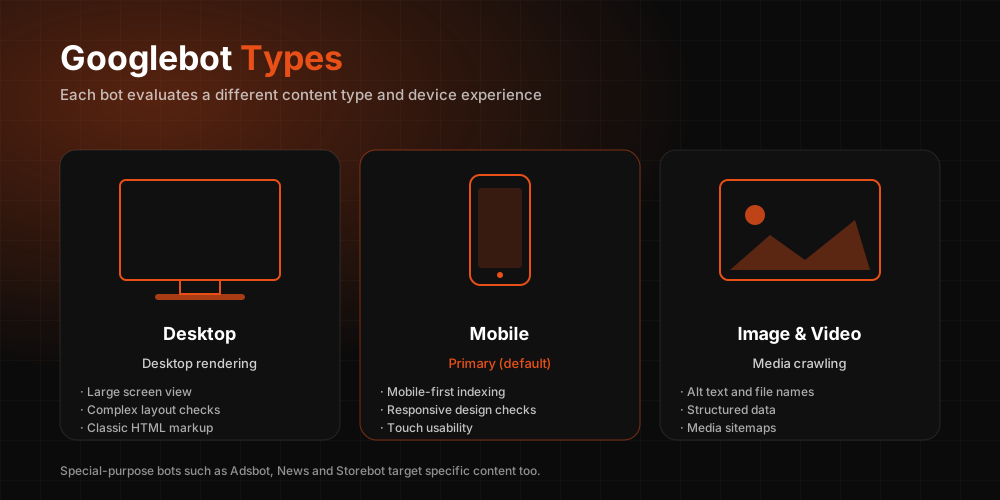
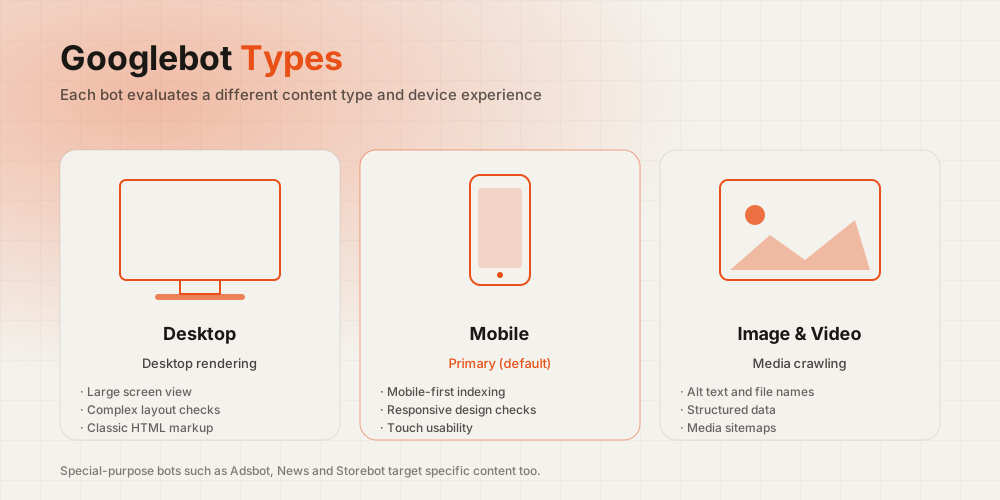
Googlebot operates in two main forms:
- Googlebot Smartphone: The crawler that simulates a mobile device user. Google evaluates content through the mobile version for most websites.
- Googlebot Desktop: The crawler that simulates a desktop user. Because of mobile-first indexing, mobile crawler requests dominate on most sites.
In robots.txt, Googlebot Smartphone and Googlebot Desktop cannot be targeted separately; both obey the same Googlebot user-agent token. When you define crawl rules, think about the shared technical accessibility of the mobile and desktop versions together.
Why does Googlebot matter for GEO?
Visibility in AI Search systems does not come from well-written content alone. The content must be accessible to the crawler, the entities a page covers must be clear, the source URL must be consistent, and the page must offer direct answers to prompt-driven questions. Googlebot is one of the most important checkpoints on the Google side of this technical foundation.
If Googlebot cannot crawl a page properly, these risks emerge:
- The page may reach the indexing systems with incomplete or incorrect signals.
- If the mobile version is missing content, the main topic and entity relationships may be perceived as weak.
- Incorrect canonical, noindex, or robots.txt usage may blur source URL clarity.
- Structured data, image alt text, and internal link structure may not be read well enough by the crawler.
- The likelihood of being considered as a source in experiences like AI Overviews and AI Mode may weaken.
How does Googlebot work?
URL discovery
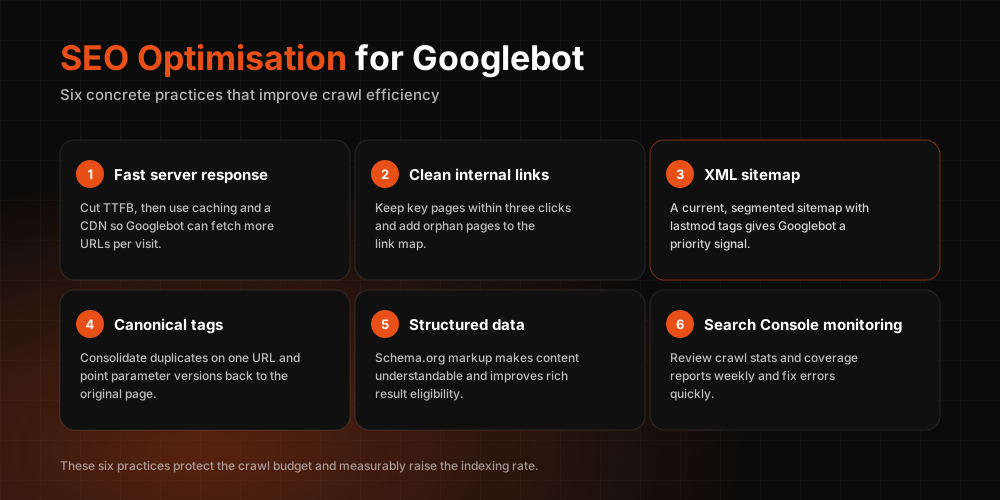
Googlebot mostly discovers new pages through links on previously crawled pages, XML sitemap files, external links, and the pool of known URLs. Listing important pages in the sitemap alone is not enough; they must also be reachable within the site architecture and supported by logical internal links.
Crawling and resource access
When Googlebot visits a URL, it may fetch the HTML content plus page resources such as CSS and JavaScript through separate requests. If critical content only loads after user interaction, the crawler may never see it. Check this especially on tabs, infinite scroll, click-to-reveal buttons, and late-loading main content.
Rendering and mobile evaluation
Google bases its evaluation on the mobile version for most sites. Text, links, schema markup, or media that exist on the desktop page but are missing on mobile can weaken the source assessment. Responsive design, equivalent mobile content, and mobile-accessible resource files are critical for Googlebot to understand the page correctly.
Indexing and source interpretation
After crawling, Google's systems evaluate the page's main topic, heading structure, content coverage, canonical signal, structured data, link relationships, and quality signals. For GEO, this process determines which prompt sets the page can answer and in which contexts it can be perceived as a source.
Crawl budget
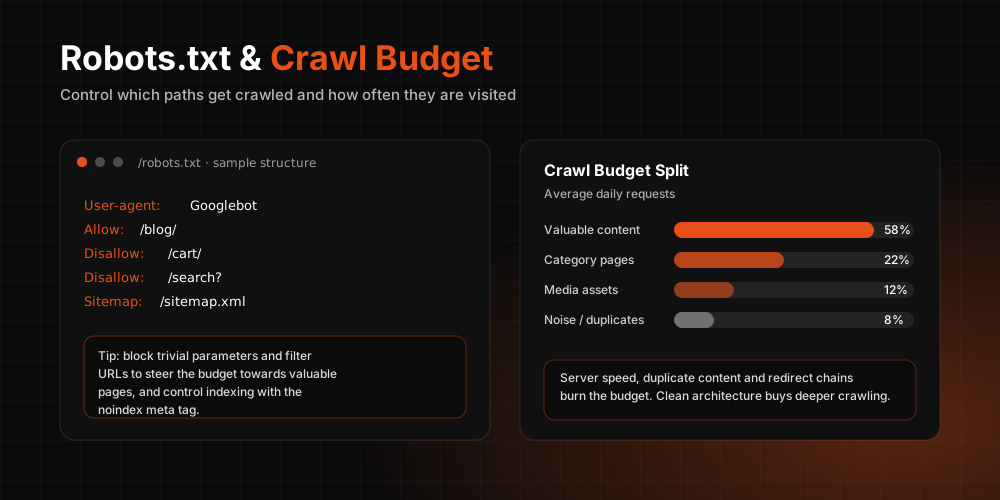
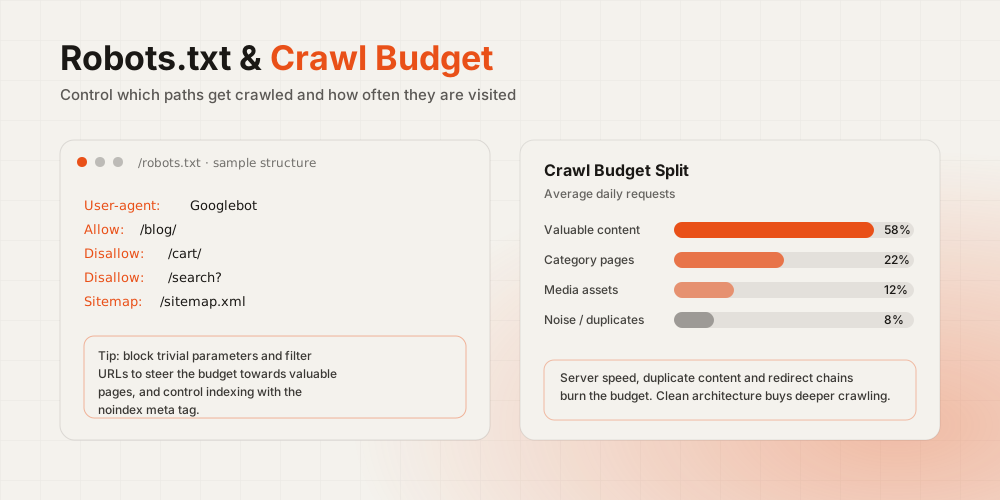
Crawl budget concerns how much and how often Googlebot can crawl a site. On large, frequently updated, or technically complex sites, crawl budget becomes more critical. Unnecessary parameterized URLs, duplicate pages, soft 404 structures, persistent 5xx errors, and weak internal link architecture can delay the discovery of important pages.
Googlebot types and the crawler structure
Google uses different crawlers and fetchers for different products and content types. Understanding them correctly helps you separate which bot is accessing your site and why.
- Googlebot Smartphone: Evaluates mobile page content, links, and resources.
- Googlebot Desktop: Simulates the desktop view, though the mobile crawler dominates on most sites.
- Googlebot Image: Crawls image files and resources tied to image search visibility.
- Googlebot Video: Evaluates video content and the technical signals on video pages.
- Googlebot News: One of the specialized crawlers used for news content.
- User-triggered fetchers: Run during user-initiated checks such as Search Console or verification tools.
In log analysis, checking the user-agent string alone is not enough. The Googlebot user-agent can be spoofed. Verify suspicious requests through reverse DNS lookups or the IP ranges Google publishes.
Robots.txt, noindex, and crawler control
The robots.txt file manages crawler traffic. On its own, robots.txt is not the right method for keeping a page entirely out of the index. Robots.txt blocks crawling; noindex tells Google the page should not be indexed. When these two signals are mixed up, the crawler cannot reach the page and therefore never sees the noindex tag.
User-agent: Googlebot
Disallow: /admin/
Allow: /public-content/
Sitemap: https://www.example.com/sitemap.xml
For critical content, check robots.txt, meta robots, X-Robots-Tag, canonical, and sitemap signals together. From a GEO standpoint, the goal is to keep source-worthy pages open to crawlers while separating weak, duplicate, or user-restricted pages with the correct method.
The role of XML sitemaps and internal links
An XML sitemap is a file that tells Google which pages, images, videos, or news content matter. Sitemaps support crawl efficiency especially on large sites, new sites, projects with weak external links, or media-heavy structures. A sitemap does not, however, guarantee that every URL will be crawled or indexed.
<url>
  <loc>https://www.example.com/sample-page/</loc>
  <lastmod>2026-08-06</lastmod>
</url>
Internal links help the crawler find priority pages within the site and understand topical relationships. A clear linking structure between pillar pages, category pages, guides, and supporting articles strengthens both crawl efficiency and the perception of topical authority in AI Search systems.
What should you watch to make crawling easier for Googlebot?
Keep mobile and desktop content equal
The mobile version should not have missing headings, missing text, different structured data, broken menu links, or hidden main content. However Googlebot Smartphone sees the page is largely how Google's indexing and evaluation systems receive their signals.
Test content loaded via JavaScript
If critical content only appears after JavaScript executes, use the URL Inspection tool, live tests, render checks, and log analysis together. Main answer blocks, product details, price, stock, author information, source links, and internal links must all be visible to the crawler.
Clarify canonicals and parameter URLs
If the same content is reachable through multiple URLs, send a clear canonical signal. Filter, sort, UTM, pagination, and parameterized URLs should not split the signal of important pages. On the AI Search side, source URL clarity matters for citability and trust.
Strengthen structured data and entity information
Use structured data types such as Article, Organization, Product, FAQ, Breadcrumb, and VideoObject in the correct context. Structured data alone does not guarantee visibility, but it produces clearer signals about the page's topic, brand entity, content type, and page relationships.
Monitor server responses and errors
4xx, 5xx, 429, redirect chains, soft 404s, and slow TTFB problems can reduce Googlebot's crawl efficiency. On large sites in particular, review log files regularly to see which pages Googlebot reaches, where it hits errors, and where it wastes crawl on unnecessary areas.
How can you check whether Googlebot is crawling your site?
Google Search Console
Google Search Console is one of the core tools for seeing how Googlebot evaluates your site. Review the page indexing report, the URL Inspection tool, the live URL test, the robots.txt report, sitemap status, and crawl stats together.
- Check the indexing status of your important URLs.
- Compare the canonical Google selected with the canonical declared on the page.
- Separate robots.txt blocks, noindex signals, and access errors.
- Request re-evaluation for new or updated critical pages.
- Track response code, file type, purpose, and host-level issues in the crawl stats.
Server logs
Server logs are a powerful data source for understanding Googlebot's actual behavior. Log analysis shows which URLs are crawled frequently, which pages are never visited, whether unnecessary parameterized URLs are draining crawl budget, and which response codes the server returns to Googlebot.
Live render and mobile tests
The live test in the URL Inspection tool helps you see whether the page is accessible to Google at that moment. A single test is not enough, though. Check the mobile view, resource files, structured data, canonical, internal links, and main content blocks together.
Googlebot checklist for AI Search and GEO
- Important pages must not be accidentally blocked by robots.txt.
- Pages that should stay in the index must not carry noindex, X-Robots-Tag, or an incorrect canonical.
- Main content, headings, internal links, and structured data must stay consistent across mobile and desktop.
- The XML sitemap should only contain current, canonical URLs with real source value.
- Main content loaded via JavaScript must be reachable by the crawler.
- 404, 410, 5xx, soft 404s, and long redirect chains should be cleaned up regularly.
- Entity information should be clarified with brand name, author, product, service, category, and source links.
- Content should offer clear, concise, citable answer blocks for prompt-driven questions.
- Search Console, log files, and live tests should be evaluated together on a regular basis.
- Access by AI crawlers other than Googlebot should be analyzed separately, and every blocked bot should be documented with its reason.
Frequently asked questions about Googlebot
Why does Googlebot skip some pages?
Incorrect robots.txt rules, noindex usage, weak internal linking, faulty canonicals, server errors, slow response times, soft 404 structures, and unnecessary parameterized URLs can all make it harder for Googlebot to crawl certain pages. Find the root cause by combining Search Console, the URL Inspection tool, and server logs.
How can you encourage Googlebot to crawl more often?
Crawl frequency cannot be guaranteed, but producing high-quality and fresh content, keeping server responses fast, maintaining an up-to-date sitemap, supporting important pages with strong internal links, and reducing technical errors all help Googlebot crawl the site more efficiently.
Can you block Googlebot?
Yes. You can restrict Googlebot from crawling specific areas with robots.txt. For HTML pages you want kept out of the index, however, use more appropriate methods such as noindex or access control. Accidentally blocking critical pages can also weaken your AI Search source visibility.
Are Googlebot and AI crawlers the same thing?
No. Googlebot serves the crawling and discovery processes within the Google Search ecosystem. Different AI platforms may run their own crawlers. GEO work should evaluate not only Googlebot access but also the access rules, robots.txt preferences, and content citability for other AI crawlers, each on its own terms.
Conclusion
Googlebot is the core crawler that directly shapes a website's technical accessibility, source URL clarity, and the signals passed to the indexing systems. A GEO-strong website needs Googlebot to reach its important pages, see the mobile version in full, crawl its resource files, and encounter correct canonical and robots signals.
Googlebot optimization is therefore not just a technical check. It is a foundational part of AI Search visibility, source selection, entity clarity, and becoming a trusted source in answer engine systems.
Sources