What Is an Index?
Understand how Google indexing works, why pages fail to get indexed, and how to make your site citable in AI search with a full GEO indexing checklist.

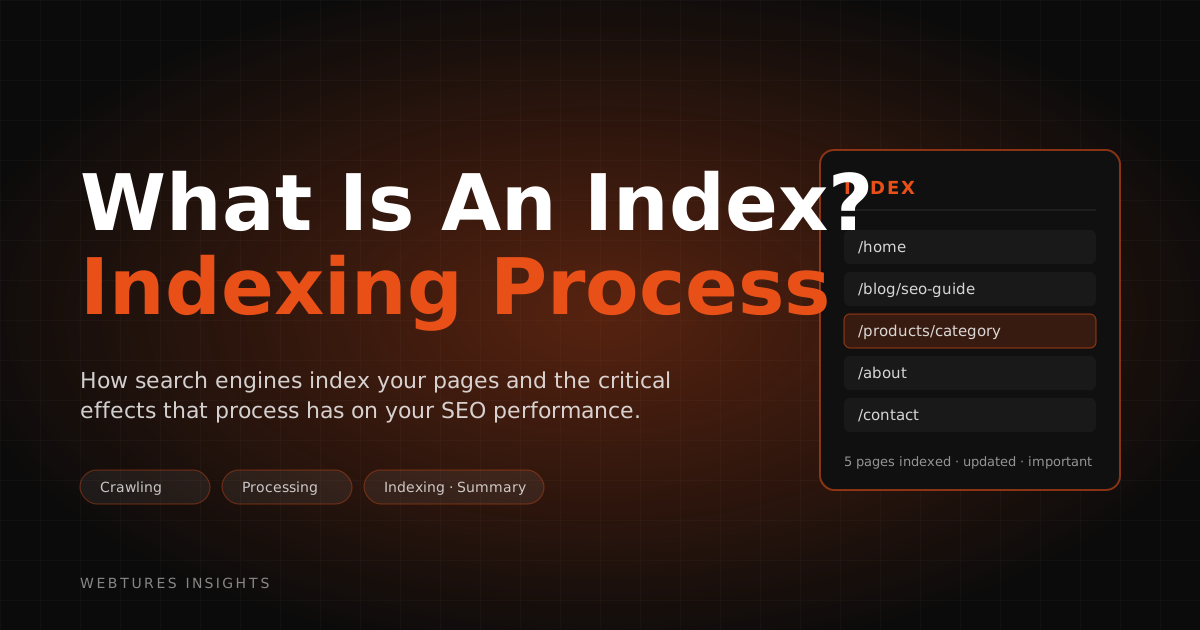
Indexing is the process by which search engines and AI-powered discovery systems crawl a website and add its content to an index. This step matters not only for a page to appear in classic search results; it is also the foundation for being understood in AI Search, AI Overviews, answer engines, and LLM-driven discovery environments.
Viewed through a GEO lens, indexing means far more than simply appearing on Google. A page needs to be crawlable, accessible, technically well structured, semantically clear, backed by unambiguous entity signals, and usable as a citable source. AI-powered answer systems do not just check whether content exists when selecting sources; they also weigh how understandable, trustworthy, current, and accessible the page is.
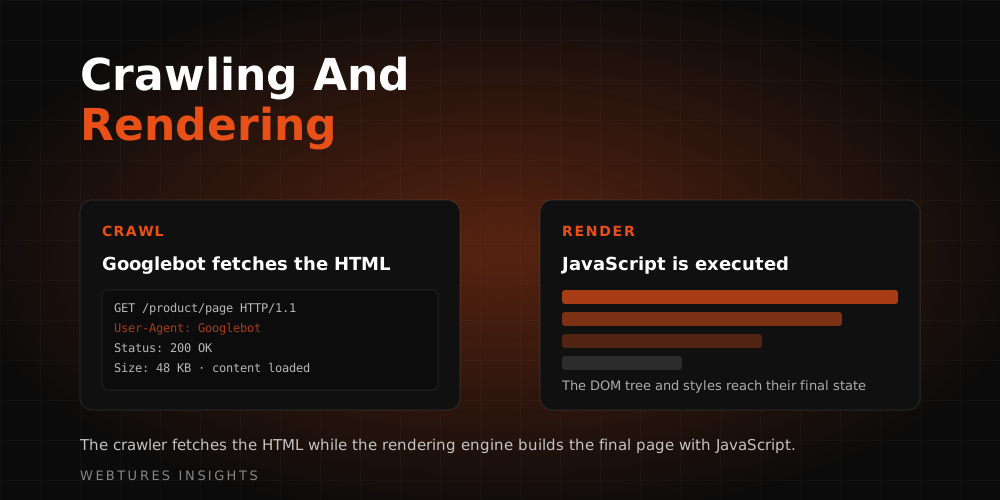
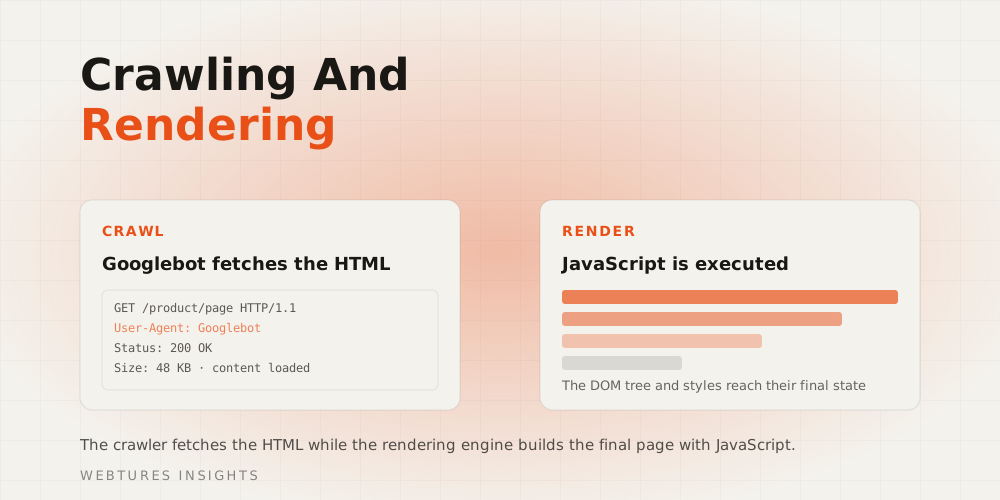
A strong indexing approach therefore treats robots.txt, sitemaps, canonicals, noindex, HTTP status codes, structured data, internal linking, JavaScript rendering, content quality, entity clarity, and AI crawler accessibility as one system. Even an indexed page can see its GEO visibility stay limited if it is not understood in the right context or fails to inspire trust as a source.
What does getting indexed mean and how does it happen?
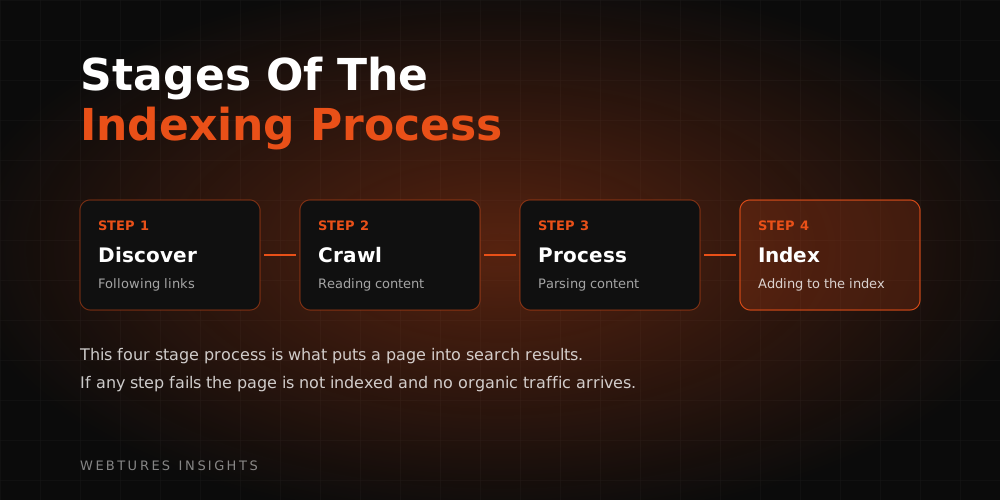
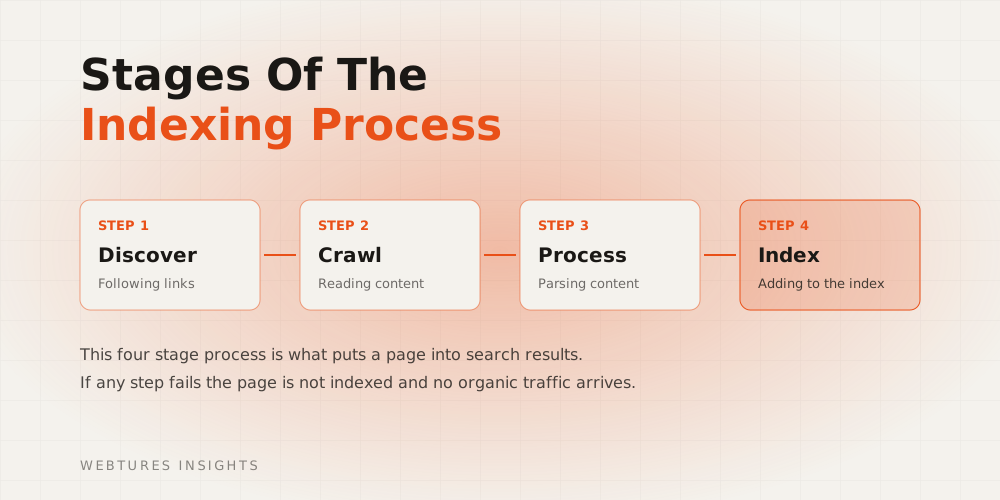
Getting indexed is the process in which a search engine discovers a web page, crawls it, processes it, and, if it deems the page suitable, adds it to its index. Most of the time this happens automatically. Site owners can still use tools such as Google Search Console to check how a page is seen, diagnose crawling and indexing issues, and request a recrawl for important URLs.
For a page to be indexed reliably, these baseline conditions must be met:
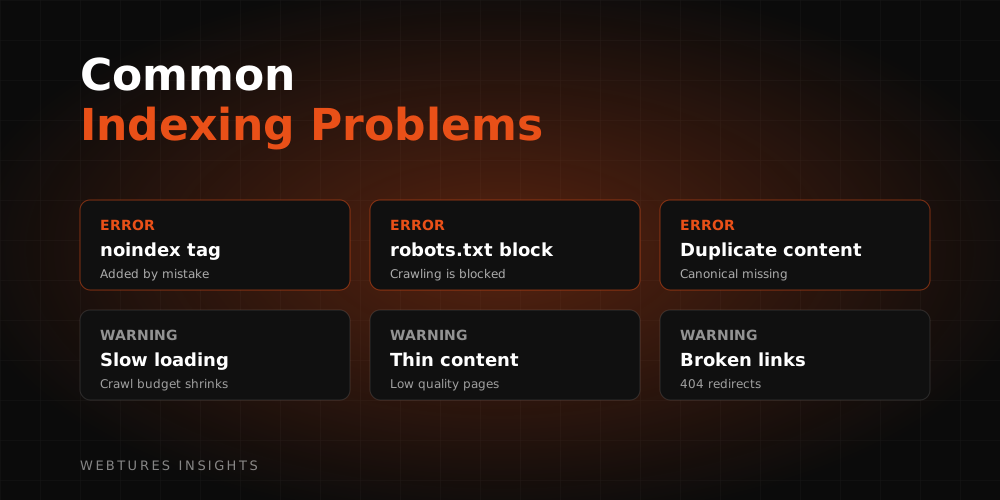
- The page must be reachable with a 200 OK status code.
- The robots.txt file must not block crawling of important URLs.
- The page must not carry an accidental noindex tag.
- The canonical tag must point to the correct source URL.
- The XML sitemap must stay current and contain only the URLs that matter.
- Important content must not be hidden from crawlers by JavaScript.
- The page must be delivered with a clear heading structure, descriptive sections, and readable HTML.
From a GEO standpoint, getting indexed is not limited to technical accessibility. The page's core topic should be unmistakable, it should answer user questions directly, it should be supported with structured data, brand and topic entities should be marked up explicitly, and the content should be structured so AI systems can summarize it.
What is the Google Index?
The Google Index is the vast catalog Google builds by processing the pages it discovers across the web and deems suitable. Every result shown to a searching user is drawn from this index. A page being in the Google index means it has the potential to appear in the relevant search experiences.
In today's search ecosystem, however, entering the index is no longer the only goal. The page must be associated with the right topic, the right entity, the right canonical URL, and the right user intent. What creates GEO value is not merely being present in the index; it is being understandable, summarizable, and citable by AI Search systems.
Pages inside the Google index should therefore be assessed on content quality, technical accessibility, structured data usage, internal link architecture, freshness, trust signals, and topical authority together. Pages that sit in the index but offer weak context may remain barely visible in AI-powered answer environments.
Why is my page not getting indexed on Google?
Failure to get indexed on Google can have many causes. These include a site being new, a page not being sufficiently discoverable, low content quality, duplicate or thin content, a misconfigured robots.txt file, a missing sitemap, incorrect canonical usage, a noindex tag, weak internal linking, 404/5xx errors, or JavaScript rendering problems.
From a GEO perspective, an indexing failure should not be treated as a purely technical crawling issue. If topical focus is weak, entity signals are ambiguous, the content structure resists summarization by AI systems, structured data is missing, or the canonical URL is unclear, the page may fail to build real source value even after it enters the index.
When investigating an indexing problem, technical checks should therefore run alongside an analysis of content depth, user intent, prompt coverage, citability, schema alignment, internal link architecture, and AI crawler accessibility.
Why does getting indexed matter?
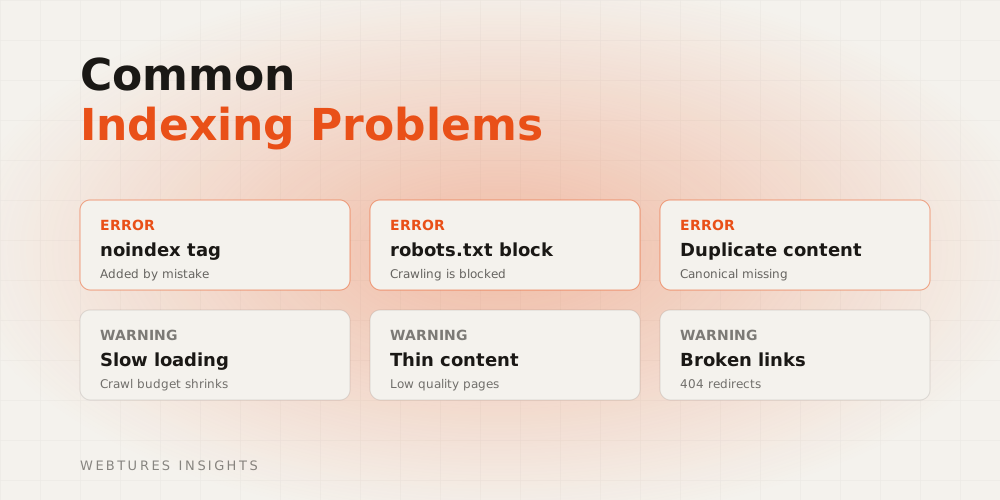
Getting indexed is a foundational step for discoverability and accessibility. Indexed pages create the opportunity for potential users to find the brand, its products, its services, or its informational content. In the GEO era, however, indexing goes beyond a page entering a database; it is the brand becoming understandable and citable within the broader knowledge ecosystem.
Healthy indexing supports the following areas:
- The potential to be selected as a source in AI Search environments.
- More accurate understanding of brand, service, product, and topic entities.
- Users reaching the correct URL.
- Content becoming summarizable by answer engine systems.
- Stronger digital visibility and trust signals.
Indexing is therefore more than a technical requirement; it is the core infrastructure of GEO visibility. A page that cannot be crawled, cannot enter the index, or cannot be matched with the right context will never produce a strong source signal in AI-powered discovery.
How do you check whether a page is indexed?
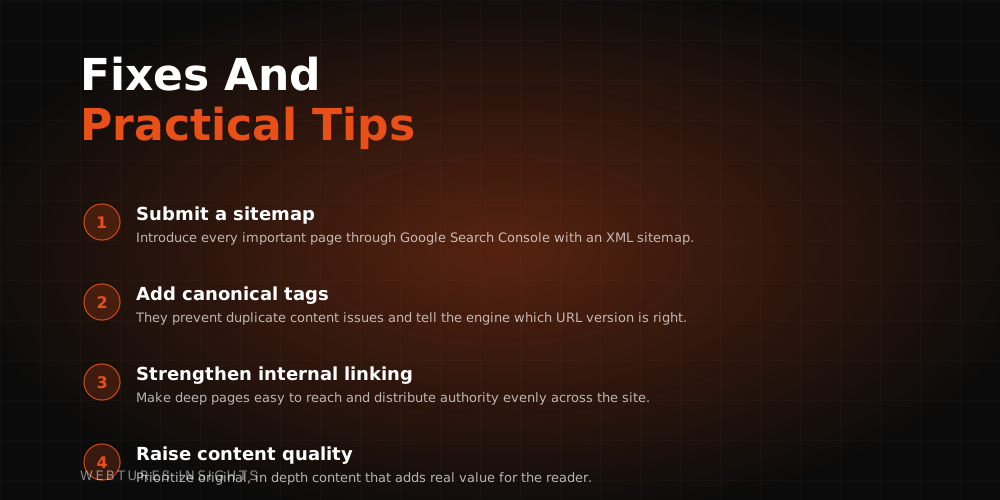
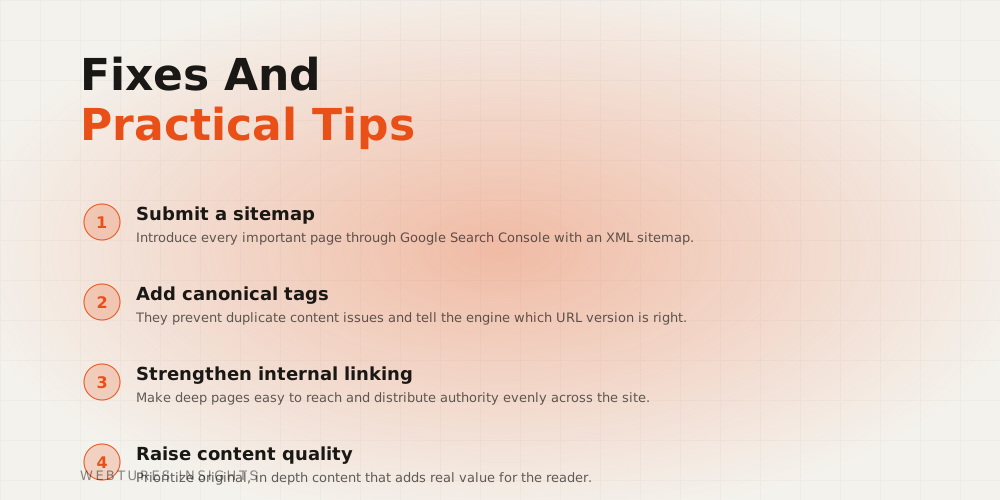
Checking indexation status matters for understanding how crawlable, indexable, and technically accessible your pages are. The two most common methods are Google search operators and the URL inspection workflow in Google Search Console.
For GEO visibility, an index check alone is not enough. Structured data, visible content, heading structure, entity clarity, internal linking, canonical consistency, and AI crawler access should be evaluated alongside it.
Checking with Google search operators
Google search operators offer a quick way to check whether a site or page has been indexed. The most common method is the "site:" operator. Entering a query such as "site:example.com" into the Google search bar lists the pages visible under that domain.
The "site:" operator does not, however, produce a precise or exhaustive report. A page appearing in this query does not mean it matches the right user intents or that it will be used as a source in AI answers. Treat this method strictly as a quick preliminary check.
Checking with Google Search Console
Google Search Console is one of the core tools for understanding how Google sees a website. The Page indexing report shows which pages have been indexed, which have problems, and why specific URLs were left out of the index.
The URL Inspection tool checks a specific URL's index status, last crawl date, canonical status, mobile usability signals, and how Google renders the page. It also lets you request a recrawl for important URLs. Google notes that repeatedly submitting the same URL does not speed up crawling; fix the technical issues first, then submit the request.
During a GEO-focused review, Search Console data should be interpreted alongside these questions:
- Is the page represented by the correct canonical URL?
- Can crawlers actually see the content?
- Does the page's structured data match its visible content?
- Does the page contain sections that answer user questions directly?
- Are brand, product, service, and topic entities marked up explicitly?
Frequently asked questions:
How do you get into the Google index faster?
- Running URL inspections in Google Search Console, keeping the sitemap.xml file current, building strong internal links, verifying robots.txt and canonical settings, clearing accidental noindex tags, improving page speed, supporting content with structured data, and structuring pages to answer user questions directly all contribute to healthier, faster indexing.
How do I find pages that are not indexed?
- Unindexed pages can be identified through the Page indexing report and the URL Inspection tool in Google Search Console. Beyond that, sitemap coverage, noindex tags, canonical usage, robots.txt blocks, HTTP status codes, content quality, internal link structure, structured data, and AI crawler accessibility should be checked together.
The GEO indexing checklist
- Do all important pages resolve with a 200 OK status code?
- Is robots.txt blocking important URLs unnecessarily?
- Has a noindex tag been applied by mistake?
- Does the canonical tag point to the correct source URL?
- Is the XML sitemap current and clean?
- Is important content accessible in visible HTML?
- Does structured data align with visible content?
- Does the page contain clear definitions, short answer blocks, and citable facts?
- Are brand, service, product, and topic entities handled consistently?
- Are there unnecessary technical restrictions blocking AI crawler access?