What is Multimodal GEO? How Should It Be Built?
Learn what multimodal GEO is and how to make your brand the Single Source of Truth for AI models. A practical framework from Webtures, the GEO pioneer.

According to Gartner, traditional search volume is expected to fall by 25% by 2026, as the center of digital interaction shifts from search bars to chat interfaces. In this new landscape, a brand's presence no longer depends on link rankings; it depends on its capacity to earn a place in the "memory" of AI models. This is where Multimodal GEO (Generative Engine Optimization) comes in, rewriting the physics of digital visibility.
What is multimodal GEO?
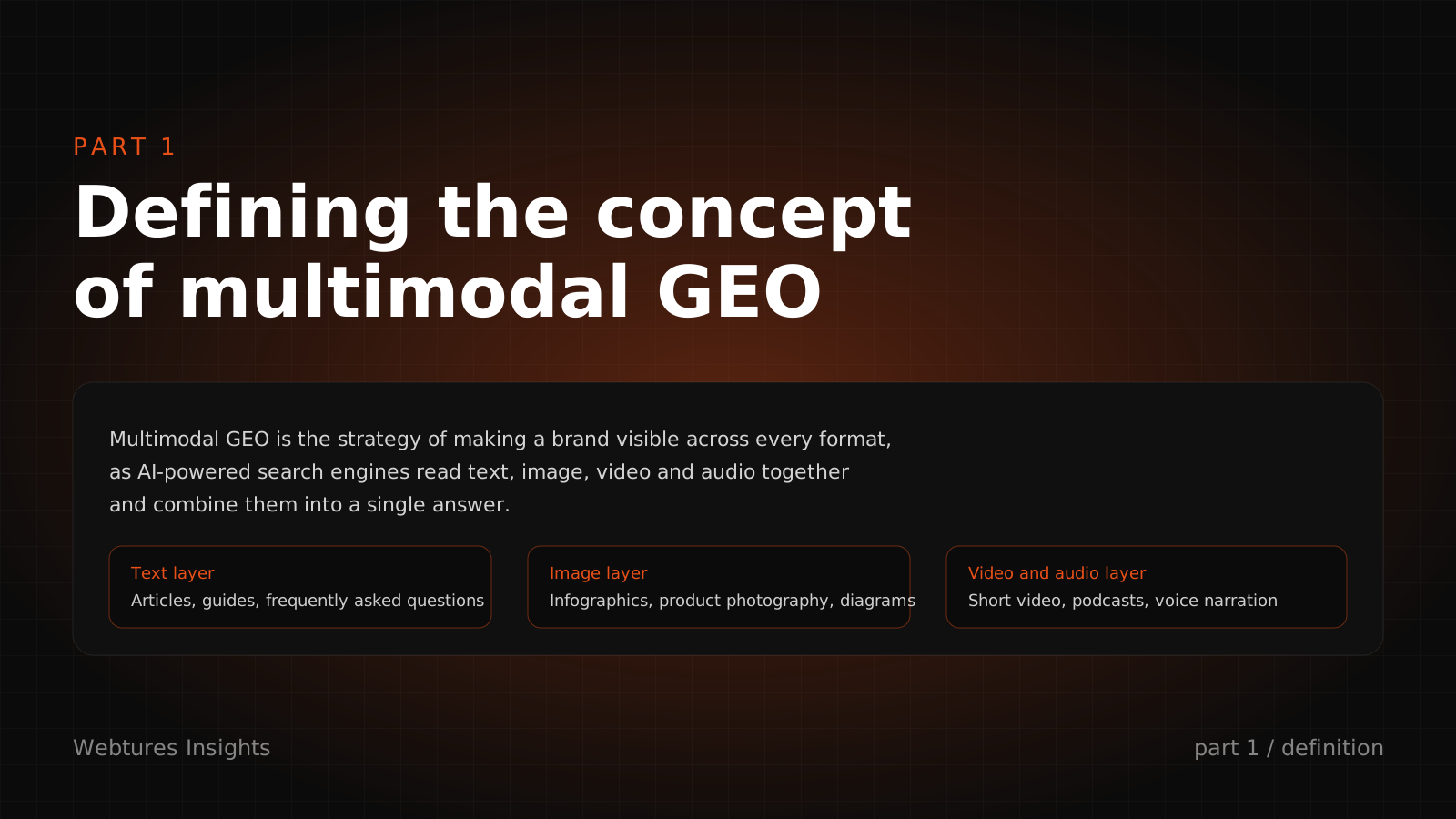
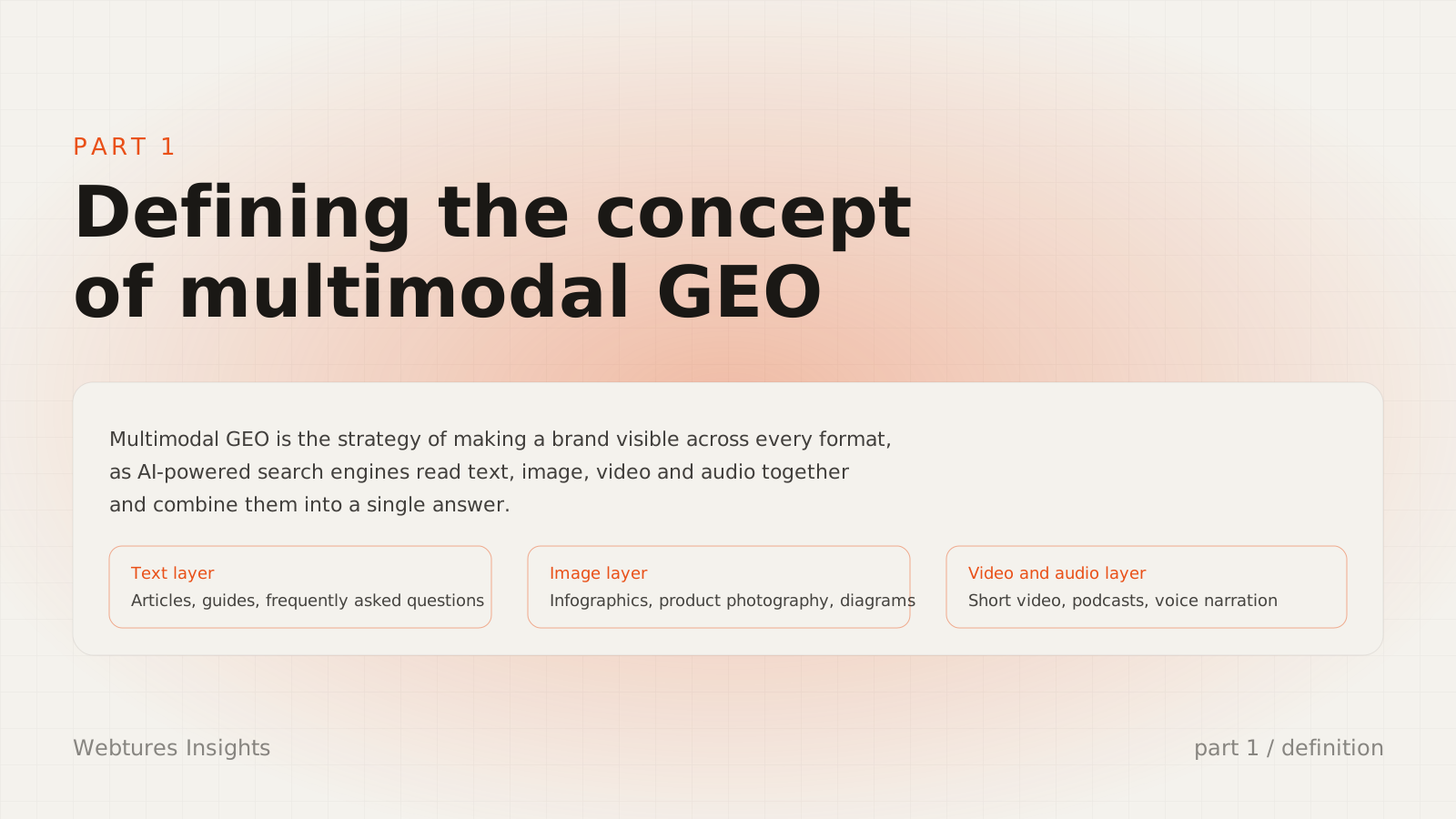
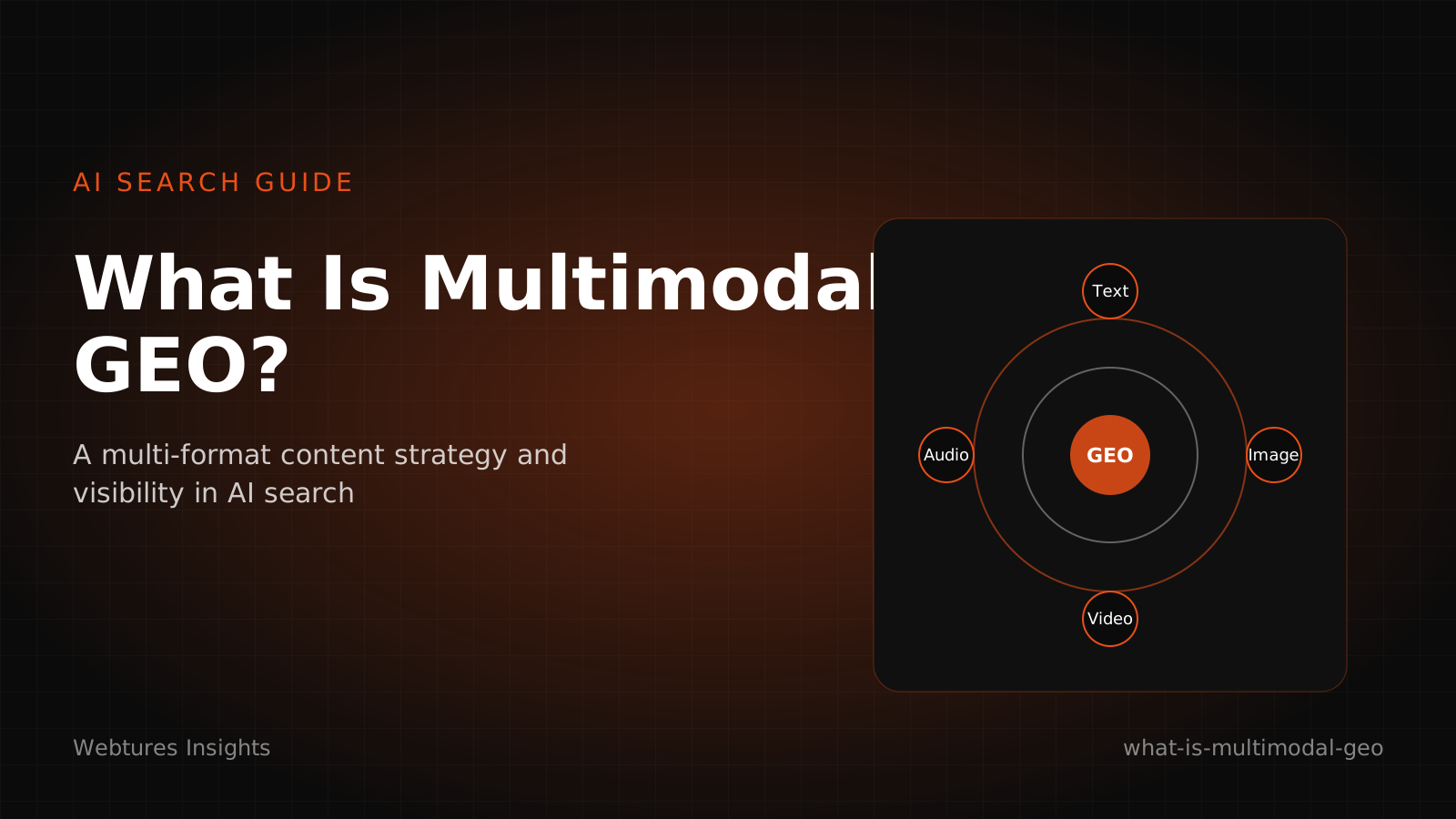
Multimodal GEO is the engineering discipline of making your brand's digital footprint "learnable" and "citable" for Large Language Models (LLMs) by structuring it not only as text but across visual, audio, and structured data formats.
AI models (Gemini, ChatGPT, Claude, and others) scan the world in a multimodal way, much like human perception. They do not just read a product's name; they see the texture in its photo, analyze the tone of voice in its promotional video, and verify the figures in its technical tables. Multimodal GEO takes your brand beyond being a website and positions it as the "Single Source of Truth" that AI assistants consult when answering user questions.
In the Webtures vision, this is less a "marketing" exercise than a process of supplying your brand's data to AI models as training data. The new digital equation is blunt: a brand that cannot be seen by AI cannot be seen by its customers.
How should a multimodal GEO framework be built?
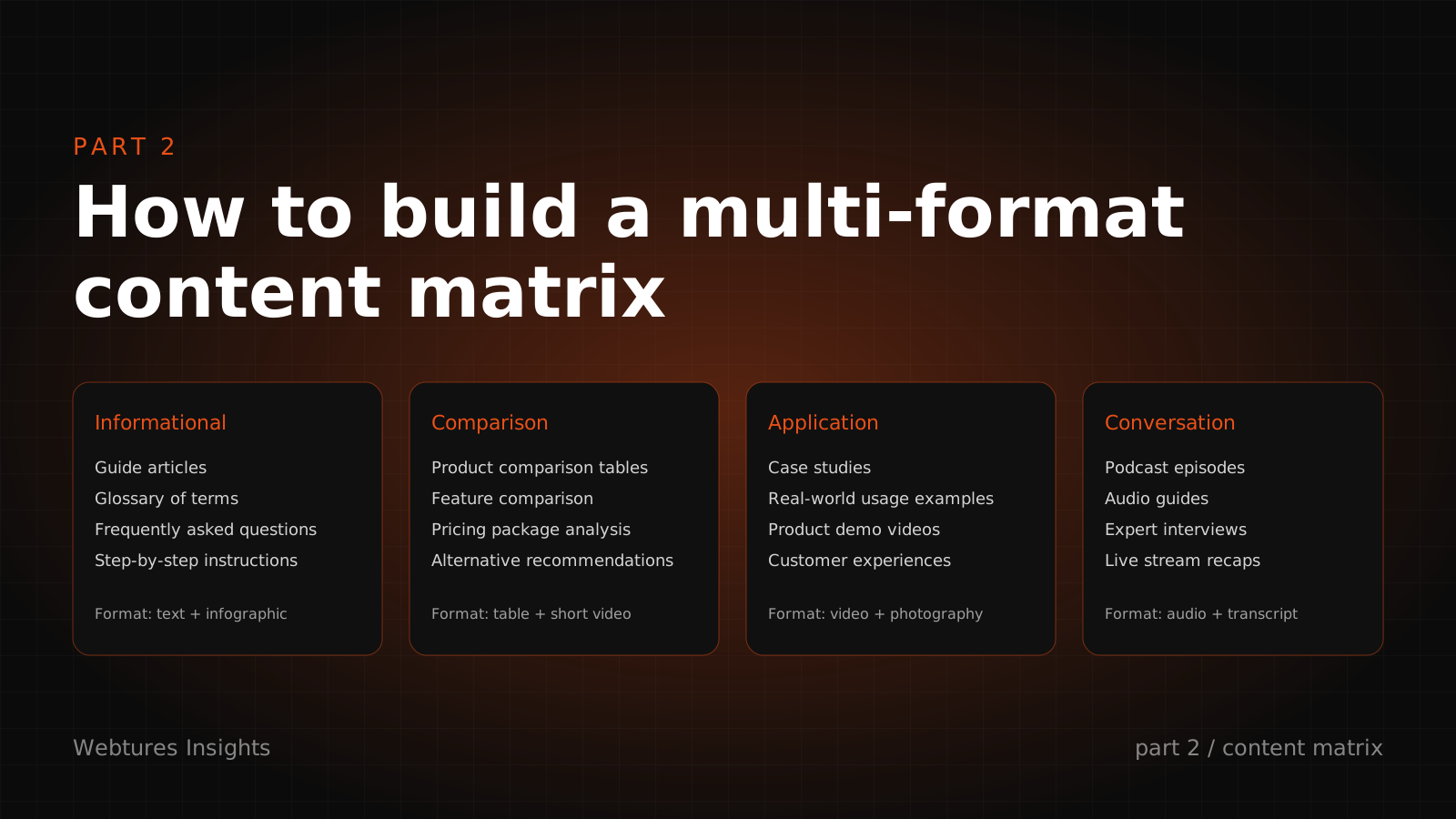
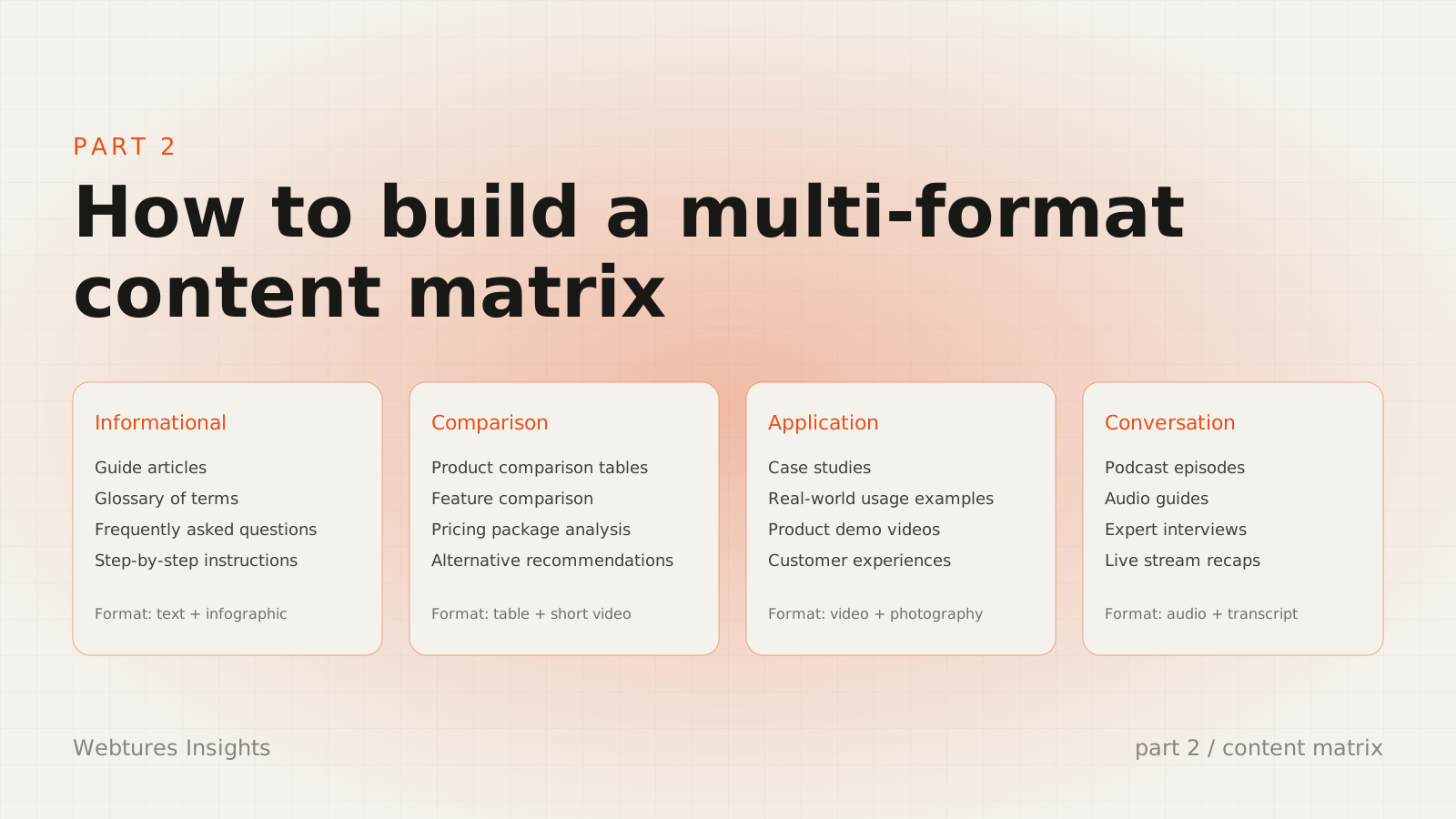
A successful GEO strategy moves entirely away from "keyword placement" and is built on constructing meaning and context. The framework should rest on these core pillars:
1. Entity-based structuring
AI recognizes concepts (entities), not keywords. Your brand, your products, and your founders need to be defined as clear, distinct entities in the digital world.
-
Knowledge graph integration: Make sure the facts about your brand (founding year, services, location, mission) appear consistently and verifiably across the web's trusted sources: Wikipedia, Wikidata, Crunchbase, and industry directories.
-
A digital identity card: Use a consistent corporate language across all your digital assets so that AI models learn to recognize your brand under specific labels such as "the pioneering digital experience brand in its market" or "a sustainable textile manufacturer".
2. Making visual and audio data semantically meaningful
Users increasingly query by taking a photo or speaking instead of typing. Your GEO framework has to answer this new behavior:
-
Pixel depth: Your product images must be clear enough for AI object recognition algorithms to parse. For a furniture brand, an image is never just "sofa.jpg"; AI should read it as "modern design, velvet upholstery, anthracite color, metal-leg seating set".
-
Video and audio transcription: Your video content and podcast recordings must be published with timestamped transcripts and detailed captions so AI bots can crawl them. AI should be able to pull the solution mentioned at minute three of a video and serve it as a direct answer to a user's question.
3. The language of structured data
LLMs and AI assistants want to answer with as few errors (hallucinations) as possible. The way to give them that confidence is to serve your data in their native language: JSON-LD.
-
Dataset authority: Price lists, spec tables, comparison charts, and stock availability should be encoded with machine-readable schema markup rather than plain HTML tables.
-
Relational context: Build contextual bridges between your products and user problems. By linking the schema for "Product X" to the schema for "the solution to Problem Y", you tell AI at the code level: when this problem is asked about, recommend this product.
4. Quote-worthy content architecture
From an Answer Engine Optimization (AEO) perspective, the goal is not to earn a click but to be cited inside the generated answer.
-
Direct-answer formats: Build sections that answer complex questions with clear, itemized, statistics-backed responses. AI models favor paragraphs that are easy to synthesize and contain a definite judgment.
-
Statistical leadership: Publish original data, reports, and forecasts about your industry. AI will cite the source that offers current, quantified data.
Visual GEO: how does AI read and select images?
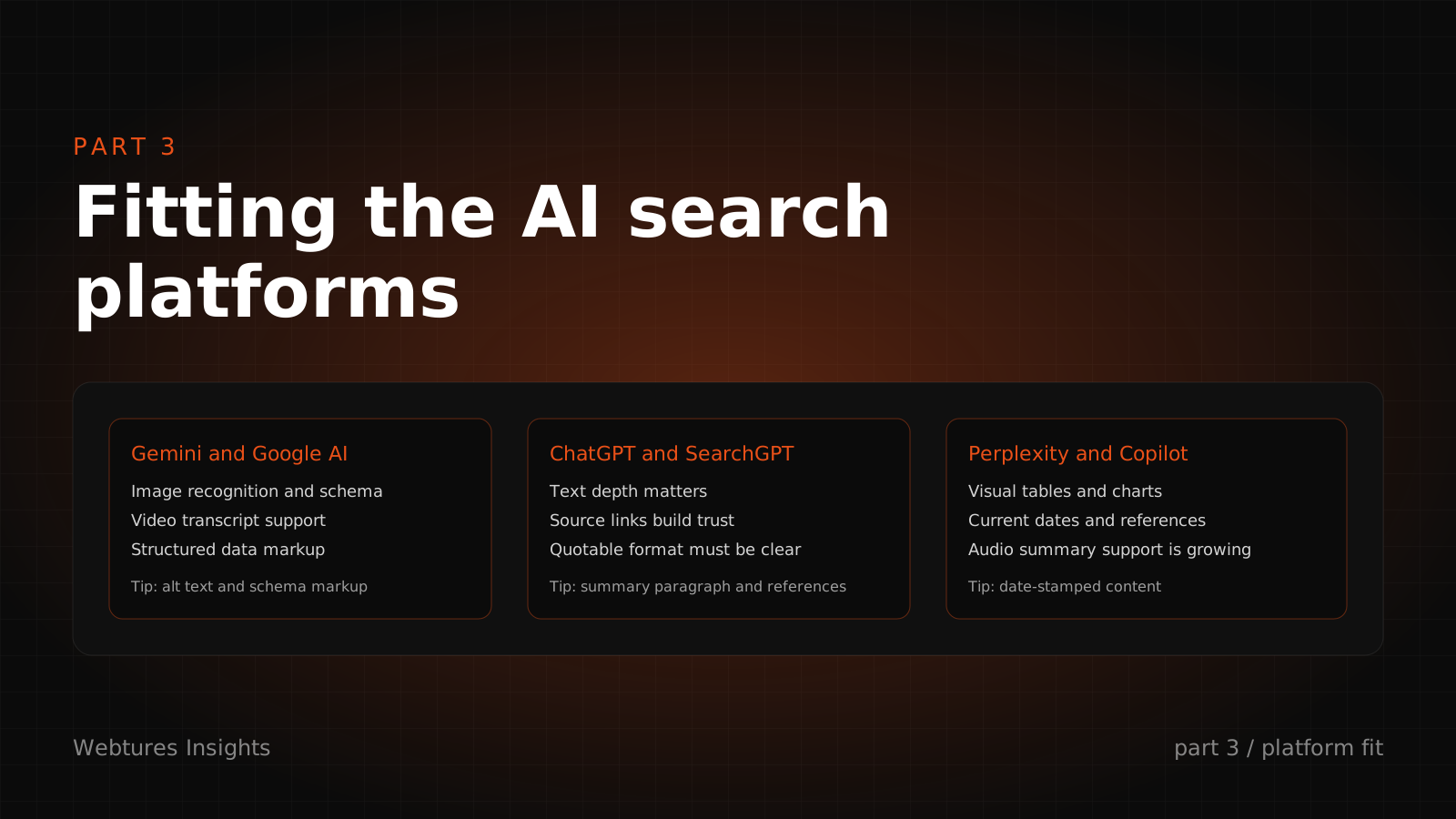
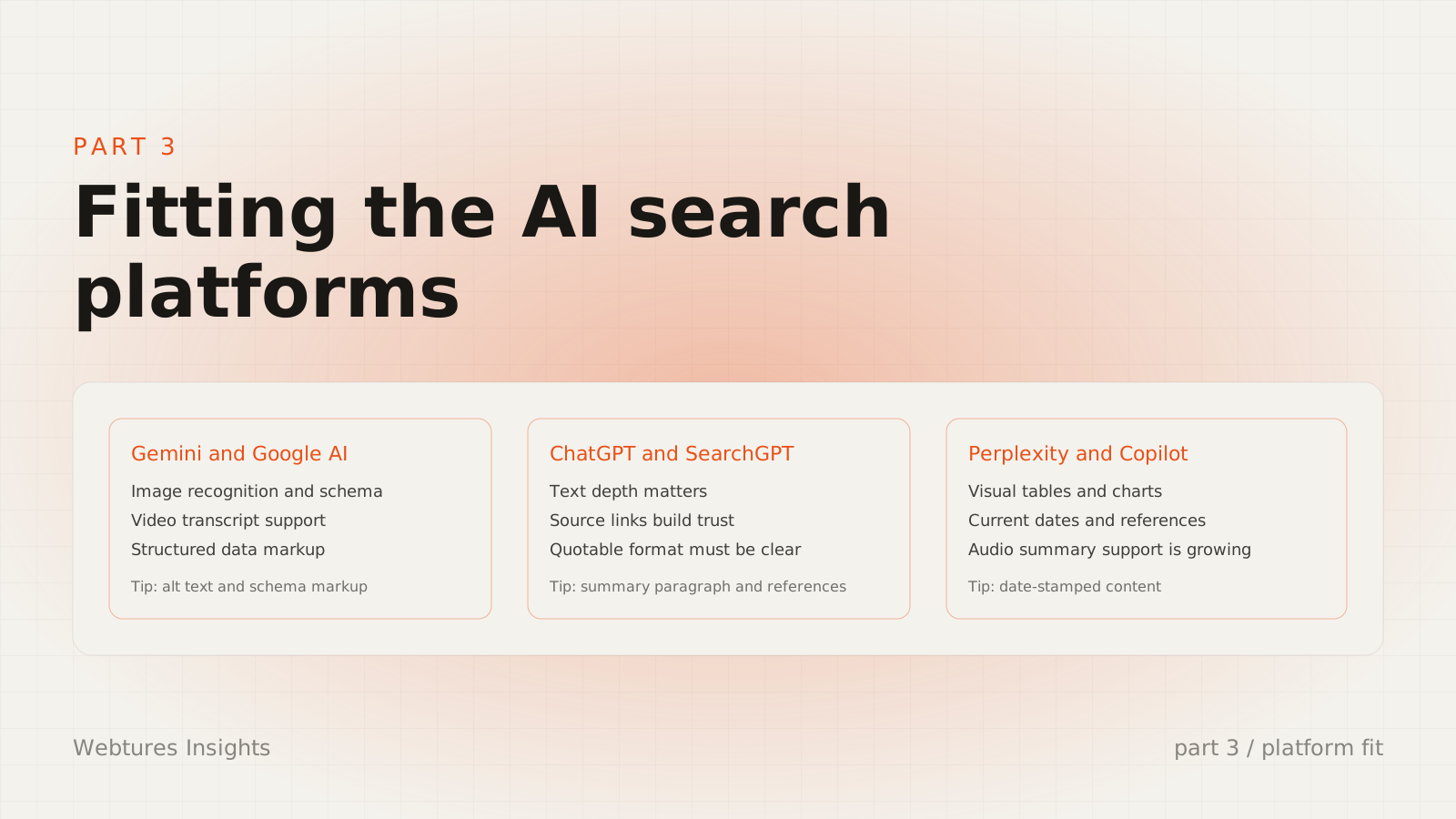
Traditional search engines tried to guess what an image contained from its file name and alt attributes. Today, AI models equipped with Computer Vision analyze an image as thoroughly as a human eye, often more so. Colors, shapes, objects, text inside the image, and surrounding context have become the factors that determine an image's GEO value. The question is no longer "should I add an image to my article?" but "can AI read the data inside my image?"
Search behavior is moving in the same direction: mobile users in particular prefer visual search and voice commands over typing. With tools like Google Lens, Pinterest Lens, and Bing Visual Search, a user simply uploads a photo to identify an object, find similar products, or learn about a place. These tools evaluate an image by its quality, format, resolution, and especially its alt text; if those elements are missing or misconfigured, the image's visibility drops. Image optimization is therefore a shared responsibility, not just for SEO teams but for content creators, e-commerce managers, and social media strategists.
Computer vision and NLP work together
Image recognition technology detects the objects, text, and brand logos inside an image, while natural language processing (NLP) analyzes the text around it to build context. If a product image on an e-commerce site sits above the phrase "waterproof men's watch", the model makes that connection and surfaces the image for related queries. AI measures consistency by comparing the actual content of the image with its textual descriptions: if the two align, the image is used as a reference; if they conflict, the content may be treated as a spam signal. An image is therefore never evaluated in isolation but together with the heading and narrative it sits within. Consistent images that represent the same topic build a signal of expertise on the AI side.
The stock photo era is over: original owned visuals
LLMs label stock images repeated thousands of times across the web as low-value, non-original content. To build authority with AI, use original owned visuals:
-
Images as evidence: A real photo of your team, your product in the warehouse, or a shot from your office signals to AI that this brand is real and active.
-
Data visualization: Instead of abstract illustrations, use charts, diagrams, and tables that verify the data in your article. AI can read the chart in your image (OCR) and add it to its answer as statistical evidence.
File name, alt text, and metadata: context engineering
The keyword-stuffing era of classic SEO is closed; we are now in the era of context engineering. The file name is the image's digital identity: DSC4536.jpg is a meaningless blob of data to AI, while 2025-model-suv-city-driving-test.jpg tells it the image contains test data. The alt attribute is no longer just an accessibility element; it works like a prompt you hand to the AI model. "Team in a meeting" is not enough; a description at the level of "the Webtures strategy team brainstorming 2026 AI trends" is what gets your image cited for relevant queries.
Metadata completes the structure: title, description, and file name should be integrated with the page content, and EXIF data should be either cleaned or filled with meaningful information. In alt texts, prefer natural sentence structure over keyword stuffing; AI notices any mismatch between the description and the actual image content.
Format, speed, and contextual placement
AI bots are efficiency-driven; oversized files burn through crawl budget. Serve images in next-generation formats such as WebP or AVIF, compressed without visible quality loss, and support them with a CDN, caching, and lazy loading. Placement is a signal too: an image should sit right next to the text it belongs to. According to KissMetrics, captions under images are read 300% more than body text; in AI crawls, that caption is processed as the image's confirmation of accuracy. Purpose-built images placed with the right hierarchy, instead of stock photos, help a brand appear more often and more consistently in AI answers.
AI-assisted product images in e-commerce
Because generative engines are multimodal systems that process text and images together, the quality of a product image directly affects the odds of being recommended. If a model can clearly identify the product in your image, it is more likely to recommend your product when a user says "find me the best red running shoes". AI-generated or AI-optimized product photos do two jobs here: clean, noise-free compositions let the model understand the product without errors, and high-quality visuals look more appealing in the source cards of AI answers, lifting click-through intent.
Steps to optimize product images for GEO
- Present the image with the clarity and contextual background AI models can interpret.
- Make the file name describe the product: "red-running-shoe-side-profile.jpg" instead of "IMG_123.jpg".
- Write an alt attribute that expresses the product's function, color, and type in a natural sentence.
- Connect price, color, and image in machine language with Product schema (JSON-LD); structured data significantly raises the product's chances of appearing in rich results and AI summaries.
- Reduce crawl cost with size optimization; fast-loading pages get their content processed more often and more freshly by bots.
Showing the product from multiple angles, in variations, and in real usage contexts makes it easier for models to "learn" it. Engaging visuals that extend dwell time are a secondary signal: if users spend time on a recommended link, AI learns that the source was the right answer and cites it again for similar queries.
How is multimodal content evaluated in AI answers?
Multimodal content is content that combines multiple formats, text, images, video, charts, and tables, in a meaningful way. When ChatGPT, Gemini, and similar systems evaluate content, they look not only at what is said but at how it is shown: text carries the conceptual information, while visuals make those concepts concrete and help the model build sharper maps of meaning. When a product's technical details are presented in writing and a diagram of its structure is added, the context strengthens for both the user and the model. Content is now evaluated by information completeness, not by keywords.
LLMs cross-verify the different format layers
Today's LLMs are trained multimodally: they identify objects in images, extract meaning from charts, and connect text with visuals. These models prefer content with strong contextual integrity; pages where the image completes the text and the text explains the image are selected as answer sources with higher priority. The practical rule that follows: every content element should serve a purpose, images should be placed to support the narrative rather than at random, and image descriptions should be tied to context in the flow of the article, not only in alt text.
The direct effect of images on prompt answers
Images are taking up more and more space inside AI-generated answers. When a user asks "what should good product images look like?", the model does not just return a list; it describes visual examples and explains why they work. For explanatory queries, such as how to perform an exercise or how to interpret a chart, sources with well-structured images stand out clearly. When a model finds an image "meaningful", the image becomes a potential piece of the answer, which turns it from decoration into a strategic unit of data.
How is voice search changing GEO strategy?
Voice search has fundamentally changed how users interact with search engines. Compared with typed searches, voice queries are more natural, longer, and more intent-driven. When AI assistants answer spoken questions, they usually cite a single source, and they expect that source to deliver clear, direct, well-contextualized answers. In a GEO strategy, voice search requires content to be not just readable but answerable out loud.
Why do people use voice search?
The core drivers are speed and convenience. According to Google, 65% of voice searches use natural conversational language: instead of typing "marketing advice", the user asks "where is the best place to get marketing advice online?" E-commerce integration is accelerating too; Insider Intelligence data shows that 27% of US consumers shop by voice at least once a month. Smart speakers and mobile assistants have become the default channel for weather, directions, and quick lookups.
Content structures that win in voice search
Content that succeeds in voice search is built on structures that answer the question directly. AI assistants prefer a clear definition or answer in the first sentence, followed by short supporting explanations. Long, indirect writing falls behind. Four additional areas stand out: natural language optimization (phrasing close to spoken language), long-tail queries, local search (business profile optimization for "near me" queries), and the featured snippet position; because a voice assistant usually delivers a single answer, winning that position is decisive.
How do you produce voice-search-ready content?
Voice-search-ready content requires a style that is close to spoken language yet professional. Sentences should stay short and the meaning should land immediately. Heading structure should mirror user questions, and each heading should focus on that one question only. This structure lets AI assistants serve the content as a complete answer without having to fragment it.
How is video content evaluated in GEO?
Video is the richest data layer of multimodal GEO: AI models analyze a video's title, description, transcript, and the scenes in its frames together. Without a timestamped transcript and detailed captions, a video is largely a closed box to bots; with a transcript, the solution at a specific minute of the video can be pulled as a direct answer to a user's question. Video content also produces indirect signals by extending time on site and lifting engagement.
AI video production: SORA and VEO
Traditional video production is slow and expensive across scripting, filming, editing, and post-production. AI video tools compress that process into minutes, making regular video output sustainable even at SMB scale. Two tools stand out for professional results:
-
SORA: Notable for visual quality and cinematic effects; strong in creative scripting and editing. Ideal for commercials and brand campaigns.
-
VEO: Built for speed and practicality; delivers high-volume output in a short time. Effective for training, corporate presentation, and promotional videos, and easy to use for non-technical teams.
The decision rule is simple: choose SORA when quality and creativity come first, VEO when speed and volume come first.
Connecting video to your marketing and GEO framework
AI-assisted video production makes it easy to derive platform-specific variations from the same master content (vertical formats for TikTok, Reels, and Shorts) and to run A/B tests. Personalized videos lift click and conversion rates in email campaigns, while product demo and training videos simplify technical detail and support decision-making. From a GEO perspective, the critical point is that every video ships with its transcript, description, and schema markup; the video must be not only watchable but crawlable.
The GEO risks of focusing on a single channel
Text-only content has limited visibility potential in the multimodal search era. Content without visual or audio support is treated by AI models as a source offering weaker context, which over time reduces how often the brand appears in AI answers. A user may start with an image and continue with a voice question, or the reverse; content must produce consistent signals at every touchpoint.
When the same narrative confirms itself across text, image, and audio formats, AI systems read it as a signal of consistency and trust. That alignment strengthens the brand's perceived expertise and turns it into a recurring reference in answer engines. On the team side, this shift requires SEO, content, design, and AI teams to work together, and KPIs to be defined around visibility and citability rather than rankings alone.
Multimodal GEO checklist
Use these checkpoints when evaluating your existing content from a multimodal GEO perspective:
- Does each H2 heading give a clear answer to a single user question?
- Do the images represent the main entity of the topic and connect semantically to the surrounding text?
- Do the file name, alt text, and caption describe the image in natural sentences?
- Are video and podcast content published with timestamped transcripts and captions?
- Are sentence lengths readable for voice search?
- Is price, feature, and comparison data marked up with JSON-LD?
Measurement and control: AI visibility monitoring
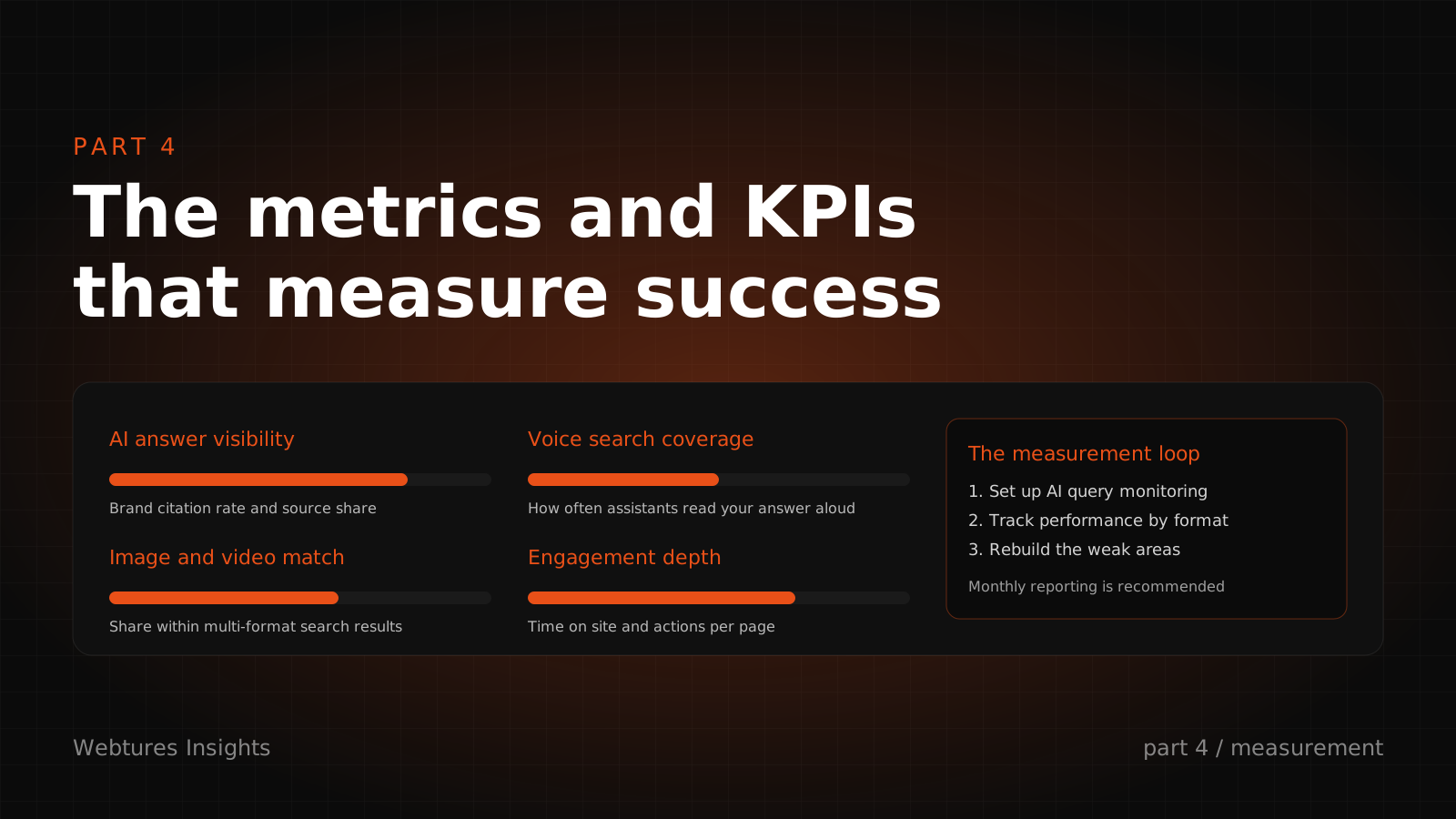
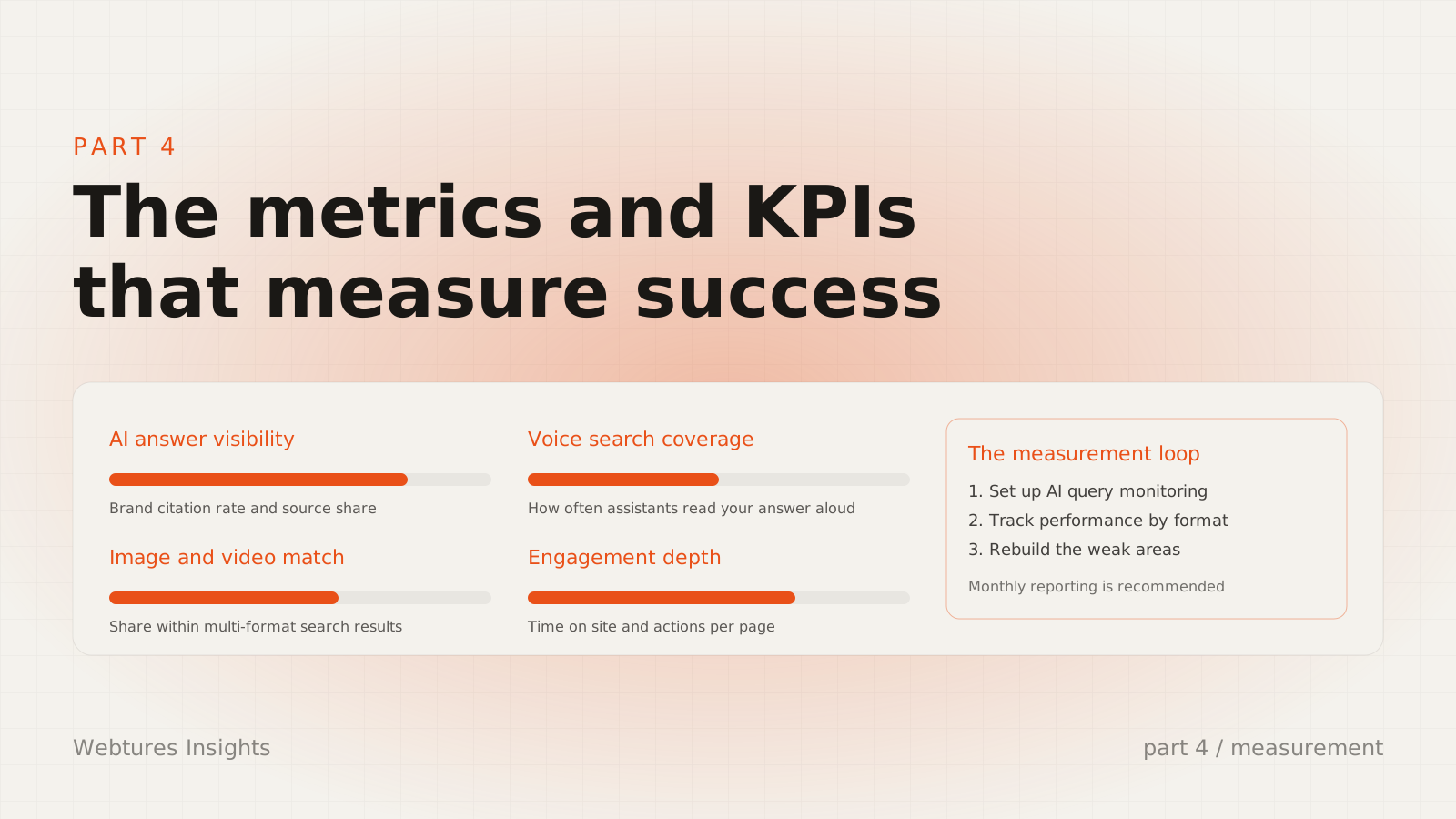
In the traditional world we tracked rankings; in the AI world, success depends on your AI Visibility Monitoring capability. You need to track which questions surface your brand on platforms like ChatGPT, Perplexity, or Gemini, which competitors it is compared against, and with what sentiment it is presented. Classic analytics tools only show you site traffic; they do not show AI perception.
Our recommendation at Webtures is to manage this process with data-driven technology, not manual spot checks. Brantial and similar AI visibility platforms report which prompts you appear in and how AI perceives your brand. The contribution of your visual work should be measured separately: track the brand's mention rate in image-heavy queries, the adjectives AI uses when describing your product images (premium, durable, innovative, and so on), and the sources shown in those answers, so strategy rests on concrete visibility data rather than assumptions.
From digital shelf space to share of model
In 2026 and beyond, marketing success will be won through "Share of Model" before "Market Share". Multimodal GEO is the one strategy that makes your brand a data-supplying authority in the AI revolution rather than a spectator. Our approach at Webtures is to make your brand not merely searched for, but the final answer that AI recommends and trusts.