What Is Semrush? How to Use It and What It Does
Explore what Semrush is, how to use it for competitor analysis, site audits, and AI visibility tracking, and how to turn its data into a GEO roadmap.


Semrush is a comprehensive visibility, competitive, and content analysis platform for digital marketing professionals and businesses. Today Semrush is used not only to track classic search results but also to evaluate AI Search, GEO, brand visibility, prompt tracking, competitor benchmarking, content gap analysis, technical accessibility, and digital PR opportunities.
Through a GEO lens, Semrush helps brands understand how they are perceived in AI-powered answer systems, which competitors are more visible, which query and prompt groups contain content gaps, and which technical issues restrict crawler access. Semrush should therefore be treated not as a tool that merely tracks traffic and rankings, but as an analysis platform that strengthens a brand's selectability as a source across the digital ecosystem.
What is Semrush?
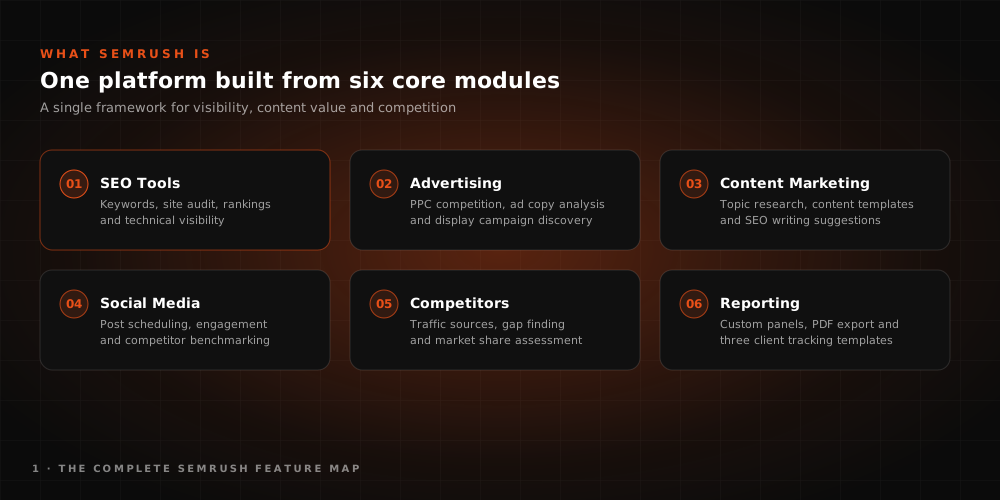
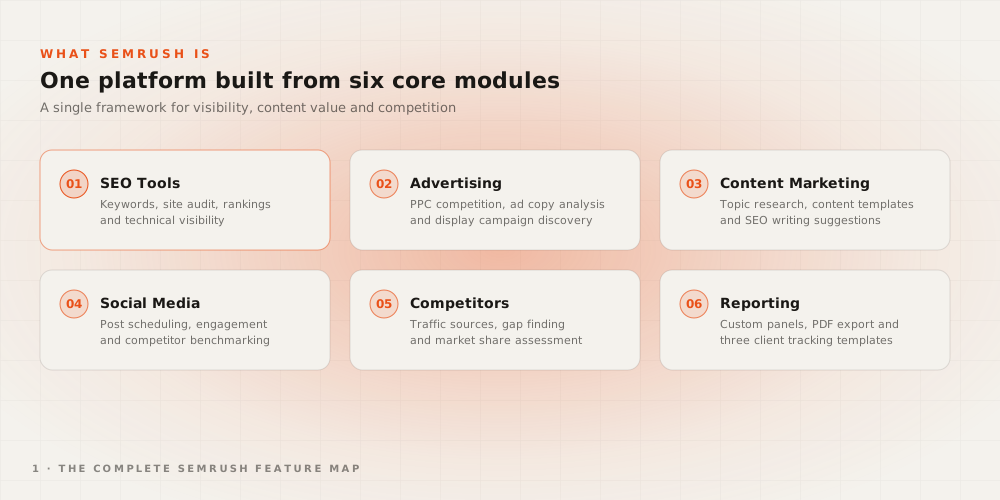
Semrush is a versatile digital marketing platform used to measure online visibility, analyze competitors, identify content opportunities, detect technical problems, and monitor brand perception in AI Search environments. The platform brings search data, competitor data, backlink profiles, content performance, ad visibility, social media data, and AI Visibility reports together under a single roof.
When we evaluate Semrush through a GEO perspective today, the core value is not just seeing which queries you appear for. The real value lies in understanding which prompts mention your brand, which topics competitors are cited on as sources, which of your pages AI systems find easier to understand, and which technical barriers are limiting visibility.
What does Semrush do?
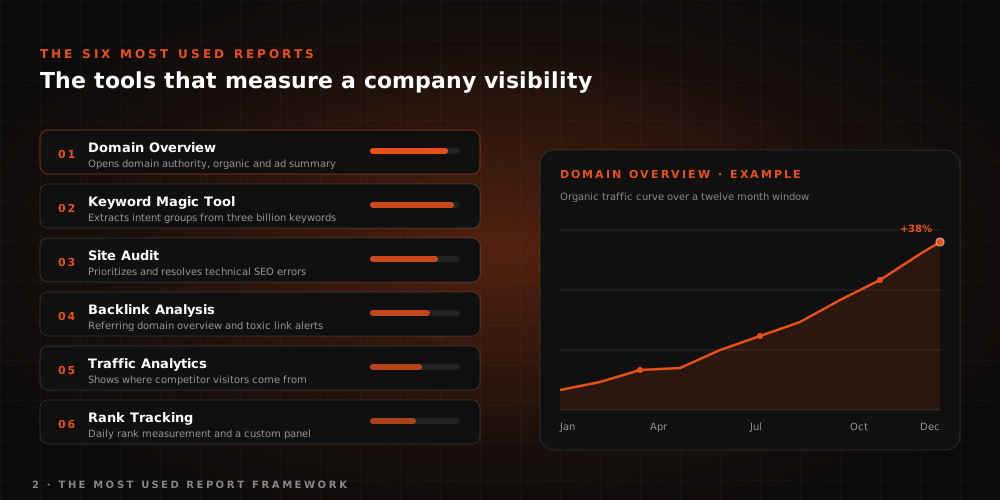
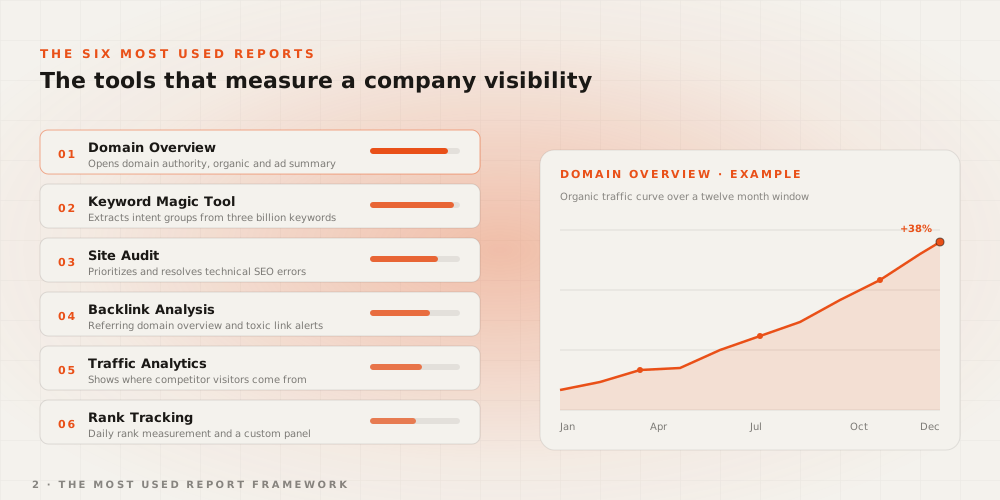
Semrush analyzes digital visibility across multiple layers. Users can examine their competitors' traffic sources, content clusters, link profiles, advertising strategies, brand mentions, and AI Search visibility. This data shows where a brand is strong and where it needs to invest in content, technical structure, or authority signals.
From a GEO standpoint, Semrush helps answer these questions:
- On which topics does my brand appear in AI-powered answers?
- In which prompts are competitors mentioned more often than me?
- Which of my pages are not structured to be citable?
- Which technical issues weaken crawler access or content comprehensibility?
- Which topic clusters need more authority and digital PR signals?
Which GEO analyses can you run with Semrush?
Semrush supports a wide range of GEO-focused analyses. The AI Visibility Toolkit helps analyze how a brand appears in AI-powered answers, how it compares against competitors, and where prompt opportunities lie. The site audit tool can detect crawler access issues, technical errors, broken links, redirect problems, structured data faults, and page accessibility risks.
The competitive analysis modules reveal which content clusters competitors dominate, which link and mention sources feed their authority, and where they satisfy user needs better. The content tools support building stronger content plans around prompt coverage, topical depth, user intent, and citability.
How to use Semrush?
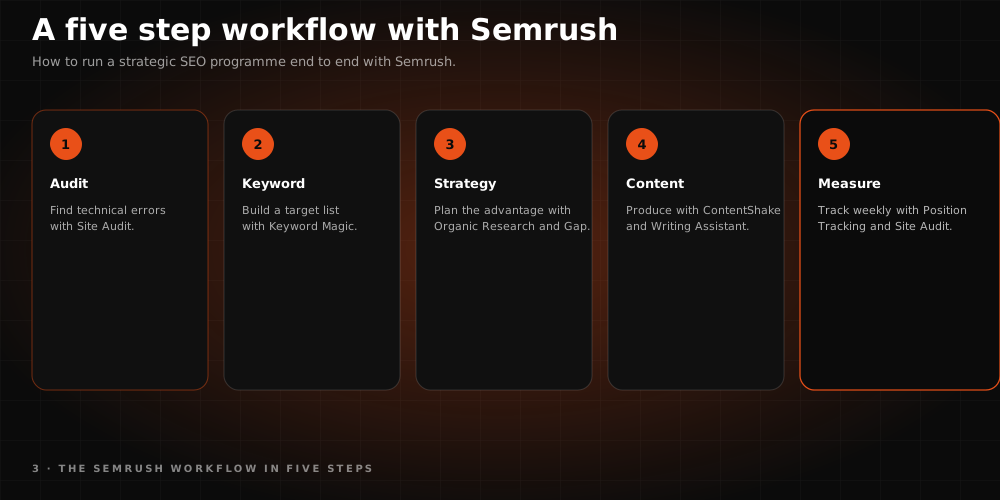
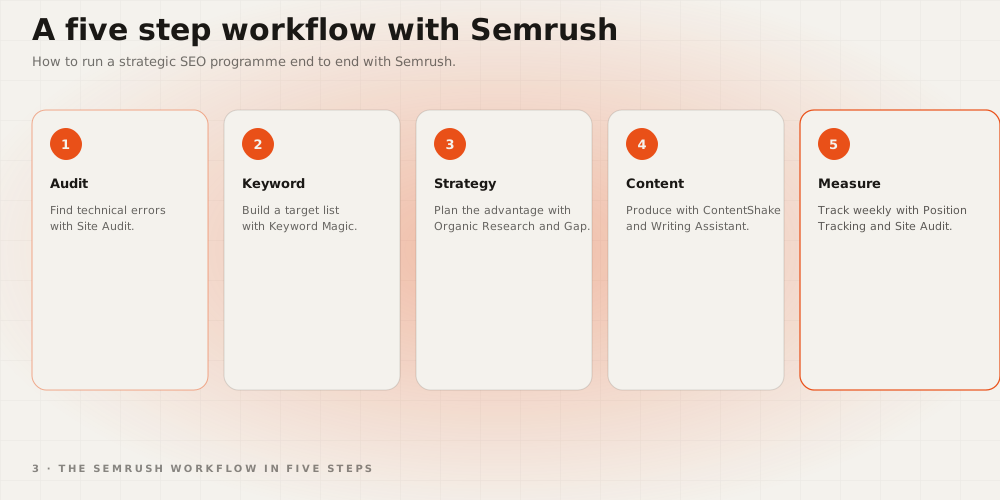
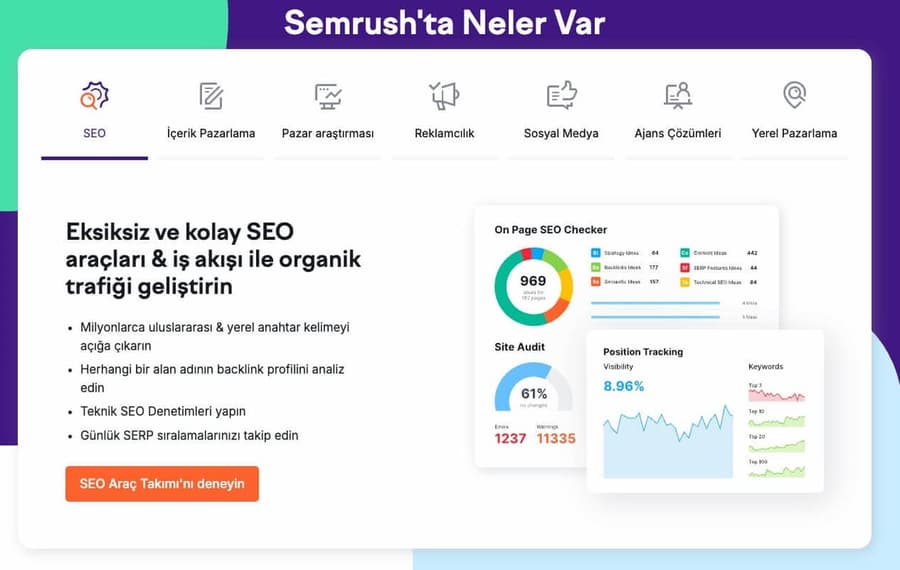
To get started with Semrush, you first create an account and then add the website you want to analyze as a project. Once the project is set up, you can run regular analyses across technical audits, competitor research, visibility tracking, content opportunities, link profiles, advertising data, and AI Visibility reports.
In GEO-focused usage, the goal is not simply to collect data. The collected data must be interpreted through prompt coverage, entity clarity, content depth, technical discoverability, source selectability, and brand trust. This approach turns Semrush reports into an actionable GEO roadmap.
Creating an account and signing in
To start using Semrush, you need to create an account on the official website. Once the account is active, you can access the platform's tools, add projects, and define the domains you want to analyze. The free trial and limited-access options are a reasonable starting point for seeing what data the platform provides. Deeper analysis, more projects, and detailed reporting may require a paid plan.
Creating projects and reporting
Creating a project in Semrush starts a continuous analysis and monitoring cycle for your website. The project screen provides technical audits, visibility tracking, link analysis, content opportunities, competitor comparisons, and reporting panels. When reporting through a GEO lens, evaluate not only traffic and position data but also AI Search visibility, prompt opportunities, content gaps, source value, and technical accessibility signals.
Link and citation analysis with Semrush
Analyzing your link profile with Semrush matters for understanding a brand's authority and source-trust signals. The platform helps examine the links pointing to your site, the referring domains, link quality, and which publications give competitors their visibility.
From a GEO standpoint, this analysis should never stop at counting links. The real goal is understanding which trusted sources mention your brand, which publications AI systems are likely to treat as citable, and which digital PR opportunities would strengthen the brand entity. Link analysis should therefore be paired with citation readiness and third-party trust signals.
Query and prompt research with Semrush
Query and prompt research with Semrush is a critical step for developing a GEO-focused content strategy. Classic search data reveals which topics users care about, which questions they ask, and where content gaps exist. The AI Visibility tools can show which prompts feature your brand, which prompts favor competitors, and which topic clusters hold fresh opportunities.
Volume and competition data alone are not enough here. User intent, follow-up questions, decision stage, citability, content format, and entity coverage must be weighed together. That is how content becomes not just findable but understandable and usable by AI systems.
Site audits with Semrush
Running a site audit with Semrush matters for evaluating a website's technical health and discoverability. The audit covers crawl errors, broken links, redirect problems, page speed issues, metadata gaps, structured data errors, canonical problems, internal link issues, and page accessibility.
For GEO, the technical audit lays the groundwork for AI crawler accessibility and content comprehensibility. If a page is technically unreachable, is not represented by the correct canonical, carries broken structured data, or hides key content during rendering, its potential to be selected as a source in AI Search environments weakens.
How to run competitor analysis with Semrush?
Competitor analysis with Semrush is a powerful way to identify visibility gaps and opportunities in your market. You can examine competitors' traffic sources, content clusters, link profiles, ad messaging, strongest pages, and topical coverage. Through a GEO lens, this analysis clarifies which prompts, answer formats, and source signals put competitors ahead.
A competitor analysis should cover these areas:
- On which topics do competitors hold stronger content clusters?
- Which publications, mentions, and links support their authority?
- In which prompts are competitors more visible in AI answers?
- Which content formats generate more source value?
- Which topic and entity gaps represent opportunities for the brand?
The content marketing tools inside Semrush
Semrush offers a range of tools that support content marketing workflows. They let you research topics, track content performance, review which subjects competitors cover, and identify content gaps. Through a GEO perspective, this data can feed clear answer blocks, comparison sections, FAQ areas, LLM-readable content structures, topic cluster plans, and entity-driven content architecture.
The goal of content production should never be publishing more pages for their own sake. Every piece should answer the user's question directly, carry trust signals, demonstrate brand expertise, and offer a structure AI systems can treat as a source.
Is Semrush free? What do the paid plans offer?
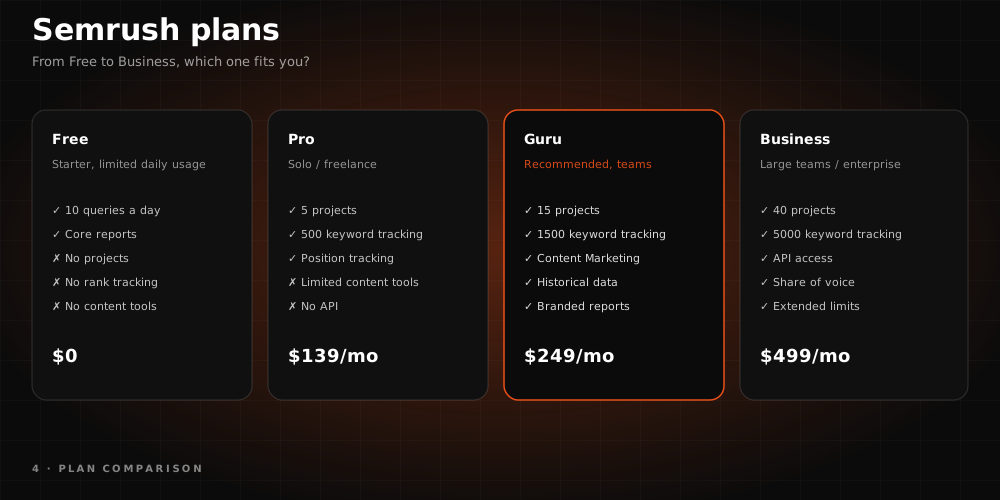
Semrush offers limited free access along with several paid plans. Free usage is useful for exploring the interface and some core analysis features. More comprehensive data, more projects, historical data, detailed reports, visibility tracking, and AI Search monitoring may require moving to a paid plan.
When choosing a plan, weigh more than price: how many domains you will monitor, how many locations you will track, which reports you need, whether you require AI Visibility tracking, and how the team will share access.
Can Semrush be used for free?
Semrush can be tried for free at a limited scale. For serious competitor analysis, regular reporting, advanced visibility tracking, higher data limits, and AI Search analysis, the paid plans are the better fit. Treat free usage as the discovery phase for figuring out which tools match your workflow.
What to watch when using Semrush
The most important discipline when using Semrush is interpreting data without stripping away its context. Deciding on a single metric can mislead. A traffic estimate, link profile, content opportunity, technical error, or visibility score must always be read against user intent, market conditions, competitive structure, and brand goals.
In GEO-focused usage, pay attention to these points:
- Cross-check Semrush data against Search Console, Analytics, CRM, sales, and customer support data.
- Prioritize prompt and topic opportunities by source potential, not volume alone.
- Interpret errors in technical reports through the lens of AI crawler access and content comprehensibility.
- In competitor analysis, examine trust signals and citation sources, not just visibility.
- Build content plans around entity consistency and journey-based visibility.
Who should use Semrush?
Semrush is a strong analysis platform for digital marketing specialists, GEO teams, content marketers, performance teams, brand managers, consultancies, e-commerce teams, and growth teams. Any team that wants to track competitors closely, identify content opportunities, detect technical issues, monitor AI Search visibility, and strengthen brand perception can benefit from Semrush.
Is Semrush a fit for small businesses?
Semrush can serve small businesses well. Companies with limited resources can use it to analyze competitors, decide which content deserves priority, spot technical issues, and grow their digital visibility more efficiently. Choosing the right plan matters, though. In the early phase, core analyses, competitor tracking, and content opportunities may be enough; AI Visibility reports and prompt tracking can follow as GEO work matures.
What are the alternatives to Semrush?
Alternatives to Semrush include Ahrefs, Moz, Similarweb, SpyFu, Screaming Frog, Sistrix, Profound, Scrunch, and various AI Search visibility tools. Each platform has a different strength. Some excel at link data, some at technical crawling, some at traffic estimation, and others at AI answer visibility and prompt tracking.
When selecting a tool, evaluate data coverage, AI Search tracking, competitor benchmarking, technical audit capacity, content planning support, reporting flexibility, team usage, location support, and budget. Semrush's advantage is uniting so much digital marketing data on a single platform.
How to grow GEO visibility with Semrush?
Growing GEO visibility with Semrush starts with a current-state analysis. Answer these questions first: on which topics is the brand visible, in which prompts are competitors stronger, which pages are technically weak, which pages lack a citable structure, and which publications support brand trust.
A practical GEO workflow can be built as follows:
- Analyze brand visibility and competitor position with AI Visibility reports.
- Identify prompt and topic opportunities.
- Examine competitors' strongest content clusters and citation sources.
- Resolve technical accessibility issues through the site audit.
- Strengthen content with clear answer blocks, structured data, entity consistency, and trust signals.
- Track AI Search visibility, branded demand signals, and content impact with regular reports.
Frequently asked questions about Semrush
Frequently asked questions help users understand the platform more clearly. They typically cluster around data updates, language support, technical requirements, competitor analysis, AI Visibility reports, and prompt tracking. The answers below are written to evaluate Semrush's GEO-focused usage more precisely.
Do you need technical knowledge to use Semrush?
Advanced technical knowledge is not required to use Semrush. The platform offers a user-friendly interface. Interpreting the data correctly, however, benefits from a working knowledge of digital marketing, content strategy, competitor analysis, technical site health, and GEO logic. Expert review adds the most value when interpreting technical audits, structured data, crawler access, and AI Visibility reports.
Which languages does Semrush support?
Semrush is built for data analysis across different languages and markets. Users can run visibility, competitor, and content analyses for their target countries, languages, and locations. For multilingual brands, this makes it possible to compare prompt intent, competitor visibility, content gaps, and local authority signals across markets.
How often is Semrush data updated?
Semrush data refreshes at different intervals depending on the tool, the data source, the plan, and the metrics being tracked. Some visibility and tracking data updates frequently, while other datasets refresh on longer cycles. When interpreting reports, check the data date, the country and location selection, the device breakdown, and the module in use.
How reliable is Semrush for query and prompt research?
Semrush is a strong data source for query research and prompt opportunity analysis. No single tool delivers absolute truth, though. For the most reliable picture, combine Semrush data with Search Console, Analytics, customer interviews, objections surfaced by sales teams, support tickets, manual AI Search checks, and competitor content analysis.
How is competitor analysis done with Semrush?
To run competitor analysis with Semrush, enter competitor domains into the platform and examine their traffic sources, strongest pages, content clusters, link profiles, ad visibility, and AI Search signals. Through a GEO lens, this analysis shows where competitors are perceived as stronger sources, which prompts they lead, which third-party sources supply their trust signals, and where your brand should invest in content or authority.