What Is YouTube GEO and Why Does It Matter?
Learn how YouTube GEO makes video content readable and citable for AI assistants, and which signals turn your videos into sources that answer engines trust.

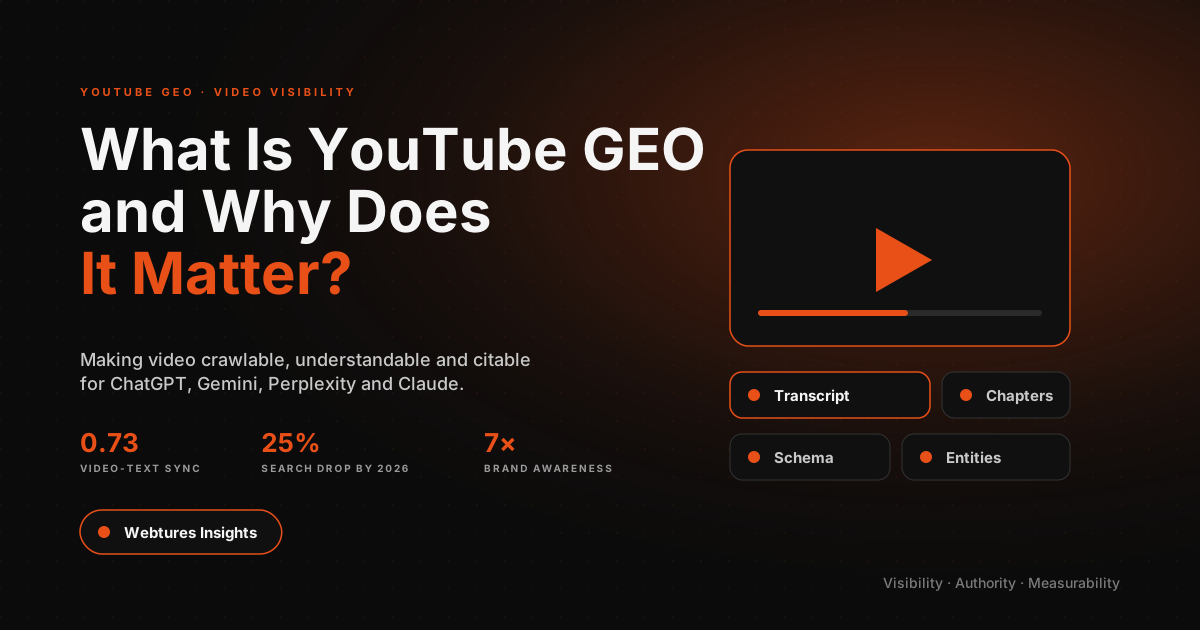
Video consumption has become one of the strongest digital behaviors. Users now discover products, brands and solutions by watching first, and AI assistants watch and interpret those same videos to carry them into their answers. That is why YouTube is no longer just a video platform; it is a critical data source feeding both human viewers and Large Language Models (LLMs).
YouTube GEO is the practice of optimizing video content for this new order, where videos are watched and interpreted not only by people but, increasingly first, by AI agents and LLMs.
Video content authority and the GEO approach in the AI era
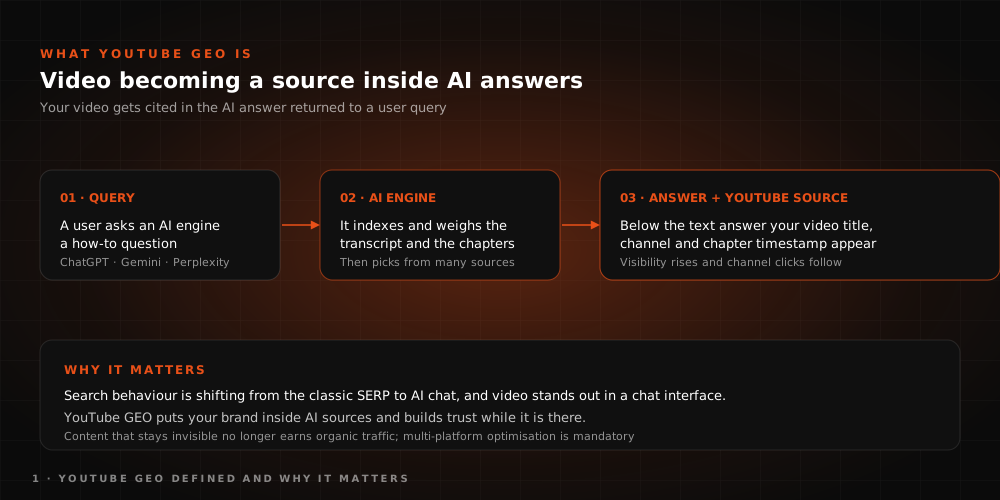
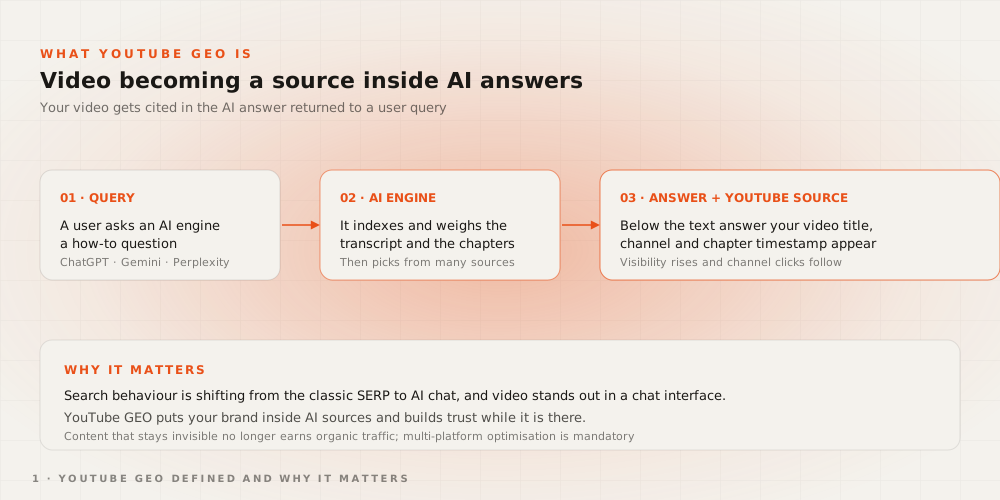
In the digital ecosystem, visibility is no longer measured by rankings on search engine results pages (SERPs) but by how accurately and reliably AI models reference your brand and your content. Video GEO (Generative Engine Optimization) is the process of making video content crawlable, understandable and citable by AI systems such as ChatGPT, Gemini, Perplexity and Claude.
According to Gartner, traditional search volume is expected to fall 25 percent by 2026, as users increasingly prefer direct, zero-click answers from AI assistants over clicking links. In this new world, video is not just media to be watched; it is among the richest data sources feeding AI models. At Webtures we define this process as a strategy for growing your brand's Share of Truth.
The core dynamics of Video GEO: semantics and entity focus
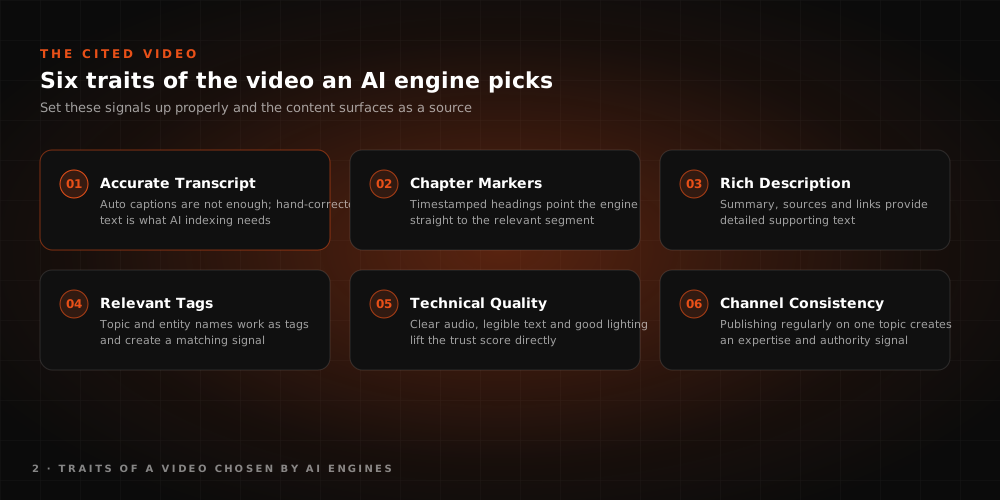
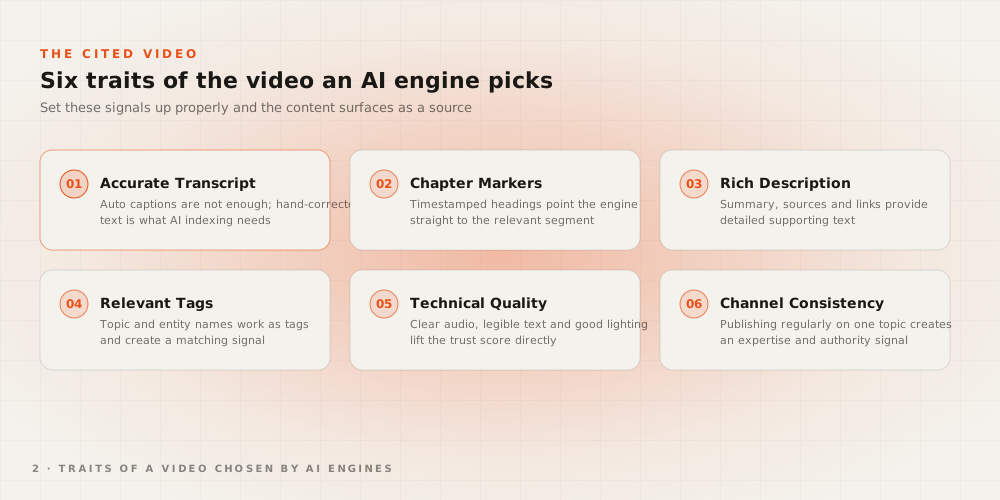
Keyword-driven optimization from the traditional era has given way to a structure built around entities and context. AI models make sense of your video less through the words in its title and more by analyzing the speech inside it (the transcript), its visual cues and even the emotion in the tone of voice.
-
Multimodal understanding: AI engines analyze video frame by frame, recognizing objects, people and on-screen text. The information density and accuracy of the content now matter as much as its technical quality.
-
Transcript authority: Spoken text is the primary data source for LLMs. Content must offer clear context not only to the viewer but to the machine.
-
The trust gap: AI models are prone to hallucination. Consistent, verifiable data in your video content is what earns it the reliable-source label from the model.
Why is Video GEO investment a critical necessity?
When the ranking parameters of systems like Perplexity and Google AI Overviews are examined, the correlation between video content and text content (YouTube Sync) shows a strong effect at around 0.73.
-
AI agents are the new consumers: Before you convince your customers, you must convince the AI assistants they use. If AI does not reference your video, your chance of reaching the end user disappears.
-
The evolution of recommendation systems: Algorithms now focus less on who watched the most and more on whether a video gives the clearest, most accurate answer to the question asked.
-
A lasting digital asset: According to Webtures analyses, brands that appear in AI answers earn 7 times more brand awareness and trust than they do through traditional advertising.
How do you optimize video for AI?
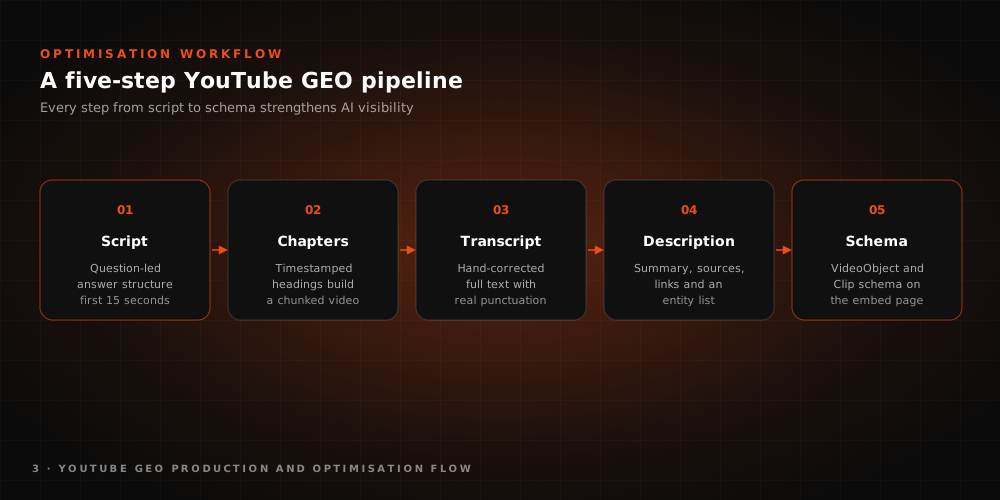
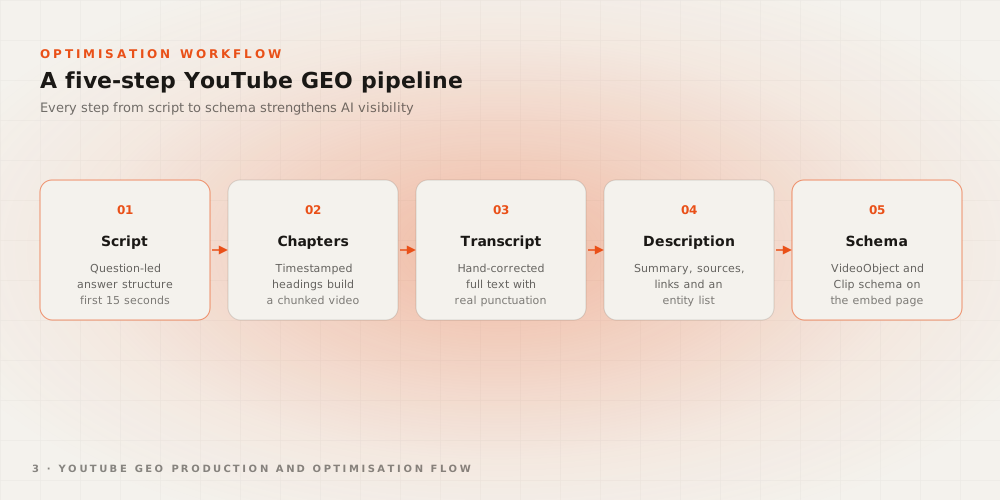
The Video GEO process focuses less on technical metadata and more on increasing the content's citation-worthiness.
1. Semantic structuring and prompt engineering
Instead of keyword research, you need to analyze the prompts users direct at AI models. Analyses across more than 40 million AI queries show that users are moving beyond how-to questions toward complex, comparative queries along the lines of "what is the best solution and why?"
-
Action: Video titles and descriptions should be written in a question-and-answer format, with the clarity of a response to an AI model's system prompt, and with structured data (schema markup) logic in mind.
2. Contextual enrichment of transcripts and captions
AI models read videos. Instead of auto-generated captions, upload grammatically clean transcripts that clearly include your brand terminology, industry terms and brand name. The first 30 seconds of the video are the most critical window for the AI to categorize (classify) the content.
3. Entity association
The topics you cover in your video need to map onto their counterparts in the Google Knowledge Graph or the general LLM knowledge base. If you say cloud computing, you should establish contextual links to related entities such as Amazon AWS or Azure. In Webtures strategies, this means getting your brand mentioned in the same cluster as the other authoritative sources in your industry (Wikipedia, academic papers and the like).
Human viewer signals still decide
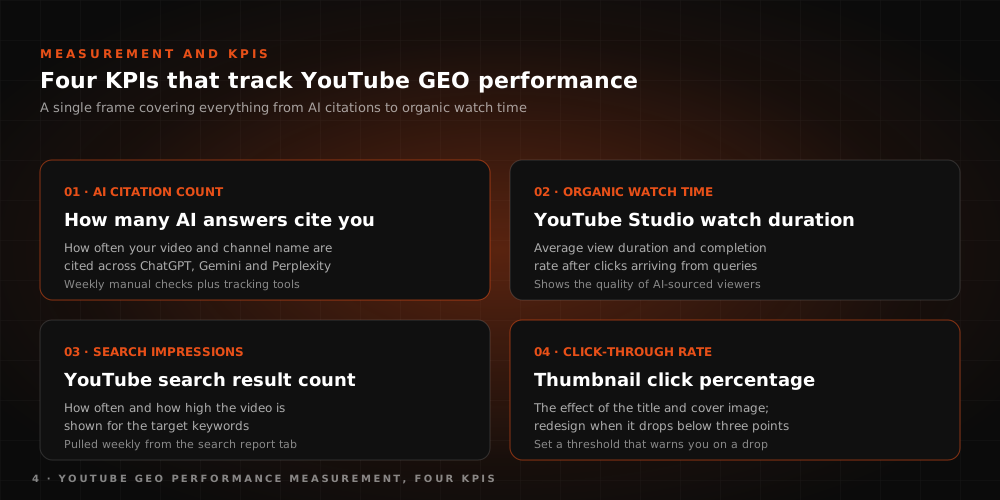
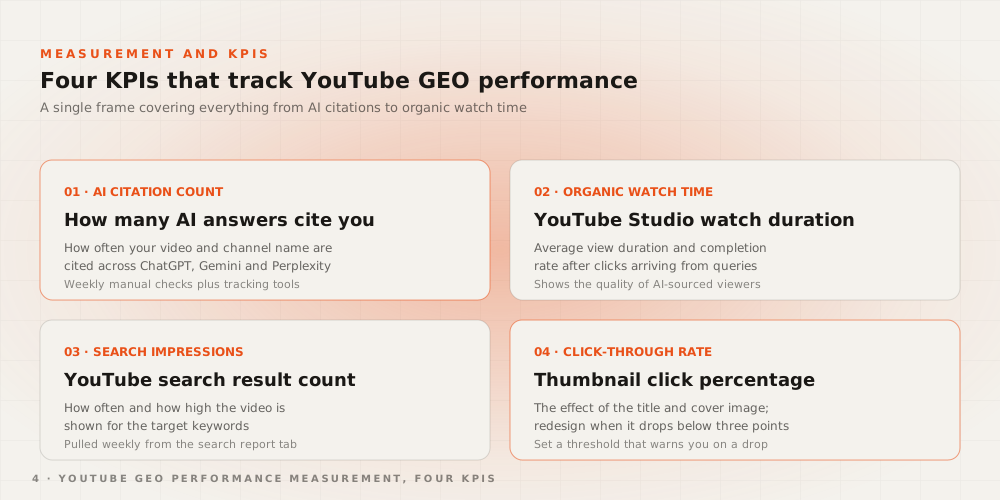
While AI models read videos, the YouTube algorithm still measures human behavior, and the two layers feed each other. Videos with strong engagement signals such as watch time, audience retention, likes and comments become more visible both in the recommendation system and on AI search surfaces. Machine readability does not replace storytelling that holds a human viewer; it is built on top of it.
On the human side, the practices that stand out are these:
-
Value-driven series content: Educational videos, guided walkthroughs and content serialized on a regular publishing schedule grow viewer loyalty and channel authority together. Videos focused purely on product promotion generate short-lived interest; content that solves problems builds lasting trust.
-
The first 15 seconds and the thumbnail: The opening determines whether a viewer stays, so start with a clear promise or a curiosity-provoking question. A thumbnail with a consistent visual identity and minimal text directly affects click-through rate.
-
Analytics tracking: Average watch time, retention rate, click-through rate and traffic sources should be monitored regularly; data on which content types hold viewers longest should steer your next video investments.
These signals also give AI models proof that the content serves a real user need; human engagement is an indirect but powerful component of citability.
AI visibility tools and measurement
Traditional rank tracker tools fall short in the generative AI world. Share of Voice and sentiment analysis metrics now take priority.
-
Visibility scores: Use new-generation tools that measure how often your brand is recommended in ChatGPT or Perplexity.
-
Citation analysis: Which AI answers cite your video as a source, and how often it appears in footnotes, is the core success criterion.
-
Hallucination control: Regularly audit whether AI is giving false information about your brand, and correct errors under an accuracy-engine principle.
If you are invisible to AI, you are invisible to your customers. To see the unseen, you can use Brantial to track your visibility across AI search engines.
The 2026 outlook: video and GEO integration
According to Webtures projections for 2026, a large share of digital marketing budgets will shift from ads that people click to the optimization of content that AI models consume.
-
Personalized video answers: AI will clip and serve only the relevant 15 seconds of your video, tailored to the user's question.
-
Multimodal commerce: AI will instantly recognize a product shown in a video and let the user buy it or read reviews without leaving the video.
In short, when you optimize your videos, aim not at the search bar but at the answer engine. Your brand's presence in the digital world will be directly proportional to how well AI knows it and trusts it.