The New Constitution of AI Visibility: GEO and Zero-Click Dominance
The era of traditional "blue link" SEO is over. Digital marketing now revolves around Generative Engine Optimization (GEO) , an answer-driven ecosystem governed by Large Language Models (LLMs).


The era of traditional "blue link" SEO is over. Digital marketing now revolves around Generative Engine Optimization (GEO), an answer-driven ecosystem governed by Large Language Models (LLMs). Instead of waiting for users to click through to your website, the goal is to make your brand and content the primary source of truth cited in AI-generated answers.
At Webtures, our vision is to ensure brands do more than merely exist in this Zero-Click future. We help them become deterministic knowledge sources that close the trust gap of LLMs.
The zero-click economy: loss or dominance?
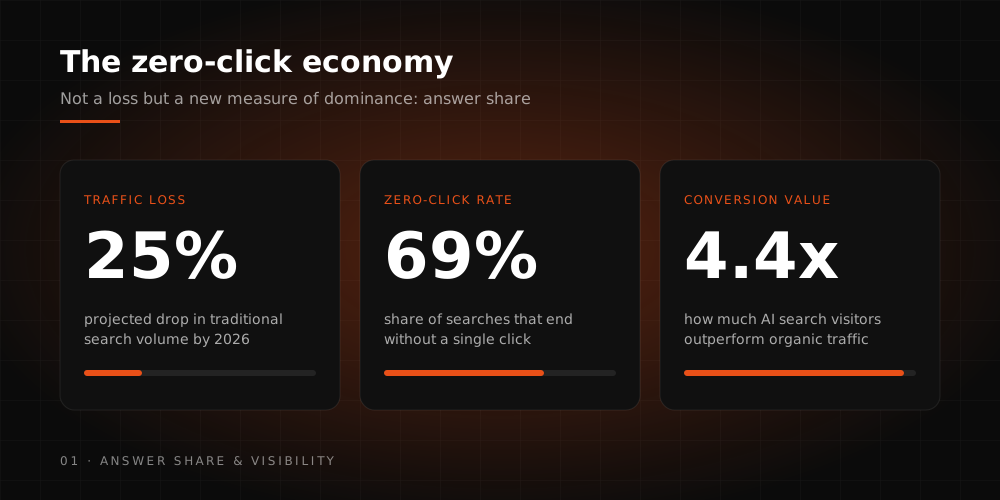
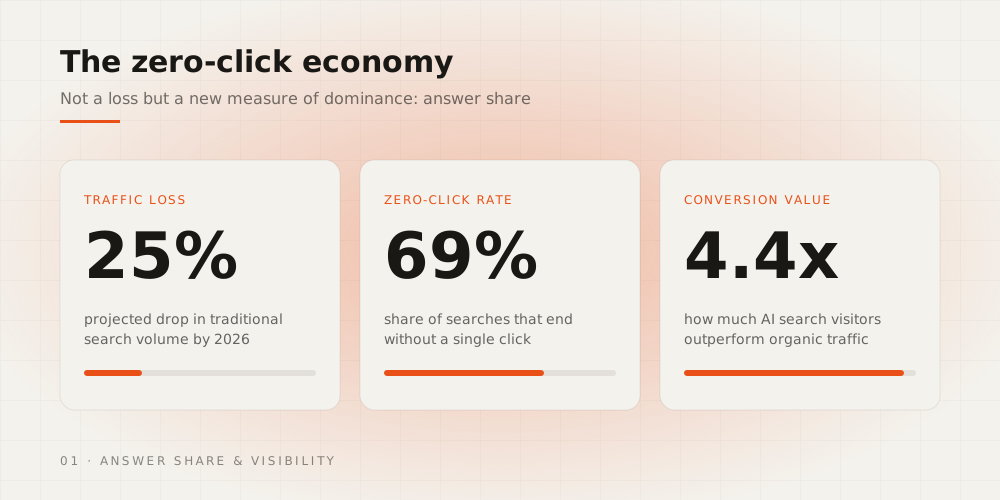
Zero-click is the phenomenon of users getting the answer to their query directly on the search engine results page (SERP) or inside an AI chat interface, then leaving without ever clicking through to the source site.
Zero-click: volume and forecasts
- Projected traffic loss: The 25 percent volume decline projected by analyst firms is a forecast, not a measurement; it varies widely by industry and should never be quoted without attribution. The measured figure below offers far firmer ground than any prediction.
- Rising zero-click rates: In the first four months of 2026, 68.01 percent of Google searches in the US ended without a click, up from 60.45 percent in 2024 (SparkToro, Similarweb desktop and mobile panel data). In the same study, clicks drop roughly 60 percent on searches where an AI Overview appears, and AI Overviews now surface on more than 20 percent of searches. For scale: Google AI Mode accounted for just 0.34 percent of all searches during the period examined.
- A changing KPI: This shift forces GEO strategy to prioritize citation frequency and sentiment within AI answers rather than traffic. Traditional SERP rankings become secondary.
The opportunity in zero-click: share of answer
Rather than treating zero-click as lost traffic, treat it as Share of Answer, a new measure of brand visibility and reputation.
- Perceived authority: When a brand is cited in an AI answer, it instantly signals expertise and credibility in the user's eyes.
- High conversion intent: Visitors arriving from AI search deliver 4.4 times higher conversion value than traditional organic search visitors, because the AI has already completed the filtering and decision-making process for the user.
- The invisible source opportunity: Models like ChatGPT can cite high-quality content that offers niche, in-depth knowledge even when it never reaches page one of traditional search. This is the competitive edge GEO can create.
The core principles of GEO: speaking to the machine
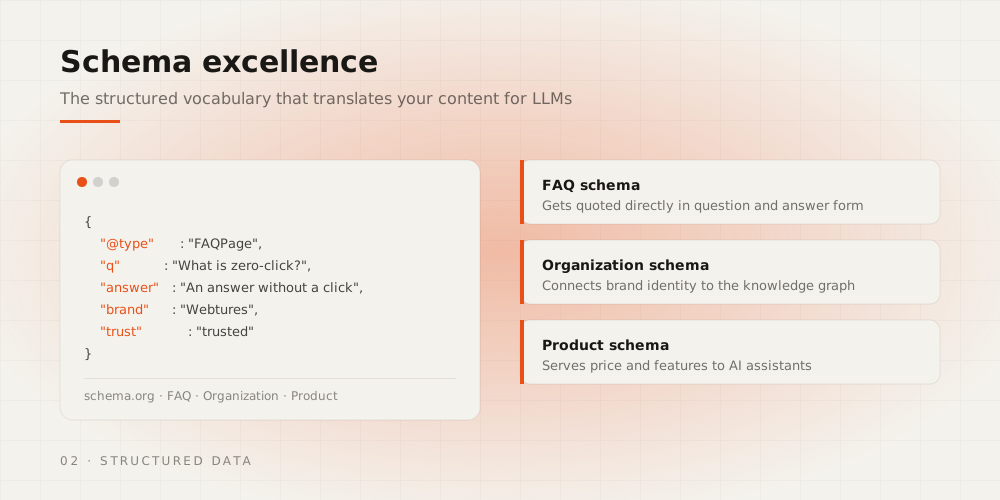
Succeeding at GEO means structuring your content so that LLMs can easily digest it and deem it trustworthy. It combines technical optimization with superior content.
1. Structured data and schema excellence
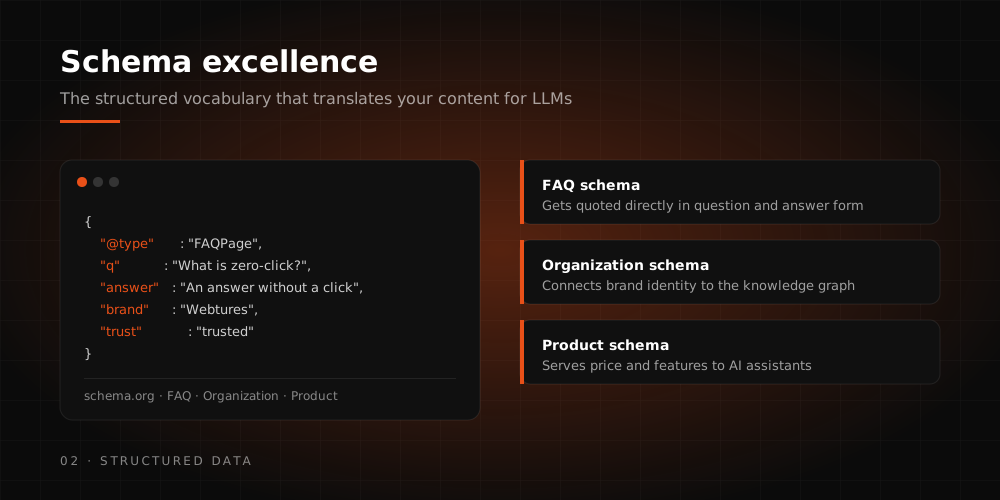
Schema markup acts as a "machine-friendly translator" that helps LLMs classify and use your content.
- Critical schema types: FAQ schema (for direct question-and-answer format) and Product schema (for surfacing prices and features to AI shopping assistants) are non-negotiable.
- Entity dominance: Use Organization schema to bind your brand's identity and area of expertise clearly into the Knowledge Graphs that LLMs draw from.
- The technical case: Industry analyses show that the vast majority of sites ranking at the top of search results use schema, evidence that LLMs take structured data seriously.
2. Citation-driven content strategy
Unlike traditional keyword stuffing, GEO content is built to earn quotations from LLMs.
- Short, direct answers: LLMs avoid long paragraphs. Structure your content with TL;DR summary blocks, bullet points, and clear paragraphs of 40 to 60 words.
- Quotable evidence: Add concrete statistics, expert opinions, and quotations from credible sources. Research shows that adding citations and statistics measurably lifts visibility.
- Long-tail and conversational language: Users ask AI queries that average 13 words. Build comprehensive content clusters that target these natural-language, long-tail questions.
3. Multi-surface authority building
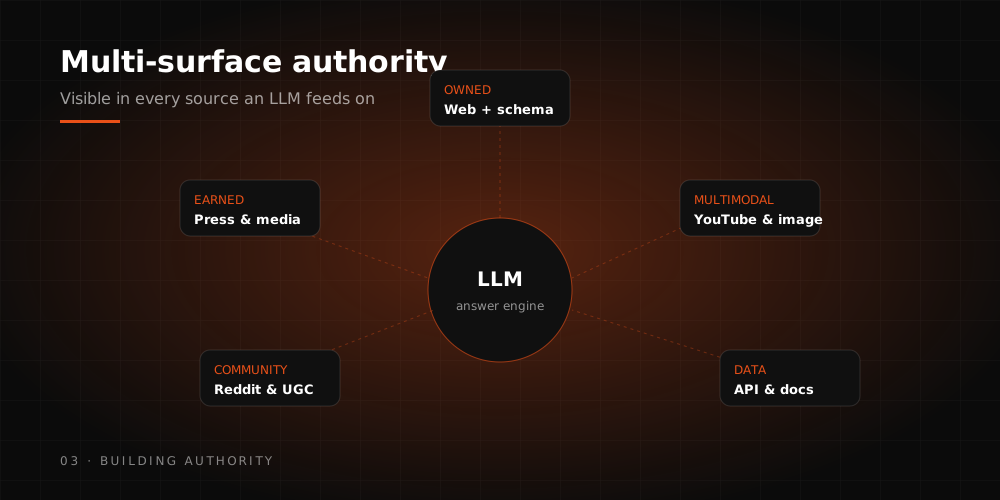
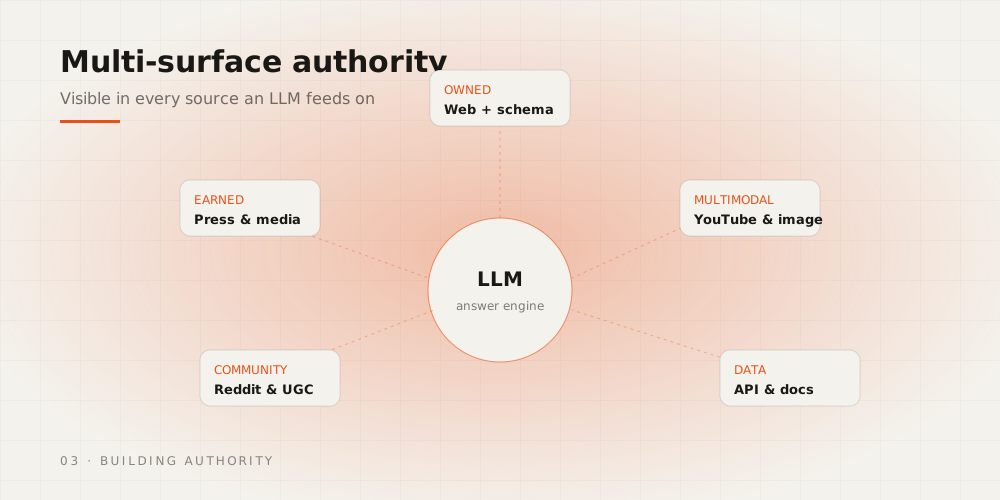
AI systems crawl every source in their training data, not just your website. That multiplies the importance of earned media and social platforms.
- The new role of earned media: The large majority of AI citations come from earned media. Press releases, industry reports, and mentions of your brand on trusted news sites feed the "credible authority" perception inside LLMs.
- Reddit & UGC (user-generated content): Reddit is the single most dominant citation source in AI answers, proof of how much LLMs value genuine user content. Brands should practice community engineering on platforms like Reddit through authentic, value-based participation.
- Visual and voice GEO: Google Lens processes 20 billion visual queries per month. YouTube videos and images tagged with accurate alt text raise visibility in multimodal AI search (visual and voice).
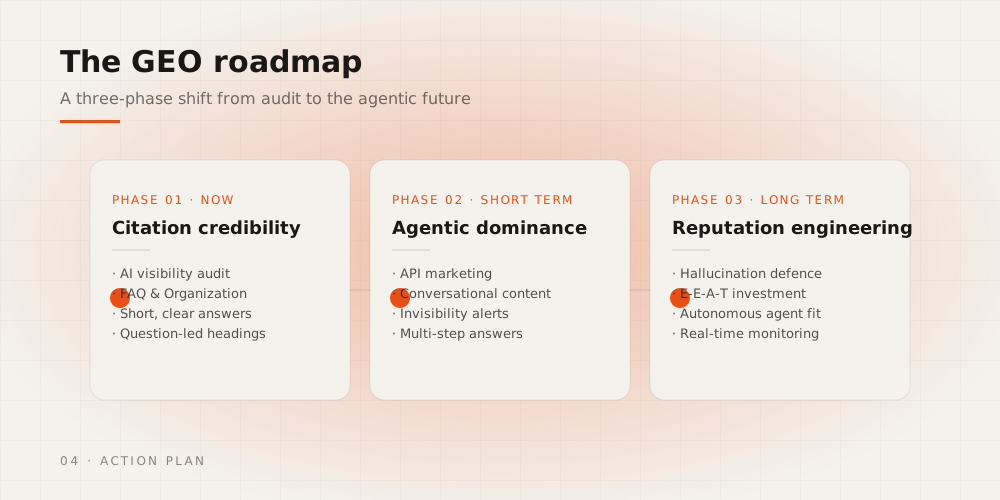
The Webtures GEO roadmap: an action plan
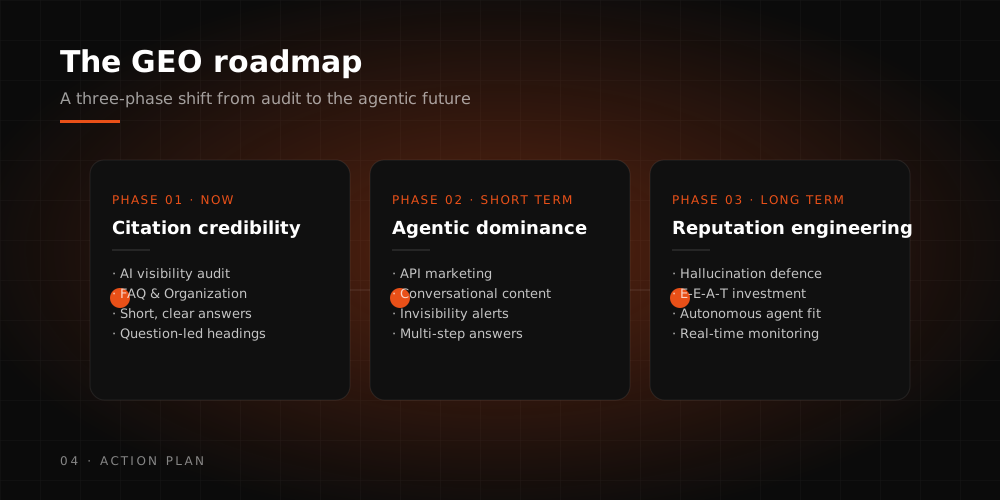
Phase 1: foundational citation credibility (start now)
- AI visibility audit: Brantial and platforms like it let you measure how often, in which prompts, and with what sentiment your brand and competitors are mentioned across ChatGPT, Perplexity, and Google AI Overviews.
- Close your schema gaps: Complete FAQ and Organization schema implementation across every critical product and service page.
- Transform your content style: Revise your 10 highest-demand keywords (the prompts with the highest Conversation Volume) to deliver short, precise answers. Make sure every heading is a question.
Phase 2: agentic dominance (short term)
- API marketing and data access: Publish data such as inventory, pricing, and technical documentation in structured formats LLMs can read. Scale-up ventures in emerging markets will need this data to substantiate their valuations.
- Dialogue-oriented content: Remember that LLM sessions involve many back-and-forth messages on average. Plan your content to answer not just the first question but the two or three likely follow-up questions as well (multi-step dialogue).
- Invisibility alarm: Set up a system that instantly detects drops in AI visibility (for example, whenever your Visibility Score falls below a defined threshold). Treat such a drop as a "code red" emergency, exactly as you would a technical outage.
Phase 3: corporate reputation engineering (long term)
- Hallucination defense: Deploy a monitoring system with real-time hallucination alerts against the risk of AI generating false information about your brand. Reputation protection will be the defining GEO service of 2026.
- E-E-A-T and trust score investment: Focus on expert-driven content (Experience, Expertise, Authoritativeness, Trustworthiness). For medical or financial topics, use hybrid models where an AI draft passes through human expert approval.
- Preparing for the agentic future: Adapt your technical infrastructure to API-based marketing now, ahead of an era where LLMs will not just answer questions but complete purchases and bookings on the user's behalf through autonomous agents.
Conclusion: from SEO to accuracy engine optimization
The GEO era is about giving up the pursuit of rankings and focusing on earning citations. Market competition will be won in the game of "answer quality" and "accuracy".
Your website's most valuable digital asset is no longer traffic alone. It is your Knowledge Graph entity and your trusted citation frequency in the memory of AI systems.
This new order has made GEO a non-negotiable discipline in digital marketing.
Source
- In 2026, Less than One Third of Google Searches Still Send a Click - SparkToro (Similarweb desktop and mobile panel data, January to April 2026, US), accessed August 9, 2026, https://sparktoro.com/blog/in-2026-less-than-one-third-of-google-searches-still-send-a-click/