AI-Powered Competitive Analysis and Market Research
AI-powered competitive analysis and market research are critical for building a durable competitive advantage. Artificial intelligence (AI) technologies analyze massive datasets to deliver faster and more accurate results, helping businesses understand their competitors better and refine their marketing strategies.
AI-powered competitive analysis and market research are critical for building a durable competitive advantage. Artificial intelligence (AI) technologies analyze massive datasets to deliver faster and more accurate results, helping businesses understand their competitors better and refine their marketing strategies.
What is AI-powered competitive analysis and market research?
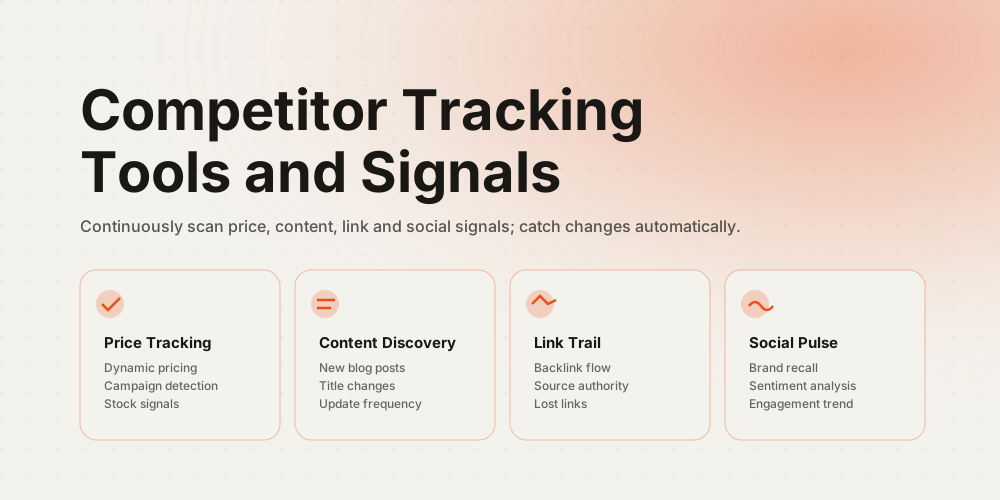
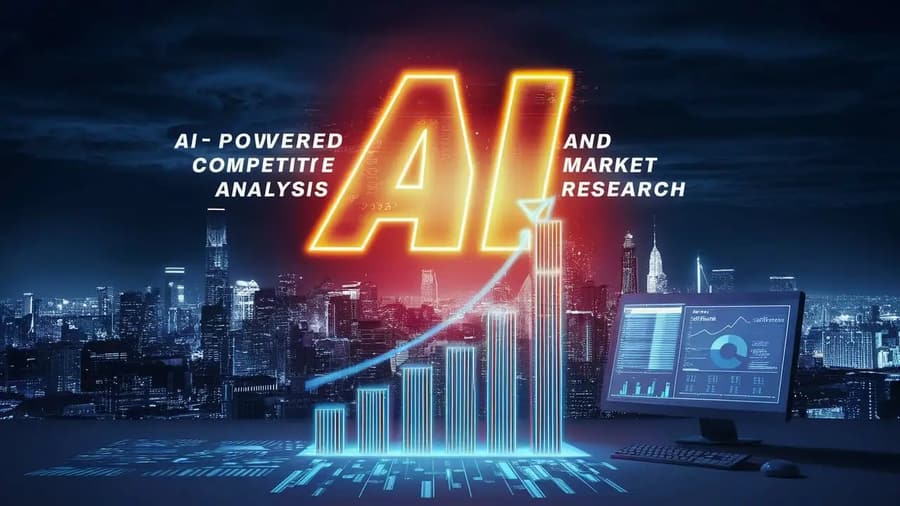
AI-powered competitive analysis and market research are processes that use artificial intelligence and machine learning to help businesses understand market dynamics, competitor strategies, and customer behavior. These analyses process large datasets quickly and accurately, delivering valuable insights. As a result, businesses can make better-informed strategic decisions and gain a competitive edge. Compared with traditional methods, AI-driven approaches produce more comprehensive and more effective results.
Defining competitive analysis and market research
Competitive analysis is the practice of studying a company's rivals and their strategies. Market research, in turn, examines the dynamics of a specific market, consumer behavior, and emerging trends. AI-powered competitive analysis and market research make both disciplines more efficient and more thorough by applying artificial intelligence and machine learning. These technologies analyze large datasets at speed, giving businesses a decisive advantage when making strategic decisions.
The role of AI and machine learning
Artificial intelligence and machine learning automate data collection, analysis, and interpretation across competitive analysis and market research. These technologies process huge volumes of data quickly and surface trends and patterns. Natural language processing (NLP) algorithms, for example, extract valuable insights from social media conversations and customer feedback. This allows businesses to anticipate competitor strategies and market shifts with far greater accuracy.
Benefits of AI-powered competitive analysis
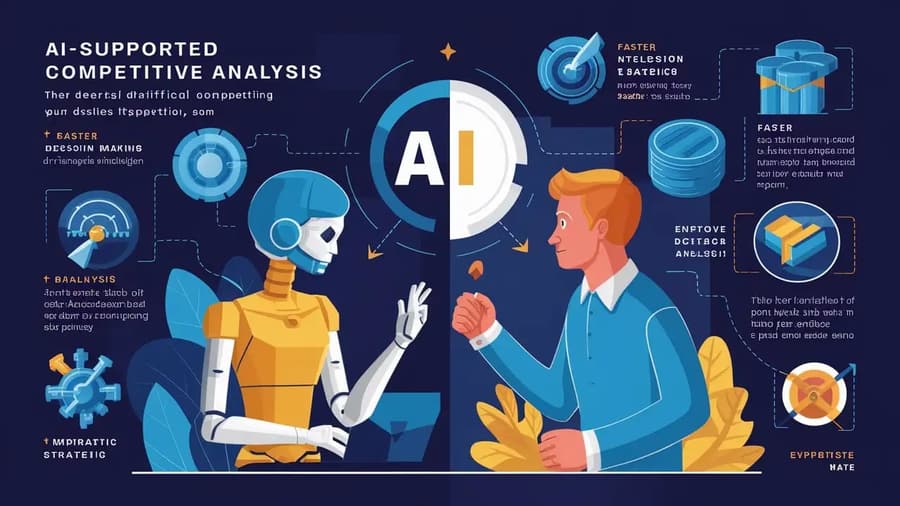
AI-powered competitive analysis gives businesses a range of advantages. The technology analyzes large datasets to anticipate competitor strategies and detect market trends. Faster, more accurate data analysis also helps businesses act on strategic decisions more effectively. AI-driven analysis strengthens a company's market position and helps it outmaneuver competitors.
Faster and more accurate data analysis
AI-powered data analysis is far faster and more accurate than manual methods. The capacity to process large datasets means businesses access more information in less time. That speed and precision translates into sharper strategic decisions. An AI algorithm can, for example, analyze millions of customer reviews to identify which product features customers praise and which they complain about.
Anticipating competitor strategies
AI technologies also excel at anticipating competitor moves. Machine learning algorithms analyze competitors' past performance and market activity to predict their next steps. This intelligence helps businesses develop proactive strategies to secure a competitive advantage. Anticipating a rival's product launch dates and marketing campaigns, for instance, lets a company adjust its own strategy accordingly.
Improving marketing strategies
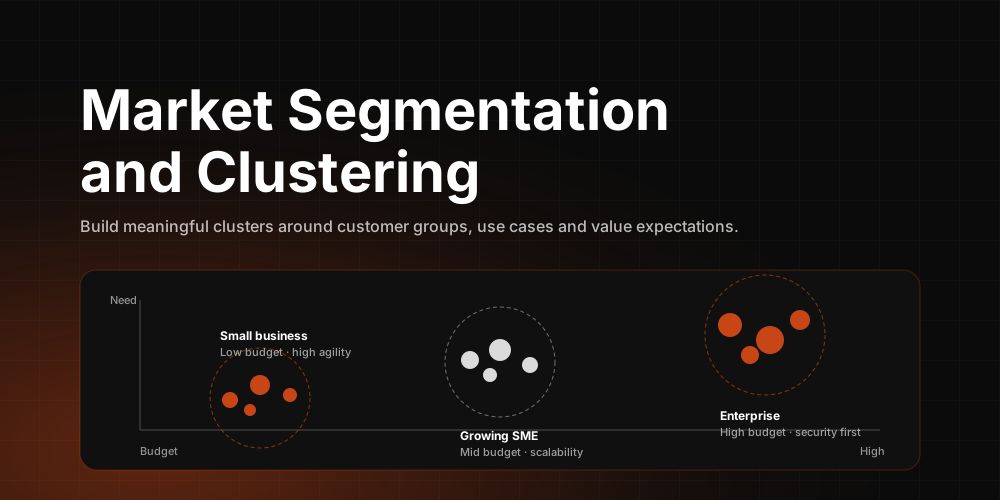
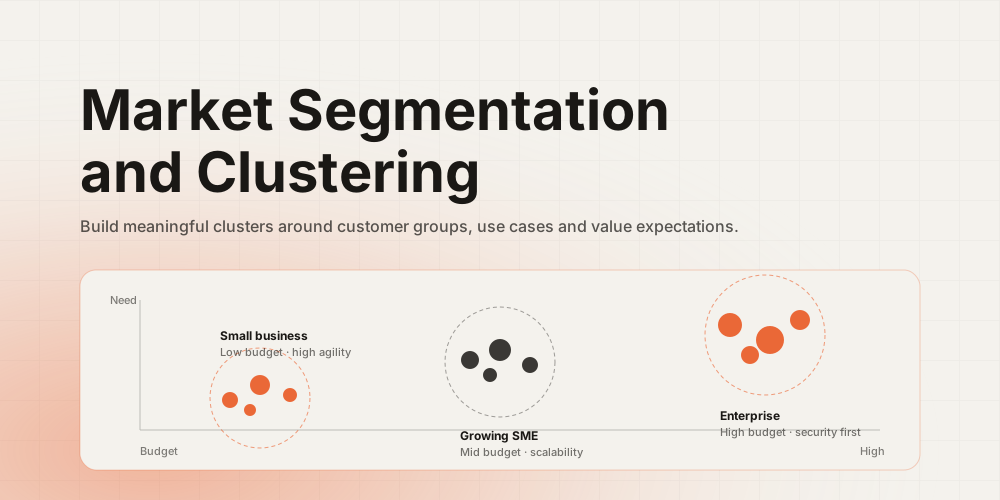
AI-powered competitive analysis and market research contribute significantly to stronger marketing strategies. Artificial intelligence analyzes customer data to build strategies that amplify campaign impact. Customer segmentation, for example, enables tailored campaigns for distinct customer groups. AI algorithms also evaluate the performance of past marketing campaigns and recommend improvements that make future campaigns more successful. This lets businesses spend their marketing budgets more efficiently and deepen customer loyalty.
Understanding customer trends
AI technologies play a key role in understanding customer trends. Artificial intelligence analyzes large datasets to identify customer behavior and preferences. Data from social media and e-commerce platforms, for example, reveals which products customers prefer, which features they value, and how they shop. These insights guide product development and shape strategies that lift customer satisfaction. With AI-driven analysis, businesses understand customer expectations more clearly and serve them better.
What are the benefits of AI in market research?
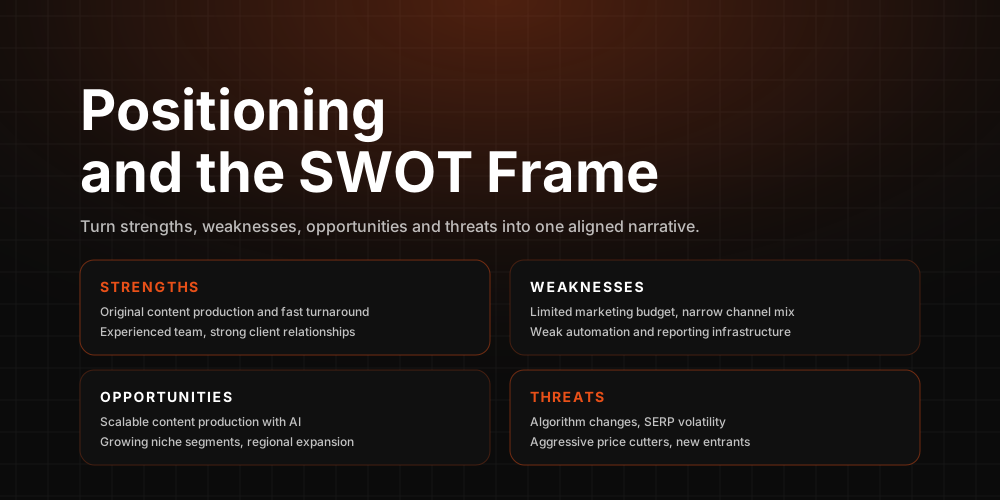
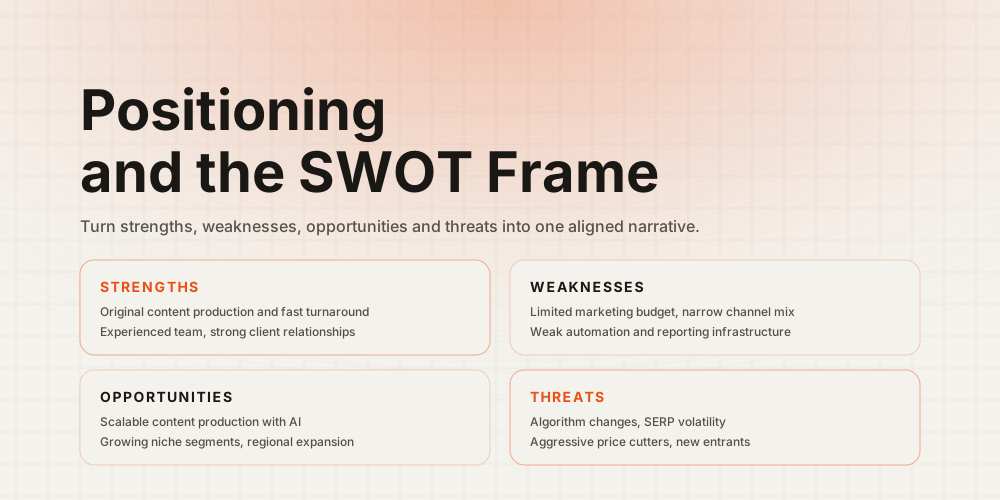
AI-driven market research gives businesses access to broader and deeper datasets, automated reporting, and continuous insight delivery. AI technologies process huge volumes of data quickly and accurately, surfacing the critical insights needed to refine marketing strategies and identify new market opportunities. By predicting consumer behavior, they also help businesses respond to customer needs more effectively.
Broader and deeper datasets
AI technologies expand the scope of market research through their ability to analyze wide and deep datasets. Data that traditional methods could never capture becomes accessible through artificial intelligence. This data is critical for developing marketing strategies and identifying new market opportunities. Social media analytics, for example, delivers far more detailed intelligence on consumer trends and interests.
Automated reporting and insight delivery
AI-driven market research saves time and cost through automated reporting and insight delivery. AI algorithms analyze data and report key findings automatically, so businesses can make data-driven decisions faster and more effectively. An AI-based platform can, for instance, deliver weekly reports on market trends and consumer behavior.
Identifying new market opportunities
AI-driven market research helps businesses spot new market opportunities. AI algorithms analyze existing market data to detect potentially profitable, still-untapped markets. These analyses offer deep insight into consumer needs and market trends. By examining consumer behavior and product demand across geographic regions, AI shows businesses where new products or services are most likely to succeed. Businesses can then enter new markets with better-informed, more strategic decisions.
Predicting consumer behavior
Predicting consumer behavior is one of the strongest advantages of AI-driven market research. Artificial intelligence analyzes historical data to forecast how consumers will act next. That allows businesses to meet customer needs proactively and optimize their marketing strategies. Machine learning algorithms can, for example, forecast sales trends for a specific product and use that intelligence to improve inventory management and supply chain processes. AI-driven forecasting lifts customer satisfaction and strengthens competitiveness.
How is AI-powered competitive analysis and market research done?
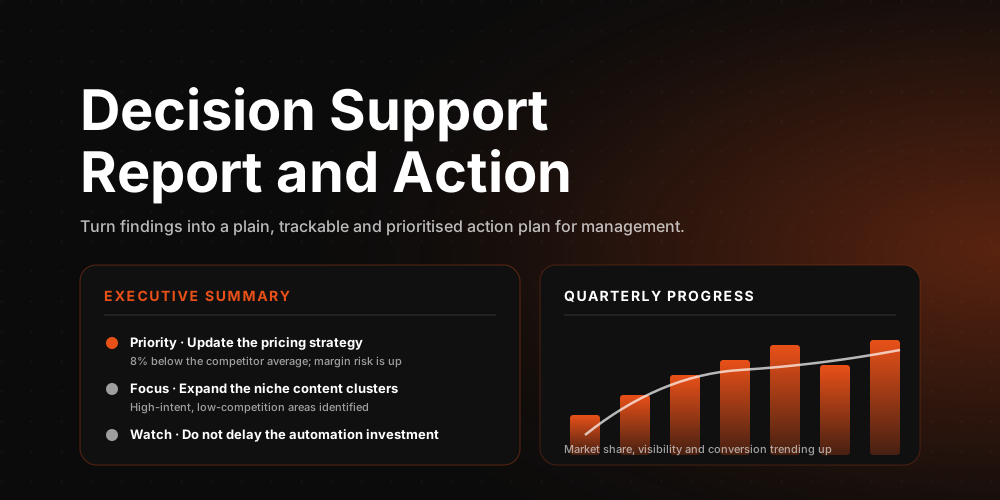
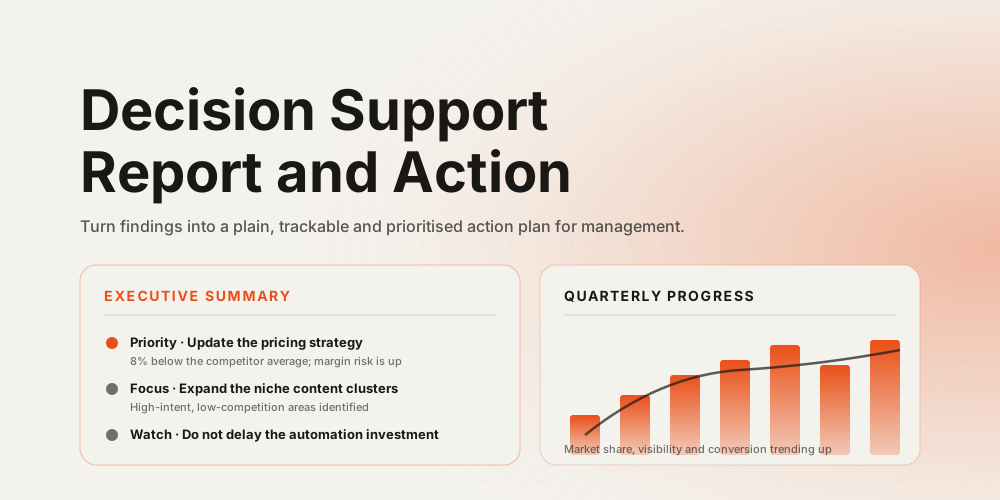
AI-powered competitive analysis and market research covers data collection, building machine learning models, interpreting the results, and making strategic decisions. First, data is gathered from sources such as social media, customer feedback, and market reports. AI algorithms then analyze this data to extract meaningful insights. The results guide the company's strategic decisions and, ultimately, its competitive advantage.
Data collection and analysis
The first step in AI-powered competitive analysis and market research is a broad, accurate data collection process. Data can come from social media, customer feedback, sales reports, market research reports, and other relevant sources. AI algorithms then analyze the collected data to produce meaningful insights. This analysis processes large datasets quickly and efficiently, supporting strategic decision-making. With AI, trends and patterns in the data surface more easily, which leads to more accurate market analysis.
Building machine learning models
After data collection and analysis comes the machine learning modeling stage. These models learn from historical data to predict future trends and consumer behavior. Machine learning algorithms process the data to produce models for customer segmentation, sales forecasting, and market trend analysis. This process helps businesses make more accurate, data-driven decisions. A retailer, for example, can use machine learning models to forecast when specific products will see peak demand and optimize inventory accordingly.
Interpreting results with AI
Once the machine learning models are built, interpreting the results correctly is a critical step. The analysis helps businesses understand market dynamics, consumer trends, and competitive strategies more clearly. Visualization and reporting make these results easier to grasp. With these insights, businesses can optimize both marketing strategies and internal processes. The analysis might reveal, for example, why a product resonates with a specific customer segment and how to fold that intelligence into future marketing campaigns.
Making strategic decisions with AI
The ultimate purpose of AI-powered competitive analysis and market research is enabling more strategic, more effective decisions. The insights help businesses make better-informed, data-driven choices across marketing, product development, customer service, and beyond. Strategic decisions built on this foundation strengthen competitive advantage, raise customer satisfaction, and expand market share. Based on AI-driven analysis, a company might decide to enter a new market or revise its current market strategy.
Tips for successful AI-powered competitive analysis and market research
Successful AI-powered competitive analysis and market research depends on using the right data sources, protecting data privacy and security, and applying machine learning models effectively. Businesses should choose reliable, up-to-date data sources and take care to protect the privacy of the data they handle. Accurate analysis of the data, combined with effective use of the results in strategic decision-making, drives better outcomes.
Using the right data sources
Choosing the right data sources is essential for successful AI-powered competitive analysis and market research. Access to reliable, current data sources improves the accuracy and credibility of the results. Sources include social media platforms, customer feedback, market research reports, and industry-specific databases. The right sources enable more comprehensive, more accurate analysis, which in turn makes strategic decisions more effective.
Protecting data privacy and security
Data privacy and security are core requirements of AI-powered competitive analysis and market research. Businesses must protect the privacy of the data they collect and process it securely. Compliance with data protection laws and ethical standards is both a legal and an ethical obligation. In the European Union, for example, compliance with the General Data Protection Regulation (GDPR) is mandatory. Strong data security preserves customer trust and keeps businesses clear of legal risk.
The future of AI-powered competitive analysis and market research
The future of AI-powered competitive analysis and market research will be shaped by rapid technological progress. Advances in machine learning and artificial intelligence enable smarter, more effective analysis methods. Deep learning algorithms and big data analytics, in particular, can handle increasingly complex and comprehensive datasets. That will allow businesses to make more precise, more strategic decisions and strengthen their competitiveness.
Technological developments and trends
The future of AI-powered competitive analysis and market research will be defined by fast-moving technological innovation. Advances in machine learning and artificial intelligence make analysis methods smarter and more effective. Deep learning algorithms and big data analytics can process more complex, more comprehensive datasets than ever before. These developments will help businesses make more accurate strategic decisions and sharpen their competitive edge. AI-driven analysis is expected to become far more widespread as the underlying technologies mature.
Industry applications and success stories
AI-powered competitive analysis and market research is already delivering results across industries. In retail, AI predicts customer behavior and sales trends; in healthcare, it analyzes disease patterns and treatment outcomes. In finance, AI plays a major role in identifying market trends and investment opportunities. These success stories show how effectively AI technologies can be applied across a wide range of use cases, and businesses can draw on them to improve their own processes.
Potential innovations ahead
The road ahead for AI-powered competitive analysis and market research holds significant potential. More advanced AI algorithms will deliver more precise, more predictive analysis. Real-time data analysis and automated insight delivery, in particular, will enable faster and more effective decisions. AI-powered chatbots and virtual assistants will also play a growing role in market research, improving how customer feedback is collected and analyzed. These innovations will strengthen competitive advantage and help businesses adapt to shifting market dynamics faster.
Growth & GEO