AI-Powered User Experience (UX) Improvements
Learn how AI is transforming UX design, from personalized experiences and smarter interfaces to more efficient workflows across web and mobile products.


AI-powered user experience improvements show how technology is revolutionizing interaction and usability. These advances offer a clear view of how UX design is being transformed for both personal and professional use.
Artificial intelligence (AI) has become an increasingly common tool for improving user experience (UX). By enabling systems that respond better to user needs and preferences, AI gives UX designers the ability to analyze user behavior in depth and deliver more effective solutions. Its integration is improving applications across a wide spectrum, from websites and mobile apps to smart home devices, and raising user satisfaction along the way.
What is AI's impact on UX?
Artificial intelligence gives UX professionals powerful tools for analyzing user behavior and applying those insights to design more effective interfaces. AI-powered systems can, for instance, analyze the time users spend on a site to identify which features attract the most attention and which sections go unnoticed. This data can then be used to personalize and optimize the user experience. AI can also analyze user feedback in real time, giving designers and developers rapid insight and opening the door to a continuous improvement cycle.
How do AI-powered UX improvements work?
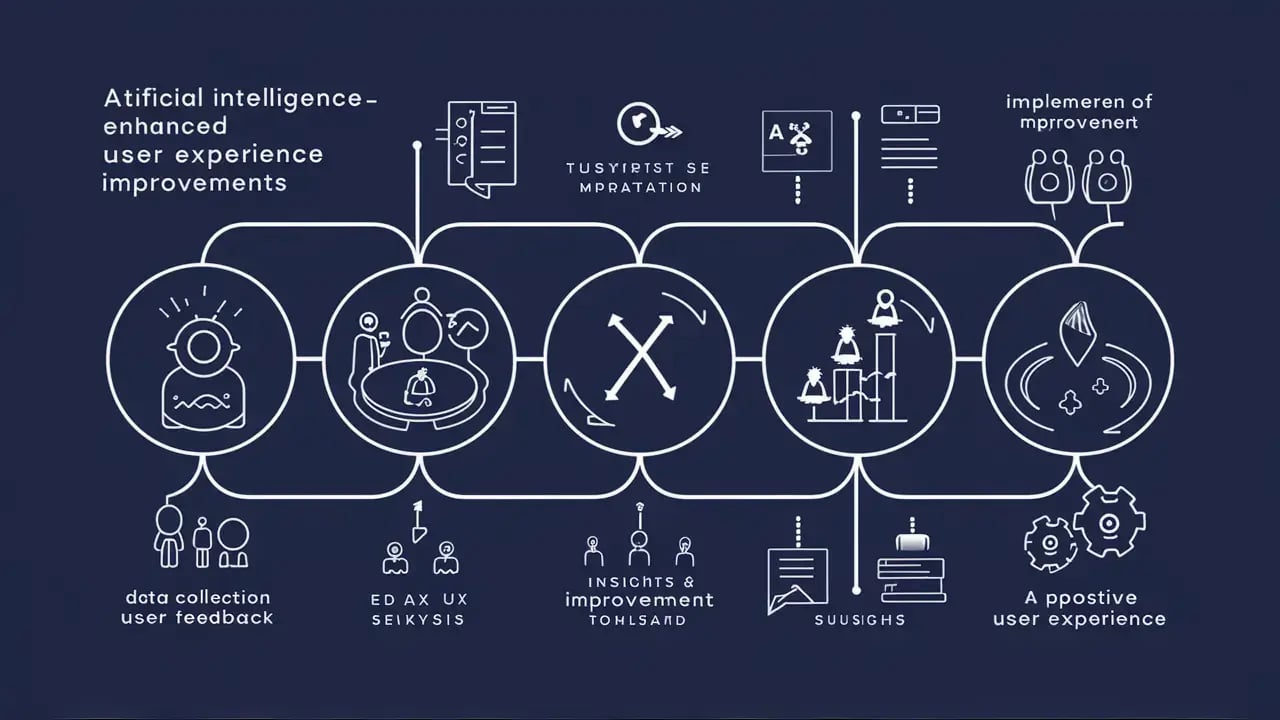
AI-powered UX improvements typically work by processing large data sets and learning complex user behavior. Algorithms learn from user interactions and apply that knowledge to deliver more relevant, personal services. AI can, for example, analyze shopping patterns on an e-commerce site and surface tailored product recommendations. Such systems can also reduce user errors and speed up transaction flows, improving UX by lifting overall satisfaction.
What are the benefits of improving UX with AI?
AI-powered user experience improvements deliver a range of advantages through the customized experiences and interactions they offer users. The technology enables a deeper understanding of user needs and faster responses, while giving businesses cost savings and operational efficiency. By continuously processing user data, AI can act on the resulting insights to improve the experience in real time. This process raises customer satisfaction while strengthening loyalty and brand value. With AI-powered solutions, businesses can better predict user behavior and gain a competitive edge by delivering more relevant services.
More personalized user experiences with AI
AI technology analyzes each user's past behavior, preferences and interactions to deliver a customized experience. On a shopping platform, that personalization appears as recommendations based on the product types the user has shown interest in. AI-powered systems automatically adapt content to each user's tastes and habits, giving every individual a unique experience. The result is longer time spent on the site or app and higher satisfaction rates.
More efficient and effective workflows with AI
Artificial intelligence automates and optimizes business processes to improve the user experience. By automating repetitive tasks and accelerating workflows, AI frees employees to focus on more complex problems, which translates into time and cost savings for the business. AI-powered chatbots, for example, can answer customer service queries automatically, reducing the load on live support teams and improving service efficiency.
AI-enhanced user interfaces (UI)
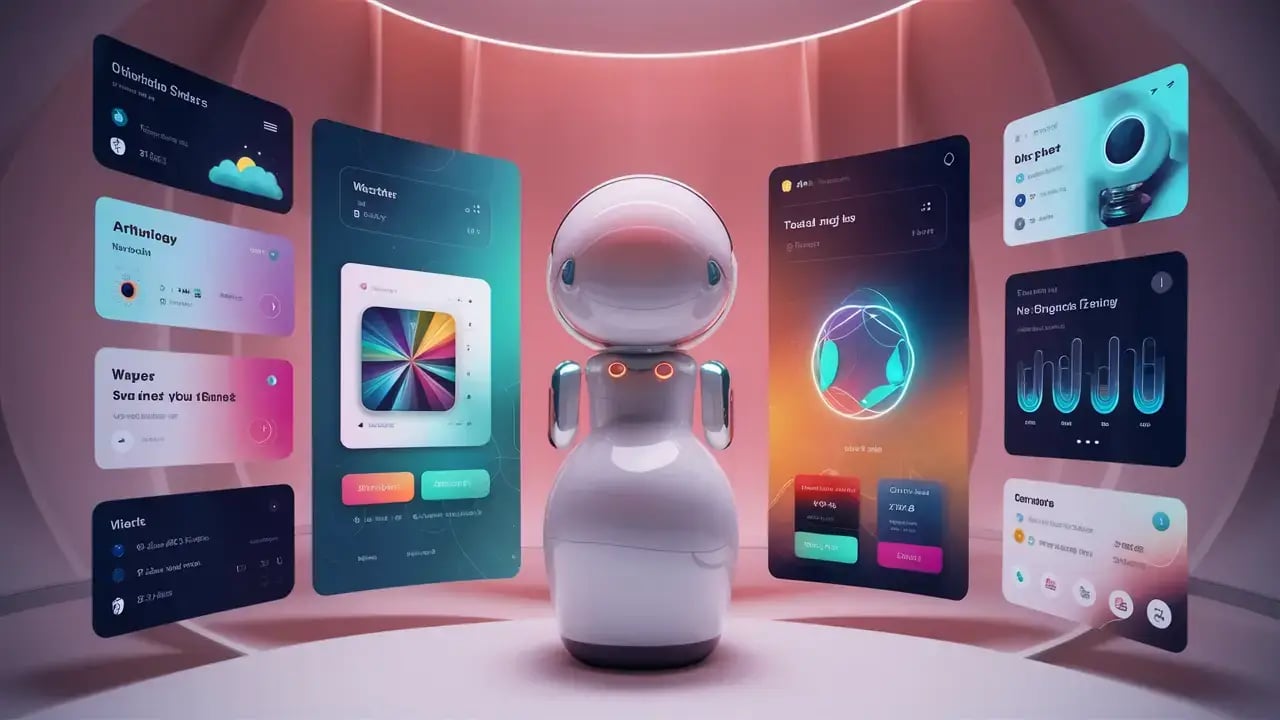
AI makes user interfaces more interactive and user friendly, simplifying how people engage with an app or website. AI-powered interfaces learn user preferences and personalize the interface accordingly, creating a more intuitive experience. They can, for instance, surface the functions a user relies on most or be designed to reduce common mistakes. AI also tracks eye movements and interaction patterns to continuously refine and optimize interface design.
Where are AI-powered UX improvements applied?
AI-powered UX improvements are used across different industries and platforms. Applications in each sector aim to improve the user experience in different ways, and AI plays a central role throughout.
AI-powered UX improvements for e-commerce sites
E-commerce sites can dramatically improve the user experience with AI. By analyzing shopping preferences and behavior, AI delivers personalized shopping recommendations. These are tuned to each user's interests and purchase history, creating a more relevant and engaging shopping experience. AI also optimizes search results so users find the products they are looking for faster, which accelerates the purchase journey and lifts sales.
AI-powered UX improvements for websites
Websites can use AI to personalize and improve the visitor experience. A news portal, for example, can use AI to recommend content based on each reader's habits. These systems make suggestions grounded in the topics a user has previously engaged with, keeping visitors on the site longer. AI can also analyze interaction data to continuously refine site design and content presentation.
What does it take to implement AI-powered UX improvements?
Implementing AI-powered user experience improvements starts with securing the right technical infrastructure and expertise inside the organization. The first step is assembling a capable technology team able to integrate AI, typically a mix of data scientists, UX designers and software engineers. Access to rich data sources is essential for AI applications. That data is collected and processed from sources such as user behavior, preferences and feedback, and the collection process must respect user privacy and comply with the law. During data processing and model training, AI algorithms extract meaningful insights from the data, and it is important to continuously test and improve the model's accuracy and effectiveness throughout.
Finally, applying AI-powered UX improvements requires an ongoing cycle of refinement and updates. This is critical for keeping pace with evolving user needs and technological change. Interaction data and user feedback play a central role in this process and guide each round of improvement.
What could AI-powered UX improvements look like in the future?
The future of AI-powered user experience improvements looks highly promising, driven by continuously advancing AI technology and an expanding range of applications. AI may soon use more sophisticated algorithms to personalize and automate the experience even further. These algorithms could analyze biometric data to understand users' emotional states and adapt content or services accordingly. Integration with Augmented Reality (AR) and Virtual Reality (VR) could open a new dimension in AI-driven UX design, with users experiencing real-time, 3D interactions through AI-powered virtual assistants. In sectors like education and retail, that kind of integration could fundamentally change the user experience.
AI will also play a growing role in improving the user experience of smart home devices and IoT (Internet of Things) products. By understanding daily routines more deeply, these devices can offer personalized automations that raise quality of life. Ultimately, AI-powered UX improvements aim to make every interaction with technology more intuitive, more efficient and more satisfying.

Let us make your brand visible in AI search.
Share your goals, we'll come back with a custom growth plan within one business day. A strategy lead will reach out personally.
Get in touch