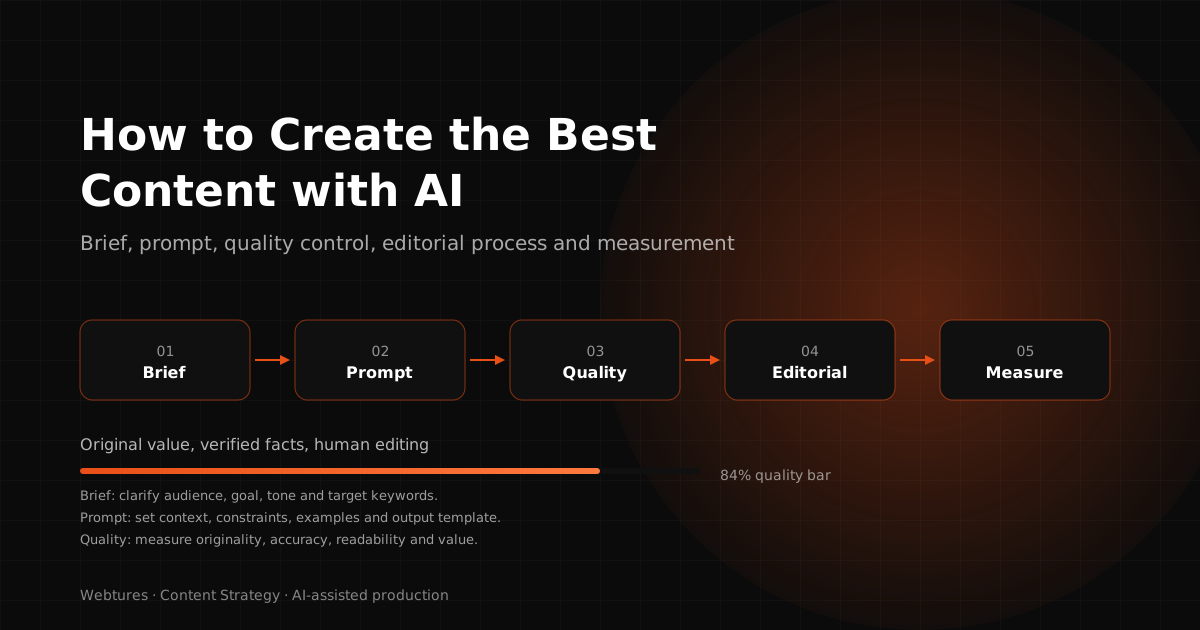
5 AI Prompts for GEO-Friendly Content
GEO-friendly content is content optimized for visibility in generative, AI-driven search. It pairs the information your target audience needs with the right keywords, so the same page can rank in traditional search engines and be cited in AI-generated answers.

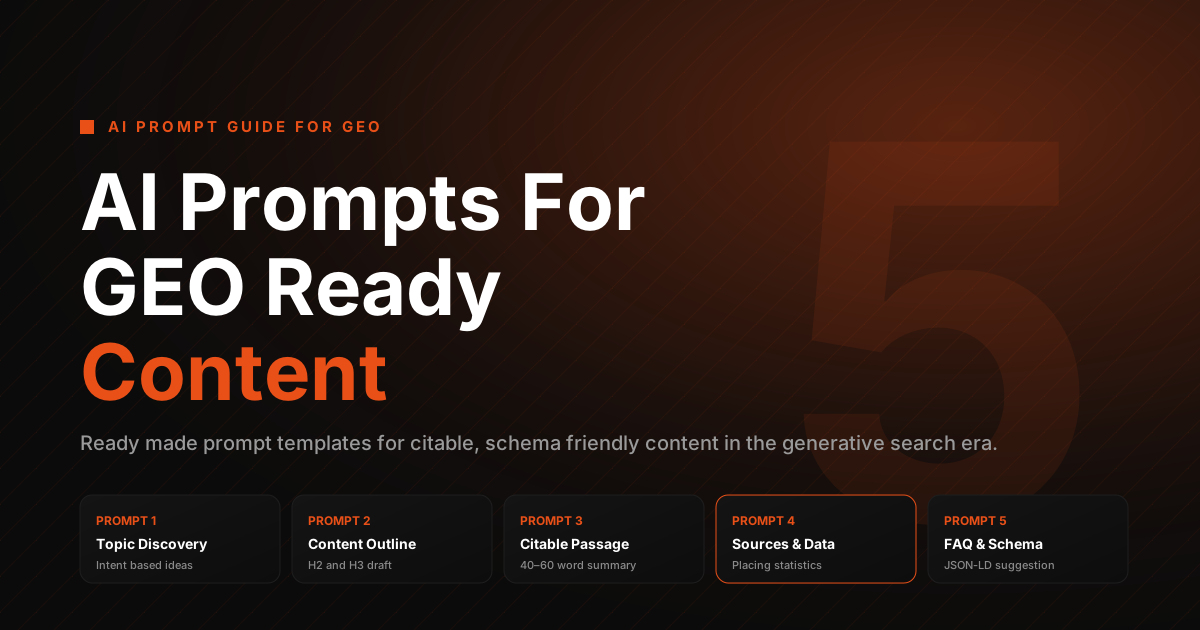

GEO-friendly content is content optimized for visibility in generative, AI-driven search. It pairs the information your target audience needs with the right keywords, so the same page can rank in traditional search engines and be cited in AI-generated answers.
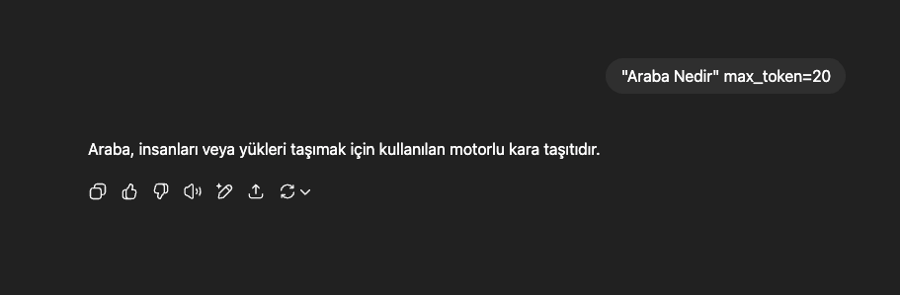
1. [Keyword] max_token=20
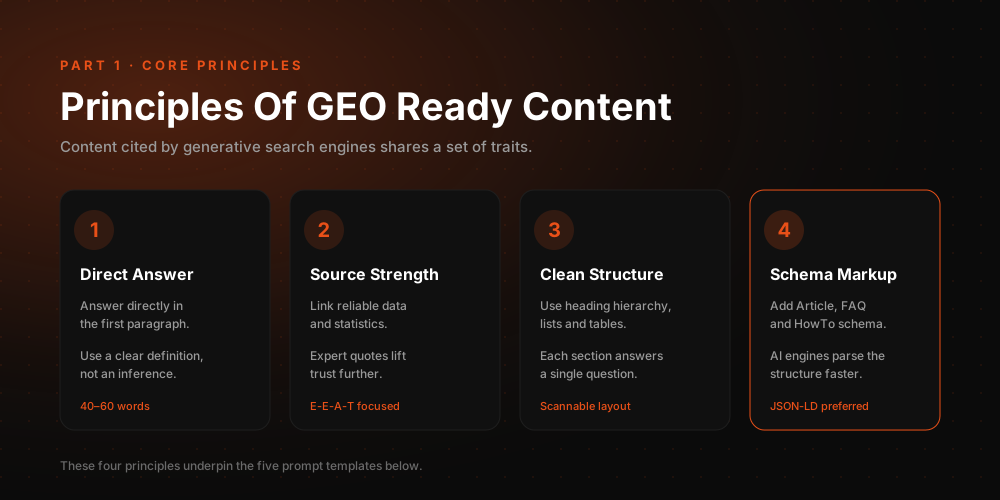
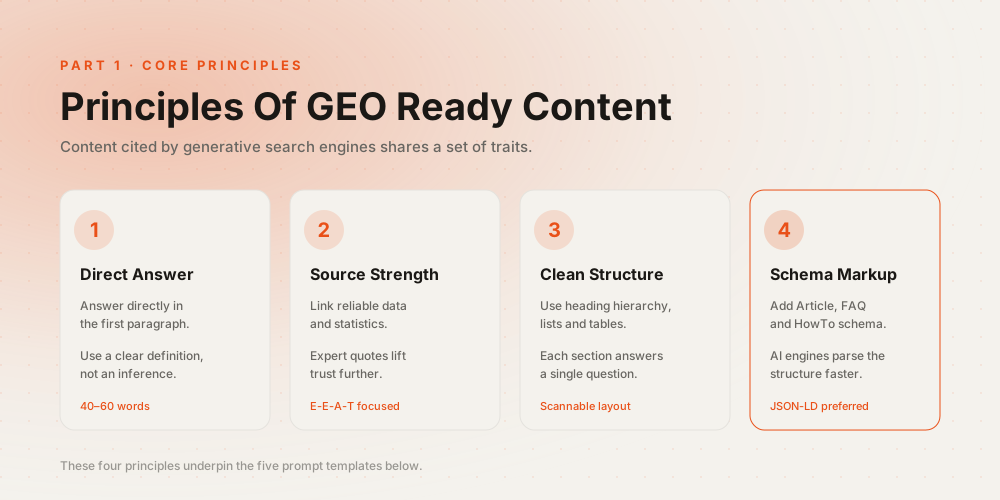
The prompt above works well in ChatGPT and instructs the model to produce a text of no more than 20 words.
Where is this useful? Anywhere a strict length limit matters, such as meta title and meta description tags. You can use the same pattern to define the word count of any content you plan to produce.
2. The "FAQ-format content" prompt
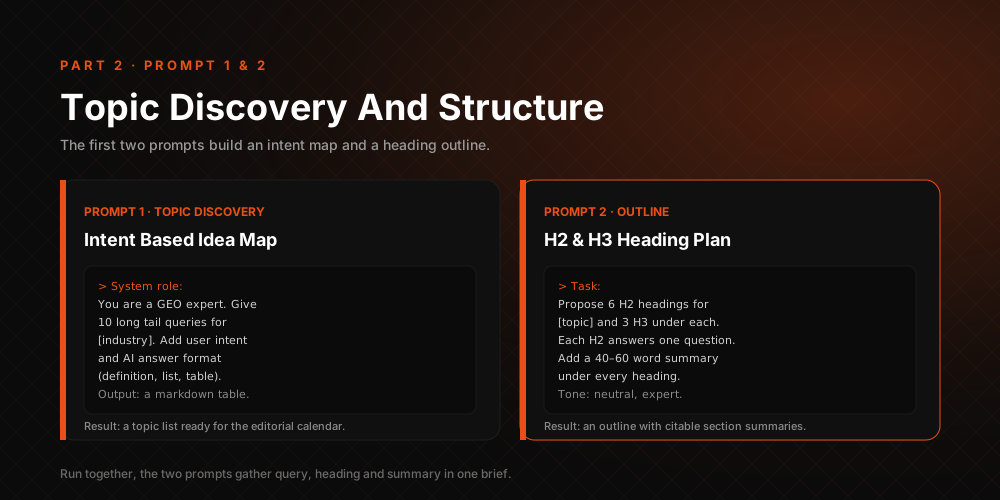
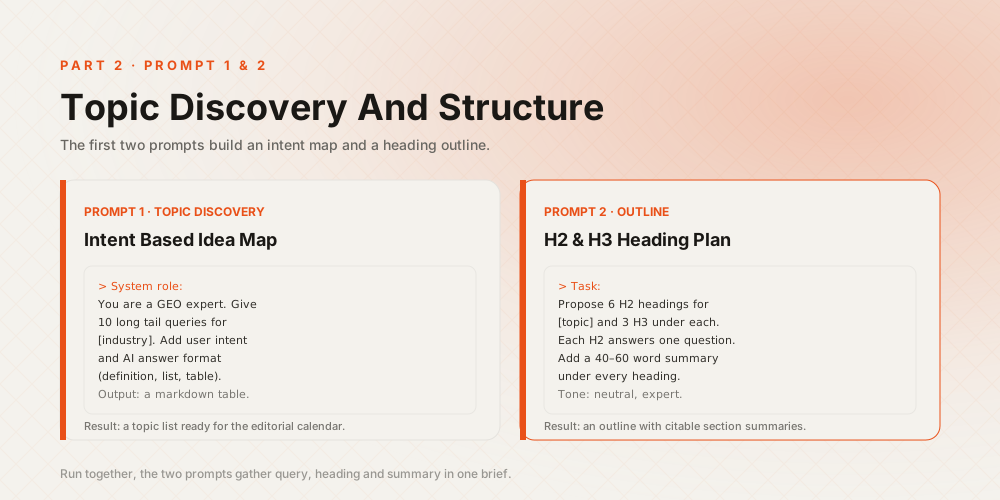
Prompt:
Generate the 10 most frequently asked, GEO-friendly questions about "[KEYWORD]". Give me only the questions, written one per line without bullet points.
This prompt returns the questions people most often ask about your topic. We deliberately ask for plain lines instead of bullets: when ChatGPT and similar tools output bulleted lists, pasting them into Word or Google Docs adds unwanted extra spacing. Line-by-line output saves you that cleanup.
3. The "keyword-focused informative blog post" prompt
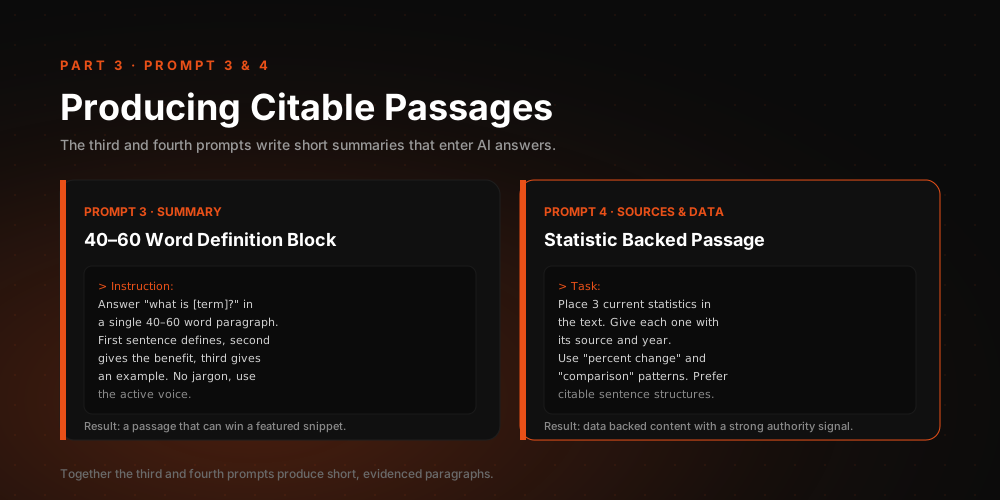
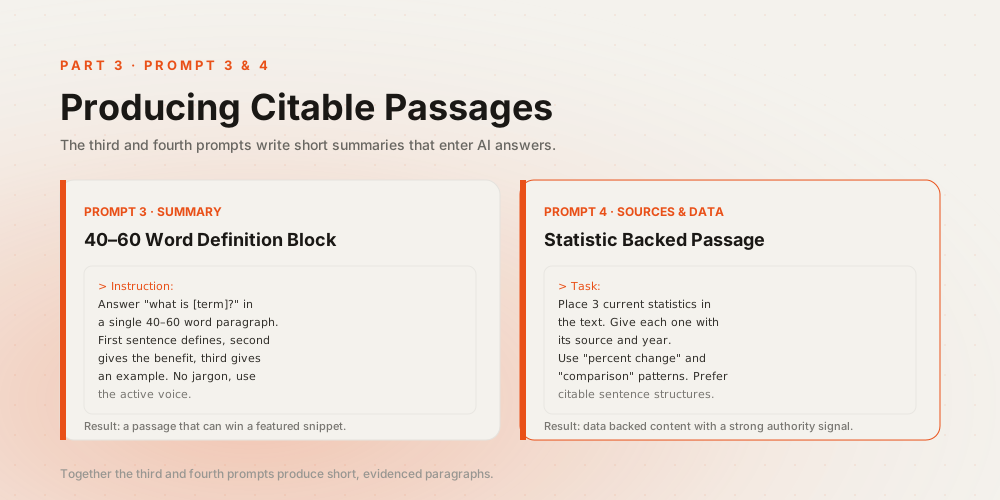
Prompt:
Write an informative, GEO-friendly blog post of at least 600 words for the keyword "[{KEYWORD}]", matched to user intent and organized with an H1-H2-H3 heading structure. Bold the keyword only once.
4. The "list-based guide format" prompt
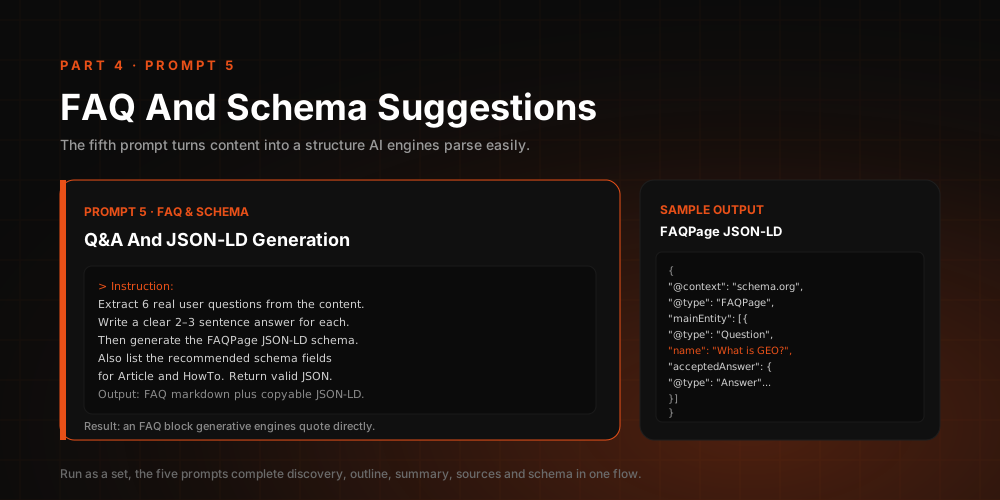
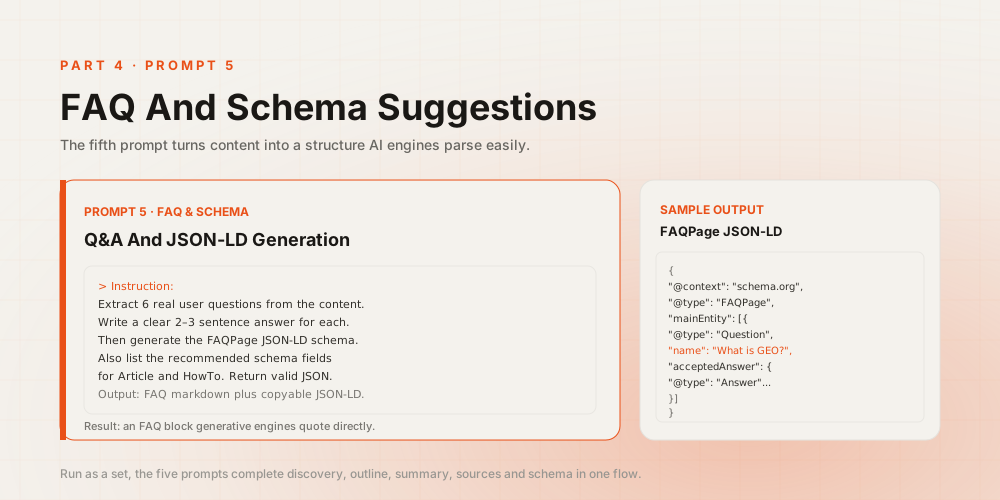
Prompt:
Prepare a detailed guide about "[{KEYWORD}]". List the content point by point, explain each item in depth, and format the headings as H2.
5. A bonus prompt for generating subheadings
Prompt:
List the GEO-friendly H3 subheadings that belong under the H2 heading "[{H2 heading}]", one per line. Then write one paragraph of no more than 60 words for each H3.
Example:
List the GEO-friendly H3 subheadings that belong under the H2 heading "H2: What are the Audi models?", one per line. Then write one paragraph of no more than 60 words for each H3.
Here we expect ChatGPT or any other AI tool to return the Audi sub-models as H3 headings and generate a short description for each model.
What is GEO-friendly content?
GEO-friendly content combines the classic on-page fundamentals that search engine algorithms reward with Generative Engine Optimization (GEO) techniques that meet the expectations of AI-powered answer engines. Traditional SEO emphasizes keyword optimization, heading structure, meta descriptions and link building; the GEO approach focuses on how AI systems perceive content and decide what to surface. Done well, it produces content that serves human readers and recommendation systems at the same time. As Google and other search engines shift to AI-driven results, an integrated SEO and GEO approach is no longer optional. It is a requirement.
Beyond structure, GEO-friendly content must answer search intent directly. AI-powered engines rank pages on content depth and contextual consistency, so creators should aim for a coherent user experience rather than keyword stuffing. Suitability for voice search and different language patterns is another important part of GEO optimization. The AI prompts used in this kind of content should be shaped strategically: not just to generate text, but to architect the content, optimize headings and produce answers aligned with user intent.
Why AI prompts matter for GEO-friendly content
A large share of content production now runs through AI tools, and what those tools produce depends directly on the AI prompts they receive. If the goal is GEO-friendly content, prompts need strategy, not just correct sentences. From an SEO perspective, keyword placement, content length, heading hierarchy and alignment with search intent are all factors the prompt directly controls. From a GEO perspective, what matters is how answer engines will evaluate the output, which AI models it will pass through, and how well it serves the end user.
Every prompt you give an AI model is a roadmap for the content it produces. A poorly structured prompt can yield content that both search engines and AI algorithms classify as weak. An effective AI prompt therefore accounts for the target audience, the purpose of the content, the search intent and the content format. A "how to" guide, for example, needs a prompt structured around solution-focused, step-by-step explanations. For local strategies or multilingual content, the prompt should also reference language fit and regional context. In short, whether AI-assisted content ends up GEO-friendly depends directly on how well the prompt is written.
How to create GEO-friendly prompts
Writing a GEO-friendly prompt is more than asking an AI to produce some content. It is a strategic process that steers production, raises quality and keeps the output aligned with GEO principles. Start by defining the target keyword precisely. The keyword determines which headings the content will cover, which sub-questions it will answer and which search intents it will serve. The prompt should also specify content length, target audience, register (formal or conversational), tone of voice and content type (blog post, product description, guide and so on).
For example:
"Write a 1,500-word, GEO-friendly, user-focused blog post answering the question 'What is digital marketing?', structured with H1, H2 and H3 headings and enriched with examples."
This example directs the AI not only to the topic but to a content structure built on GEO criteria. It also helps to specify secondary keywords such as "digital marketing strategies" and "digital campaign measurement" so the model builds semantic relationships. That approach makes the content easier for engines like Google to crawl and understand.
How should GEO-friendly prompts be designed?
GEO (Generative Engine Optimization) prompts start with understanding how AI-powered answer engines work. These systems generate content not only for search engines but also for recommendation systems such as social content engines, voice assistants and content platforms. A GEO-friendly prompt should therefore specify more than text generation: it should account for contextual fit, answer quality, format consistency and semantic richness. If a user is searching for more than the literal phrase "digital marketing examples", your prompt should explain why the phrase matters, which industries use it and in what format the answer should be presented.
An ideal GEO prompt treats user intent, content format and context as one unit. For example:
"List effective digital marketing examples for B2B companies. Explain each example under its own subheading, keep the explanations in short paragraphs, and optimize the headings so AI content recommendation engines can parse them."
A prompt like this does more than generate content; it structures the output for maximum visibility across distribution channels, search engines and recommendation systems. Producing GEO-friendly content, in other words, also requires technical insight into how AI interprets what you publish.