Which Factors Drive Rankings in AI Search Engines?
Learn which factors decide rankings in AI search engines: content authority, intent match, freshness, entity clarity and semantic relevance in answers.

Answer ranking in AI search engines cannot be explained by the position logic of classic result lists. ChatGPT, Perplexity, Google AI Overviews, AI Mode, Gemini and similar answer engines evaluate the user's prompt, the context of the query, source credibility, content quality, freshness, technical accessibility and citation potential all at once.
The goal of GEO work is not simply making a page visible. The real objective is making your brand and content understandable, verifiable, trustworthy and usable as a source inside AI answers. AI Search visibility therefore requires managing content, technical infrastructure, authority, brand entity, third-party signals and measurement as one connected system.
How does answer ranking work in AI search engines?
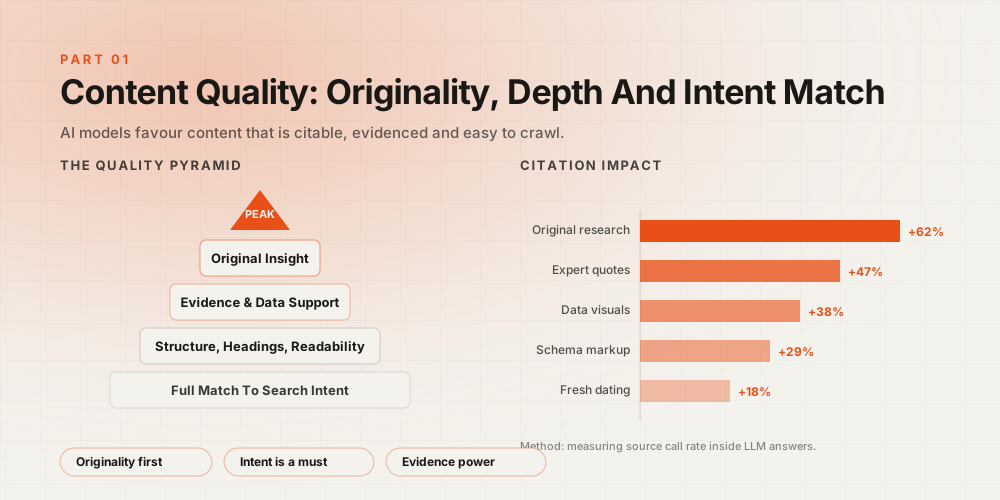
AI search engines rarely list a single page. Instead, they gather information from multiple sources, synthesize it against the user's prompt, and present the answer as a short summary, table, list, recommendation or step-by-step explanation. Some systems include source links inside the answer, while others may only mention a brand or website in context.
In this process, "ranking" usually means source selection and visibility inside the answer. Classic search was about being one of ten blue links; answer engines select only a handful of sources from millions and generate a single response. The criteria behind that choice can be called selection signals. A piece of content can appear in an AI answer in several ways:
- It can be shown as a direct source link.
- The brand or product name can be mentioned inside the answer.
- A definition, data point, table or method from the content can be summarized in the answer.
- The page can serve as an indirect source in the user's follow-up questions.
- The brand can be associated with a specific category or topic entity.
A GEO strategy should therefore focus not only on pages that drive traffic, but on the page, content and brand signals AI systems can rely on as trusted sources.
The core factors behind source selection in AI answers
1. Content authority and trustworthiness
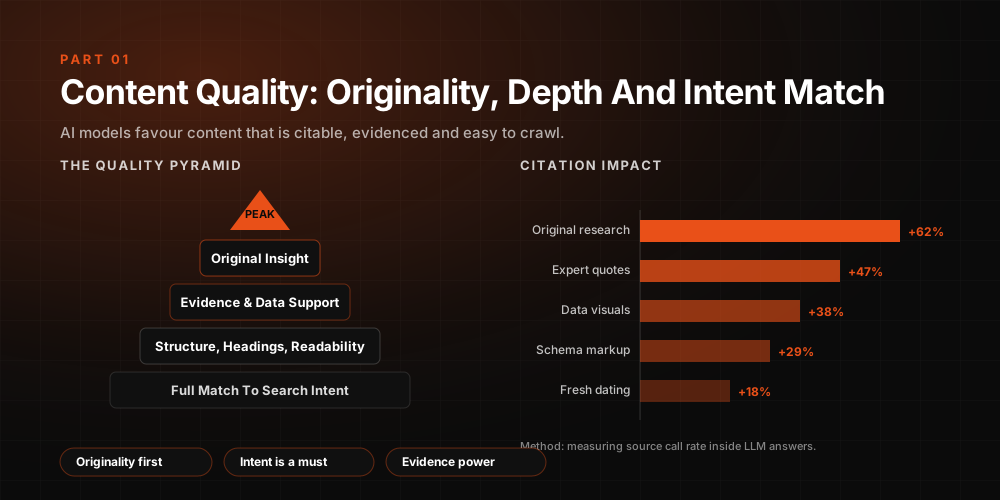
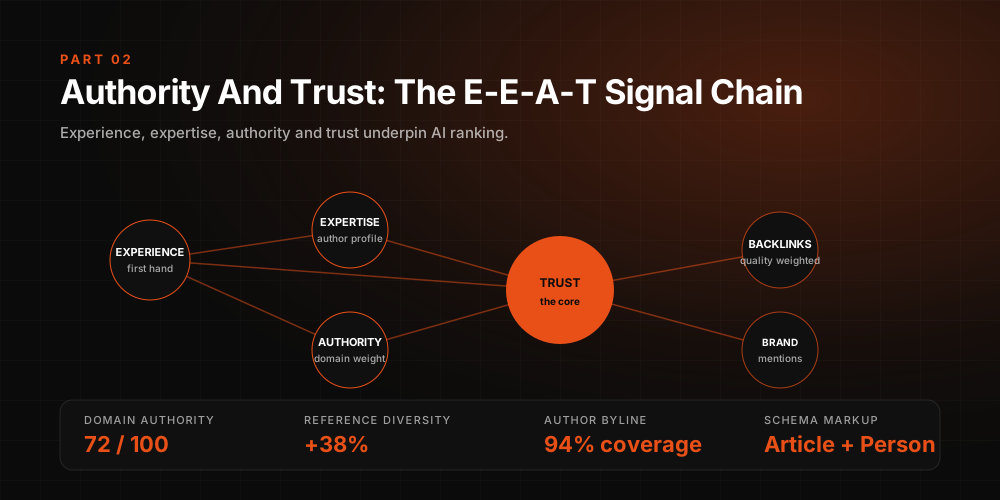
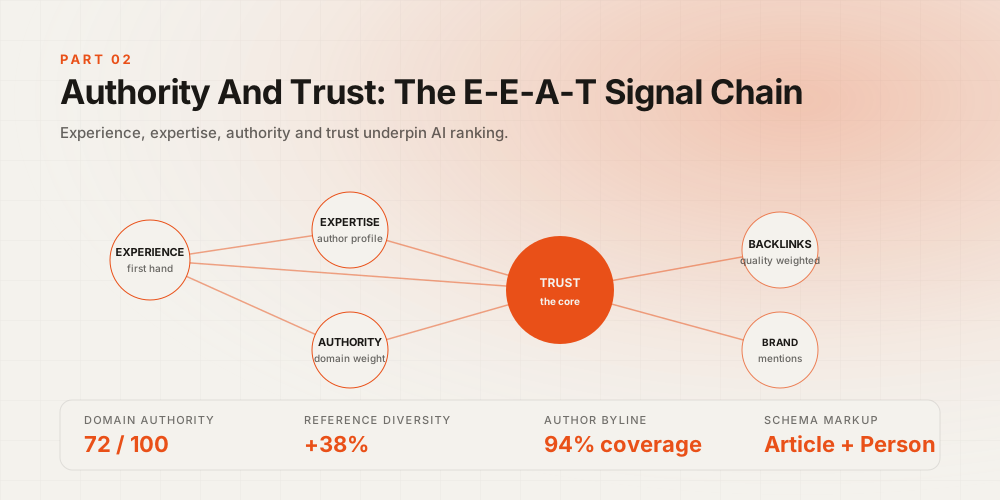
AI search engines lean toward sources with strong credibility and expertise signals when generating answers. Because large language models are designed to avoid producing false information, they select the source with the highest trust signal when presenting facts. Content written from real experience, clear author or brand identification, claims backed by sources, and actionable guidance for the user all raise the odds of being selected. Author authority is part of this evaluation too; when the writer's expertise can be verified online, it produces an additional expertise signal.
Trustworthiness extends beyond what sits on the page. How the brand is mentioned in industry publications, news sites, forums, review platforms, podcasts, social networks and authoritative guides matters as well. Consistent, genuine brand mentions help AI systems understand the brand as a clearer entity. On the AI side, the classic SEO concept of backlinks is largely replaced by citations, meaning being referenced inside answers; the more consistently a brand name is paired with a topic, the more likely it is to be selected for that topic.
2. Semantic relevance and entity clarity
AI systems evaluate the meaning behind a query and its related entities, not just matching keywords. Content that clearly explains the main topic, subtopics, the relationships between people, brands, products and services, and the context of use becomes easier to understand. Because models read the world through relationships between concepts, content that sits at the center of the relevant concept network and makes those relationships explicit is more likely to be chosen.
For entity clarity, brand name, service category, product attributes, location, area of expertise, author details, source links and related concepts should be used consistently. Vague, scattered content built on generic statements will struggle to be selected as a source in AI answers.
3. Answering the user's prompt directly
In AI search, users tend to write detailed questions, comparisons and task-oriented prompts rather than short keywords. Content should therefore go beyond general topic coverage and match the answer format the user expects. If the user expects a comparison, a page that only pitches a product can be eliminated no matter how comprehensive it is.
A piece of content should be able to answer these questions clearly:
- Is the user expecting a short definition?
- Are they looking for a step-by-step solution?
- Do they want a product, service or brand comparison?
- Are they after pricing, risk, advantages or decision support?
- Do they need local, current or personalized information?
When prompt intent is not met, even comprehensive content may never make it into the answer.
4. Citability and source structure
Content that can be used in AI answers needs to be clear, verifiable and quotable. Definitions, short answer blocks, tables, bullet lists, examples, steps, references and up-to-date data statements all matter here.
Citability is not achieved by stacking external links. References should come from sources that are relevant, current, authoritative and genuinely useful to the reader. In the same way, the page itself should clearly separate claims, data and recommendations.
5. Factual accuracy and consistency
Pages containing incorrect, outdated or contradictory information are risky sources for AI systems. Models check how closely the statistics and technical data in a piece of content align with other authoritative sources; content that contradicts widely accepted data can be labeled low-confidence. Fast-moving areas such as health, finance, law, technology, artificial intelligence, regulation, pricing and product specifications demand regular content updates.
For factual consistency, dates, statistics, product details, prices, legal statements, technical information and references should be reviewed at regular intervals. When content is updated, the change date, the new data and the reason the old information changed should be stated as clearly as possible.
6. Content freshness
Freshness does not carry the same weight for every topic. It matters far more for news, tool guides, product comparisons, pricing, regulation and technology content. In evergreen guides, historical accuracy, fresh examples, shifting user intent and current supporting sources are what count. Pages fed by dynamic data, such as regularly updated tables and comparisons, carry stronger source value than static text for prompts that require current information.
AI Search systems can treat outdated content as a weaker source for prompts that require current information. The content inventory should therefore be reviewed regularly, and pages that have lost their freshness should be refreshed, consolidated or repositioned according to their source value.
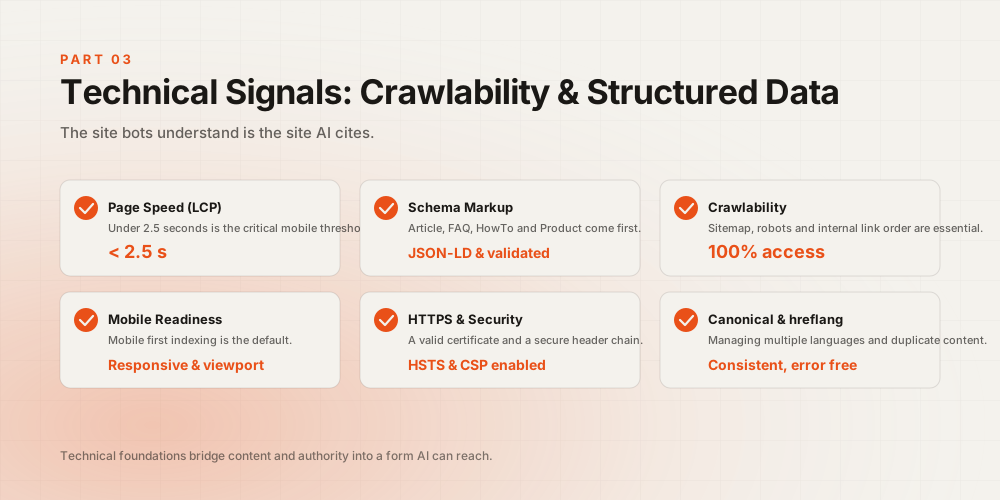
7. Technical accessibility and crawler compatibility
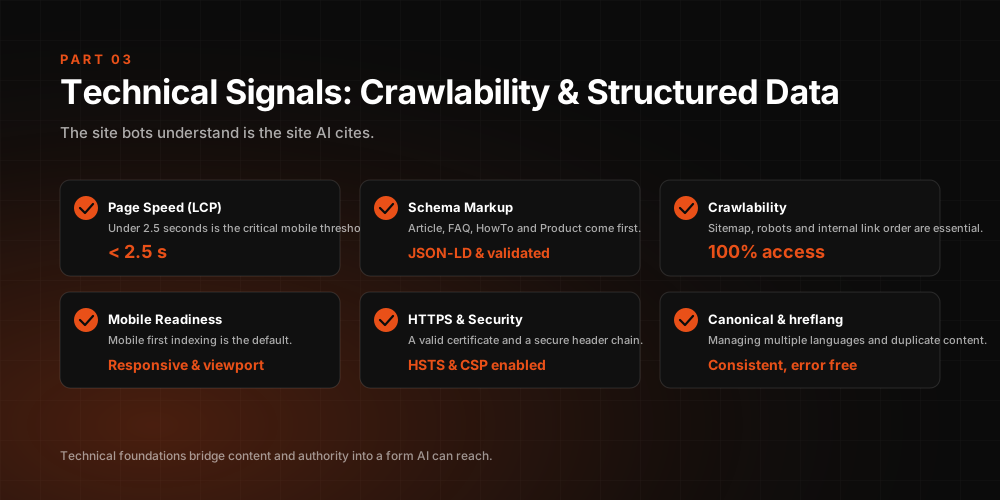
Content must be technically accessible before AI systems can evaluate it. Robots.txt blocks, misapplied noindex tags, incorrect canonicals, main content loaded late via JavaScript, 4xx/5xx errors, slow server responses, broken internal links and missing sitemaps can all weaken source eligibility.
Access for Googlebot, Bingbot, OAI-SearchBot and other AI crawler systems should be checked separately. OAI-SearchBot access matters specifically for ChatGPT Search visibility, while technical eligibility in the Google Search index matters for Google AI Overviews and AI Mode.
8. Structured data and machine readability
Structured data helps make explicit which content type, entity and context a page belongs to. When schema types such as Organization, Article, Person, Product, Review, FAQ, HowTo and Breadcrumb are used correctly, they support machine understanding of the page. Marking up data such as product price, stock status, specifications and user ratings with JSON-LD lets answer engines use that information directly at low processing cost.
Schema alone, however, does not guarantee visibility in AI answers. Structured data must stay consistent with the visible page content and be paired with clean HTML, a clear heading structure, descriptive anchor text, internal links and accessible content blocks.
9. Brand awareness and digital footprint
AI systems do not judge brand and topical authority from a single page. How the brand is described across different sources, which categories it is associated with, which publications reference it and what users say about it all produce contextual signals.
Sentiment analysis is part of this evaluation. The overall tone of user comments on Reddit, community platforms such as Türkiye's Ekşi Sözlük, forums and social media can influence whether a model presents the brand as a recommendation. A brand surrounded by heavy complaints will struggle to appear among the recommended options in its category, while positive, genuine user experiences are a strong selection signal.
Digital PR, industry directories, expert opinions, third-party reviews, customer testimonials, social proof and consistent brand information are therefore important parts of a GEO strategy. The goal is not to manufacture artificial mentions but to make the brand's real expertise and trust signals visible.
Which content formats do AI search engines prefer?
In practice, the source selection factors translate into certain content formats being used more often in AI answers. Because answer engines can process clearly structured, parseable and summarizable formats at low cost, these types stand out:
- Long-form guides: Comprehensive content that breaks a topic into sections with hierarchical headings, each section focused on a single question. Length alone creates no value; original, non-repetitive, well-structured writing is what makes the difference.
- Q&A and FAQ formats: Blocks that answer user queries briefly and directly are the fastest structures for summarization systems to process, and they hold source value in follow-up questions too.
- Tables and comparison content: Pages that present prices, features and options in tables or bullet layouts can be converted directly into answers for comparison prompts.
- Hybrid visual and text content: AI systems now process image and video data alongside text. Properly named images, descriptive alt text and video transcripts produce additional signals that let content be verified from multiple angles.
Whichever format you choose, the shared requirement is the same: content should match user intent, be written in natural, fluent language, and avoid artificial keyword stuffing. Models process text written with the fluency of their own training data more easily; forced patterns produce a negative signal.
How should content be prepared for AI Search?
Content intended for use in AI answers should be prepared to be clear, modular and citable. Instead of long but scattered pages, favor sharp headings, short answer blocks, detailed explanations, tables, comparisons, examples and FAQ structures.
Effective GEO content carries these traits:
- It answers the main question clearly in the opening section.
- It groups sub-questions under a logical heading structure.
- It defines concepts, entities and related terms explicitly.
- It is supported by current, verifiable sources.
- Where a comparison, pros-and-cons breakdown or step-by-step solution is needed, it presents it in an explicit format.
- It clearly displays author, brand, expertise and update information.
- It strengthens the topic cluster and source pages through internal links.
- It has no issues with AI crawler access or technical readability.
How do you measure visibility in AI answers?
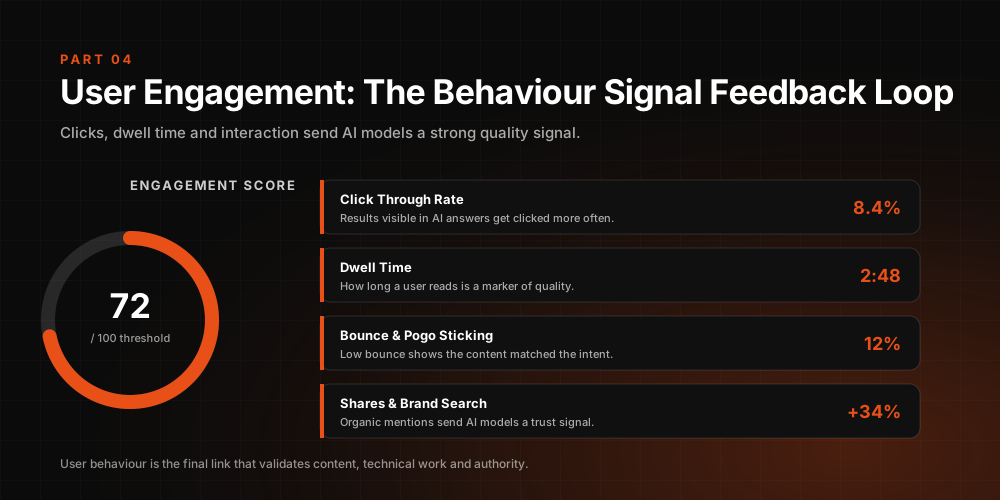
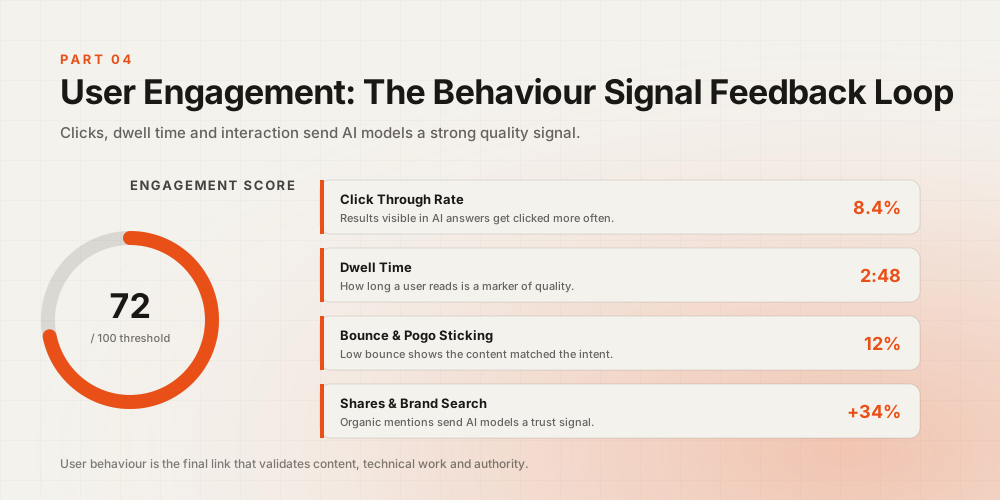
Measuring AI Search visibility through organic traffic alone is not enough. Users often get their answer directly on the AI screen and interact with the brand without ever clicking through to the site. Measurement therefore needs a wider frame.
Metrics worth tracking include:
- AI Overviews and AI Mode performance reports
- Brand name appearances in ChatGPT, Perplexity and other AI answers
- Frequency of being shown as a source link
- Referral traffic and UTM sources
- Growth in brand mentions
- Brand representation in comparison queries
- Appearances as a source or expert opinion in third-party publications
- Changes in AI answers after content updates
- AI-driven touchpoints in the conversion, lead or sales journey
The generative AI performance reports in Google Search Console can be used to track content visibility across AI experiences inside Google Search. On the ChatGPT side, OAI-SearchBot access, referral traffic and visibility in brand queries should be evaluated separately.
A checklist for AI Search and GEO
- Does the page answer the user's main question directly?
- Does the content cover follow-up questions, comparisons and decision-support areas?
- Are author, brand and expertise details clear?
- Are claims current, verifiable and sourced?
- Are entity relationships and topic coverage well defined?
- Is the schema consistent with the visible content?
- Can Googlebot, Bingbot and the relevant AI crawler systems access the page?
- Are robots.txt, noindex, canonical and sitemap signals consistent?
- Is the page fast, mobile-friendly and able to render its main content?
- Is the brand mentioned consistently across third-party sources?
- Are brand name, URL and content citations in AI answers being tracked?