AI-Powered Website Traffic Analysis
Explore how AI transforms website traffic analysis with real-time data processing, behavioral segmentation, and predictive models that lift conversion rates.
Artificial intelligence (AI) technologies are transforming how website traffic and user behavior are analyzed. With capabilities such as real-time data processing, behavioral segmentation, automated tracking, and predictive models, AI helps businesses understand their visitors better and lift conversion rates. In this article, we break down AI's role in website analysis, what AI-powered analytics tools offer, and the strategies for growing website traffic with AI.
AI's role in website analysis
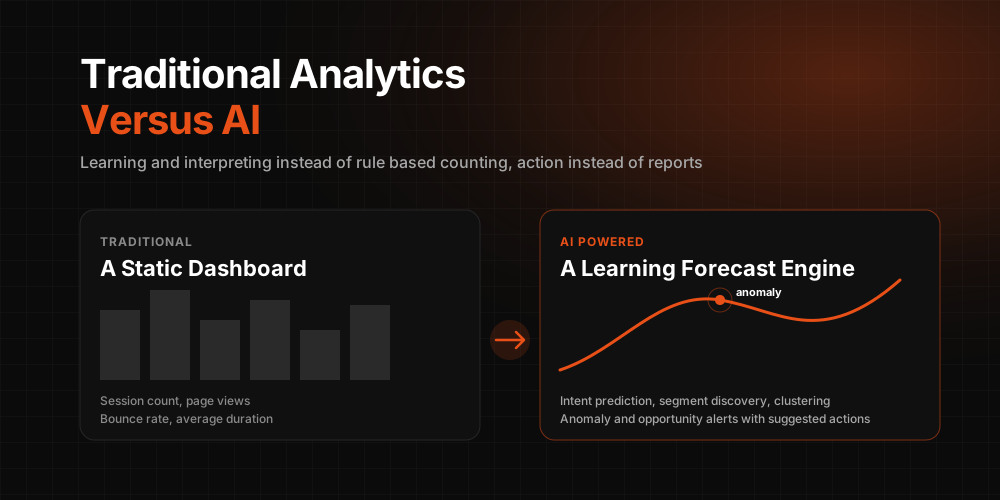
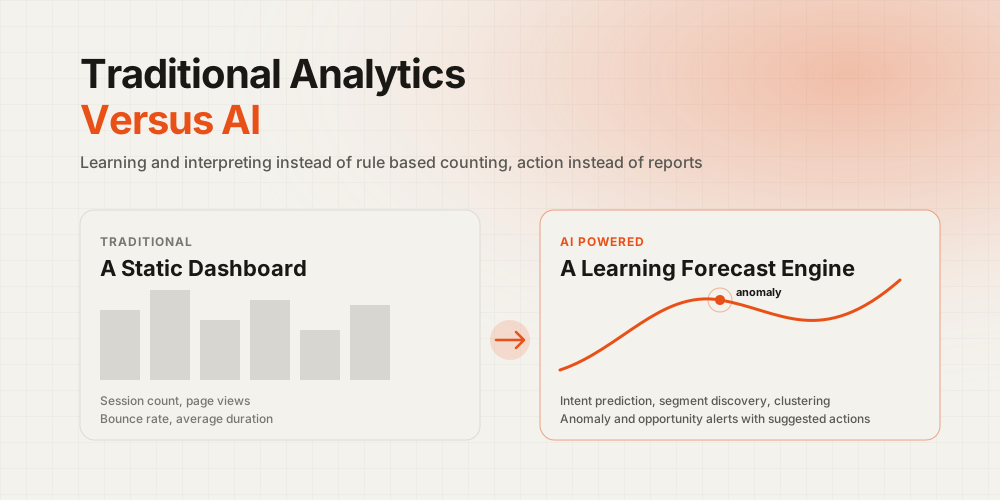
Artificial intelligence plays a critical role in website analysis and in understanding user behavior. AI processes large datasets to analyze visitor behavior and extract meaningful insights from that data. Some of AI's main roles in website analysis include:
AI improves data collection and analysis by applying a range of methods and techniques to website analytics. First, AI algorithms track how users move through a website and derive meaningful data from those movements. That data covers which pages hold users' attention longest, which content draws the most interest, and where users drop off. Analyzing this information gives businesses valuable direction for making their websites more user-friendly.
Beyond that, AI technologies are effective at predicting user behavior and building strategies on those predictions. By analyzing past user behavior, AI can forecast how future visitors will act. That lets businesses adjust their strategies proactively and optimize the user experience. AI also drives deeper engagement by delivering personalized experiences. Personalized recommendations increase the likelihood that users interact with the content and products that interest them.
- Data mining: AI can process vast amounts of data by analyzing user behavior and interactions on websites. This gives businesses a much sharper understanding of what their users want.
- Predictive analytics: AI uses historical data to forecast future user behavior, helping businesses adjust their strategies proactively.
- Personalization: AI personalizes the user experience to respond better to visitor needs, which raises customer satisfaction.
Real-time data processing and analysis
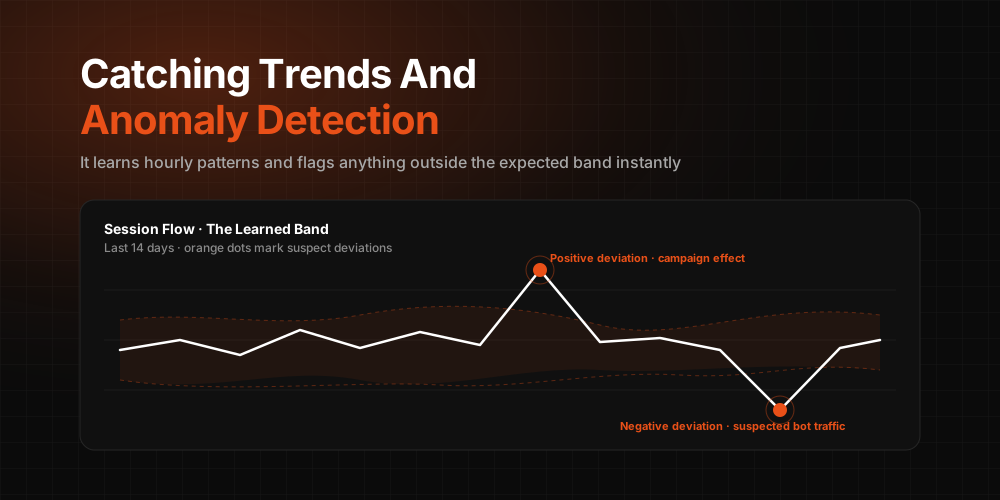
Real-time data processing and analysis is a significant advantage for websites. AI monitors users' moment-to-moment movements on a site and delivers analysis in real time. These capabilities include:
Real-time data processing and analysis makes it possible to optimize website performance and user experience instantly. AI technologies track every user action on a website as it happens and process that data immediately. Businesses can see in real time how users are interacting with the site and make the necessary improvements quickly.
On an e-commerce site, for example, data such as which products users browse, which items they add to their carts, and at what stage they abandon the purchase can be monitored in real time. That data gives businesses critical information for improving the user experience and driving sales. Real-time analysis also helps businesses detect and resolve issues on the site the moment they occur. Problems such as slow page load times or errors in the checkout flow are identified and fixed immediately.
Real-time data processing and analysis does more than optimize website performance; it also raises user satisfaction. When users experience a fast, frictionless website, they engage more and conversion rates climb. That makes real-time data processing and analysis an indispensable tool for modern website management.
- Live monitoring: AI tracks every step users take on a website and processes that data instantly, so businesses can react quickly to optimize the user experience.
- Instant reporting: Real-time analysis gives businesses on-demand reports they can use to make strategic decisions.
- Critical event detection: AI instantly detects critical events on a website (cart abandonment, for example) and alerts the business.
Deep analysis of user behavior
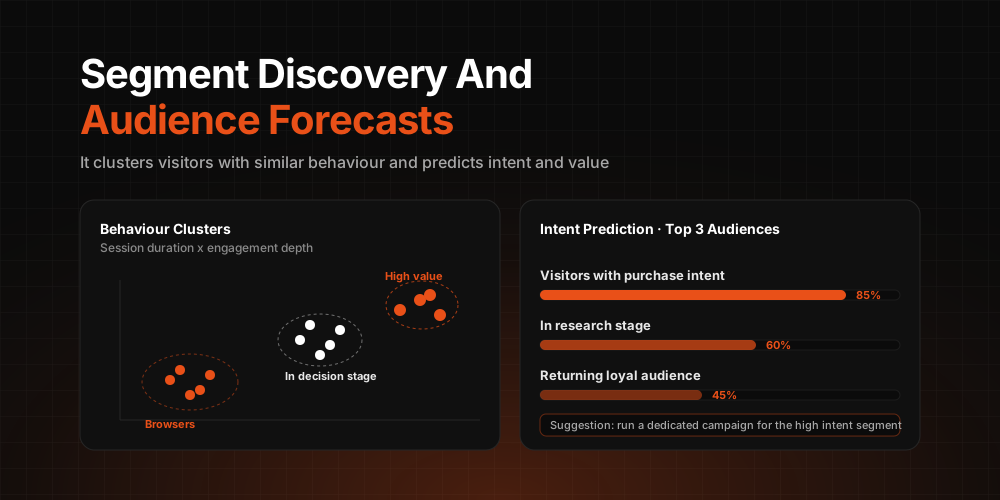
AI analyzes user behavior in depth to surface more complex and more valuable insights. These analyses cover:
Deep behavioral analysis gives businesses vital information for improving website performance and user satisfaction. AI technologies track how users move through a website and derive meaningful data from those movements. That data identifies which pages users visit, which content they engage with, and at what point they leave the site.
These analyses show businesses exactly where their websites need improvement. A business that discovers users spending more time on certain pages, for example, can add more content there or route users toward other pages. AI that tracks user movement across the site also determines which steps will optimize the user experience.
Behavioral segmentation is part of deep user behavior analysis as well. AI divides users into distinct segments so that tailored strategies can be built for each one. First-time visitors and loyal customers, for instance, can be targeted in different ways. This segmentation makes marketing strategies more effective and raises conversion rates. Personalized experiences, in turn, drive deeper engagement with the site. AI analyzes users' past behavior to serve personalized content and recommendations, which keeps users on the site longer and pushes conversion rates higher.
- Behavior pattern detection: AI identifies the behavior patterns users follow on a website: which pages get the most visits, which paths users take, and where they exit.
- User segmentation: AI divides users into segments so tailored strategies can be developed for each. First-time visitors and loyal customers, for example, can be targeted differently.
- Personalized experiences: AI analyzes users' past behavior to deliver personalized content and recommendations, driving deeper engagement with the site.
What AI-powered analytics tools offer
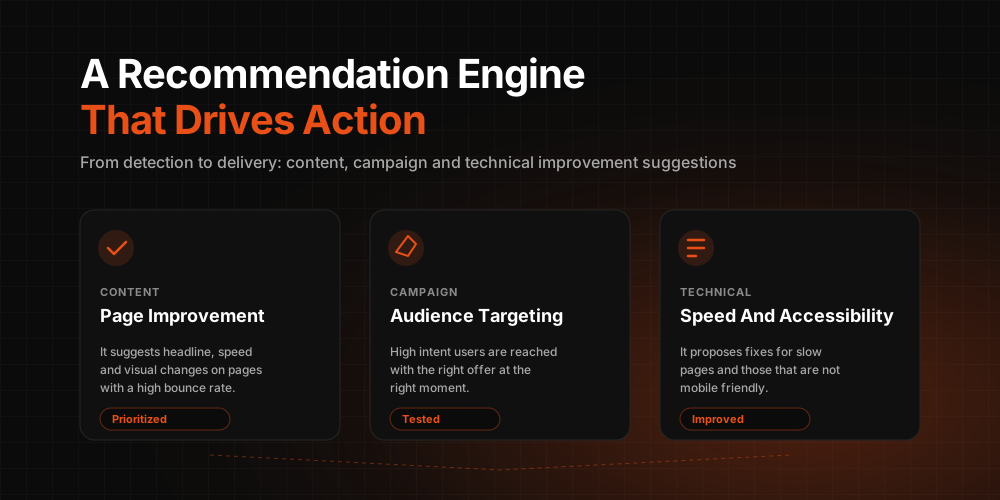
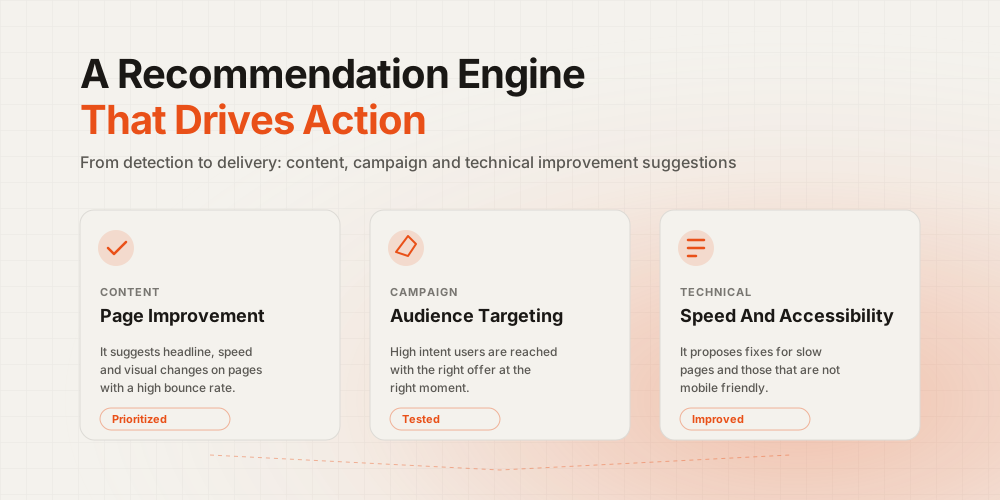
AI-powered analytics tools give businesses major advantages in understanding user behavior and targeting effectively. Their main capabilities include:
AI-powered analytics tools give businesses powerful means to understand user behavior in depth and build strategies on that behavior. These tools track how users move through a website and derive meaningful data from those movements. AI processes that data to analyze user behavior and deliver valuable insights.
Behavioral segmentation and targeting is one of the standout capabilities of AI-powered analytics tools. AI divides users into segments so tailored strategies can be built for each one, which makes marketing more effective and lifts conversion rates. First-time visitors and loyal customers, for example, can be targeted differently. AI determines the most effective marketing messages and strategies for each segment, so ad campaigns perform better and conversions rise.
Automated tracking of visitor interactions is another key capability. AI automatically monitors every user interaction on a website, far faster and more effectively than manual tracking. By analyzing those interactions, AI determines which content resonates most, and that data feeds directly into content strategy. AI-powered analytics tools give businesses powerful means to understand user behavior and act on it.
Behavioral segmentation and targeting
- Segmentation: AI groups users into segments based on their behavior. Each segment contains users with similar behavior, and dedicated marketing strategies can be built for each group.
- Targeting: AI identifies the most effective marketing messages and strategies for each segment, so ad campaigns perform better and conversion rates rise.
Automated tracking of visitor interactions
- Automated tracking: AI automatically monitors every user interaction on a website, far faster and more effective than manual tracking.
- Interaction analysis: AI analyzes user interactions to determine which content draws the most engagement. That data helps shape content strategy.
Interpreting visitor behavior with AI
AI also provides powerful tools for interpreting visitor behavior. With them, businesses can better understand how users behave on their websites and feed that knowledge into strategic decisions.
AI-based predictive models analyze historical data to forecast future user behavior. Those forecasts give businesses critical input for strategic decisions. By analyzing past user behavior, for example, AI can predict how future visitors will act, letting businesses adjust their strategies proactively and optimize the user experience. Predictive models anticipate users' future movements on the site, which makes strategic planning easier.
Conversion rate optimization is another major benefit of AI-based predictive models. AI measures the effectiveness of different strategies through A/B testing and identifies the one that performs best, which helps push conversion rates higher. AI also builds targeted campaigns for each user segment, serving content matched to users' interests to drive conversions. And by analyzing user feedback, AI pinpoints the improvements a website needs, insights that can be used to improve both user experience and conversion rates.
AI-based predictive models
- Predictive models: AI uses historical data to forecast future user behavior. These models anticipate users' future movements on the site, simplifying strategic planning.
- Personalized recommendations: Predictive models improve the user experience by serving personalized suggestions, such as product recommendations likely to interest users on an e-commerce site.
Tips for conversion rate optimization
- A/B testing: AI measures the effectiveness of different strategies through A/B tests and identifies the most effective one, helping lift conversion rates.
- Targeted campaigns: AI builds campaigns targeted to user segments, serving content matched to users' interests to increase conversions.
- User feedback: AI analyzes user feedback to identify the improvements a website needs. That feedback can be used to improve user experience and conversion rates.
AI-powered web analytics tools
AI-powered web analytics tools help businesses analyze website performance and user behavior. They deliver valuable insights and support strategic decision-making.
AI-powered web analytics tools give businesses powerful means to understand user behavior and build strategies on it. These tools track how users move through a website and derive meaningful data from those movements. AI processes that data to analyze user behavior and deliver valuable insights. The result is a much deeper understanding of user behavior and the strategies it should inform.
Popular AI web analytics tools include Google Analytics 360, Adobe Analytics, and Mixpanel. Google Analytics 360 analyzes user behavior and delivers comprehensive reports, standing out for its capacity to process very large datasets. Adobe Analytics offers user segmentation, personalization, and predictive analytics, helping businesses optimize the user experience. Mixpanel tracks user interactions and delivers detailed analysis; its AI-powered features make it easier to understand user behavior and shape strategies around it.
These tools give businesses comprehensive analysis for a deep understanding of website performance and user behavior. They also support strategic decision-making: detailed behavioral data helps businesses optimize their marketing and sales strategies. By automating manual analysis, AI saves businesses time and resources, so they can operate more efficiently and raise customer satisfaction.
Popular AI web analytics tools and their features
- Google Analytics 4: Google's next-generation analytics tool uses advanced AI and machine learning to analyze user behavior and deliver comprehensive reports. It stands out for user journey tracking and event-based measurement.
- Adobe Analytics: Adobe's AI-based analytics tool offers user segmentation, personalization, and predictive analytics, helping businesses optimize the user experience.
- Mixpanel: Mixpanel tracks user interactions and delivers detailed analysis. Its AI-powered features make it easier to understand user behavior and build strategies around it.
- Amplitude: Amplitude is a powerful tool focused on product analytics. It uses AI and machine learning to analyze user behavior in depth and delivers insights for optimizing product strategy.
- Pendo: Pendo offers AI-powered tools for analyzing user interactions and experiences. It tracks user behavior, builds segments, and serves personalized recommendations.
- Hotjar: Hotjar visualizes and analyzes user behavior, offering AI-supported analysis through heatmaps, session recordings, and feedback surveys.
How these tools benefit businesses
- Comprehensive analysis: AI-powered tools deliver comprehensive analysis that gives businesses a deep understanding of website performance and user behavior.
- Strategic decisions: These tools support strategic decision-making. Detailed behavioral data helps businesses optimize their marketing and sales strategies.
- Greater efficiency: By automating manual analysis, AI saves businesses time and resources, so they can work more efficiently and raise customer satisfaction.
Strategies for growing website traffic with AI
AI offers a range of strategies for growing website traffic, spanning content personalization and ad optimization through to SEO and content strategy.
AI offers a range of strategies for growing website traffic, from content personalization and ad optimization to SEO and content strategy. AI grows traffic by serving content personalized to users' interests. Personalized content keeps users on the site longer and drives engagement. AI also applies targeting and personalization strategies to make ad campaigns more effective, ensuring ads reach the right users and conversion rates rise.
AI's role in SEO and content strategy is equally significant. AI runs keyword analysis to identify the most effective keywords and optimize SEO strategy. It also analyzes website content to determine what performs best and refines content strategy accordingly. Competitor analysis is another important capability: AI analyzes competitors' SEO and content strategies to give businesses a competitive edge, helping them outrank rivals in search.
Content personalization and ad optimization
- Personalized content: AI serves content personalized to users' interests, keeping them on the site longer and driving engagement.
- Ad optimization: AI applies targeting and personalization strategies to make ad campaigns more effective, ensuring ads reach the right users and conversions rise.
AI's role in SEO and content strategy
- Keyword analysis: AI runs keyword analysis to identify the most effective keywords and optimize SEO strategy.
- Content optimization: AI analyzes website content to determine which pieces perform best and optimizes content strategy accordingly.
- Competitor analysis: AI analyzes competitors' SEO and content strategies to give businesses a competitive advantage, helping them rank above their rivals.
Growth & GEO