AI Search Visibility Strategy for B2B Lead Generation
Learn how AI search visibility drives B2B lead generation. Position your brand in AI-generated answers and build a qualified lead pipeline with GEO.

B2B lead generation is going through a fundamental shift as AI-powered search engines reshape how buyers find information. Users no longer rely solely on classic search results; they increasingly base decisions on answers generated directly by AI. That forces brands to rebuild their visibility strategies from the ground up. AI search visibility means being present not only in classic search results but also in the answers, recommendations and source citations produced by AI models. In highly competitive B2B sectors, this form of visibility has become a critical factor that directly affects lead generation. This guide covers how B2B brands should position themselves in the AI-driven search ecosystem, which GEO strategies to apply and how to manage the transition.
What is AI search visibility and why is it critical for B2B lead generation?
AI search visibility is the presence of your brand as a reference in the answers produced by AI-based search systems. Instead of presenting users with dozens of results, these systems generate single, trusted answers. Visibility is therefore no longer about ranking; it is about being citable as a reference. On the B2B side, decision processes are longer and more rational, so users gravitate toward trusted sources. AI models favor high-authority, verifiable content with strong context. A brand that appears in these answers earns trust immediately and enters the lead process with an advantage. This creates a serious competitive edge in SaaS, consulting and technical services in particular. Brands without AI visibility may still attract traffic, yet fall behind when it comes to reaching decision makers and producing qualified leads.
From classic search behavior to AI search: the shifting visibility dynamics
Classic search behavior sends users to links on a results page, while AI search connects them directly with an answer. This shift is transforming click behavior in a significant way. Users now consume the information presented to them instead of browsing through results. Content production must therefore move from a ranking-focused approach to an answer-focused one. For B2B brands, this transition requires redesigning inbound strategies. Depth, context and credibility matter most, especially in technical content. AI systems prefer comprehensive, well-structured information over surface-level material. Classic traffic and ranking metrics are no longer sufficient on their own. Producing AI-compatible content has become a strategic requirement.
Search behavior is evolving from the SERP to LLM answers
User behavior is shifting from SERP-focused searches toward LLM-based answers, driven largely by the need to reach information faster. Users now ask more complex questions such as "what is the best solution" and expect a clear, direct answer. LLM systems respond with contextual answers. This weakens the keyword-focused content approach. In its place, content that understands user intent and delivers comprehensive answers gains importance. The change is even more critical in B2B, because decision makers need fast, accurate and provable information. Content must therefore be not only findable but also selectable and citable by AI.
The role of AI visibility in the B2B funnel
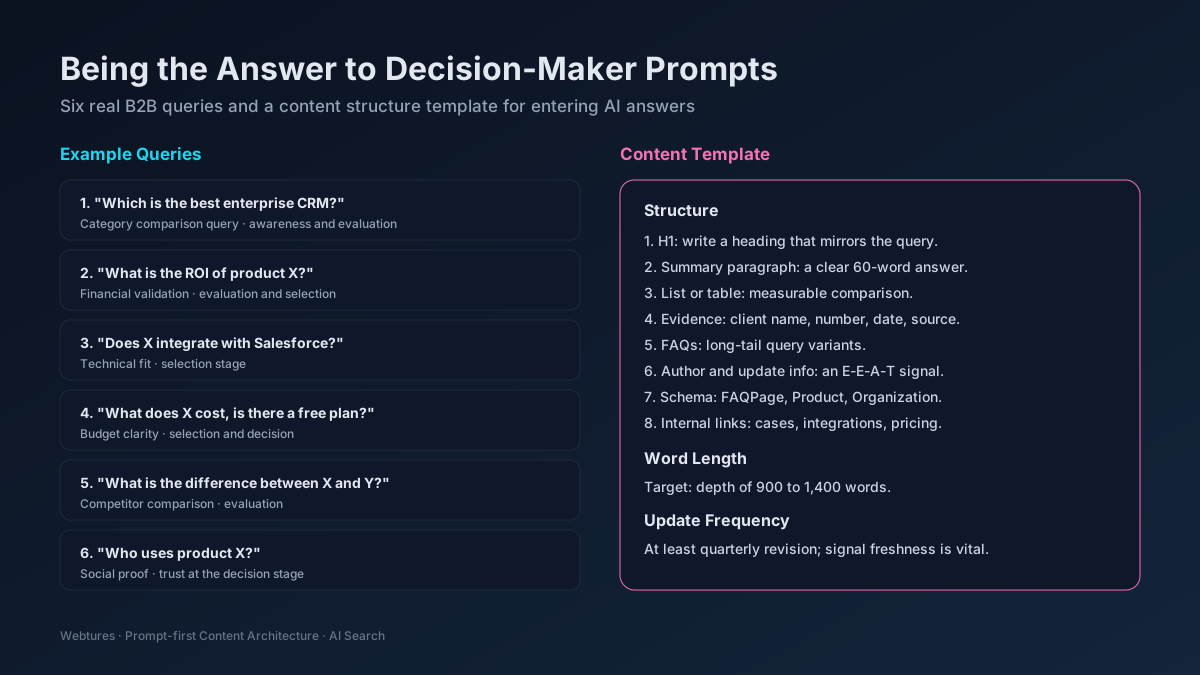
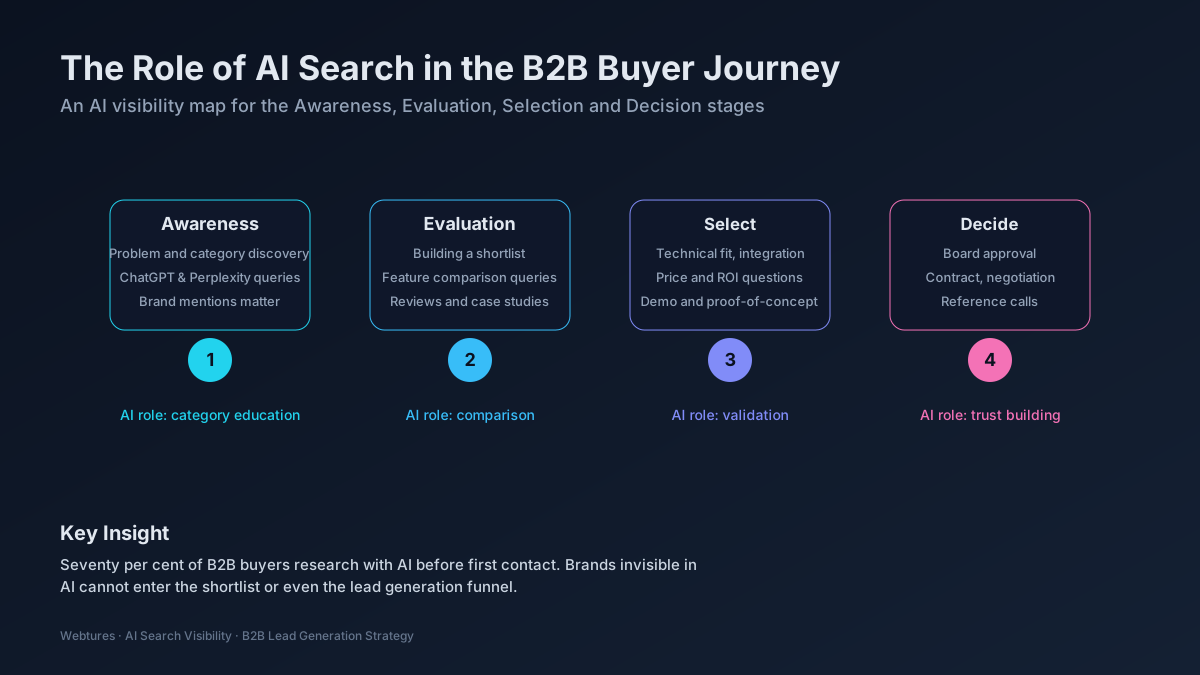
The B2B funnel consists of multi-layered, lengthy decision processes, and AI search visibility affects each stage differently. At the top it builds brand awareness, in the middle it establishes trust, and at the bottom it accelerates the decision. Brands recommended by AI are positioned as authorities in the user's mind. This delivers a real advantage in highly competitive sectors, lowers lead generation costs and lifts conversion rates. Because AI systems try to present the most suitable solution to each user, reaching the right target audience also becomes easier, which improves overall marketing efficiency.
How AI shapes the awareness, consideration and decision stages
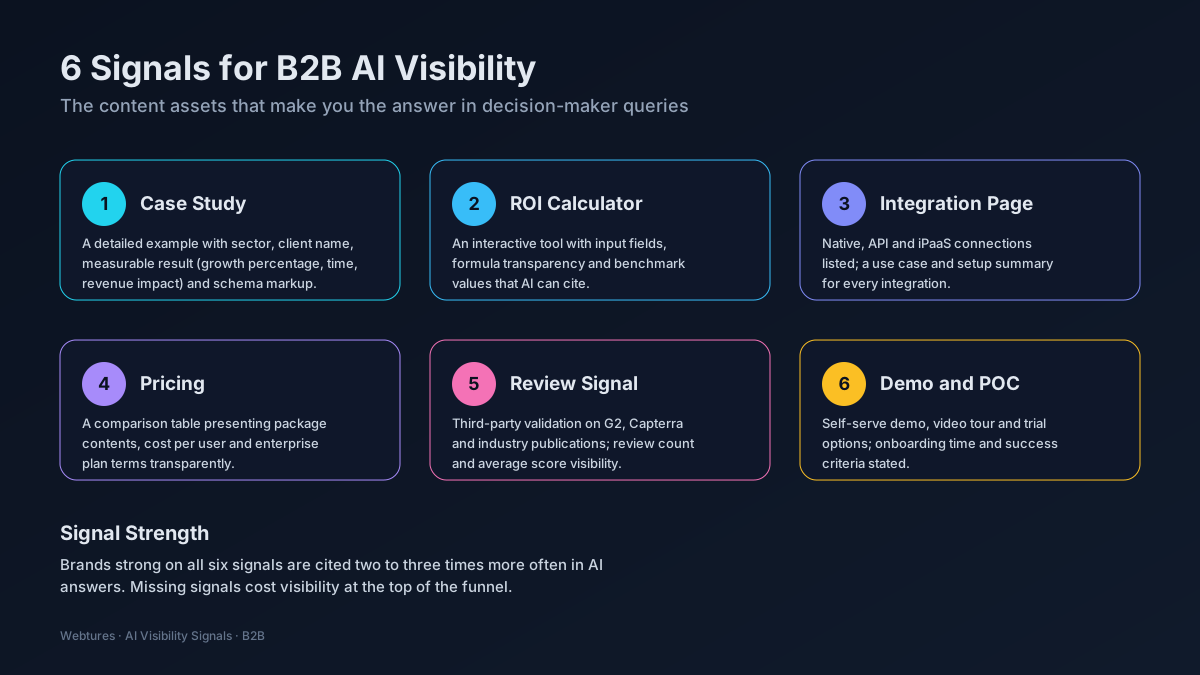
AI systems surface different content at each stage of the funnel. Informational content leads in the awareness stage, comparative and in-depth content in the consideration stage, and trust-focused content in the decision stage. Content strategy should therefore be built around the funnel. AI recognizes which stage a user is in and serves the most appropriate content, which raises the stakes for producing the right material. B2B brands that fail to cover every stage will not earn AI visibility. In the decision stage in particular, case studies, customer stories, demo content and reference pages play a critical role and directly influence conversion.
How does generative engine optimization (GEO) increase lead acquisition?
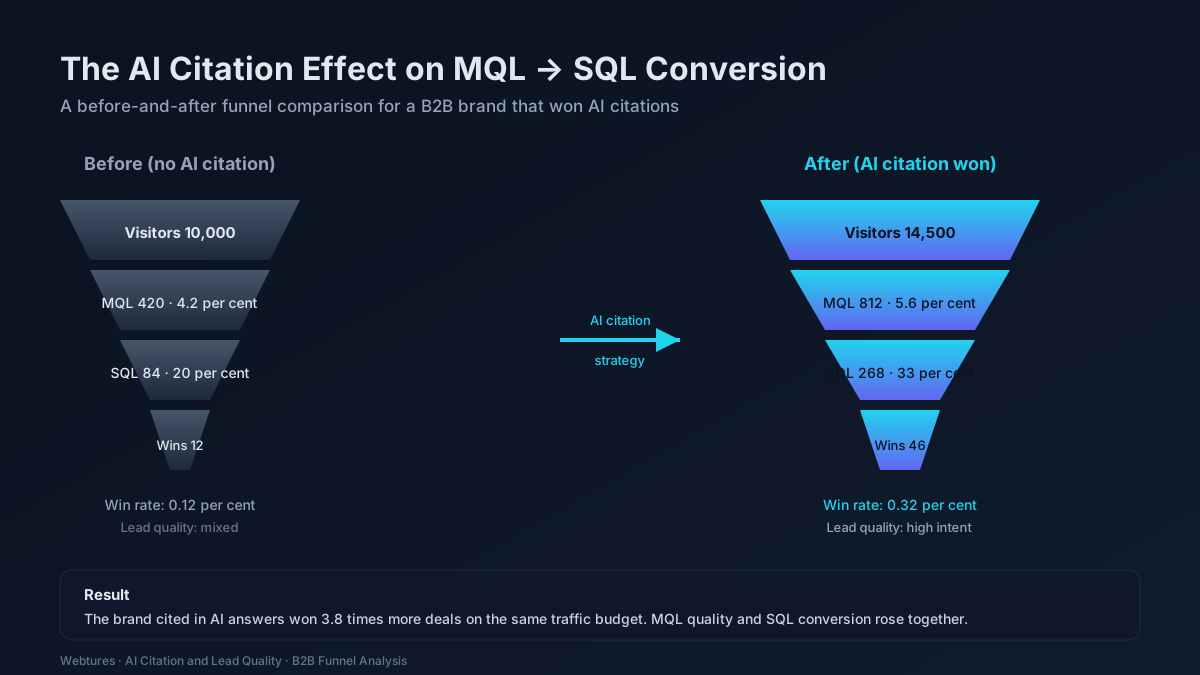
Generative Engine Optimization is a next-generation optimization approach developed to earn visibility inside AI systems. GEO focuses on how AI models interpret, compare and select content as a source. Contextual integrity, data structure and credibility come to the fore. In B2B lead generation, GEO helps a brand reach the right user at the right time. For complex products and services in particular, GEO strategies make a substantial difference. The approach targets qualified lead production, not just traffic. AI systems prefer GEO-compatible content when serving the most suitable solution to a user, and that preference translates into higher conversion rates.
How should content architecture be structured for AI visibility?
AI-compatible content architecture differs from the classic blog format. Content should be structured to answer a specific question directly, with subheadings organized around user intent. In B2B content, technical detail, examples and data-backed explanations carry weight. AI systems consider this kind of content more trustworthy. Content architecture should be built on an entity-based structure so AI can interpret it more accurately. Content also needs to be current, consistent and properly sourced. Outdated, contradictory or unsupported claims may be assigned a lower trust signal by AI. Regular content updates are therefore essential.
Entity, context and intent-focused content structure
AI systems analyze content through entities and context, so clear and precise use of concepts matters. Content must also answer a specific user intent. An intent-focused structure increases AI visibility. The approach is even more critical in B2B, where users search for specific solutions. Terminology should match the sector, and context must be established correctly. AI positions content with strong context higher, so surface-level writing should be avoided.
An AI-compatible keyword and query strategy for B2B
Keyword strategy has evolved alongside AI search. Query and prompt-based structures now matter more than individual keywords. B2B users typically ask long, detailed, context-heavy questions, so content should be prepared to answer those queries directly. Long-tail prompts play a critical role in AI visibility. Semantic structure matters as well: related concepts should appear together within the content. This approach helps AI systems understand the material more fully, and in B2B strategies it produces more qualified leads.
Trust and authority signals that earn a place in AI answers
AI systems prioritize trusted sources when selecting content, which makes authority signals critically important. B2B brands should use references, data sources and expert opinions in their content. Brand mentions, digital PR visibility, expert profiles and consistent company information are effective signals as well. AI does not evaluate strong domains alone; it can also weigh brands whose credibility is corroborated across multiple sources. Brand trust matters as much as content quality. Customer reviews, case studies and success stories play a supporting role here and are evaluated positively by AI.
Source quality, reference structure and brand credibility
Source quality is one of the deciding factors in AI visibility. Trusted, verifiable sources raise the value of content, while a solid reference structure reinforces it. This matters even more in B2B content, because users look for proof before deciding. Brand credibility is an essential part of the process; a strong brand perception is evaluated positively by AI systems. Content production should therefore go beyond delivering information. It must also build trust.
Technical infrastructure and data structure: a foundation AI systems can read
Technical infrastructure is the foundation of AI visibility. Structured data, schema usage, site speed, crawlable HTML, canonical consistency and clean URL structures all play a critical role. AI systems and crawlers analyze technically sound sites far more easily. When this infrastructure is missing on B2B sites, earning visibility becomes difficult. Content must also be discoverable and interpretable in the right way. Technical errors can weaken a page's chances of being selected as a source, so technical accessibility and data structure should be audited regularly.
Measuring AI search visibility: which metrics should you track?
Measuring AI search visibility differs from classic traffic and ranking metrics. Beyond visit counts, you should track content references, AI mentions, citation frequency, platform-level visibility, competitor share and sentiment. Conversion rates and lead quality are important metrics as well. In B2B, quality outweighs quantity, and analysis processes should be built accordingly. As AI visibility grows, qualified lead acquisition and organic conversion rates tend to rise with it.
An AI visibility roadmap and implementation plan for B2B brands
An AI visibility roadmap requires strategic planning. Start with an audit of existing content, then make that content AI-compatible. Align the technical infrastructure and apply GEO strategies. Throughout the process, measure brand mentions, citation quality, prompt visibility, competitor share and lead quality on a regular basis. This roadmap delivers sustainable growth and gives B2B brands a lasting competitive advantage.