Best Chrome Extensions for GEO in 2026
GEO (Generative Engine Optimization) is the discipline of getting selected as a source by systems like ChatGPT, Google AI Overviews, Gemini, and Perplexity. Chrome extensions are not GEO tools on their own; they are classic technical audit tools.



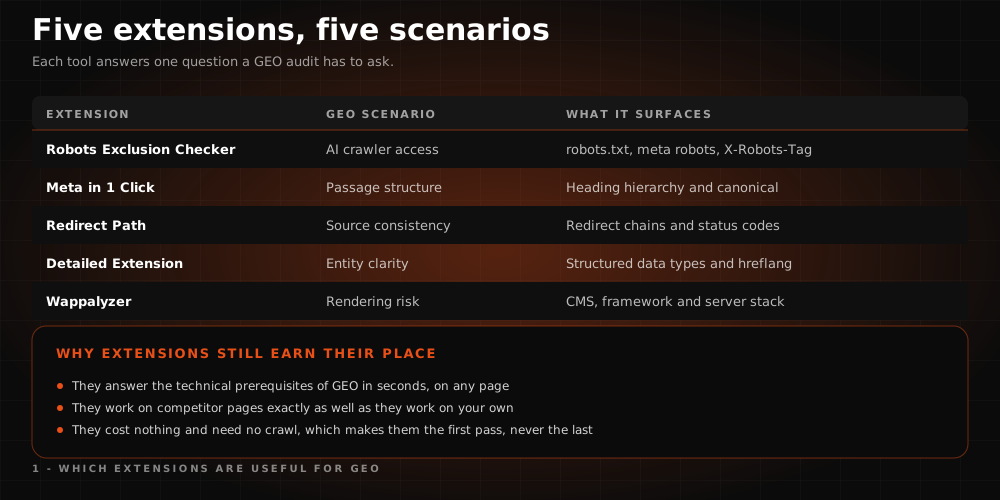
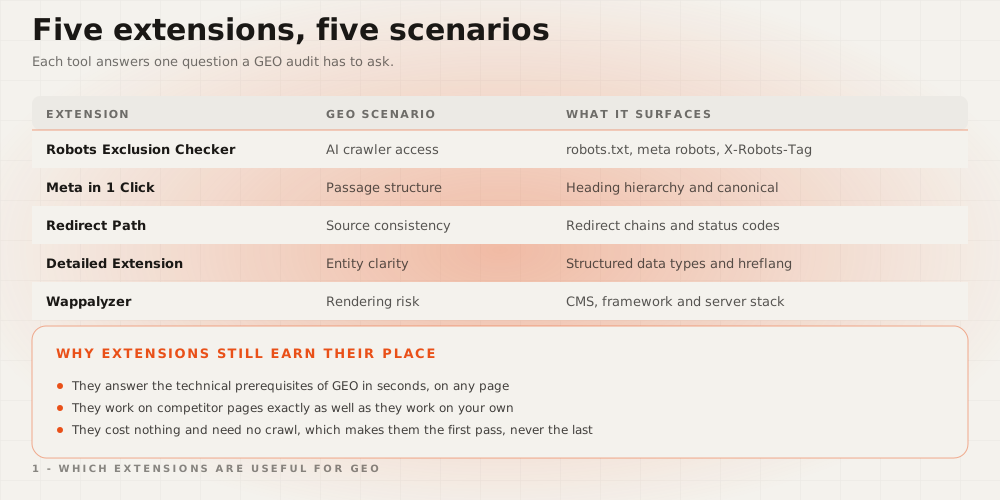
GEO (Generative Engine Optimization) is the discipline of getting selected as a source by systems like ChatGPT, Google AI Overviews, Gemini, and Perplexity. Chrome extensions are not GEO tools on their own; they are classic technical audit tools. Their value emerges when you ask them the right question. GEO's technical prerequisites, such as whether AI crawlers can reach the page, how the content is structured, and whether the source URL is consistent, can be checked in seconds with these extensions. In the list below, we explain concretely which GEO scenario each tool serves.
Which Chrome extensions are useful for GEO work?
Robots Exclusion Checker
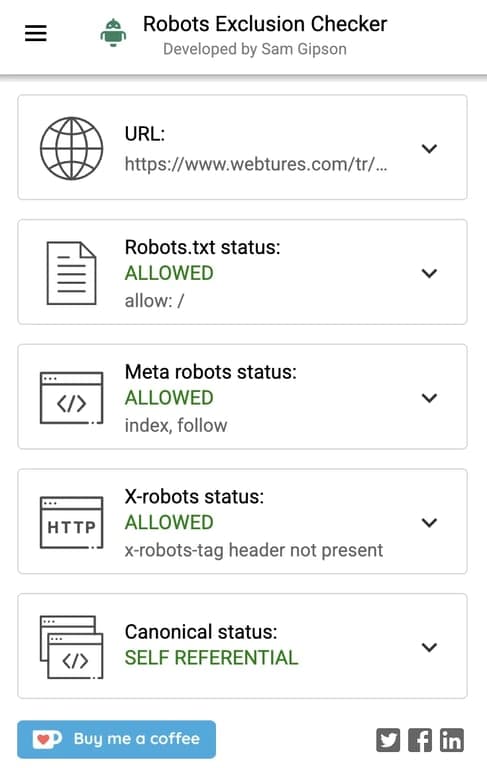
Robots Exclusion Checker shows the robots.txt, meta robots, and X-Robots-Tag status at a glance. The GEO scenario is clear: AI crawlers such as GPTBot, ClaudeBot, PerplexityBot, and Google-Extended obey robots.txt rules. A blanket Disallow rule, or a bot block copied over without thought, can push your content outside the pool AI systems feed on. If a page never appears in AI answers, this is the first place to check.
- Shows robots.txt and meta robots status per URL.
- Surfaces blanket blocks that affect AI crawler user agents.
- Answers the accessibility question, the first step of any GEO audit.
- Catches accidentally blocked sections before they spread site-wide.
Meta in 1 Click
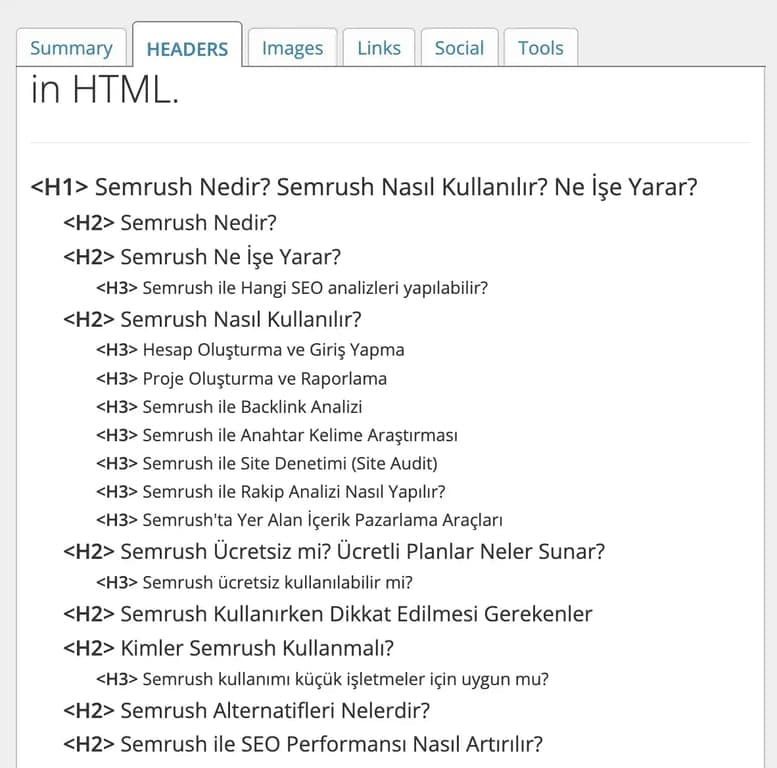
Meta in 1 Click summarizes the title, meta description, canonical, robots data, and heading hierarchy in a single click. The GEO scenario hides in the heading hierarchy: language models use H2 and H3 structure as a signal when splitting content into passages. From this panel you quickly verify whether headings are phrased as questions, whether each section focuses on a single subtopic, and whether the canonical points to the URL you want cited.
- Extracts the heading hierarchy to show how machines will read your passage structure.
- Summarizes canonical and language settings so you can check citation URL consistency.
- Presents everything on one screen, costing you seconds per page.
- Also works for studying the answer architecture of competitor pages.
Redirect Path
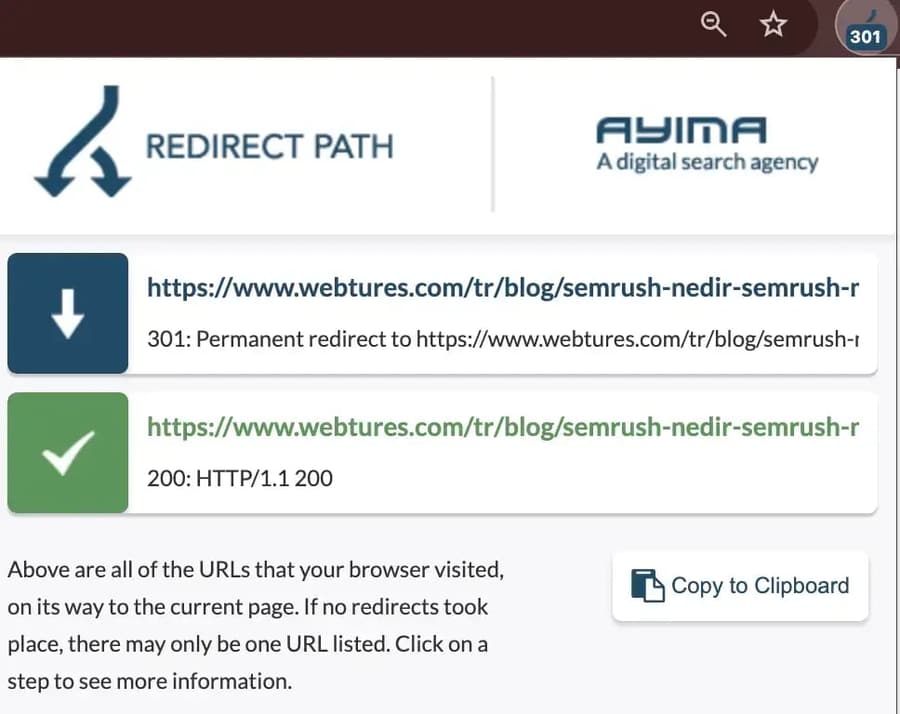
Redirect Path shows redirect chains and HTTP status codes in real time. The GEO scenario is source consistency: when AI systems cite a brand, they usually reference a single URL. 301 chains leading to the same content, http and https confusion, or parameterized duplicates split the citation signal across multiple addresses. If a source-citing system like Perplexity keeps referencing your old URL, follow the chain with this extension and collapse it to one final address.
- Shows HTTP status codes in real time.
- Detects multi-step redirect chains.
- Flags failure points with visual alerts in the browser.
- Helps you protect source URL consistency in AI citations.
Detailed Extension
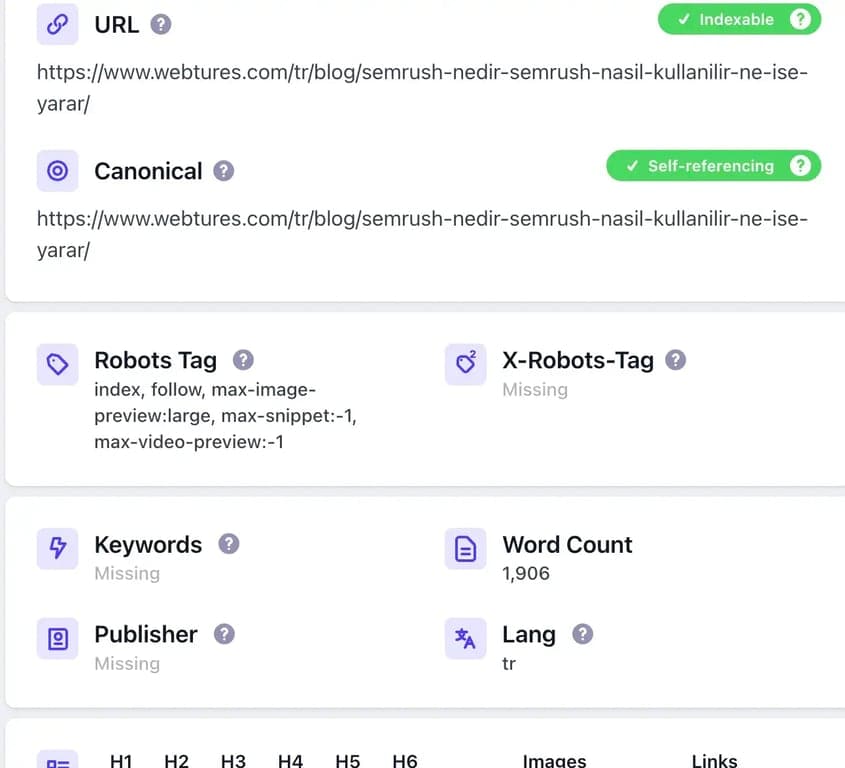
Detailed Extension gathers everything from meta tags to structured data analysis in one clean panel. The GEO scenario is structured data: schema types like Organization, Article, FAQPage, and HowTo are hygiene signals that help AI systems classify entities and content types correctly. From this panel you check whether author information, publish dates, and organization data are machine-readable. The hreflang tab clarifies which language version should be cited in which market on multilingual sites.
- Lists structured data types so you can audit entity clarity.
- Presents meta tags, heading structure, and hreflang usage in a single panel.
- Groups each element into separate tabs for a clear view.
- Verifies that author and date signals are machine-readable.
Wappalyzer
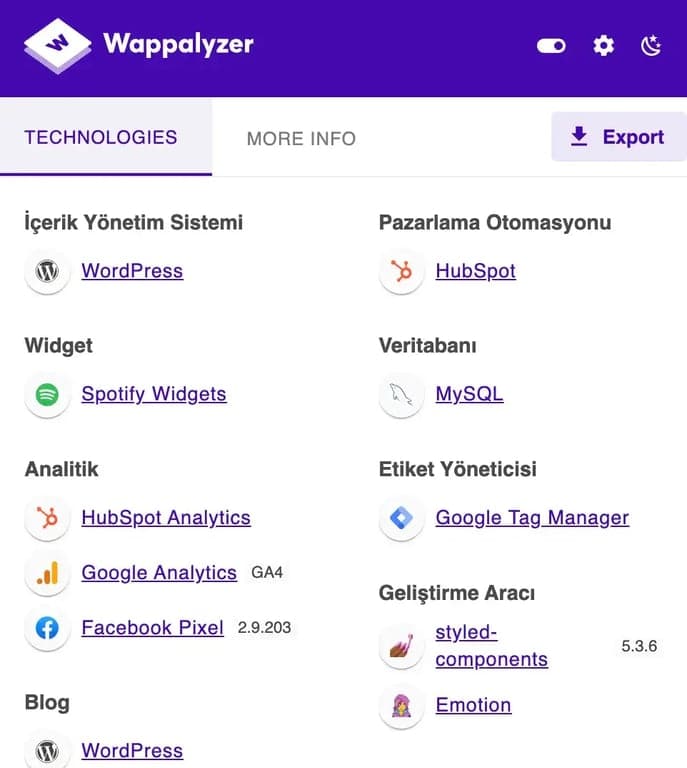
Wappalyzer instantly reveals a site's CMS, JavaScript framework, and server infrastructure. The GEO scenario is rendering: most AI crawlers do not execute JavaScript the way a browser does. When you detect an SPA stack that renders content only client-side, that site's main text may be invisible to some AI systems. This finding determines how urgently to recommend server-side rendering or static generation. Knowing the CMS and infrastructure also tells you upfront whether your technical recommendations are even feasible on that site.
- Shows instantly which technologies a site is built with.
- Detects frameworks that signal client-side rendering dependence.
- Lists the CMS, e-commerce stack, and security services.
- Lets you assess the feasibility of technical GEO recommendations upfront.
- Serves as the first step in competitor infrastructure analysis.
These extensions let you audit GEO's technical prerequisites quickly, page by page; but none of them measures your visibility inside AI answers. To understand which question clusters select you as a source, where competitors lead, and how AI summarizes your content, you need query-level data. This is where Brantial makes the process measurable by analyzing which queries cite your brand as a source in AI answers and which content gaps remain. The micro insights from extensions become a macro GEO strategy through platforms like this.