The Role of Brand Reputation in AI Search Results
Understand how brand reputation determines whether AI models cite you. See how LLMs read trust signals and how to build machine-readable authority.

The search experience is going through a fundamental break in the AI era. Users no longer reach information only through classic search engines; they also turn to large language models (LLMs) such as ChatGPT, Gemini, Claude and Perplexity. These models scan millions of pieces of content and produce a single, concise answer. For brands, this creates a new visibility frontier: appearing as a natural source inside AI-generated answers.
In this new order, brand reputation plays a far more critical role than it ever did. Reputation used to be measured through human-centered signals: customer experience, reviews, brand awareness and content quality. Today the same concept is read and evaluated by both humans and machines. Brand reputation is becoming the center of AI visibility, because a brand's level of credibility across the digital universe directly determines how often, and in which contexts, AI systems will reference it.
The universe of AI seekers and the new definition of reputation
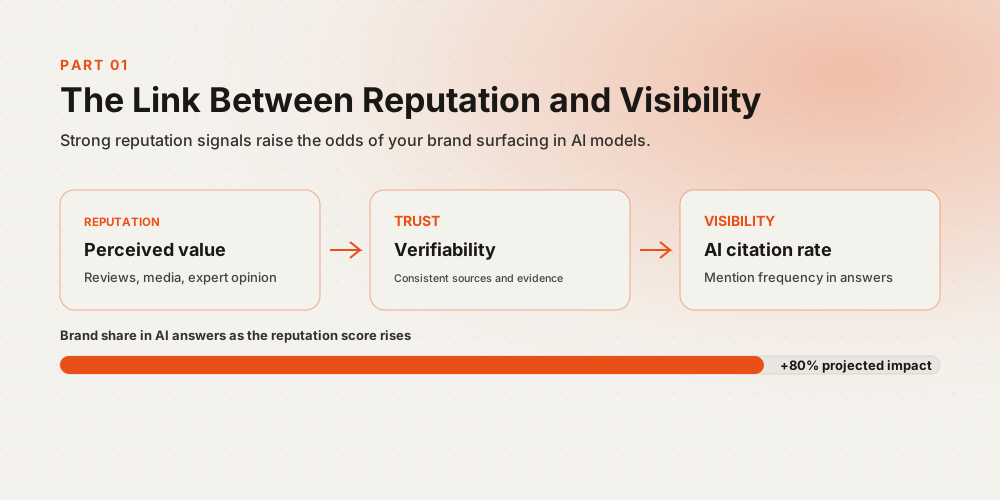
Traditional search engines invite the user to choose among dozens of links. AI-based search removes that step entirely. The user simply receives the answer; often there is not even a direct click to the brand's content. What matters now is not being on the first page but being part of the answer itself. And the key determinant of becoming part of the answer is how machines read your brand reputation.
AI evaluates brand reputation along four main axes:
- Consistency: Presenting the same expert identity everywhere.
- Trust signals: Publishing authoritative, expert, accurate and current information.
- Contextual fit: Owning a strong content network that reinforces the same theme.
- Citation propensity: Being perceived by LLMs as a consistently reliable information producer when they compare sources.
Where these criteria intersect, a kind of machine-side "reputation score" emerges. No such score is actually visible, but the way models work scores reputation indirectly. Every trace you leave in the digital world is now read twice: once by humans and once by machines.
How do LLMs measure reputation?
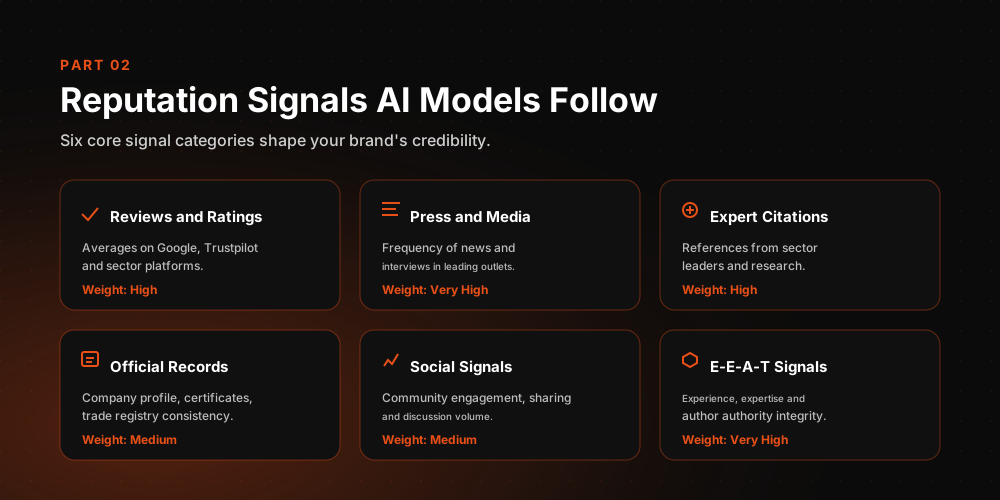
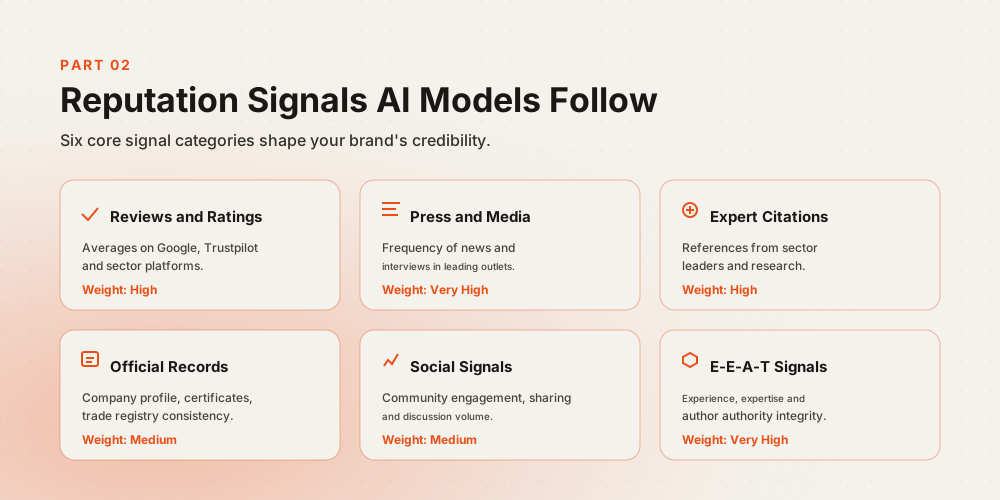
AI models read content differently from classic SEO logic. What matters here is not just backlinks but how intricately the information network is woven. If a brand speaks with the same consistency across its blog posts, social media, product descriptions, industry reports and media coverage, an LLM interprets that picture as a strong authority signal.
To evaluate a brand, models look at:
- consistency across its content,
- whether its information passes fact-checking,
- whether its area of expertise is clearly defined,
- whether it aligns with other trusted sources,
- how often it is mentioned within its industry,
- the depth of its digital footprint.
When these signals combine, the model decides whether to trust the brand on a given topic. A brand publishing in finance that also writes shallow health articles will most likely see that content labeled with low confidence, because the model continuously tests the relationship between an expert identity and its content. This is exactly why the new definition of brand reputation is not just managing external perception; it is building an expertise consistency that machines can understand across the digital universe.
The practical framework for this measurement overlaps heavily with the experience, expertise, authoritativeness and trust signals Google defines as E-E-A-T. Content featuring the views of people who have actually used the product or service produces experience signals; verifiable author bylines are an expertise signal; industry reports and references from respected sources feed authority, while accessible contact details and responses to user reviews feed trust. Another differentiator is information gain: content that merely repeats existing sources gets filtered out, while a brand that publishes original research and shares its own data gets labeled by the model as a pioneering source.
The connection between brand reputation and AI results
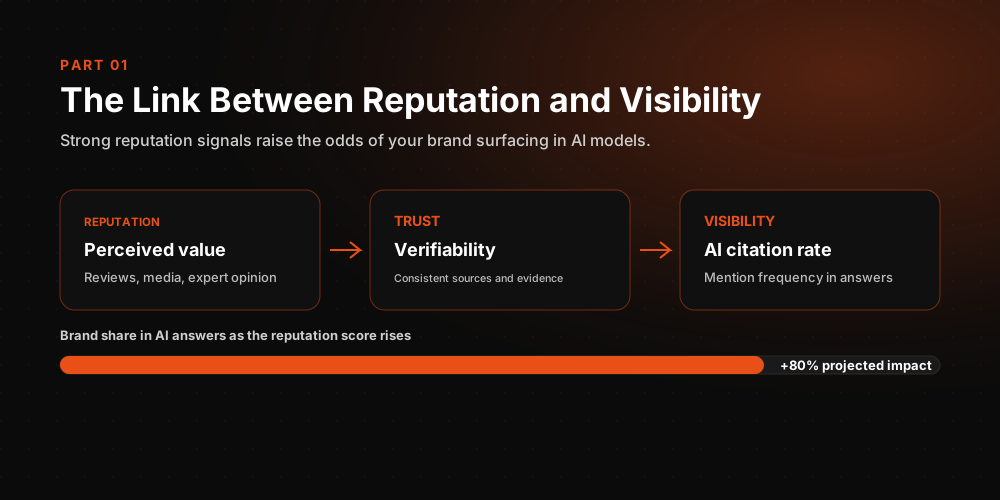
Brand reputation is no longer just perception management; it is a technical factor that directly determines visibility. When LLMs set out to answer a question, they weigh and compare the information in their data pool. Consistent, comprehensive and frequently repeated information receives more weight. The brand's content stops being just another piece of information and takes on the role of a reference within the system.
Brand reputation influences AI results in three critical ways:
1. A higher probability of being included in answers
Content from a brand with strong reputation gets more consideration during answer generation, because the model naturally elevates sources with high trust signals. That translates into the brand being visible across far more queries.
2. The brand gets cited in a wider context
In traditional SEO, visibility typically revolves around specific keywords. In AI search, question intent is broader. Even when a user asks "what is the best work routine?", a wide context of sleep, productivity, time management and mental health comes into play. Brands with established reputations see their content considered across those subtopics as well.
3. The model uses it in personalized answers
If LLMs find a brand trustworthy, they may draw examples from it even when generating personalized answers. At that point the brand becomes an information source regardless of user intent. Together, these effects show that brand reputation is not merely a perception asset; it is the core of AI-based visibility.
How do brand mentions feed reputation?
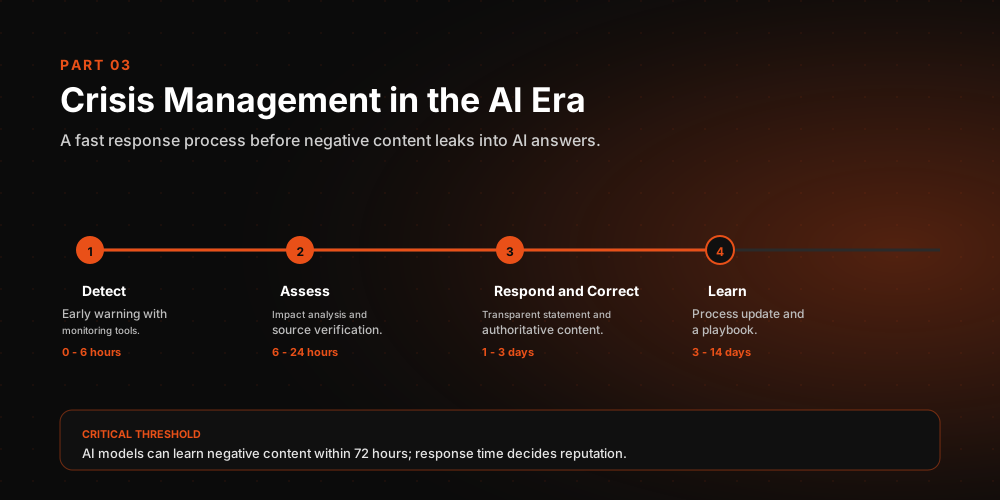
Existing through your own content alone is no longer enough. Who mentions your brand elsewhere, in what context and how often provides direct input to how models read your reputation. A user recommending the brand on a forum, the brand name appearing alongside a specific topic in an industry analysis, or the product being evaluated in a comparison article: each one helps the model position the brand as an authority or a recommended solution.
Mentions fall into three main groups:
- Organic mentions: Content created outside your control by users or independent sources. Natural mentions in forums, community platforms such as Reddit, or video comments are found far more convincing than advertising.
- Brand appearances in content: Being featured in blog posts, industry analyses, media bulletins and product comparisons. A brand name appearing alongside a specific topic is a strong signal for the model to associate the brand with that topic.
- Social media posts: Real user experiences on X, LinkedIn, Instagram and similar channels, evaluated together with timing, engagement and context data.
The model passes these mentions through two additional layers. The first is sentiment analysis: does the tone of the mention lean toward praise, neutrality or criticism? A brand where positive mentions cluster can settle into the "preferred by users" position in recommendation and comparison answers. The second is semantic association: the concepts a brand keeps appearing next to anchor it to a category. A cleaning brand consistently mentioned in the context of "natural products" earns its way into the recommended names for related queries. That is why not just the existence of a mention but its quality and context are part of reputation.
Reputation management is now a technical strategy
In the AI era, reputation has to be considered together with technical components such as content quality, expertise, trustworthiness and information architecture. Looking good is no longer enough; being well understood is required too, because what matters to models is that a brand's expertise is defined at the data level.
What brands need to do is therefore not purely communications work. It demands a technical and strategic architecture:
- content that does not contradict its own history,
- every statement carrying the same expert tone,
- supporting content that reinforces topical authority,
- pruning redundant and shallow information,
- presenting the brand message in a clear rather than convoluted structure,
- deepening the same topic across different channels: all of these are now part of reputation strategy.
These elements let LLMs read the brand as a "contextually strong" source. In practice, this architecture also needs external reinforcement: encouraging users to describe their experiences in their own words, producing content detailed and referenceable enough for others to cite, and building an informative, non-promotional presence on Q&A platforms such as Quora, Reddit and Türkiye's Ekşi Sözlük. All of this work raises both the density and the contextual quality of the brand's mentions in the eyes of the models.
Trustworthiness: the main determinant for AI
Brand reputation rests on trust for artificial intelligence just as it does in the human mind. But LLMs define trust a little differently. When determining whether a brand is trustworthy, a model may look at:
- the historical consistency of its content,
- the diversity of its information sources,
- the overall tone of what is said about the brand online,
- how well other recognized sources align with the brand,
- how long the brand has been producing content on a given topic.
What matters here is that trust signals are both quantitative and qualitative. Producing a large volume of content is not enough; the quality standard, positional consistency and freshness of that content are what count. A strategy article written in 2019 and never updated can even register as a risk signal to LLMs, because models treat information freshness as an important criterion.
AI reads a brand's trustworthiness not from a single blog post but from its entire digital behavior. Managing brand reputation now sits at the intersection of marketing and data strategy. Transparency is part of that reading too: brands that explain their data policies in plain language, embed fact-checking into their content processes and openly state where they use AI are considered more trustworthy by users and models alike.
Brand reputation in the AI era is becoming a competitive advantage
Being visible in AI search is far more strategic than holding a position in classic SEO rankings, because here the brand plays a role not just in search results but in the answers users receive. That creates a much higher-value touchpoint and a far more lasting impression.
Brand reputation delivers three major competitive contributions:
- Visibility across more queries: being preferred by the model in broader contexts.
- A stronger perception of authority: models using the brand's information as one of their core references.
- A more durable digital presence: every new piece of content becomes a reputation signal added to the data universe in the brand's name.
The most important competitive arena of the coming years will be AI-based visibility, and the strongest factor determining that visibility is brand reputation.
Competition is no longer measured solely by ranking on Google's first page. A brand's digital success is determined by how much space it occupies in AI-generated answers. This new era moves brand reputation beyond being one part of a communications strategy and makes it the most critical component of visibility.
The real question for brands is no longer "Where do I rank in search results?" but "How much space do I occupy in the answers AI generates?"
The answer to that question depends largely on the strength of your brand reputation. Brands with strong reputations will be cited more often by LLMs, appear in more contexts and become the most visible names of the AI era. In the AI universe, visibility will be earned not through content volume but through the data-level strength of reputation.