GEO Guide for the Construction Industry
GEO for construction and real estate brands: machine-readable project data, prompt-led expert content, reputation management in AI and the conversion funnel.
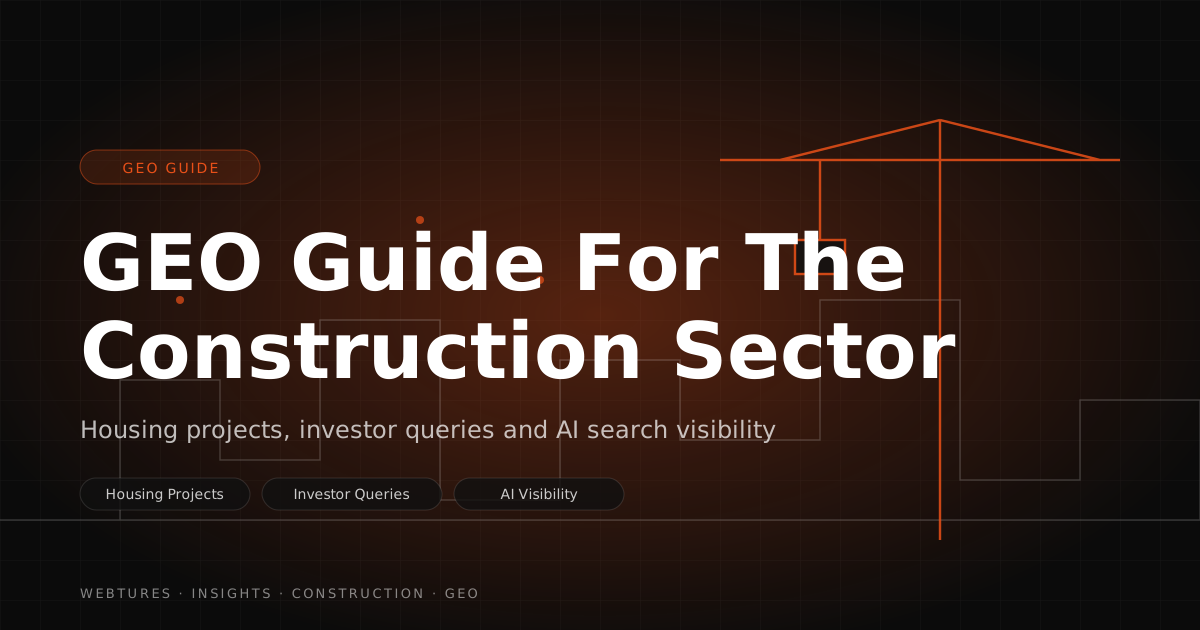

The construction industry has entered an era in which AI engines are redefining every marketing and customer acquisition process. Traditional visibility efforts are giving way to Generative Engine Optimization (GEO) strategies focused on having content synthesized directly by AI assistants. As users turn to platforms like Gemini, ChatGPT or Google AI Overviews to find answers, the core objective for brands is no longer website traffic but citation-worthiness: being included in the AI answer as a trusted source. In this new order, a construction company's success is directly tied to how accurately, quickly and authoritatively AI can summarize its projects and expertise.
Project data architecture for AI engines
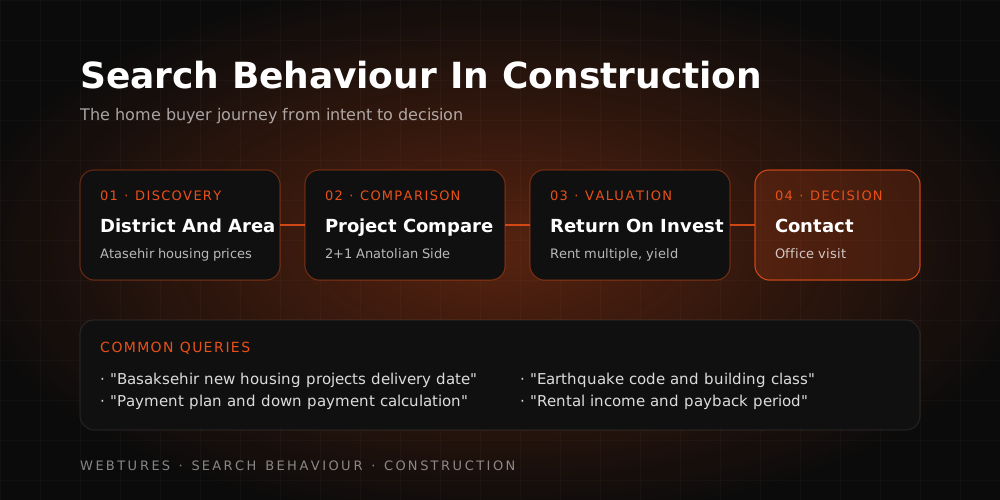
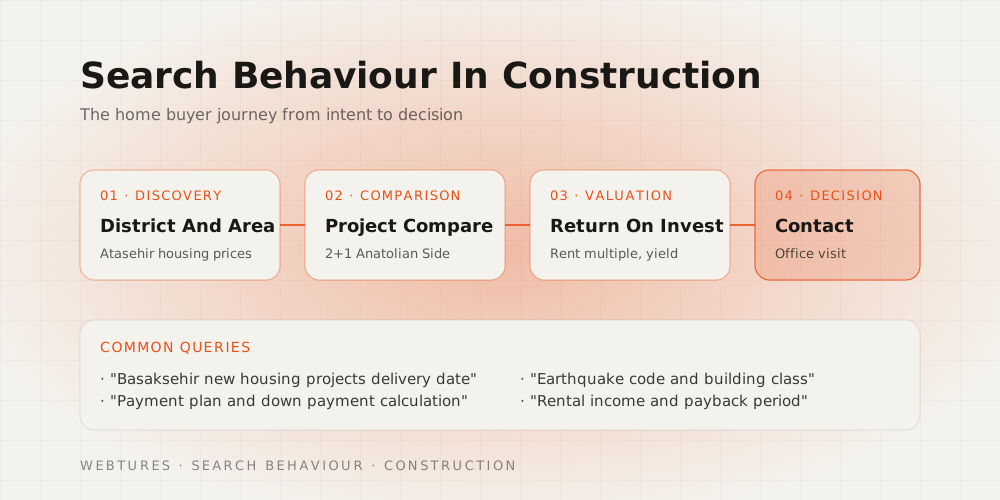
For AI engines, construction projects should be more than a showcase of visual material; they should serve as a structured truth source that AI feeds on. AI rewards the clarity and precision of information over its aesthetics.
Structured presentation of data
Critical data about construction projects must be formatted specifically so that Large Language Models (LLMs) can parse and use it easily.
- Encoding critical project data: Quantitative information such as housing price ranges, unit sizes, delivery dates or return on investment (ROI) should be presented on project pages as clean, labeled HTML tables or bulleted lists. This lets AI access the data instantly and fold it into an answer rather than parsing dense prose.
- Entity optimization and consistency: All corporate entities, including your project name, location and developer, must appear with absolute consistency across every trusted source online (official institution sites, trade directories). This consistency is a fundamental factor in preventing AI from synthesizing your project incorrectly (hallucination).
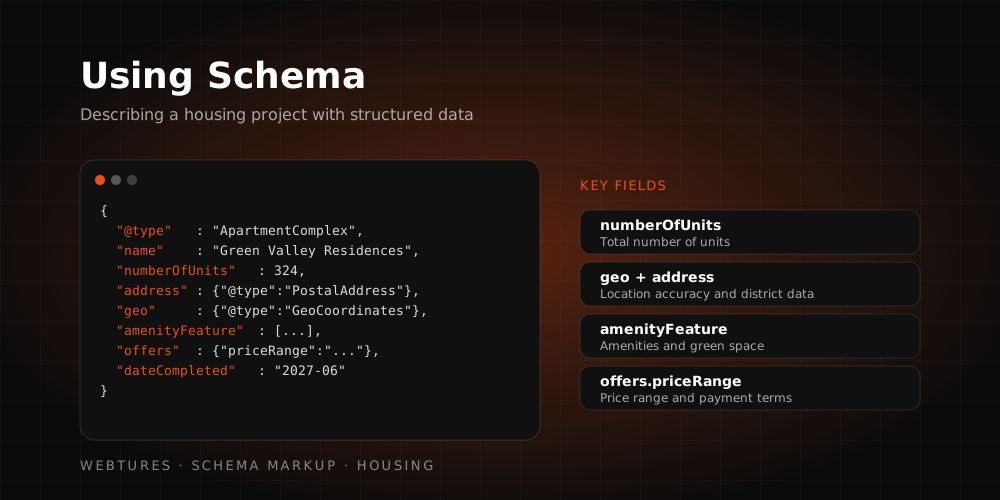
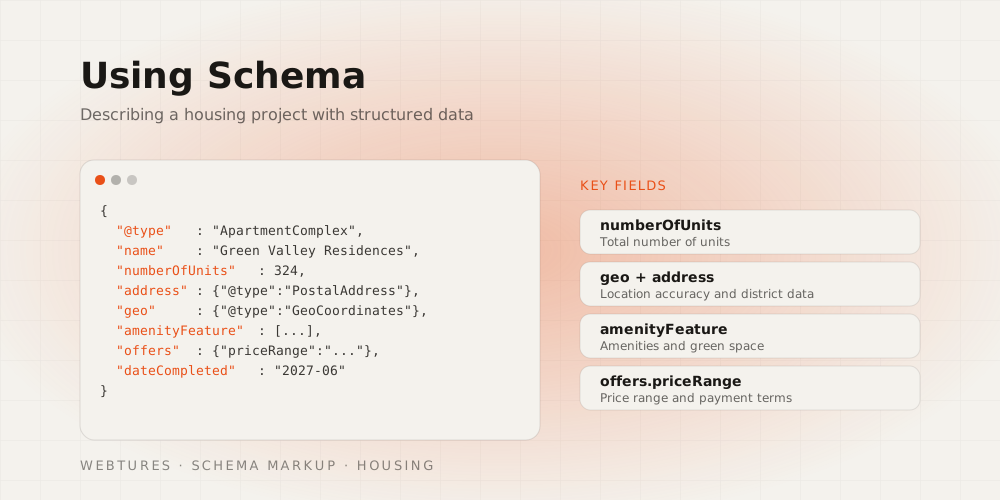
- Structured data usage: Using Schema.org types such as "RealEstateListing" or "Project", signal to AI systems that your content is a verified data source, not just promotional copy.
Fields that must be machine-readable on a project page
| Field | Schema equivalent | Why it matters |
|---|---|---|
| Project name and developer | RealEstateListing + Organization | Entity consistency; prevents hallucination |
| Location | address, geo | Matching "project in district X delivering in 2027" |
| Unit type and floor area | numberOfRooms, floorSize | The right class in comparison questions |
| Price range and payment terms | offers (price, priceCurrency, priceValidUntil) | The agent's budget filter; unreadable inside a PDF |
| Delivery date and project status | additionalProperty | The source of "when is it delivered"; a stale page produces a wrong answer |
| Frequently asked questions | FAQPage | Passage-level answers to long prompts |
These fields should exist both as visible text and as JSON-LD; an inconsistency between the two lowers the trust signal for the model and the agent.
Building the AI narrative with expert content
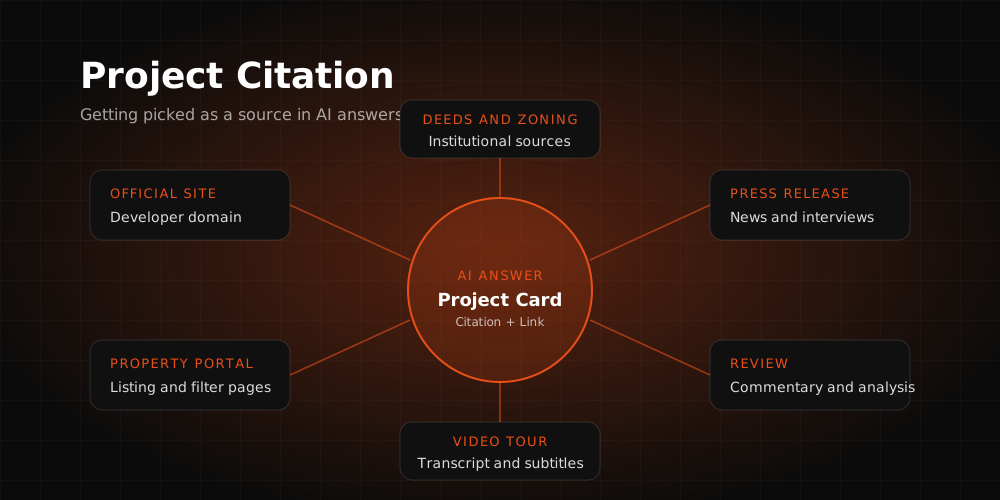
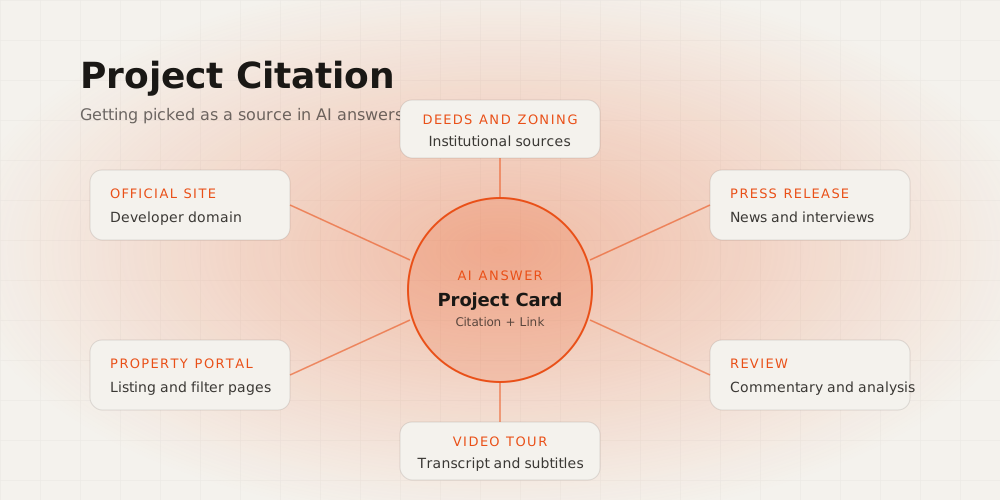
The central pillar of a GEO strategy is getting AI assistants to use your brand as the primary source when answering complex, strategic questions in the sector. This requires moving from keyword hunting to targeting the long, conversational prompts AI is likely to receive.
Prompt-driven content development
Instead of "offices for rent in Istanbul", users now write prompts that demand depth, such as "What is the impact of Turkey's new zoning regulations on commercial real estate investment?" or "How are KPIs defined in sustainable housing projects?".
- Visionary analysis: Content should be built to answer these knowledge-driven prompts. Publish expert reports on the current effects of Turkey's urban transformation legislation, regional real estate market projections for 2026 or the use of AI-based automation in construction projects.
- A discipline of freshness: AI engines prefer current information, but this is not a publishing frequency race. Google's own search guidance does not define publishing cadence as a ranking signal; thin content produced at scale, by contrast, falls under spam policies. The right approach is to manage freshness where information genuinely ages: urban transformation legislation, financing and cost items, delivery schedules and regional pricing data. Add a visible update date to these pages and a short note explaining what changed. On topics that have not changed, deepening existing content produces a stronger authority signal, for both users and engines, than producing new content.
Managing reputation and accuracy in AI
The hallucination risk inherent in Large Language Models (LLMs) is a serious reputational threat for corporate construction brands. Making sure AI always gets your brand right is a critical element of any GEO strategy.
- Positioning in dark social spaces: AI engines cite discussions on community-driven platforms with high credibility and originality (local forums, private industry platforms) as an important source. Shape the AI's narrative about your project by distributing expertise-based content that supports your brand story in these dark social spaces.
- Accuracy assurance: Brantial, the AI visibility tool we built at Webtures, analyzes how your brand and projects appear across billions of queries in the AI ecosystem, aiming to detect and correct early any potential for AI models to give false information about your project's price, location or status (hallucination). This keeps brand accuracy in AI answers under control.
Managing the conversion funnel through AI
The ultimate goal of GEO is to appear in the AI answer and steer prospects into the sales process even in a zero-click environment.
- Call to action (CTA) integration: Append statements that clarify the user's next step to the end of the summary answer AI serves. This moves the user from the AI assistant directly into your sales funnel (for example: "Contact our digital assistant for Project X's current prices and detailed floor plans").
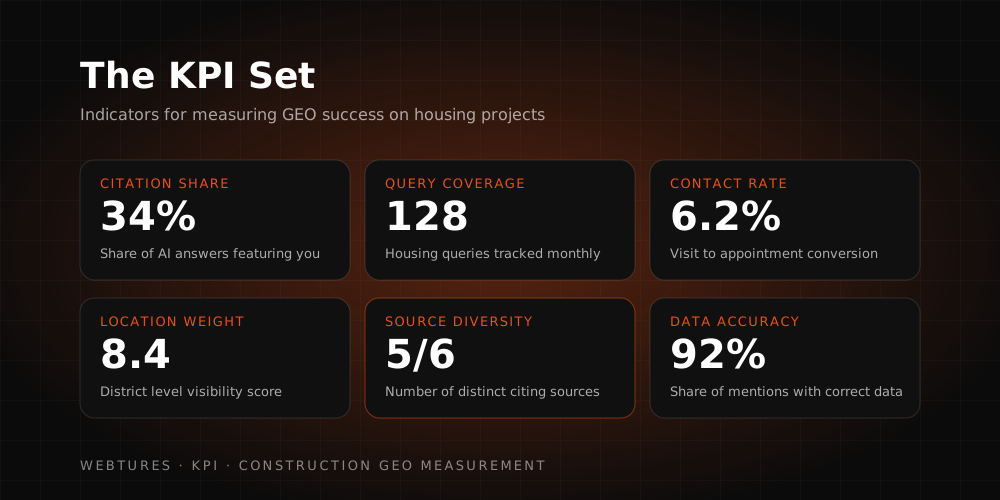
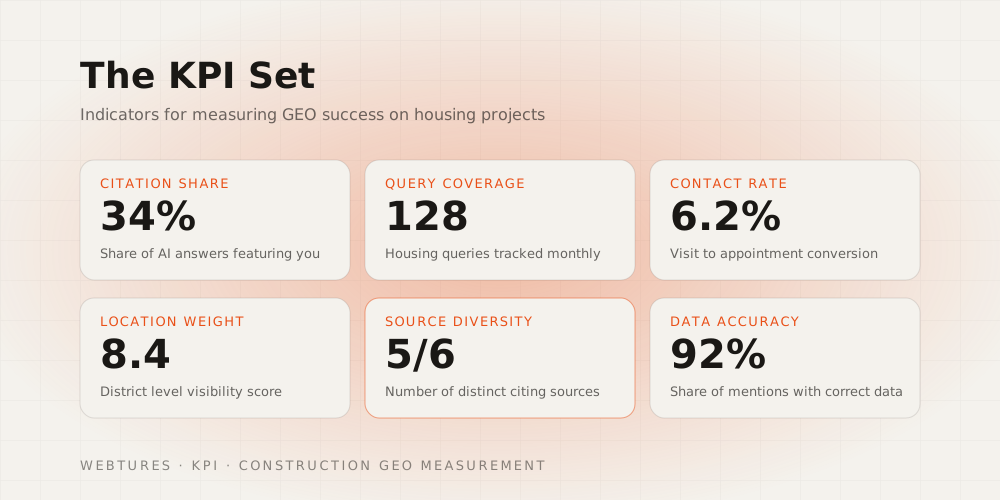
- KPI-driven content: Your content should not only inform; it should carry enough data to guide the reader toward a commercial decision. Present the data behind your project's competitive advantage and profitability in a format AI can synthesize easily, turning AI into a pre-sales assistant for your prospects.
Adopting GEO strategies moves construction brands out of a passive wait for digital visibility and into a visionary position where they actively manage AI engines. This approach is the only way to build a lasting competitive advantage in the new digital economy AI is constructing.
What the Webtures team sees in the field
In construction and real estate the pattern we see most often is information trapped inside PDF catalogues and images. When the project name, delivery date, location, unit type and payment terms are not written as text on the page, that data is unreadable for both search engines and AI assistants. A floor plan embedded in an image may serve the visitor, but it produces nothing on the machine side.
The second observation concerns a scattered corporate narrative. In the corporate visibility work we ran for Ekol Lojistik, the decisive step was not producing new content but collecting existing service and capability definitions under a single structure. We see the same need regularly in construction brands that operate project by project.
The third is currency. When brands remove pages for completed projects, AI answers keep speaking from stale information, and without a redirect to the right equivalent an information gap is left on the brand's side.
You can measure how AI systems and agents read your project pages with the AI Agent Readiness scan, and see the sector-independent plan in the 2026 GEO roadmap.
Growth & GEO