What Is Entity Structure for AI and Why Does It Matter?
Entity structure for AI is an approach that has fundamentally changed how modern information systems make sense of language.

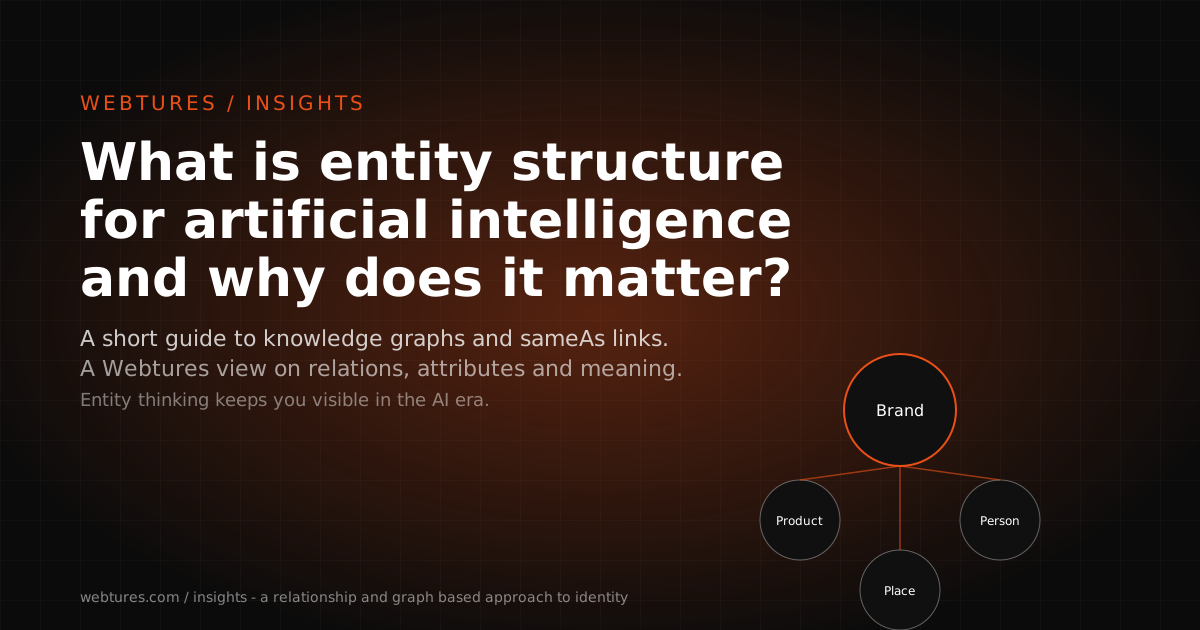
Entity structure for AI is an approach that has fundamentally changed how modern information systems make sense of language. Today, artificial intelligence models, AI Search systems, and search experiences no longer focus on the surface meaning of words alone but on the conceptual entities those words represent. These entities allow systems to answer the question "What exactly is this thing?" correctly. Telling whether the word "apple" refers to a fruit or a technology company, for example, is the foundation of accurate information matching. Entity structure makes that distinction possible and establishes both semantic and contextual integrity.
The significance of this approach is not limited to classic search experiences; generative AI systems such as ChatGPT, Google AI Overviews, Google AI Mode, Perplexity, and Microsoft Copilot also rely on entity-based knowledge relationships to resolve meaning. When these systems read a text, they grasp not only the words but the semantic relationships between them. Humans think in words, while AI thinks in entities. That difference redefines how digital information is organized and becomes decisive in brands' GEO (Generative Engine Optimization) strategies.
What is an entity? A simple definition
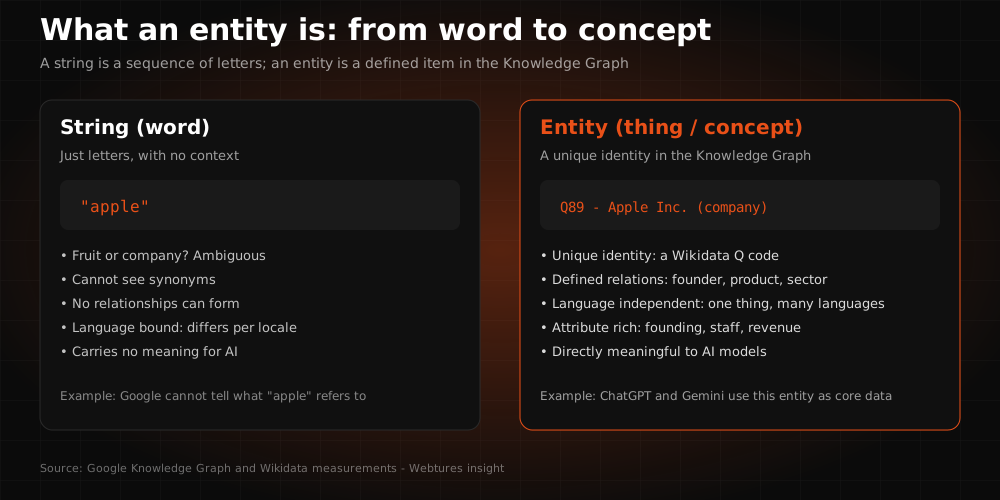
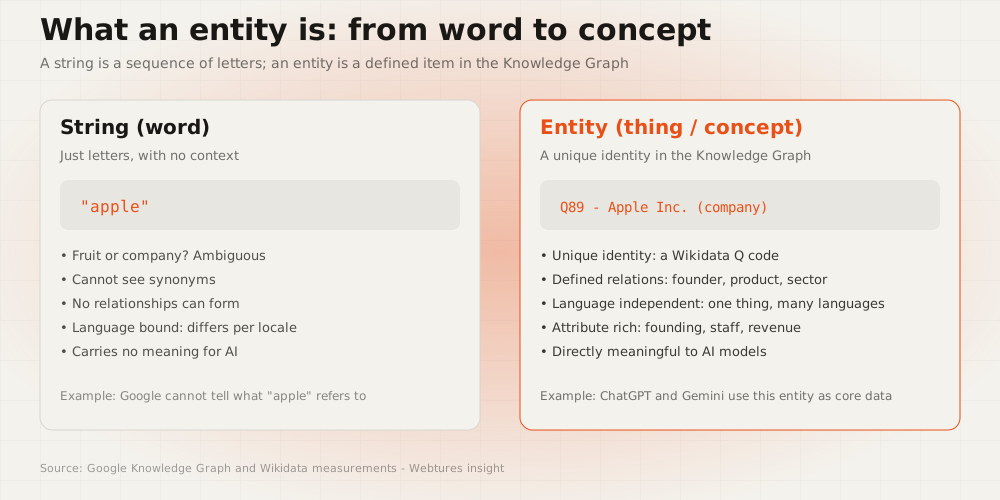
An entity is the unit of information that lets AI systems identify a concept, person, object, brand, product, or place in a unique way. Put differently, an entity is the clear answer to the question "What exactly is this?" The word "Paris," for example, can be a city or a person's name. To resolve that ambiguity, AI treats each meaning as a separate entity: "Paris (City)" and "Paris (Person)." This way the system escapes informational confusion and interprets the correct context.
An entity's uniqueness ensures it is represented with the right connections in the knowledge network. That in turn strengthens the digital identity of a web page, a brand, or a product. Defining a brand as an "Organization," for example, helps unify its name, logo, founder, address, social profiles, and service area under the same entity. This is why entity-based structure is a cornerstone both of AI comprehension processes and of GEO strategies.
Entity examples: why is "apple" two different things?
The "apple" example is one of the classic ways to understand why entity structure matters. The same word can refer both to a fruit and to a world-famous technology company. When AI resolves that double meaning, it looks at the context the word appears in and at the other entities related to it. When it appears alongside words like "iPhone," "MacBook," or "iOS," the company entity "Apple Inc." takes over. When it appears with concepts like "fruit," "vitamin," or "nutrition," the system interprets it as "apple (fruit)."
This disambiguation creates distinct connection points inside the knowledge graph and prevents misreadings. Entity structure is therefore an information system that redefines a word's meaning according to its context. From a GEO perspective, this means content is understood more accurately by AI, associated with the right sources, and represented more consistently in AI answers.
How does AI use entities?
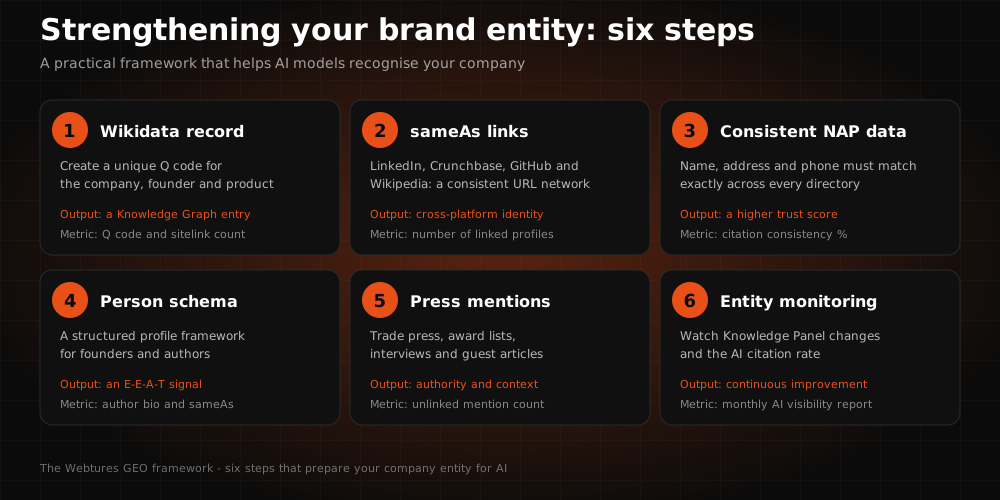
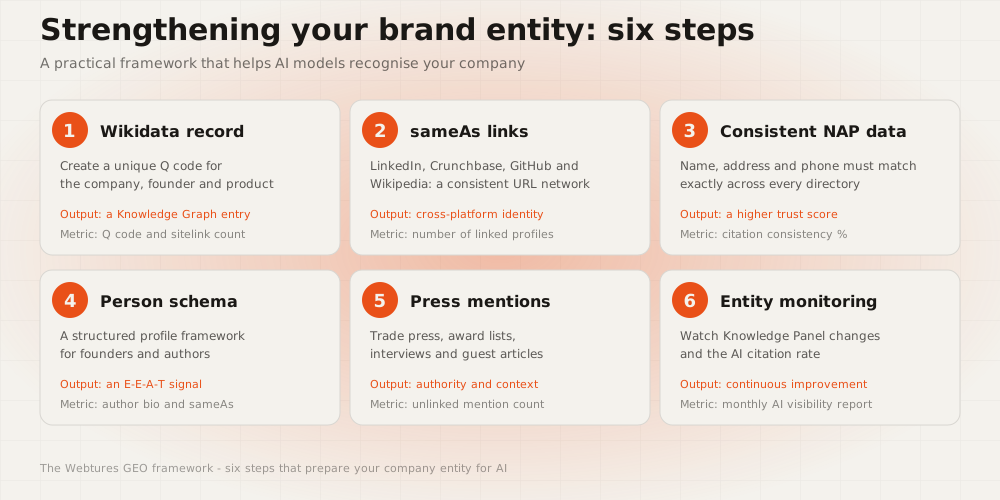
AI systems do more than identify entities; they also resolve the relationships between them. While analyzing a text, the system tries to understand which concept supports another, which event relates to which person, and which product, category, or industry a brand connects to. This is how user intent is determined far more accurately.
When a user searches for "apple prices," for example, the system has to choose between "apple (fruit)" and "Apple Inc." The entity relationships that resolve context step in here. The same logic applies to brands, products, services, and expert individuals. If a brand does not produce consistent entity signals across the digital ecosystem, AI systems may place it in the wrong context or pass it over as a source in relevant answers.
Through knowledge graph usage, AI merges information coming from different sources into a meaningful whole. This approach enables AI Search systems to produce more accurate, consistent, and reliable answers. Entity-based modeling is therefore a core requirement for GEO visibility and source selection.
The role of entities in intent and meaning resolution
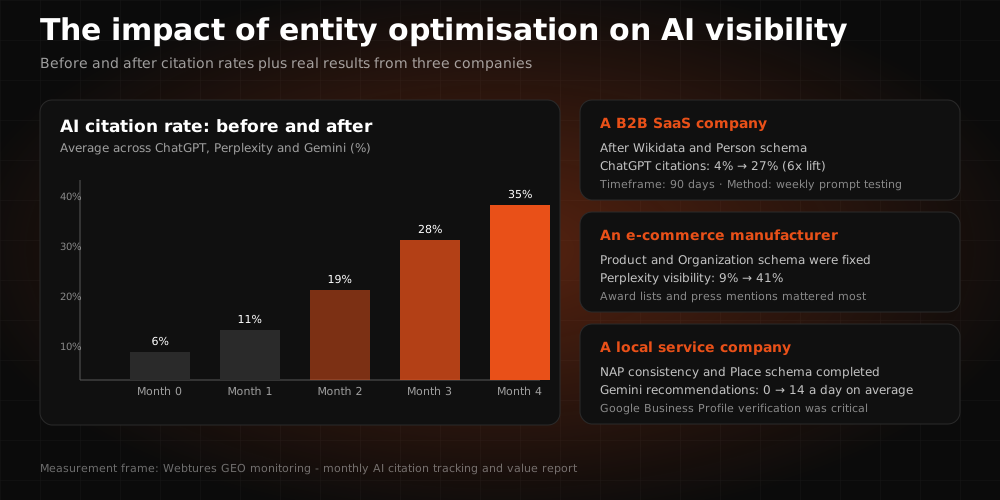
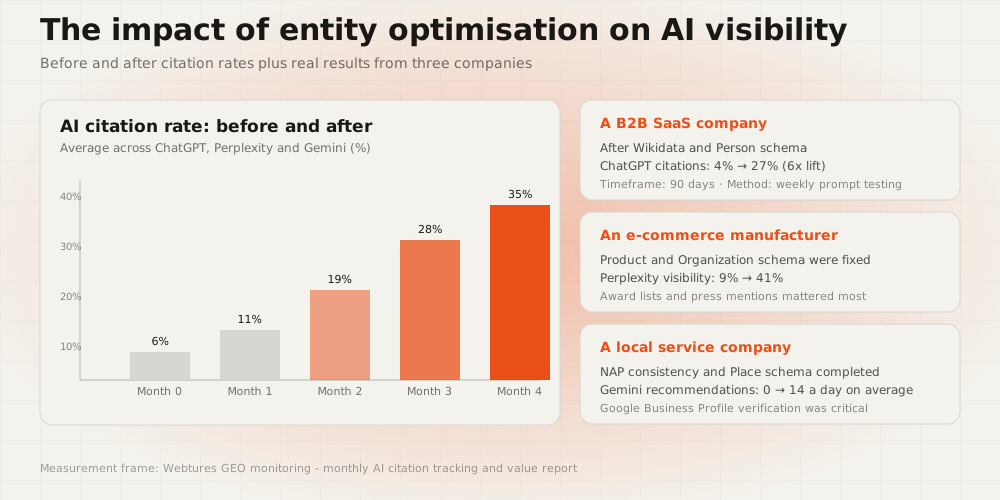
Entity-based structures play a decisive role in interpreting the intent behind a text. Traditional keyword-based analysis only looks at word matches, while entity-based understanding resolves the real meaning behind those words. In a query like "best apple brands," the user may mean fruit brands or Apple products depending on the context. AI makes that call by looking at the full query, the user's intent, and the related entities.
This kind of meaning resolution matters greatly for GEO (Generative Engine Optimization), because generative AI systems recommend content or brands based not on keyword density but on entity context, source credibility, topical coverage, and informational consistency. Content reinforced with entities can therefore be judged more trustworthy, authoritative, and contextually meaningful by AI.
Knowledge graphs and entity relationships
A knowledge graph organizes interconnected entities into a meaningful network. Every entity is linked to other entities. A relationship such as "Elon Musk" → "CEO of" → "Tesla Inc." helps the system understand the connection between person, company, and role. This structure plays a fundamental role in how AI systems verify information, generate recommendations, and build context.
From a GEO standpoint, the knowledge graph makes it easier for AI systems to recognize a brand or a piece of content correctly. Generative AI draws on the connections in this graph to assemble the right brand, product, expertise, or service information. Brands should therefore structure their digital presence so it is represented consistently within the knowledge graph.
Why entity structure matters for GEO
Defining entities with structured data
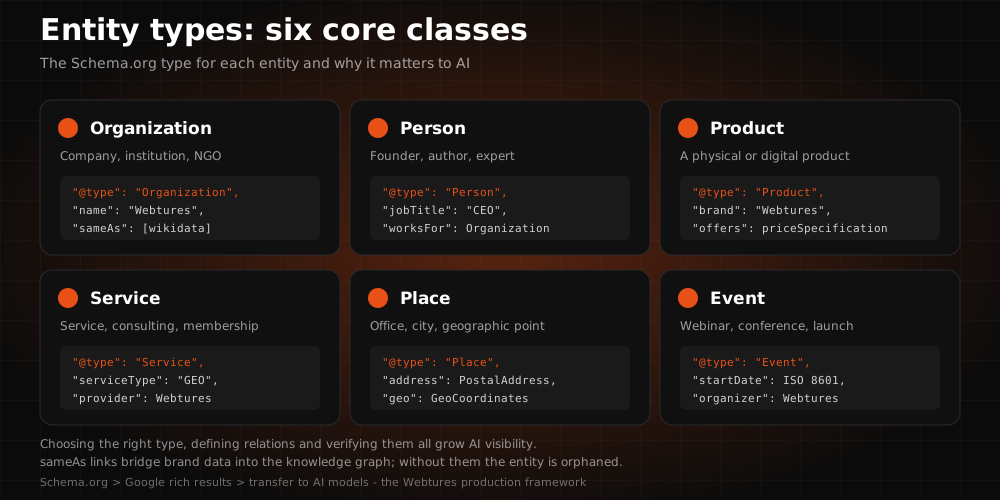
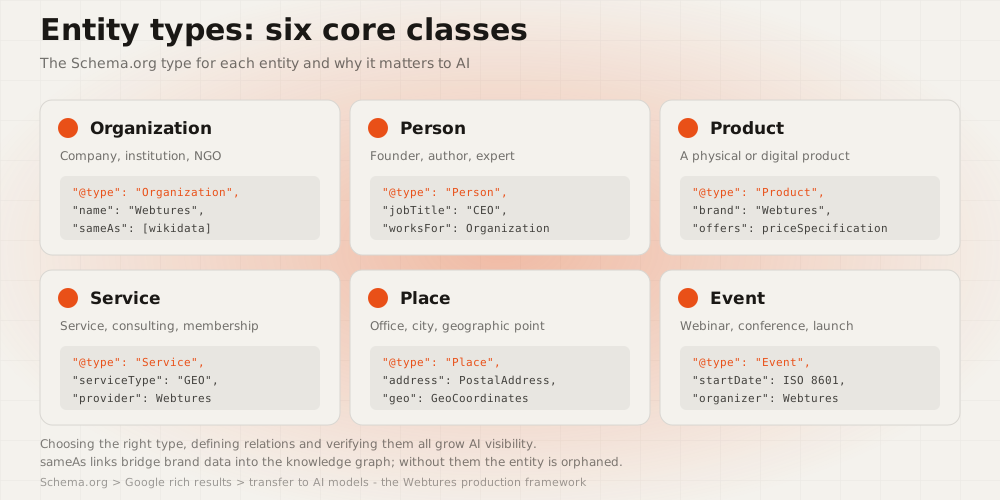
Structured data is the code layer that states explicitly who an entity is and which attributes it has. An "Organization" schema on a business page, for example, openly communicates the brand name, logo, founding year, address, contact details, and social profile links to the systems reading it. This structure reinforces entity identification.
AI-powered systems can use this structured data to associate the brand with the correct knowledge graph. Structured data is therefore one of the clearest ways to build a digital identity for GEO visibility.
Building brand credibility with sameAs links
The sameAs property connects a brand to its identities on other platforms. sameAs definitions pointing to Wikipedia, LinkedIn, Crunchbase, YouTube, X, or industry directory profiles confirm to AI systems that these presences belong to the same brand. These connections play a critical role in the entity matching process.
Through this method, brands are represented more reliably inside the knowledge graph, and the likelihood of being recognized correctly by AI Search systems increases. sameAs links sit at the center of building digital authority and brand consistency in the AI era.
Entity matching: making sure AI understands your brand correctly
Entity matching is the process that ensures a brand or a piece of content is identified as the same entity across different sources. If a brand is named "X Technology" and its web address is "xtechnology.com," the system needs to recognize the two as one entity. That match is strengthened by structured data, sameAs links, consistent brand information, uniform logo usage, and accurate references in third-party sources.
When entity matching goes wrong, AI can misclassify the brand, confuse it with other brands, or create a faulty connection in the knowledge graph. That damages GEO visibility, brand representation in AI answers, and the chance of being selected as a source.
How to produce entity-first content for GEO
GEO (Generative Engine Optimization) is the discipline of earning visibility inside generative AI systems. Here the classic keyword-density mindset gives way to an entity-first content approach, in which content is built around entities that AI can understand.
When producing content about a technology brand, for example, it is not enough to mention product names; you also need to clarify the brand's official name, its founder, its product family, the industry it serves, its location, the traits that set it apart from competitors, and its presence in trusted third-party sources. AI systems can then attach the brand to the correct knowledge graph node and represent it more accurately in relevant answers.
Entity optimization for visibility in generative search results
Generative search presents users with AI-generated summary answers. The way into those answers runs through content supported by the right entities. AI Search systems can evaluate informational credibility not only by page content but also by entity connections, source consistency, brand mentions, and topical authority.
Content should therefore be reinforced with structured data, clear definition sentences, consistent brand information, expert profiles, source links, and entity associations. AI can then recognize the content as a trustworthy source and position the brand more accurately in generative search results.
The role of entities in brand awareness and E-E-A-T
E-E-A-T (Experience, Expertise, Authoritativeness, Trustworthiness) is one of the core credibility signals in AI-powered search experiences. Entity structure supports each of these four elements, because AI interprets a brand's experience, expertise, and authority through accurate entity connections.
A strong entity structure should therefore be evaluated together with the brand's expert profiles, success stories, references, publications, social profiles, third-party mentions, and structured data. When these signals come together, the brand can be perceived as a more reliable source by AI Search systems.
Building brand consistency with entity-driven GEO strategies
Entity-driven GEO goes beyond the classic keyword-centered content approach. The goal here is to make sure the brand is identified with the same identity on every platform. The website, social media profiles, press coverage, directory sites, industry listings, and third-party databases should all converge under the same entity identity.
This strategy strengthens the brand's consistency inside the knowledge graph. AI systems recognize the brand correctly, present its content in the right context, and generate more reliable answers about it. That in turn raises GEO visibility and the long-term potential of being selected as a source in AI answers.
Humans think in words, AI thinks in entities
Entity structure, in the end, is the foundation that shapes both how AI systems build meaning and how digital brands earn visibility. Humans think in words; AI thinks in entities. That difference touches everything from content production to brand authority, from digital PR to AI Search visibility in the information age.
Succeeding in the GEO era means adopting an entity-first strategy. Through structured data, sameAs, entity matching, consistent brand information, trusted sources, and topical authority, brands can be represented correctly inside the knowledge graph. That secures a stronger position in generative search results, AI answers, and AI-powered discovery systems.