How Does AI Decide Which Brands to Recommend?
AI-powered search systems aim to generate direct answers rather than presenting users with a list of links. This has fundamentally changed what visibility means for brands.

AI-powered search systems aim to generate direct answers rather than presenting users with a list of links. This has fundamentally changed what visibility means for brands. The goal is no longer simply to rank; it is to be the source brand behind the answers AI produces. When interpreting user queries, AI models prefer brands that are trustworthy, clear, consistent and demonstrably expert. This selection process covers far more than classic SEO criteria and evaluates a brand's digital identity as a whole.
In this guide, we examine the logic AI uses to choose brands in detail, through entity perception, trust signals, content structure and expertise indicators. By the end, you will understand exactly why some brands appear in AI results again and again while others are left out entirely.
Why do AI search engines select brands at all?
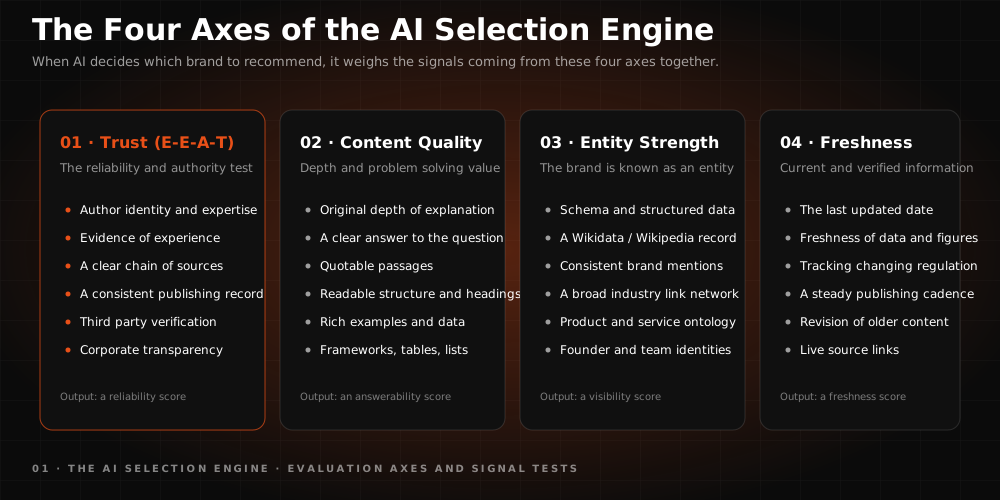
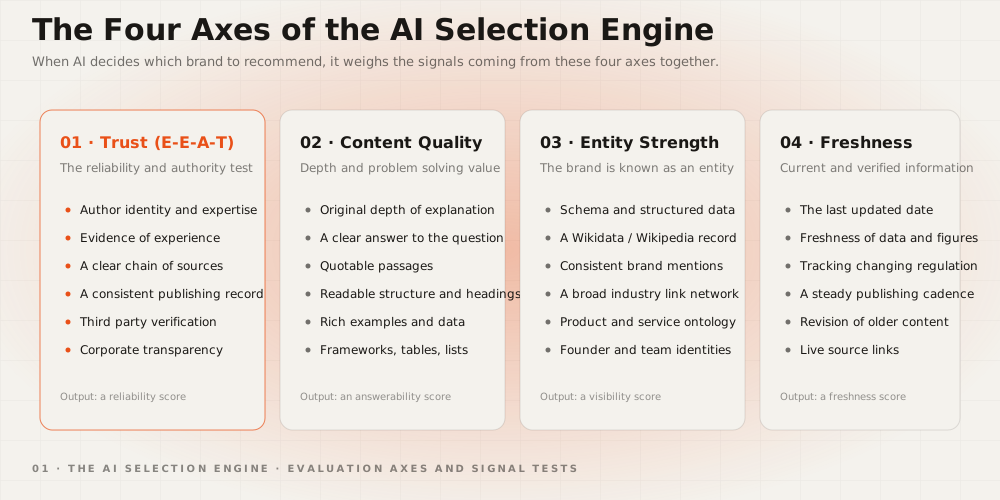
AI search engines are designed to give users the most accurate and trustworthy answer in the shortest possible time. For these systems, not every website is equal. AI generates answers by referencing only a handful of sources out of millions of pieces of content. That constraint forces the system to make a selection. The brands it selects are those that send sufficient expertise signals on the topic, have proven credibility and maintain a consistent digital presence.
In our own visibility measurements at Webtures we run the same set of prompts against several answer engines every week and log which brands each one names. What we observe is that the engines rarely agree with each other, and that a brand's presence depends less on its authority in classic search than on whether a clear, quotable description of it exists somewhere the engine trusts.
User experience sits at the core of this approach. AI wants to minimize the loss of trust that would come from serving wrong or incomplete information. It therefore prefers brands that have already been validated by independent sources, are clearly defined within their industry and publish continuously on a specific topic. This preference is not a conscious ranking; it is a probability calculation.
In short, AI selects brands so it can give the user the best possible answer. That selection directly shapes a brand's visibility and creates an effect far more durable than classic search results.
Does AI evaluate brands the way it evaluates a website?
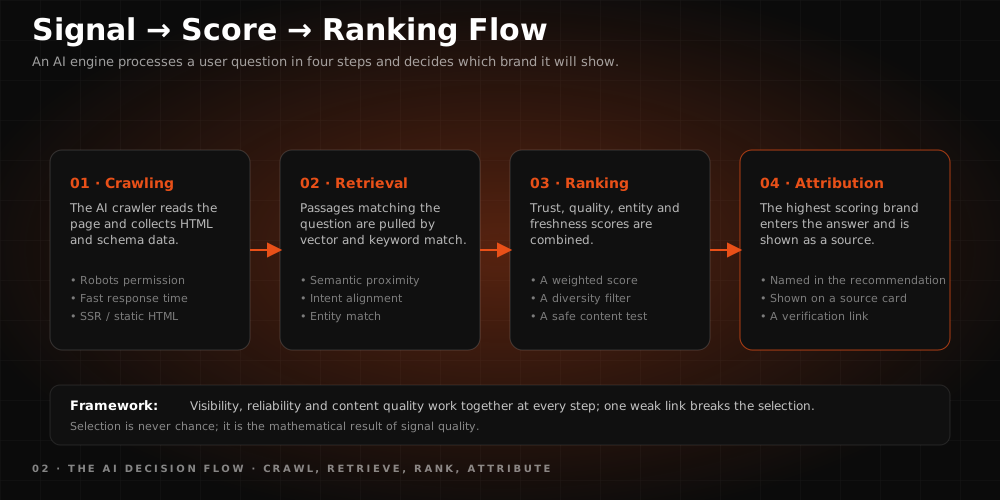
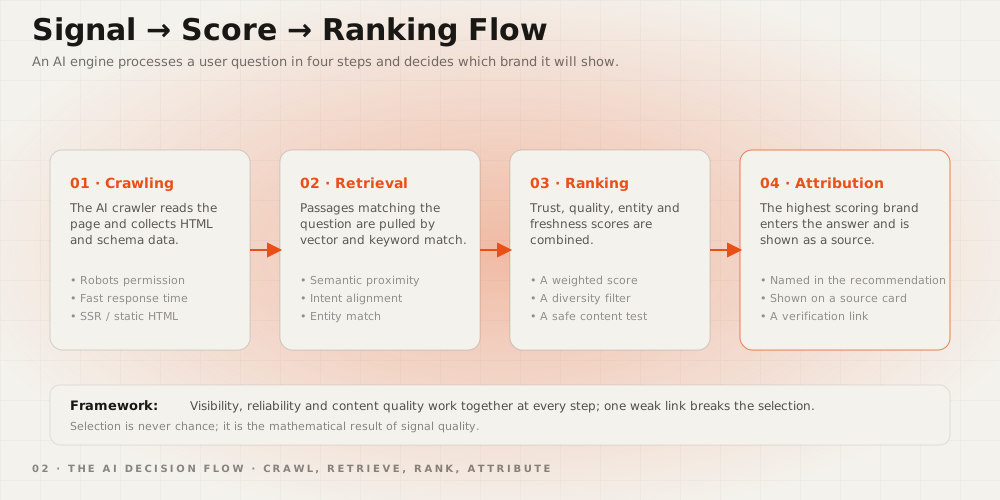
AI systems do not evaluate brands merely as websites. Rather than the technical structure of a domain, they focus on the identity, expertise and digital footprint of the brand behind it. A strong site infrastructure alone is not enough. What matters to AI is which brand the site represents and on which topics that brand is a reliable source.
This marks a shift from URL-based evaluation to brand-based evaluation. AI analyzes references to the same brand name across different platforms, along with the frequency and context of those mentions. If a brand appears consistently in blog content, industry reports, press releases and third-party sources, it is perceived as a trustworthy source of information.
For AI, then, the website is only a vehicle. The real evaluation concerns the brand's position within the digital ecosystem, which makes it essential to handle SEO work together with brand strategy.
Why is entity perception critical for AI?
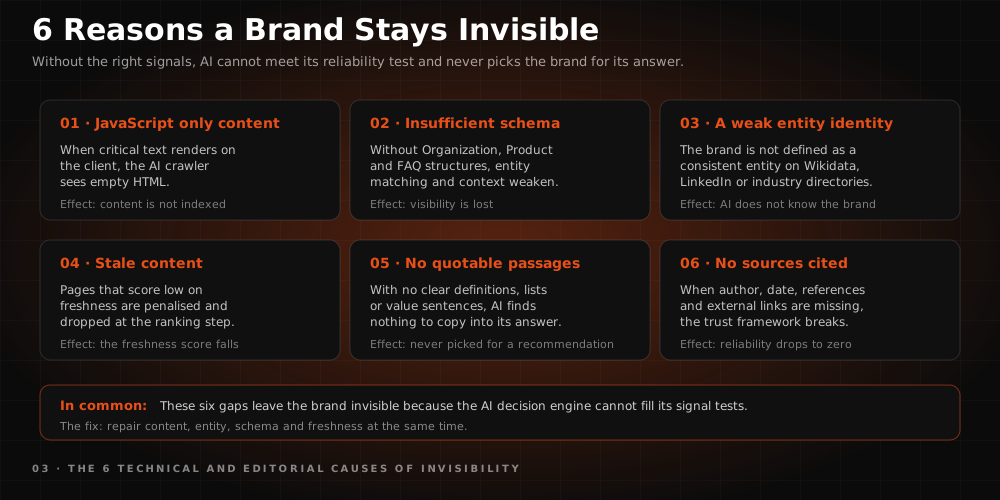
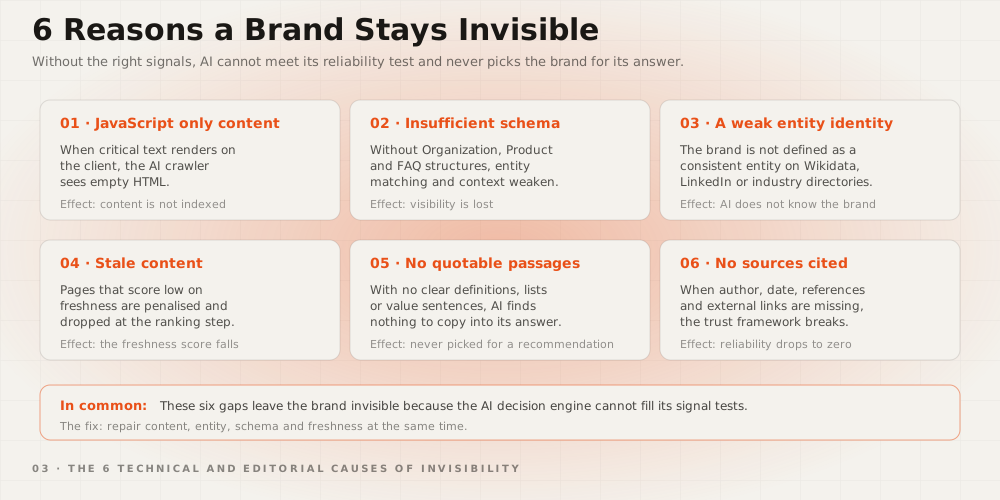
AI systems treat the internet not as a classic pool of documents but as a knowledge network of meaningful entities. For AI, brands gain value not merely by having a website but by being a defined entity. Entity perception establishes clearly who the brand is, what it does and where its expertise lies. AI treats vague or poorly defined brands as risky and avoids them when generating answers.
The entity approach helps AI filter out contradictory information. If a brand is defined consistently across different platforms, AI accepts it as a reliable reference point. The brand is then evaluated not on the strength of a single piece of content but as a coherent digital presence. Information on the website, social media profiles, industry platforms and third-party sources all contribute to strengthening entity perception.
What is an entity, and why does AI trust entities?
An entity is one of the core concepts AI uses to make sense of the world. An entity is something with a clear identity that can be defined and related to other entities. A brand, a person, an organization or a product all qualify. AI prefers to trust things it can define as entities rather than ambiguous concepts.
The reason for that trust is verifiability. If a brand appears in different sources under the same name, with similar descriptions and consistent information, AI treats it as reliable, which raises the likelihood of it being referenced in answers. Brands with weak entity perception rarely make it into AI results.
In short, being an entity means being recognizable, distinguishable and clear in context. These qualities play a decisive role in whether AI selects a brand.
Is your brand defined as an entity?
For a brand to be perceived as an entity, it needs a clear identity in the digital environment. The brand name, field of activity, services and areas of expertise must be defined explicitly. Contradictory descriptions across platforms make it harder for AI to make sense of the brand.
Entity definition extends beyond the website. Social media profiles, industry platforms, news sites and third-party sources all reinforce the perception. Conflicting narratives under the same brand name weaken trust signals, and AI will turn to alternative brands with a clearer identity.
Being able to define your brand in a single sentence is therefore a major advantage. Clarity is one of AI's primary selection criteria, and becoming an entity is a process that should be managed deliberately.
Which trust signals does AI use to select brands?
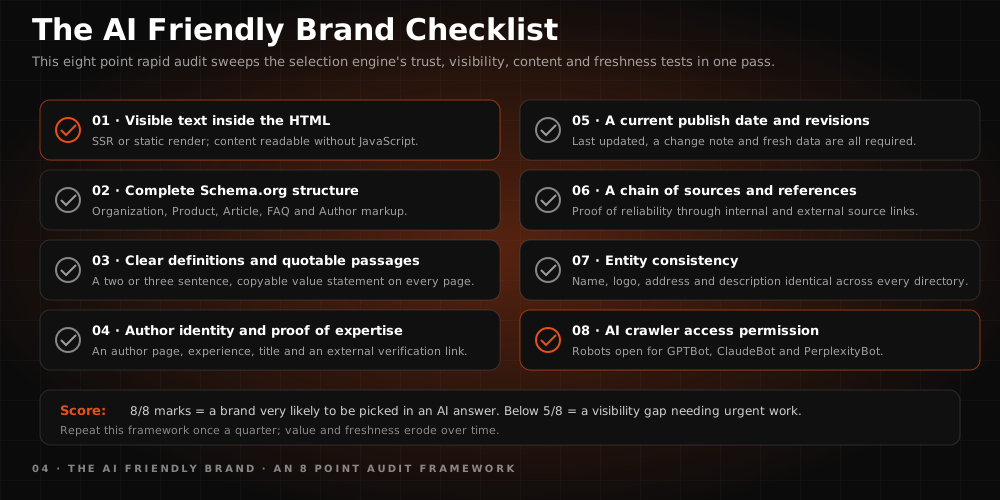
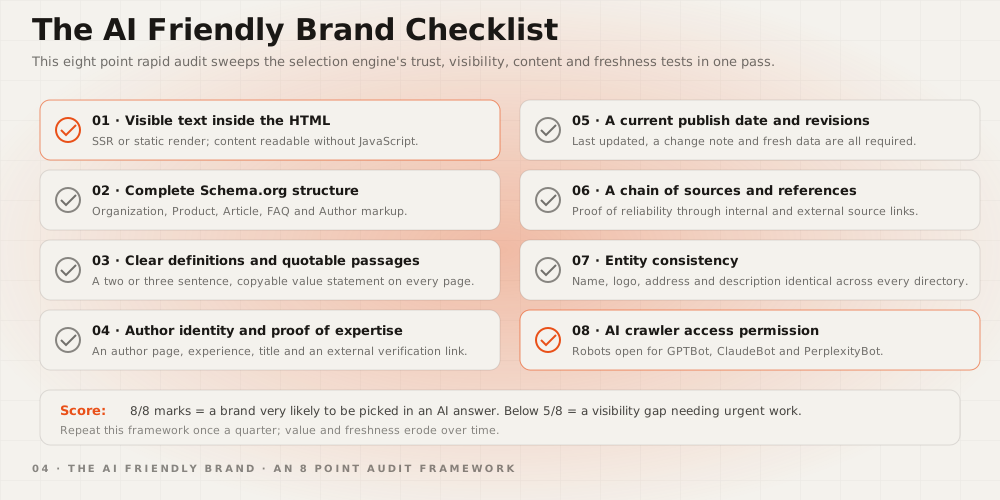
AI does not rely on a single metric when selecting brands; it weighs many trust signals together. These signals reflect the brand's reputation and verifiability in the digital world. Their purpose is to establish whether the information on offer is accurate, current and useful. The stronger these signals appear to AI, the more likely the brand is to be used in answer generation.
Trust signals do not come solely from the brand's own claims. Citations from third-party sources, industry references and visibility on independent platforms are important parts of the process. AI treats the same information appearing consistently across different sources as a strong verification signal. That is why brands need to build a multi-channel digital presence rather than communicating through a single channel.
Digital authority and source trust
AI evaluates trust signals in layers when selecting brands. Being referenced by different, independent sources directly strengthens a brand's perceived credibility. Those references can come from news sites, industry blogs, academic content or expert commentary.
Being strong on a single platform is not enough. AI wants information verified across multiple sources. Instead of publishing only on its own site, a brand needs to be present in its industry ecosystem. Brands that are mentioned, quoted and held up as examples generate stronger trust signals.
Ultimately, digital authority is measured not by traffic alone but by recognition from credible sources, which is a critical advantage for visibility in AI results.
Brand consistency and the digital footprint
Consistency is one of the fundamental components of trust for AI. The brand name, descriptions and messaging must align across every digital channel. Divergent narratives on different platforms can lead AI to classify the brand as risky.
The digital footprint covers every trace a brand leaves online. When those traces reinforce each other, AI reads it as a strong signal. Brands that offer the same services but describe them in inconsistent ways can lose trust.
Brand language, tone and messaging should therefore be managed through a central strategy. AI selects what is consistent and filters out what is confusing.
Content quality or content meaning: which matters more?
In the AI era, content production means more than polished writing or long articles. The decisive factor is the meaning and context the content carries. When evaluating a piece of content, AI cares less about grammar or fluency than about how well it answers the user's question. Shallow but well-written content falls behind content that is deep and explanatory.
Meaning-driven content lays out the essence of the topic clearly. AI wants explicit definitions, concepts handled in context and no needless repetition. Content built purely around keywords is easily detected by AI and classified as low value, which directly affects the brand's visibility.
The goal of a content strategy is therefore not to produce well-written copy but to create content that understands the question correctly and answers it clearly. For AI, content that produces meaning always takes priority over content that is merely polished.
Why keyword-driven content falls short
In classic SEO, keyword density was an important criterion. For AI, that approach is no longer sufficient. AI systems focus on the meaning conveyed, not on word repetition. Shallow content that merely carries keywords is filtered out because it produces no value.
Keyword-driven content typically restates the same information in different sentences. AI detects these repetitions easily and classifies the content as low quality, and the brand fails to appear in AI answers as a result.
The aim of content production is not to place keywords but to give the question a clear, satisfying answer. Content that produces no meaning is invisible to AI.
How AI reads meaning-driven content
AI reads content by context, not sentence by sentence. It looks for logical coherence between the title, subheadings and paragraph structure. Content with clear definitions, examples and explanations carries higher value.
AI prefers content that can answer the user's question directly. Vague phrasing, indirect statements and unnecessary padding all work against you. Structured, plain and explanatory content stands out.
Meaning-driven content does more than make a brand visible; it turns the brand into a trusted source of information.
How does AI measure brand expertise?
AI does not judge expertise from a single piece of content or short-term performance. The perception of expertise forms over time and requires continuity. When a brand publishes regularly around a specific topic, it demonstrates knowledge and experience in that field. AI analyzes that continuity to determine whether the brand is genuinely expert.
Depth matters as much as variety in measuring expertise. Brands that cover different angles of the same topic, answer questions thoroughly and break subjects into digestible parts send stronger expertise signals. Scattered content strategies weaken the perception.
Sustained visibility on a specific topic
AI measures expertise through continuity, not through a single article. Regular, in-depth publishing around the same topic strengthens the perception of expertise. Scattered and unrelated content erodes it.
Sustained visibility shows that the brand has command of the topic, and AI treats that command as a reason to choose it. A content strategy therefore needs a clear focus.
The brand's role as the one that answers
AI researches on the user's behalf and wants to serve the clearest answer. Brands that answer questions therefore come to the fore. Content that guides, explains and teaches supports this role.
When a brand offers knowledge rather than merely promoting services, it becomes valuable to AI. This approach delivers long-term visibility.
Why do brands get filtered out of AI results?
AI avoids serving users risky or low-value information. Some brands are therefore left out of AI results even when their sites are technically strong. The core reason is a failure to send sufficient signals of trustworthiness, clarity or originality. When AI detects these gaps, it filters the brand out automatically.
Another cause of elimination is an unclear digital identity. Brands whose offering, expertise or audience cannot be understood create ambiguity for AI, and ambiguity translates directly into risk. AI prefers alternatives with sharper positioning.
The problem of copied and derivative content
AI easily detects content that resembles other content. Material derived from other sources without original value is excluded from AI results, a pattern especially common on sites that generate content automatically.
Originality is not a matter of swapping words. It requires adding value through perspective, examples and the way the story is told.
Brands without a clear identity
Brands whose purpose cannot be fully understood are risky for AI. Brands with vague service areas and scattered messaging do not get chosen. Clarity sits at the top of the selection criteria.
How should a brand position itself for AI search?
In the AI search era, brand positioning must go beyond classic SEO logic. The target is no longer just top rankings; it is becoming the brand AI references when generating answers. That requires the brand to position itself as a clear, comprehensible and expert source.
Sound positioning starts with stating plainly which problems the brand solves. AI prefers concrete solutions over vague promises. Content should meet user questions head on and show why the brand is the right answer to them. AI reads this approach as a trust signal.
From SEO to visibility intelligence
In the AI era, success is not measured by rankings alone. Visibility, citations and being referenced take precedence, and brands should be positioned against these new benchmarks.
Structured data and semantic clarity
Structured content makes it easier for AI to understand the brand. Clear headings, explanatory copy and an orderly structure form the foundation of this process.
Sources