How Is Visual Search SEO Changing in the Age of AI Search?
Learn how visual search SEO is evolving with AI Search through visual entities, alt text, schema, image context, and performance measurement.


How Is Visual Search SEO Changing in the Age of AI Search?
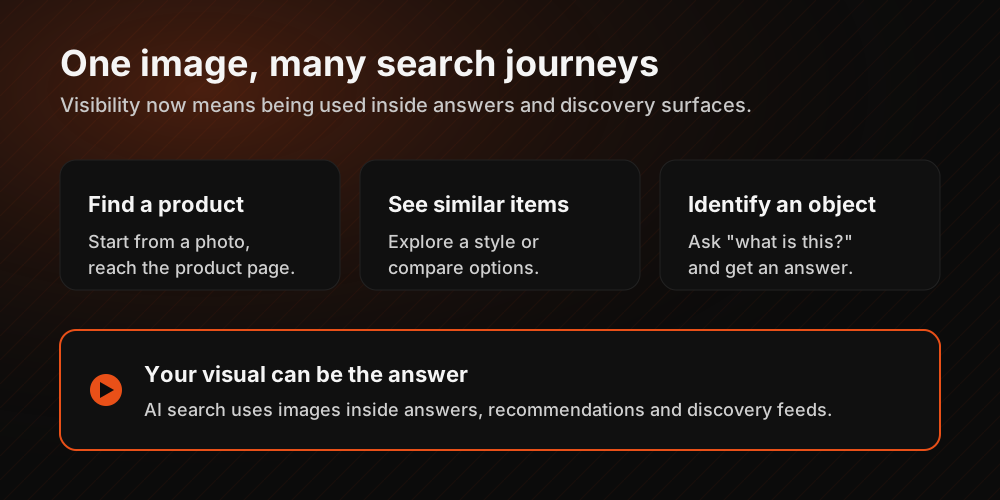
Visual search SEO in the age of AI Search is no longer only about optimising image files. It is becoming about managing the meaning of the image, its usage context, and its entity relationships. Users no longer search only by typing text. They may want to find a product from a photo, discover similar options, understand a style, or access information directly through a visual.
For this reason, images are no longer just supporting media assets on a page. They are becoming strong signals that influence discovery, interpretation, and decision-making. Google Images, Lens, Discover, and AI-powered shopping surfaces evaluate visual quality together with surrounding copy, product information, schema, page context, and brand signals.
For SEO, content, design, and e-commerce teams, the goal is no longer only to get images indexed. The real objective is to have visuals represented with the right meaning, in the right context, for the right query. A successful visual search strategy should combine technical accessibility, original visual production, visual entity management, page content, and performance measurement.
Why Visual Search SEO Matters in the Context of AI Search
In AI search experiences, visibility is measured not only by whether a page can be found, but also by how a visual is used in an answer, recommendation, or discovery surface. A user may want to find a product from an image, explore a design style, look for similar items, identify an object, or access information without typing.
For this reason, the image file name, alt text, surrounding content, connected page, product information, and structured data fields should work together to create meaning.
In traditional image SEO, file size, alt text, and image sitemaps were already important. In the age of AI Search, these elements are still necessary, but they are not enough on their own. What the image shows, where it is used, which product or entity it is connected to, and how it supports the user’s decision become more decisive.
For brands, this means visual visibility should now be managed through discovery, trust, product matching, and quality of representation, not only through traffic.
How Should Search Intent Be Interpreted for Visual Search SEO?
For visual search SEO, user intent should be interpreted not only at keyword level, but also according to the role the image plays in the search journey. In some cases, users want to identify a product. In others, they want to see similar options, understand a style, or move closer to a purchase decision through a visual cue.
Therefore, the image and the content around it should not only describe what is visible. They should also support different user scenarios.
For example, a user in the research stage needs to understand what the image shows, which category it belongs to, and which use case it represents. A user in the decision stage may want to understand the product’s colour, material, size, model, environment of use, and differences from similar alternatives.
When AI systems can extract these distinctions from the image, alt text, page copy, and structured data, they can position the brand more accurately in relevant visual queries. This turns the image from a purely aesthetic element into an active part of the search and decision-making process.
Entity and Trust Signals for Visual Search SEO
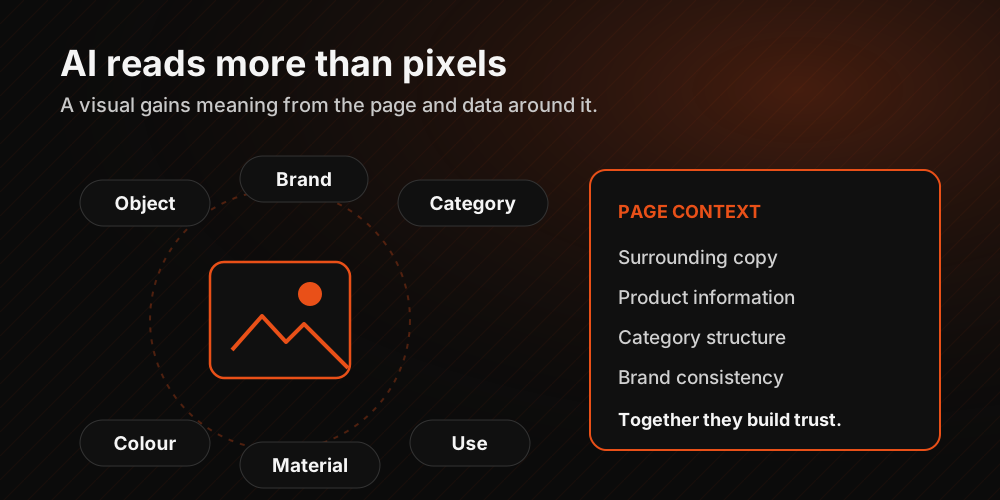
A visual entity gains meaning through the object, brand, category, location, colour, material, purpose of use, and page context. AI search systems do not interpret images only at pixel level. They evaluate visuals together with the connected page, surrounding copy, product information, category structure, and brand signals.
For this reason, what the image shows should be consistent with the page title, description, product name, category, and schema fields.
Trust signals become especially important in decision-oriented visual searches, especially in areas such as products, health, finance, locations, and shopping. Original visuals, clear product information, accurate alt text, up-to-date page content, user experience quality, image clarity, and source transparency can help AI systems evaluate the image as a stronger signal.
In contrast, generic stock images, weak surrounding copy, critical information embedded only inside the image, and inconsistent brand messaging can weaken visibility.
Technical Infrastructure and Data Layer for Visual Search SEO
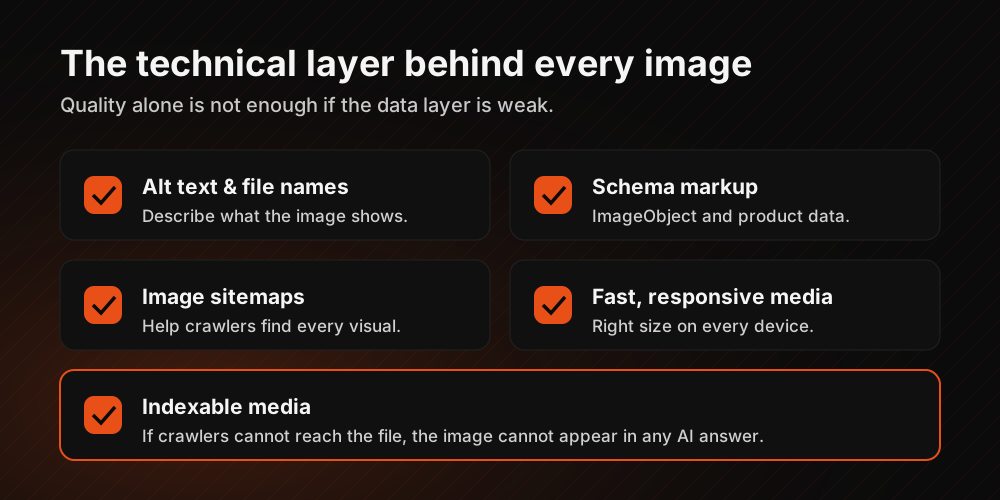
Alt text, file names, surrounding content, schema, image sitemaps, page performance, responsive images, and media indexability should be managed together. Technical infrastructure works in the background, but it directly affects visual search visibility.
Even when an image is high quality, visibility may be limited if Google or AI-powered search systems cannot access the image, the image URL cannot be indexed, page context is weak, or the media file slows down performance.
For this reason, technical checks should not be limited to reducing image size. The image should be connected to the right page, alt text should be descriptive, file names should be meaningful, structured data should support the visual context, responsive image logic should be set up correctly, and the image should be included in an image sitemap where relevant.
Critical information inside an image should also be explained in the page copy, not only embedded visually. The aim is to make each image accessible, meaningful, and reliable for both users and search systems.
Content Format and Page Structure for Visual Search SEO
Product usage images, infographics, step-by-step visuals, comparison visuals, and original data visuals can create stronger signals for AI Search. Since AI-powered search systems interpret images together with other information on the page, it matters where the visual appears, how it is described, and which decision-making question it supports.
Images should therefore not be used only for decoration. They should be positioned as elements that strengthen the meaning of the content.
Usage images on product pages, option-based visuals on category pages, step-by-step visuals in guide content, and original charts or graphics in blog content can all create stronger visual signals.
Every image should answer the question: “What does this visual help the user understand faster?” When visuals are used this way, they improve user experience and help AI systems understand the object, product, process, or context more accurately.
Implementation Priorities Table for Visual Search SEO
The priority table below can be used to make visual search SEO work more operational. The aim is not only to list tasks, but also to clarify how each action contributes to AI Search visibility and visual discovery performance.
Teams can use this table as a framework for content briefs, technical checklists, product page optimisation, or monthly visibility reports.
For brands managing many pages, products, or content assets, visual optimisation can quickly lose quality and consistency if it is not planned. For this reason, visual types, usage areas, technical standards, alt text rules, and performance metrics should be defined from the beginning.
This turns visual SEO from isolated file edits into a continuously managed AI visibility system.
| Focus Area | How to Apply It | AI Search Contribution |
|---|---|---|
| Meaning layer | Explain what the image shows and in which context through the page copy. | Helps AI systems interpret the object and context correctly. |
| Originality | Use product, team, location, process, or data-based original visuals instead of stock images. | Increases source value and brand differentiation. |
| Technical access | Use responsive images, image sitemaps, and indexable media URLs. | Improves the likelihood of image discovery. |
| Conversion context | Connect visuals with PDPs, category pages, guides, or comparison content. | Supports the user’s decision-making process. |
How Should Visual Search SEO Performance Be Measured?
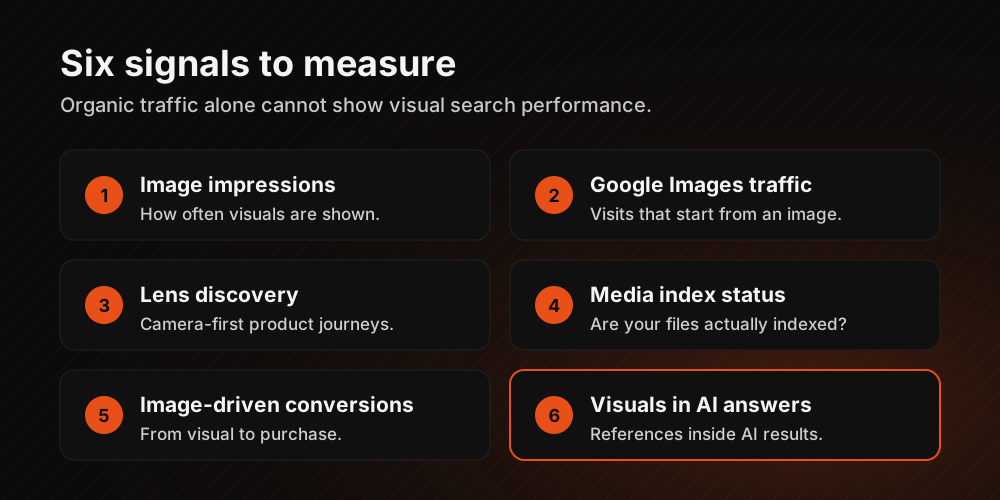
Visual search SEO performance should be measured through image impressions, Google Images traffic, Lens-driven discovery, media index status, image-driven conversions, and visual references in AI answers.
Traditional organic traffic is not enough on its own because users may see an image in Google Images, Lens, Discover, or AI-powered shopping surfaces and form an opinion about the brand or product without clicking through to the website.
For this reason, measurement should evaluate both visibility and quality of representation. Image search performance in Search Console, image-driven behaviour in analytics data, media URL index status, and visual interactions on critical pages should be monitored regularly.
For e-commerce websites, the impact of product images on clicks, add-to-cart actions, and conversions should also be analysed. The healthiest approach is to report traditional image SEO metrics together with AI visibility indicators.
Risks and Quality Control Points for Visual Search SEO
Generic stock images, weak surrounding copy, critical information embedded only inside images, and technically inaccessible media files can reduce visibility. These risks often do not come from a single image alone, but from broader gaps in how a brand manages visual assets.
For example, product visuals may be high quality while alt text remains weak, infographics may contain valuable information without a text equivalent, or images may not be connected to the right pages, making it difficult for search systems to understand the context.
Because AI systems interpret visuals, text, and page context together, the quality control process should be multi-layered. File name, alt text, image size, format, mobile compatibility, indexability, surrounding copy, schema alignment, and on-page placement should be reviewed regularly.
Teams should also make sure that images are used to provide information, comparison, or decision support, not only for visual decoration. This strengthens visual visibility and helps the brand be represented more accurately across AI-powered search surfaces.
An Actionable Roadmap for Visual Search SEO
First, the visual inventory should be classified. Then original image sets should be added to critical pages, and visual search performance should be included in the content refresh plan.
The visual inventory should be grouped into categories such as product images, category images, infographics, team and location photos, use case visuals, comparison visuals, and data-based visuals. This classification makes it easier to identify which visuals are purely decorative and which ones are strategic for search and decision-making.
In the second stage, original visual needs should be defined for pages with high commercial or strategic value. In the third stage, alt text, file names, surrounding copy, schema, image sitemaps, and responsive image usage should be improved from a technical perspective.
In the fourth stage, visual references across Google Images, Lens, Discover, AI-powered shopping surfaces, and AI answers should be monitored regularly. This kind of roadmap turns visual search SEO from one-time image optimisation into a sustainable AI Search visibility strategy.
Would you like to work with us ?
Share your goals, we'll come back with a custom growth plan within one business day. A strategy lead will reach out personally.
Get in touch