How Return and Trust Signals Affect Visibility in AI Shopping
Return policy and trust signals affect AI assistants’ decision to recommend a product. We cover how to build these signals for GEO in detail.

Return and trust signals are elements, return policy, warranty, secure payment and transparent terms: that show a purchase is risk-free. Before recommending a product, AI shopping assistants look not only at the product’s features but also at how safe buying it is. Easy returns and clear trust signals provide the evidence AI needs to recommend a product confidently. This article covers in detail the effect of return and trust signals on GEO and AI shopping visibility.
Why Trust Signals Are Decisive in AI Recommendations
Trust signals are decisive in AI recommendations because when recommending a product, AI feels responsible for giving the user a good experience. An assistant avoids recommending a product that would lead to a bad shopping experience (difficult returns, hidden costs, insecure payment); because this undermines the credibility of both the user and the assistant. Easy returns, warranty and transparent terms are evidence that buying a product is low-risk and directly affect AI’s recommendation decision.
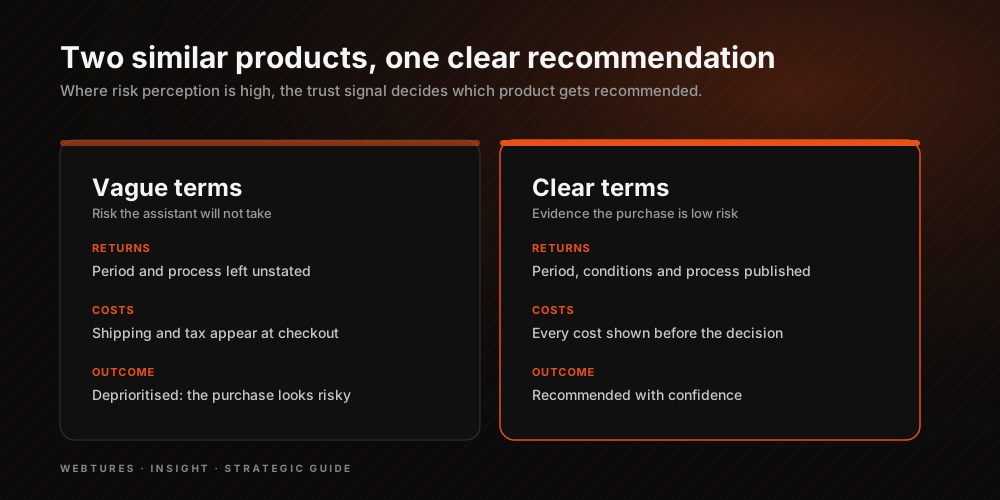
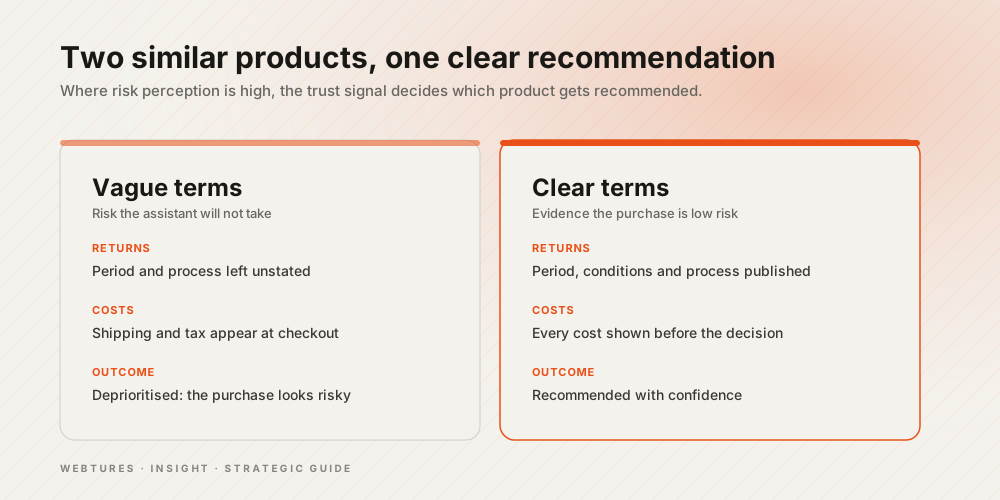
This effect stems from the fact that shopping is a trust relationship beyond product features. Between two similar products, if one offers a clear return policy and strong trust signals while the other is vague on this, AI tends to prioritise the one with strong trust signals. This is especially clear in categories where users’ risk perception is high (electronics, fashion, high-priced products). Trust signals make a product not only attractive but also safe to buy.
Which Return and Trust Signals Reach AI
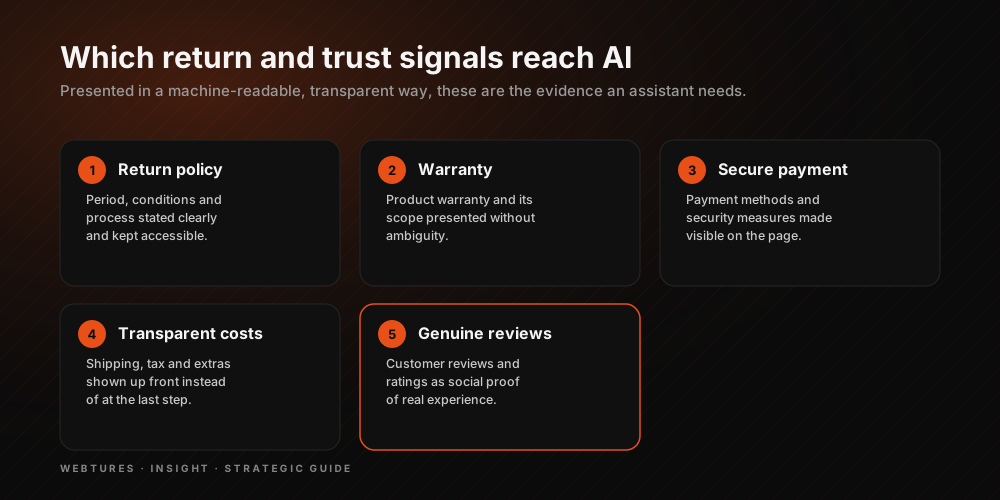
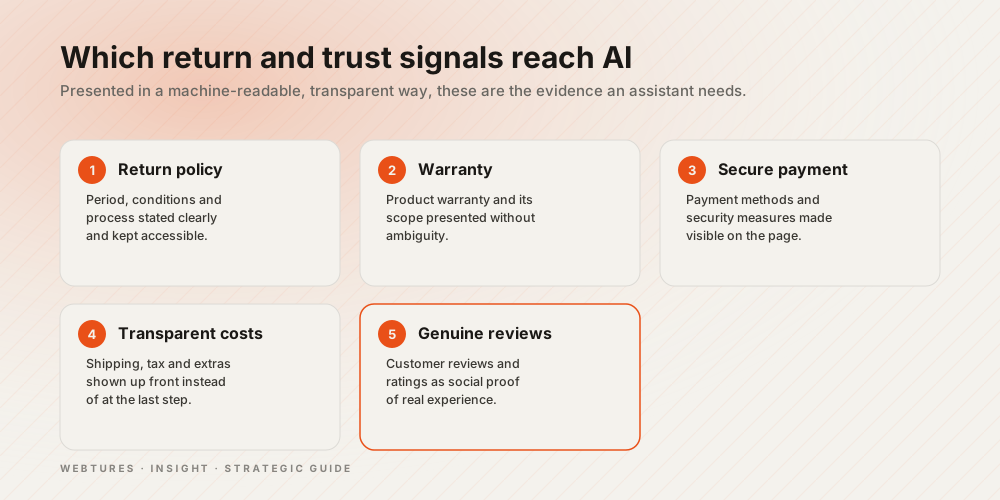
Return and trust signals cover various elements that can be conveyed to both the user and AI. Presenting them in a machine-readable, transparent way lets the signal reach AI:
- Clear return policy: State the return period, conditions and process clearly and accessibly.
- Warranty information: Present the product warranty and its scope clearly.
- Secure payment signals: Make secure payment methods and security measures visible.
- Transparent costs: Show shipping, tax and additional costs clearly up front, without hiding them.
- Genuine reviews: Offer social proof of trust with customer reviews and ratings.
The common aim of these signals is to prove the risk-freeness of the purchase to both the user and AI. Not hiding return and cost information is especially critical; transparent terms produce trust, while vague or hidden costs are a risk sign for both user and AI. Presenting this information clearly on product and category pages strengthens the brand’s credibility holistically.
Making Trust Signals Part of the Product Experience
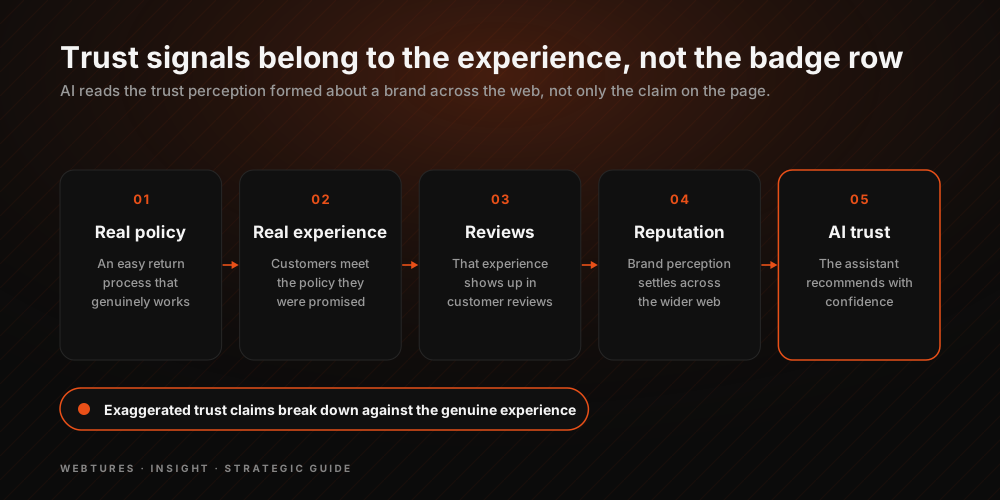
Trust signals should not be mere badges added to the product page; they should reflect a genuine customer experience. When a brand genuinely has an easy return process, an honest warranty policy and a transparent cost structure, this experience reflects in both customer reviews and the brand’s overall reputation. AI assesses not only the trust stated on the page but also the trust perception formed about the brand across the web; so genuine experience produces more lasting trust than a marked-up signal.
This approach takes trust signals beyond marketing decoration and makes them part of how the brand operates. Fake or exaggerated trust claims cause harm in the long run when they contradict the genuine experience; whereas genuine, consistent trust signals strengthen both customer satisfaction and AI’s trust in the brand together. This coherence positions the brand as an option recommended with confidence in AI shopping experiences.
Connecting a Trust Signal Strategy to a Holistic GEO Program
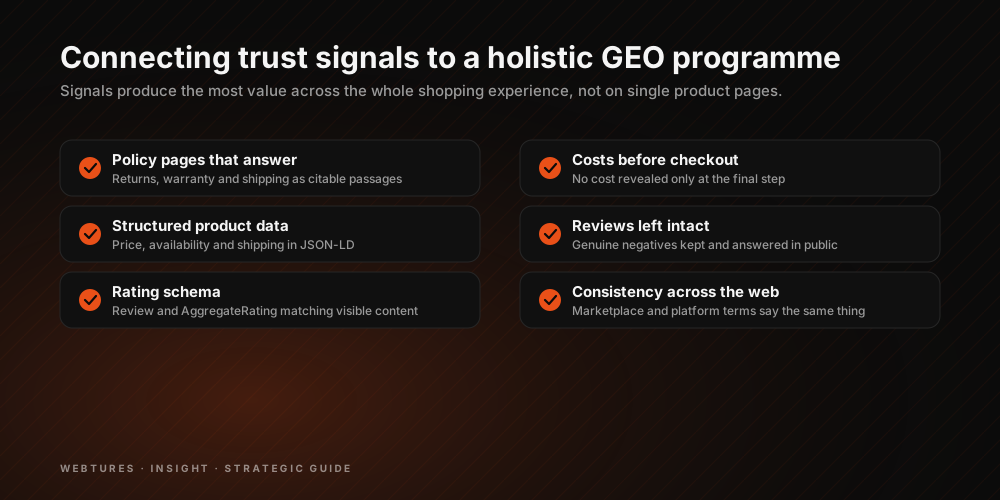
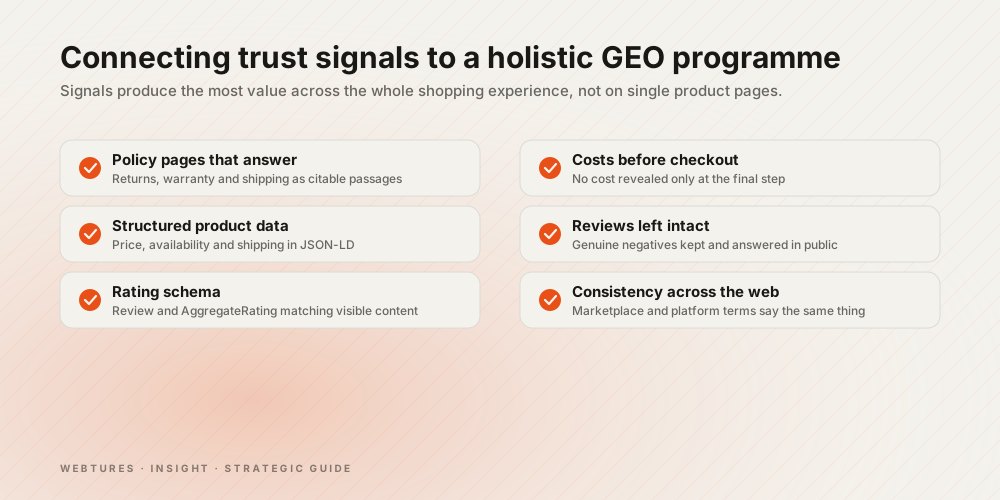
Return and trust signals produce the most value through a holistic GEO program covering the brand’s entire shopping experience, not individual product pages. When a transparent return policy, clear warranty information and genuine reviews are presented consistently across the catalog, the brand gains holistic credibility in AI shopping experiences. This concerns the trust perception of the brand’s entire product presence, not a single product.
Webtures handles trust and return signals as a layer of product optimisation within its GEO consulting service. The program first measures, through an AI Visibility Audit, with what trust perception the brand’s products are represented in AI shopping queries and which trust signals competitors stand out with; then it ensures return policy, warranty and cost information are presented clearly, transparently and machine-readably on product and category pages. Webtures also monitors the brand’s trust perception across the web to ensure marked-up signals are consistent with the genuine experience and continuously tracks how products are positioned in terms of trust in shopping recommendations across ChatGPT, Perplexity and Google AI Overviews. This way return and trust signals stop being superficial badges and become a measurable strategy that makes the brand stand out as an option recommended with confidence.
Frequently Asked Questions
Does showing the return policy clearly on the page affect sales?
Showing a clear return policy usually increases trust and thus the likelihood of purchase. Users and AI assistants tend to prefer a product whose conditions are clear and fair over one where the return process is vague. Hiding the return policy may seem to deter some returns in the short run, but in the long run it undermines trust and creates a risk sign for both user and AI. Transparency is the foundation of sustainable trust.
Can a small brand produce strong trust signals?
Yes, trust signals depend not on the brand’s size but on the honesty and transparency of its operation. A small brand can produce strong trust signals with a clear return policy, an honest cost structure, secure payment and genuine customer reviews. In fact, trust signals are even more critical for small brands; since they have not yet built the established reputation large brands have, transparent and consistent trust elements are the most effective way to prove their credibility.