How Should You Analyze Google AI Overview Results?
Measure your presence in Google AI Overviews with visibility, position, source and sentiment analysis, and see how tools like Brantial systematize it.

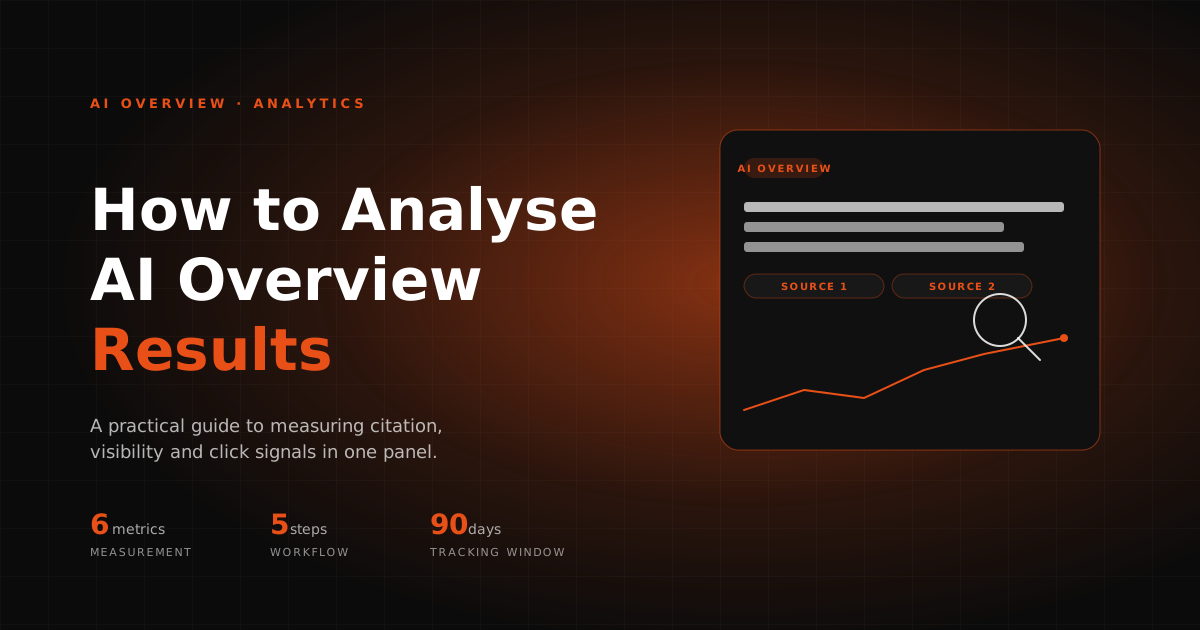
AI Overview, Google's AI-powered results layer, has fundamentally changed how content is evaluated, moving well beyond classic ranking logic. Asking "what position am I in?" is no longer enough. The critical question is now: "Do I appear in AI answers?"
That is why the analysis process must also move beyond classic visibility metrics and become more layered, contextual and GEO-focused.
What is AI Overview?
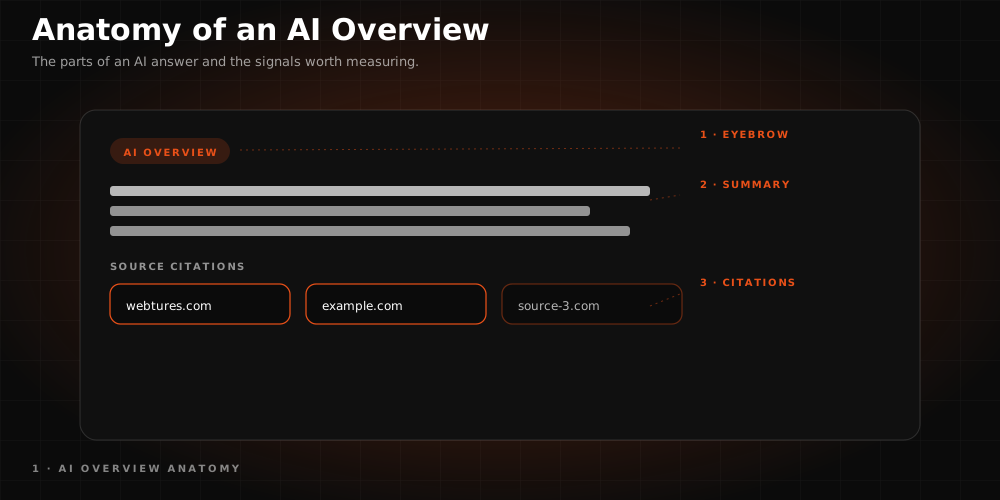
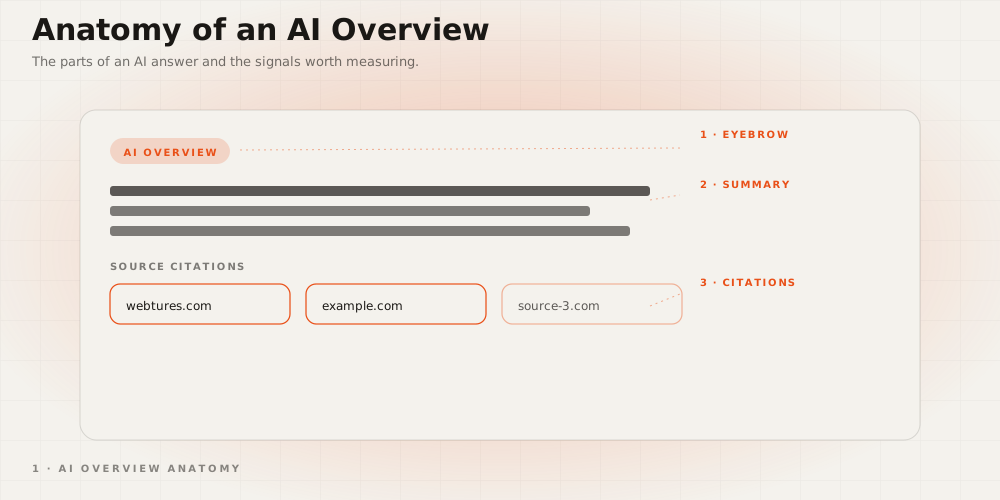
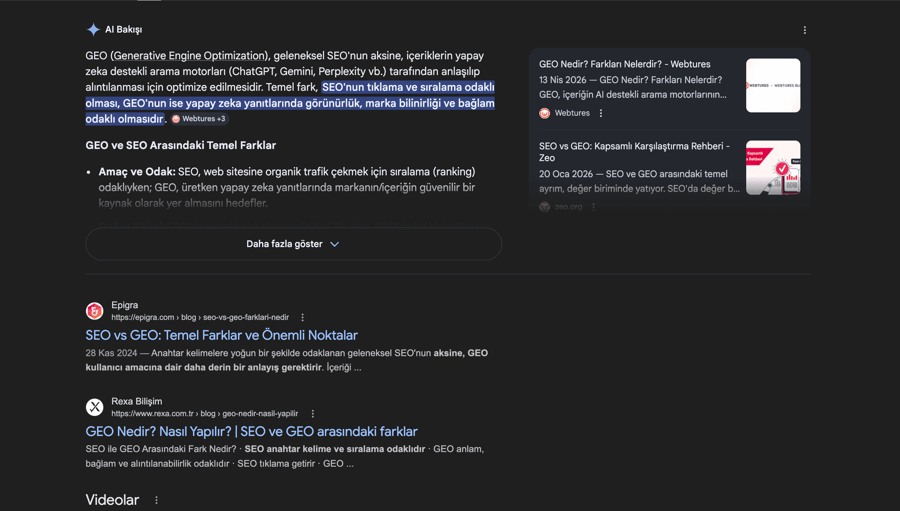
AI Overview, one of the most significant innovations reshaping Google's search experience, is an AI layer that serves summarized and synthesized answers to user queries instead of classic link lists. The system combines information drawn from different sources into a single answer, shifting the search experience from finding results to receiving answers.
This change reshapes far more than the user experience; it is redrawing the entire digital ecosystem, from content production and GEO strategy to brand visibility and source citability.
How does AI Overview work?
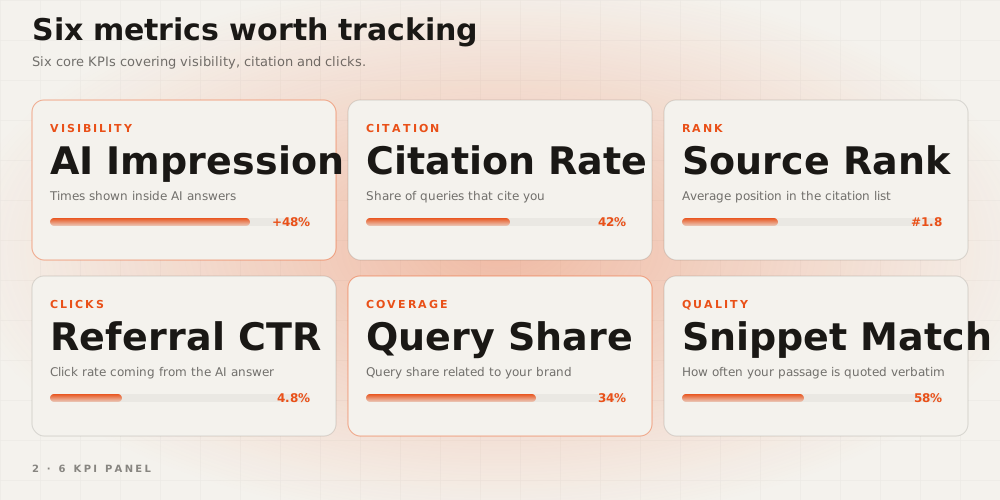
AI Overview analyzes the user query, gathers the most relevant information from a range of sources and assembles it into a coherent whole. Throughout this process it focuses not just on keyword matching but on semantic relationships, user intent, source credibility and answerability.
Simplified, the working logic looks like this:
- The user enters a query or prompt.
- The system analyzes the intent and context behind it.
- Content is selected from different web sources.
- That content is summarized into a single answer.
- The sources referenced inside the answer are displayed.
This structure lets users reach the information they need without visiting multiple sites. For brands, it makes producing content no longer sufficient on its own; content must now be understandable, verifiable and selectable as a source by AI systems.
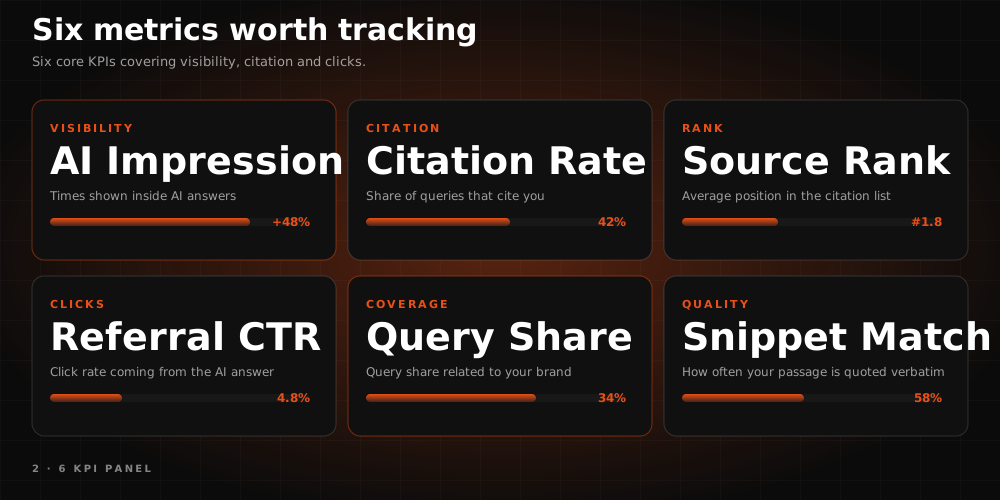
1. Visibility analysis: are you there or not?
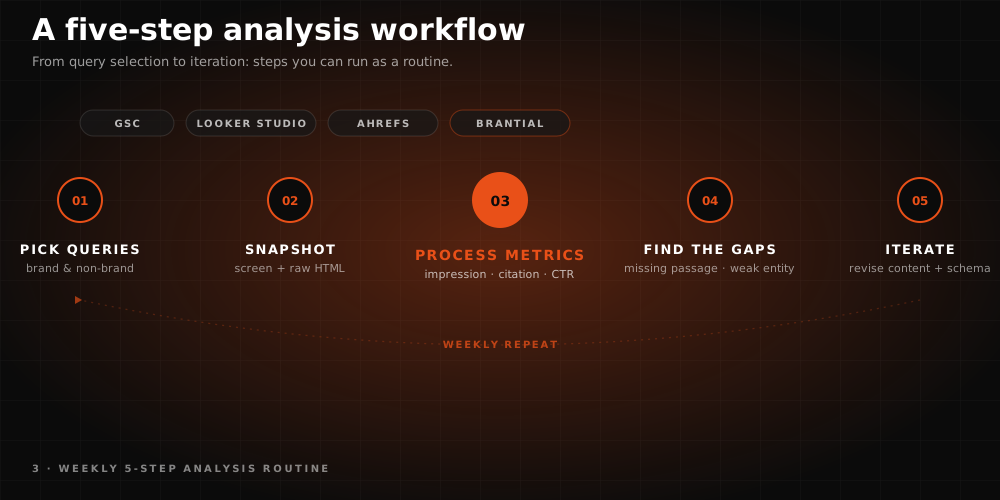
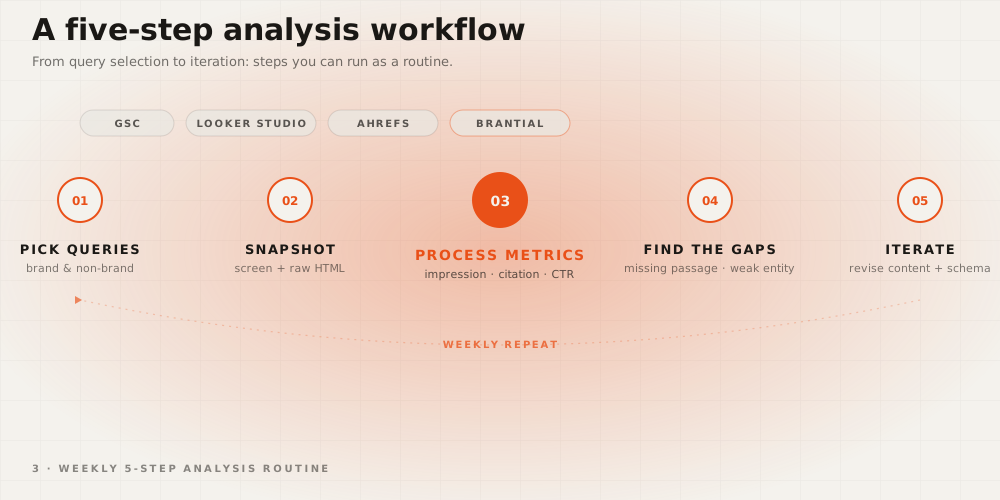
The first and most critical step in AI Overview analysis is measuring visibility.
This metric answers one question: in how many of your target queries do you appear inside the AI Overview?
When running the analysis:
- Build a defined set of prompts.
- Check whether the brand appears inside the AI Overview for each of those queries.
- Calculate a percentage visibility score.
Example:
- If you appear in 6 out of 20 queries, your visibility rate is 30 percent.
This metric differs from the classic impression model, because what it measures is not the chance of being shown but the state of existing as a source or reference inside the AI answer.
2. Position analysis: where do you appear?
Appearing inside an AI Overview is not enough on its own. The second step is position analysis.
The key points to examine are these:
- Do you appear at the top of the AI answer?
- Are you mentioned in the middle section?
- Do you only show up in the source list?
- Is the brand name cited directly, or is only the URL referenced?
Being the first reference versus appearing as a bottom-of-list source makes a serious difference in traffic, trust and brand perception. AI answers are mostly read top to bottom, and user decisions are shaped by the first recommendations.
That is why position analysis should examine the distribution, not just an average.
The wrong approach:
- "My average position is 2."
The right approach:
- I appear as the first reference in 3 queries.
- I am mentioned in the middle section in 2 queries.
- I only appear in the source list in 5 queries.
3. Source analysis: where does the AI find you?
One of the most critical yet least analyzed layers of AI Overview is source analysis.
When generating an answer, Google references specific sites. These sources can include:
- Industry blogs
- News sites
- Forums and community platforms
- Authoritative content platforms
- Brand websites
- Third-party review and comparison pages
The questions to ask during the analysis:
- Which domains keep appearing inside AI Overviews?
- On which sources are competitors becoming visible?
- Is my brand present on those sources?
- Through which sources do AI systems define the brand?
This analysis differs from classic link analysis. The goal here is not merely to earn links, but to be present with the right context on the data sources AI systems trust.
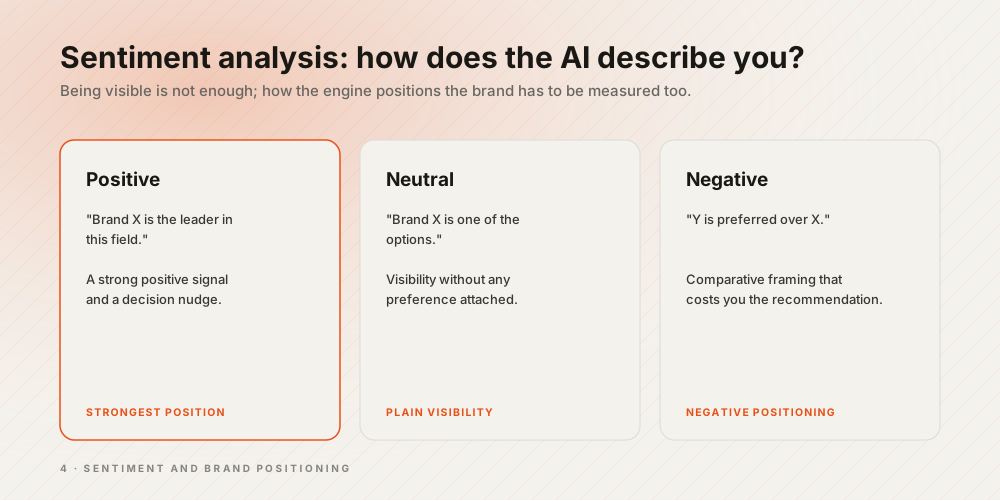
4. Sentiment analysis: how does the AI describe you?
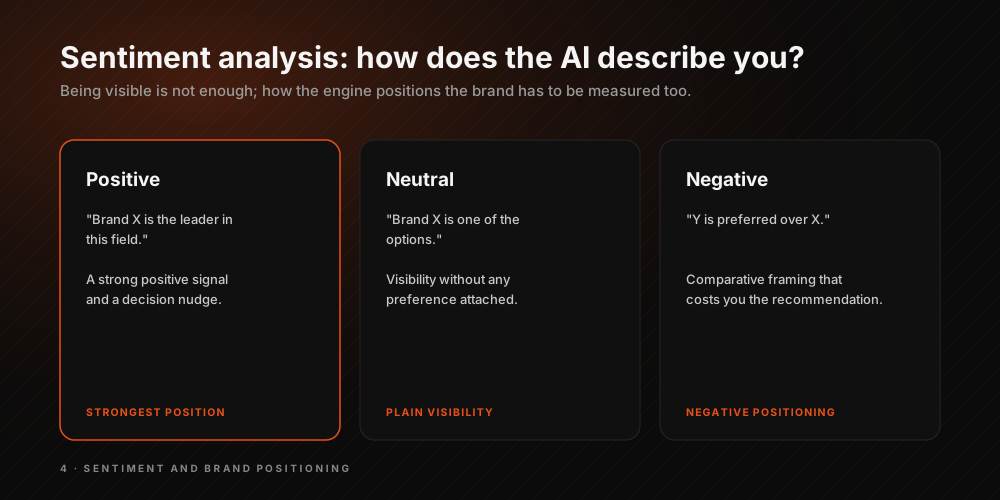
Being visible is not enough on its own. How AI systems position the brand must also be measured.
This is where sentiment analysis comes in:
- Is the brand mentioned positively?
- Is the framing neutral?
- Is it described in comparison with competitors?
- Which attributes is the brand associated with?
Example:
- "Brand X is the leader in this field." produces a strong positive signal.
- "Brand X is one of the options." provides neutral visibility.
- "Y is preferred over X." creates negative positioning.
This analysis is especially critical for brand positioning, because AI often gives the user not just information but a decision recommendation.
5. Running query-level analysis
One of the biggest mistakes in AI Overview analysis is generalizing.
The right approach is to analyze each query and prompt intent separately.
The reasons:
- The same brand performs differently across different queries.
- AI answers are intent-based.
- Informational, commercial and local queries can draw on different source sets.
- Brand perception can weigh more in comparison-driven queries, while source trust dominates in information-driven ones.
The analysis can therefore be split into these categories:
- Informational queries
- Commercial research queries
- Comparison queries
- Local queries
- Problem-and-solution prompts
Evaluate each category on its own. That way it becomes much clearer where the brand is strong by query type, and where it falls short by intent.
AI Overview analysis is a core part of GEO measurement
Real AI visibility performance only emerges when visibility, position, source, sentiment and query-level analysis are read together.
This is exactly where solutions like Brantial AI systematize the process, because running AI Overview analysis manually is both time-consuming and unsustainable.
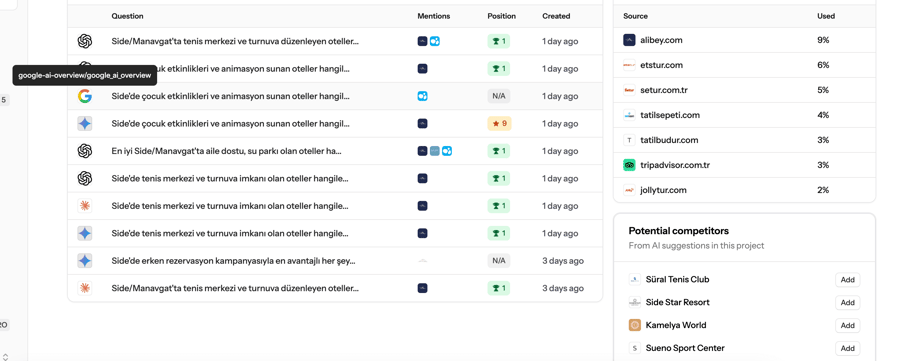
With the framework that AI visibility solutions like Brantial provide, you can:
- Track your visibility rate precisely across your defined query set.
- Analyze your position inside the AI answer in detail for every query.
- See directly which sources the AI does, or does not, reference you through.
- Evaluate how your brand is positioned in AI answers on a sentiment basis.
- Identify which prompt sets you gain visibility in, and which intents you are missing.
One of the most critical differences is that all of these metrics are presented not in isolation, but in a structure that can be read together. That makes it possible to produce actionable insights instead of merely looking at data.