How to Implement Speakable Schema for Voice AI Assistants
Speakable schema flags the sections of content meant to be read aloud by AI assistants. We cover implementation, limits and its real GEO value in detail.

How to Implement Speakable Schema for Voice AI Assistants?
Speakable schema is schema.org markup that flags the sections of a page best suited to be read aloud by voice assistants. Voice search and AI search assistants, when producing a spoken answer, want to read out not the whole page but only the most concise, informative passage; speakable markup points to exactly that passage. Parts of the text specified via CSS selector or XPath tell the assistant, “these are the sentences to read.” This article covers in detail how to implement speakable schema, its current limits and its real value for GEO.
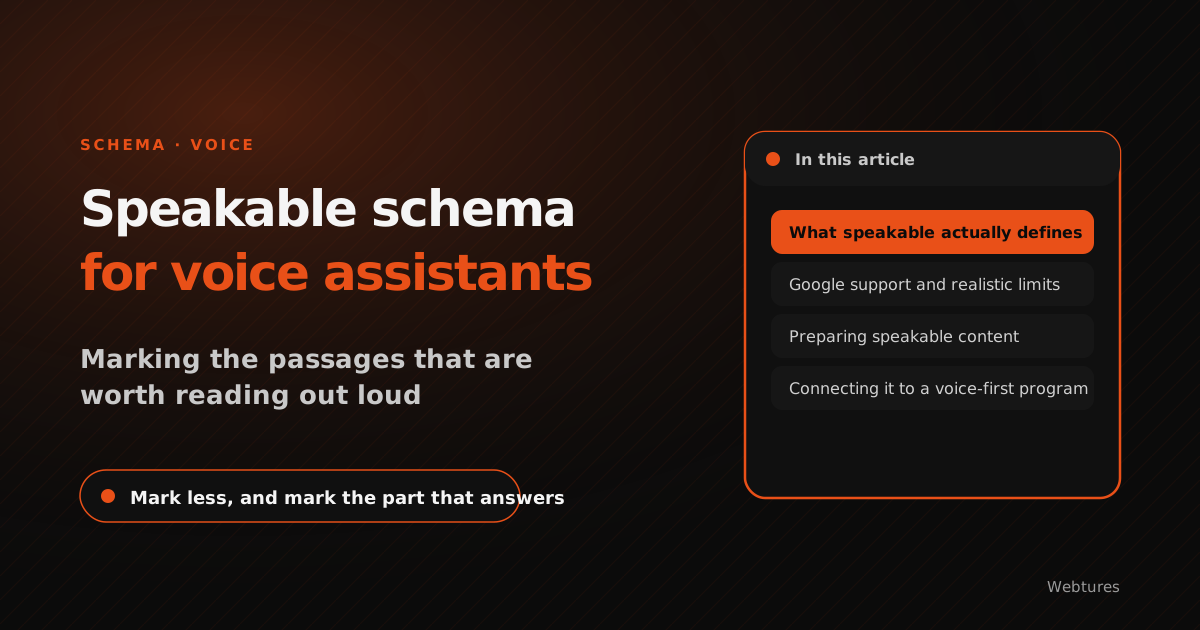
What Exactly Speakable Schema Defines
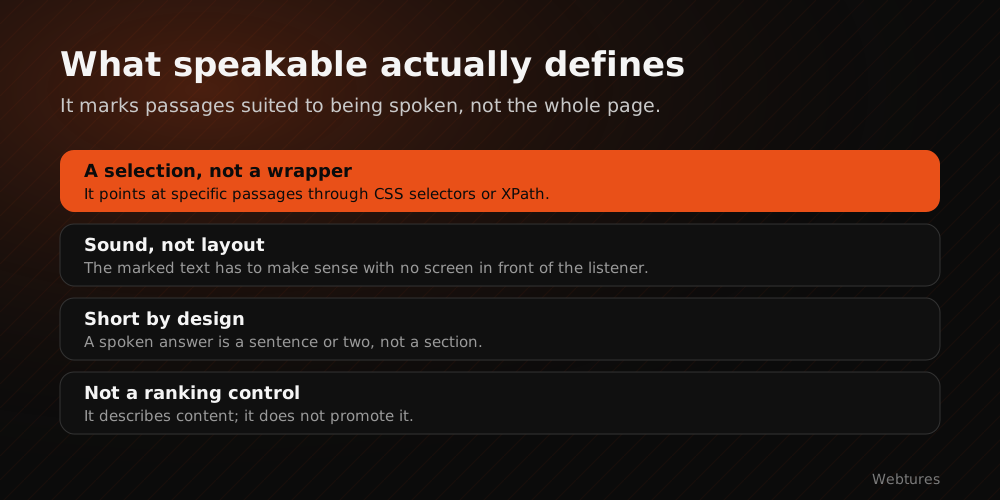
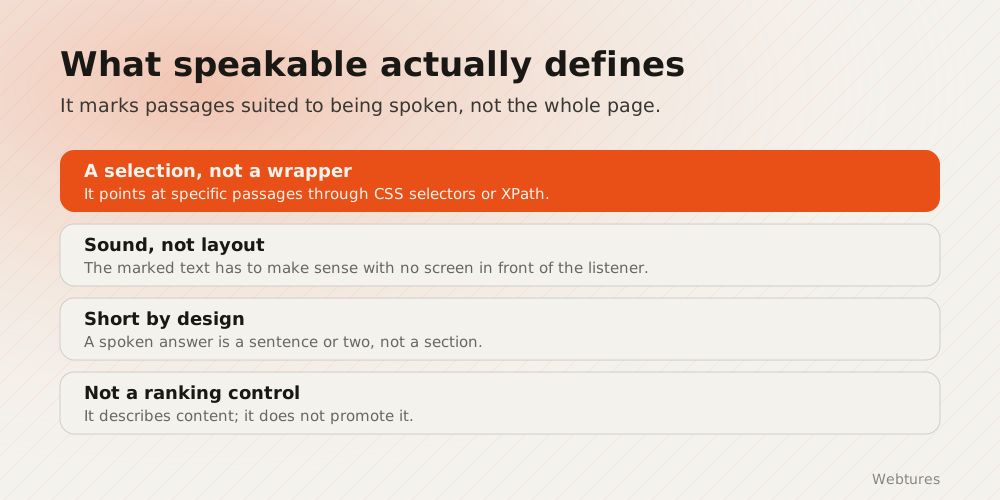
Speakable schema is a property within WebPage or Article markup that indicates the parts of a page suitable for being read aloud. The markup works in two ways: with cssSelector you can target a specific HTML element on the page (for example a summary paragraph or the first sentence under a heading), or with xpath you can do the same with a more precise path expression. This lets the assistant read the marked section directly instead of scanning the whole page. This approach matches the nature of spoken answers: when a user expects a reply from a voice assistant, they want to hear a clear summary readable in ten to fifteen seconds, not a long text.
The most critical detail of this type is that the marked section must be meaningful and context-independent on its own. A sentence read aloud lacks the visual context it has on screen; it must be understandable alone, without the heading, image or surrounding paragraphs. So the text you mark as speakable should consist of self-contained sentences that summarise a single clear idea with no pronoun ambiguity. In a news article, for instance, the speakable section is usually the opening paragraph that captures the essence, or the summary sentence under the headline.
Google’s Speakable Support and Realistic Limits
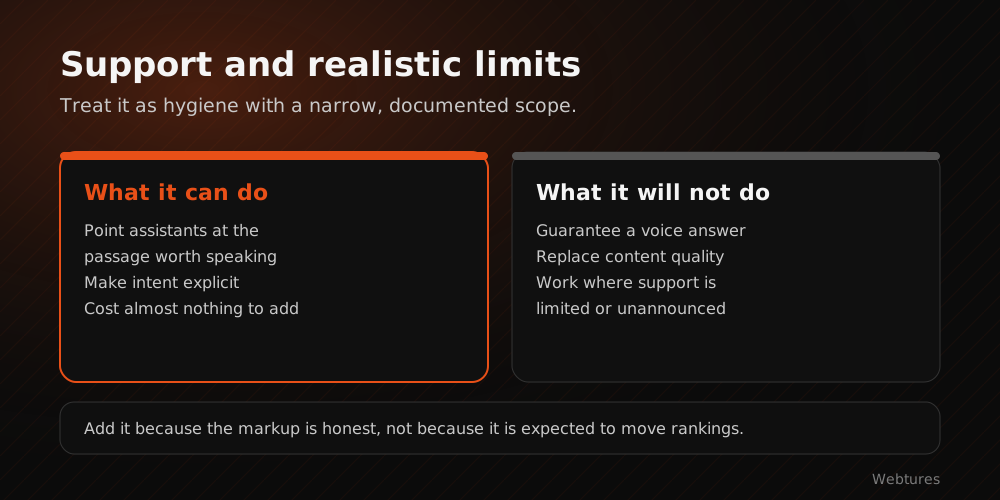
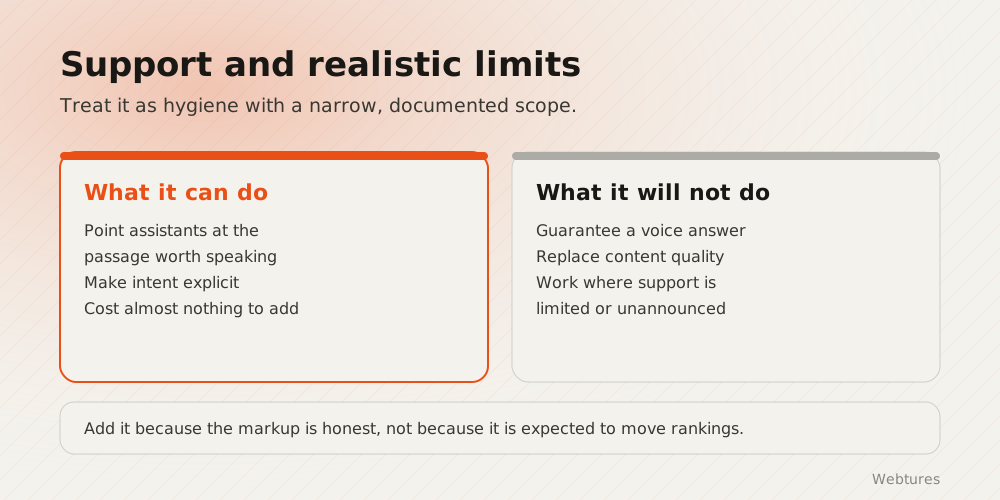
When implementing speakable markup, the most important thing is to manage expectations correctly. Google long positioned the speakable feature as a beta for news publishers and kept support limited to certain regions and to Google Assistant. So speakable is not a mature markup that guarantees a rich result on every site and page; it is more of an evolving part of the voice ecosystem. Ignoring this reality and adding speakable to every page can create markup clutter without any concrete gain.
Even so, speakable does not lose its value for GEO, because the real benefit comes not only from Google’s official support but from forcing you to think of content as ready for voice and AI answers. Deciding which sentence of a page could stand on its own really means defining that page’s strongest “answer block.” This discipline prepares content for the growing channels of ChatGPT voice mode, Gemini Live and voice search. The right approach, then, is to treat speakable not as a rich-result tool but as the technical expression of voice-first content thinking.
The Approach to Follow When Preparing Speakable Content
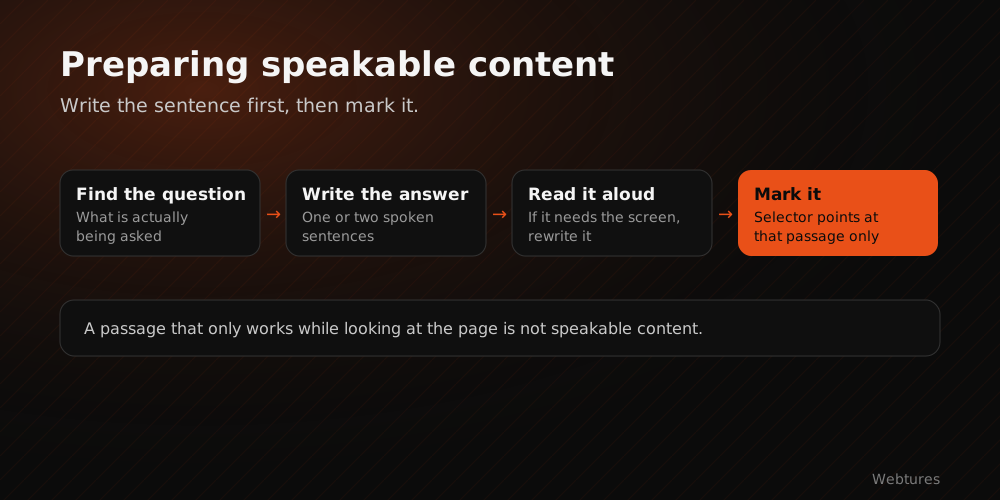
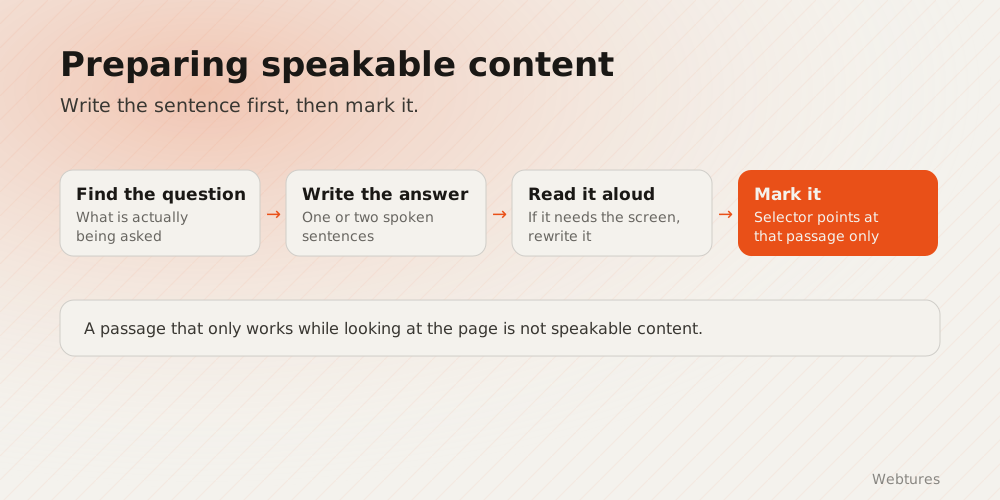
For speakable markup to work, the visible content must first be designed to be read aloud. The steps to follow in practice are more about content structure than markup:
- Identify the answer block: Create a section on the page that summarises the answer to the main question in two or three sentences; speakable will target this.
- Write independent sentences: The marked text must be understandable without visual context; use the entity’s name instead of a pronoun.
- Set stable selectors: The element targeted by cssSelector or xpath should be marked so it stays in place even if the design changes.
- Keep it short: The ideal length for reading aloud is about 20-30 seconds; avoid making long paragraphs speakable.
- Validate: Check the markup’s validity with structured data testing tools and confirm the selector captures the right text.
What these steps share is treating speakable not as a tag added afterwards but as part of content structuring. A page with a clearly defined answer block is more easily cited by AI engines even without speakable; the markup simply speeds up the process by explicitly pointing this ready block to voice assistants. Markup matching the visible content exactly is indispensable for both validity and trust.
Connecting Speakable to a Voice-First GEO Program
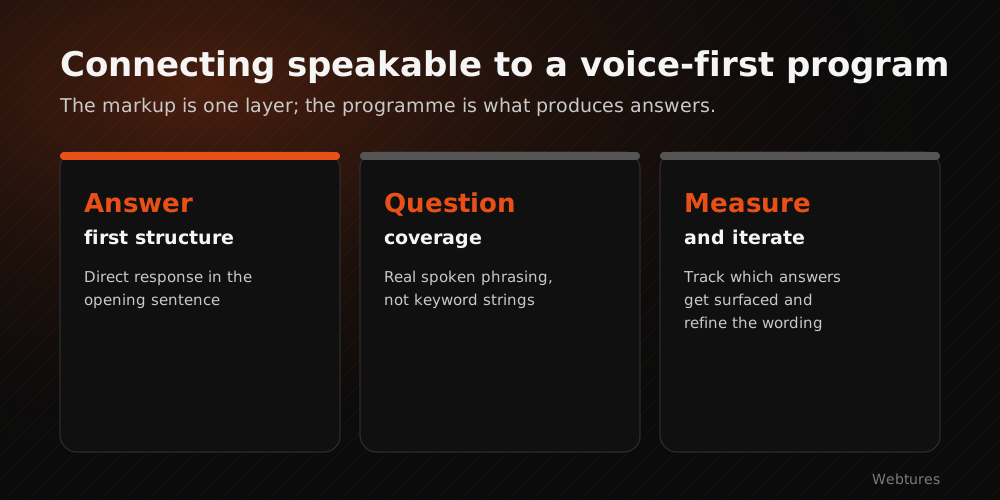
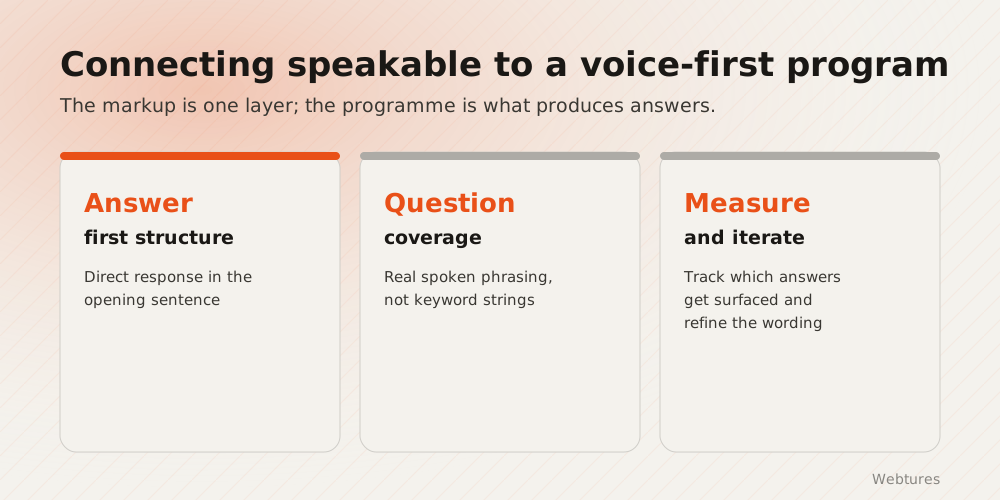
Speakable schema is not a standalone win but part of a broader GEO program built on readiness for voice and AI answers. For voice assistants to recommend a brand, it is not enough for content to be marked up; the brand must be recognised as a trusted source on the topic, answer blocks must be consistently structured, and this visibility must be continuously monitored. Speakable is only a technical link in this chain and shows its real impact when combined with the content and authority layers.
Webtures handles this whole within its GEO consulting service. The program first measures, through an AI Visibility Audit, which questions the brand appears for across surfaces like ChatGPT, Google AI Overviews, Gemini and Perplexity; then, in the LLM Citation Optimisation phase, it restructures pages with answer-first openers, clean definition blocks and summaries suited to being read aloud. Speakable markup is then selectively applied at this stage on pages that will genuinely add value for voice assistants. This way your brand does not just add a tag; it earns consistent, measurable visibility across voice and generative search channels, tracked through Webtures’ continuous monitoring and reporting loop.
Frequently Asked Questions
If I add speakable schema, will I definitely appear in voice assistants
No, speakable markup alone does not guarantee appearing in voice assistants. Since Google’s support is limited to certain content types and regions, the markup is more a signal that the content is ready to be read aloud. The real determinant is that the page contains a self-contained answer block and that the brand is recognised as a trusted source on the topic. Speakable makes this readiness visible but does not replace authority.
Which content types are most suitable for speakable
Content that can be told with a short, clear summary and is based on current, factual information is the most suitable. News summaries, definition sentences, answers to frequently asked questions and the intro summaries of guides fit reading aloud naturally. Complex content that depends on visual context or requires long narration is not suitable for speakable; rather than forcing markup on such content, you should first create an independent summary block within the page.