How to Prepare Product Data for ChatGPT Search
Learn how to prepare product data for ChatGPT Search so your products can be better understood, compared, and recommended in AI answers.


Preparing product data for ChatGPT Search helps products be accurately understood, compared, and confidently recommended by the model in shopping-intent answers. This work goes beyond traditional product page optimisation because users no longer interact only with lists of links. They now encounter interpreted, source-backed product answers that are structured to support decision-making. In the ChatGPT shopping experience, product results may be shaped by signals such as structured metadata, pricing, stock status, descriptions, reviews, third-party content, and product feed access. For e-commerce, marketplace, and product marketing teams, the goal is therefore not only to be indexed or generate traffic. The real objective is to have the product represented with the right attributes, in the right context, for the right query. A strong approach brings together product identity, technical data structure, page content, user intent, and performance measurement. From this perspective, product data management becomes less about a one-time technical update and more about continuously managing AI visibility.
Product Data for ChatGPT Search Why Is It Important in the Context of AI Search?
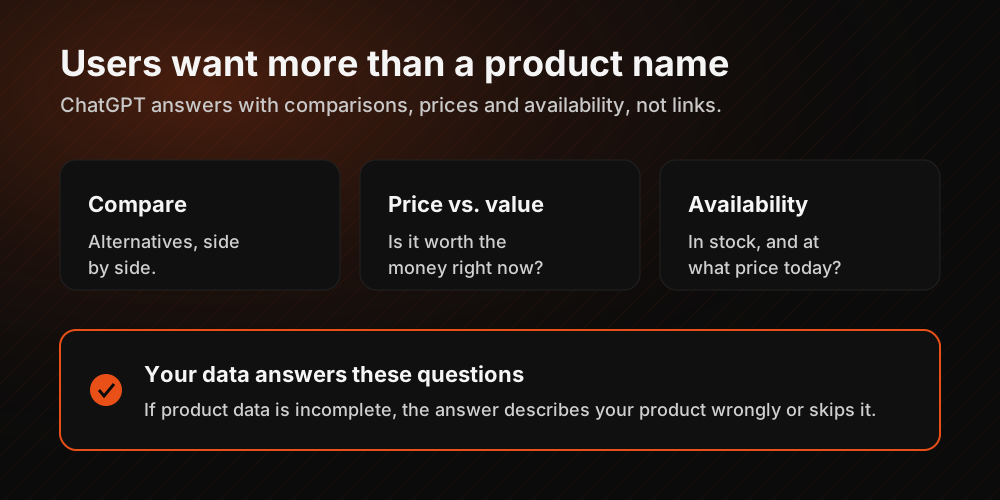
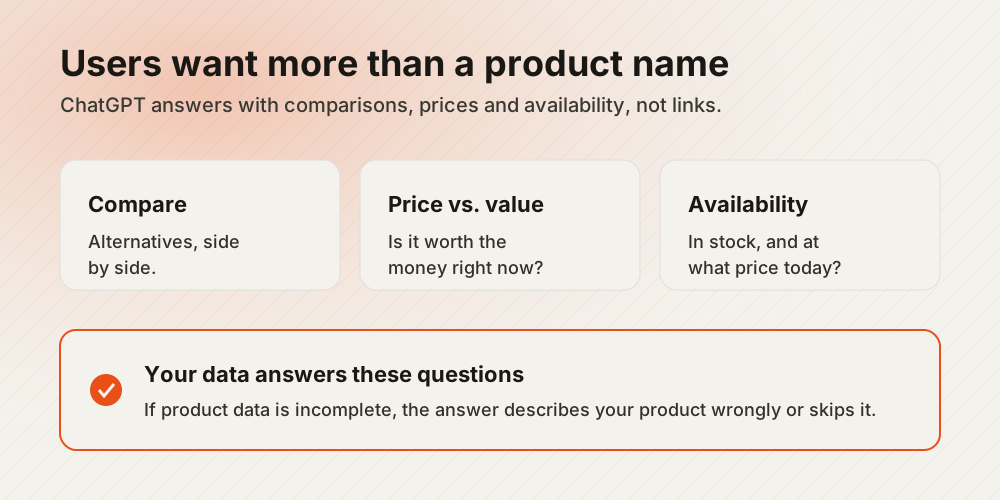
In AI search experiences, visibility is measured not only by whether a product page can be found, but also by how the product is described within the answer. When users search for a product, they often want more than the product name. They want to compare alternatives, understand the balance between price and features, evaluate reviews, and accelerate their purchase decision. For this reason, product titles, descriptions, technical specifications, variant details, and structured data fields should be clear enough for the model to interpret accurately.
In traditional SEO, a strong product page may be enough to gain rankings for certain queries. In AI search, however, the clarity and usefulness of the product information become more decisive. Missing feature fields, inconsistent pricing, unclear variant descriptions, or duplicated product copy can cause the model to misunderstand the product. For brands, this means product visibility must now be managed through data accuracy, context, trust, and recommendation quality, not only through rankings.
How Should Search Intent Be Interpreted for Product Data in ChatGPT Search?
When preparing product data for ChatGPT Search, the first step is to interpret user intent not only at keyword level, but also according to the user’s stage in the purchase journey. In some queries, users are looking for general product information. In others, they want to compare similar products or focus on decision-making details such as price, stock, delivery, compatibility, or use case. Therefore, product content should not consist only of a general description. It should include information that supports different decision scenarios.
For example, a user in the research stage may need to understand what the product does, which need it solves, and which category it belongs to. A user in the decision stage may need technical specifications, variant differences, use cases, price advantages, review summaries, and comparisons with similar products. When AI systems can extract these distinctions from product data and page content, they can position the product more accurately for more relevant shopping queries. This helps the product not only appear, but be recommended in a more useful and reliable way.
Entity and Trust Signals for Product Data in ChatGPT Search
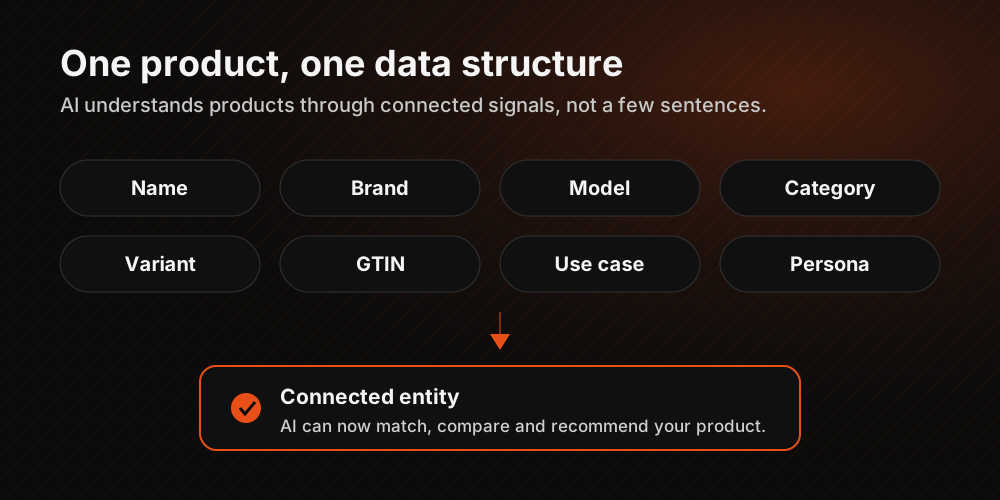
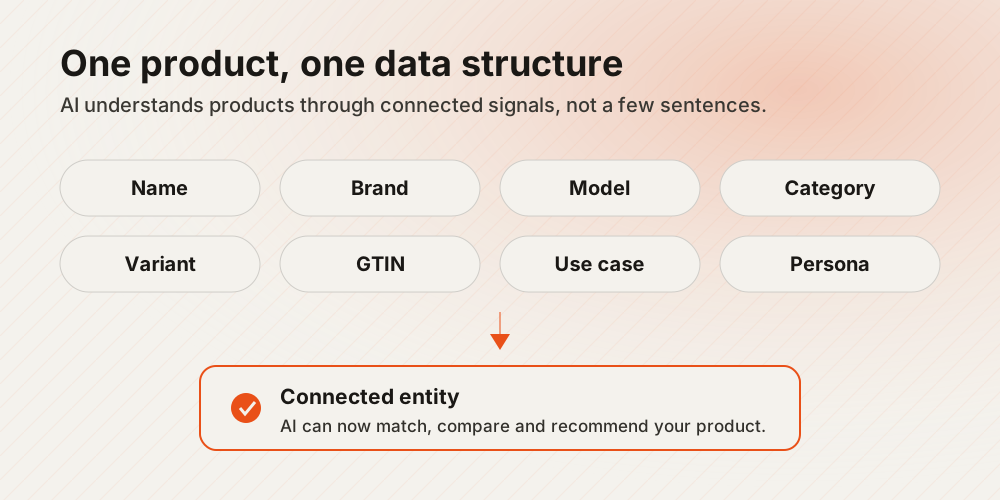
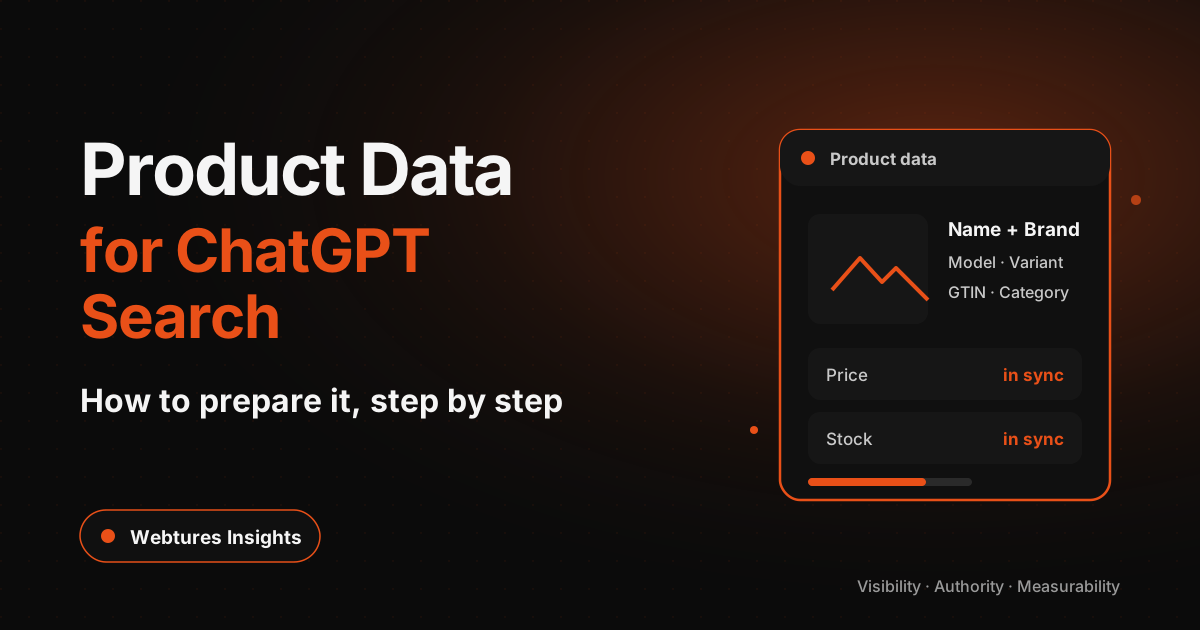
Product name, brand, model, category, variant, GTIN, MPN, use case, target persona, and distinctive features should be handled as part of a single data structure. AI search systems understand products not only through a few sentences in the description, but through connected data signals. For this reason, the information on the product page should be consistent with the product feed, schema fields, category structure, image alt text, review content, and third-party references.
Trust signals become especially important in shopping-intent queries. Clear brand information, up-to-date pricing, stock status, verified user reviews, product specifications, return or delivery information, and explanatory use cases can help the model evaluate the product more reliably. In contrast, missing variant data, inconsistent product names, changing price information across sources, or artificial-looking descriptions can cause incorrect product matching. Product data should therefore be seen not only as a technical requirement, but as the foundation of the product’s digital identity.
Technical Infrastructure and Data Layer for Product Data in ChatGPT Search
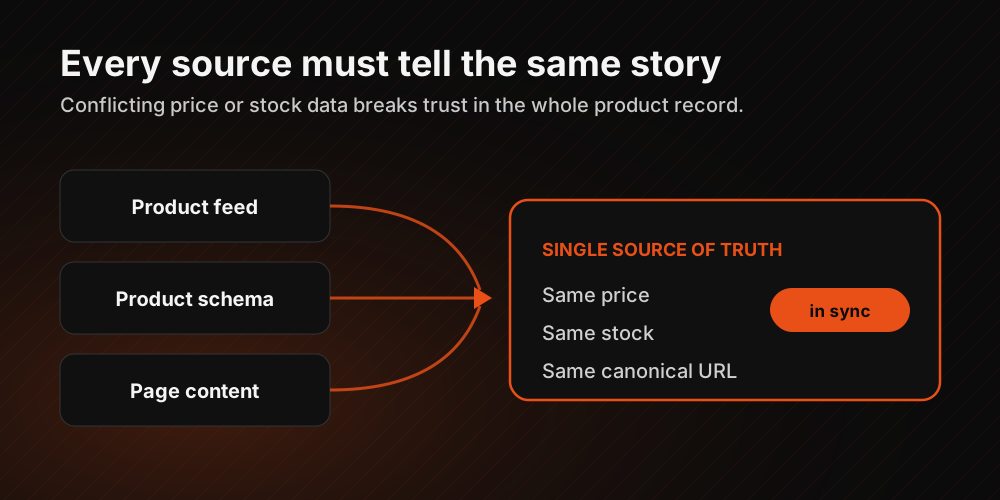
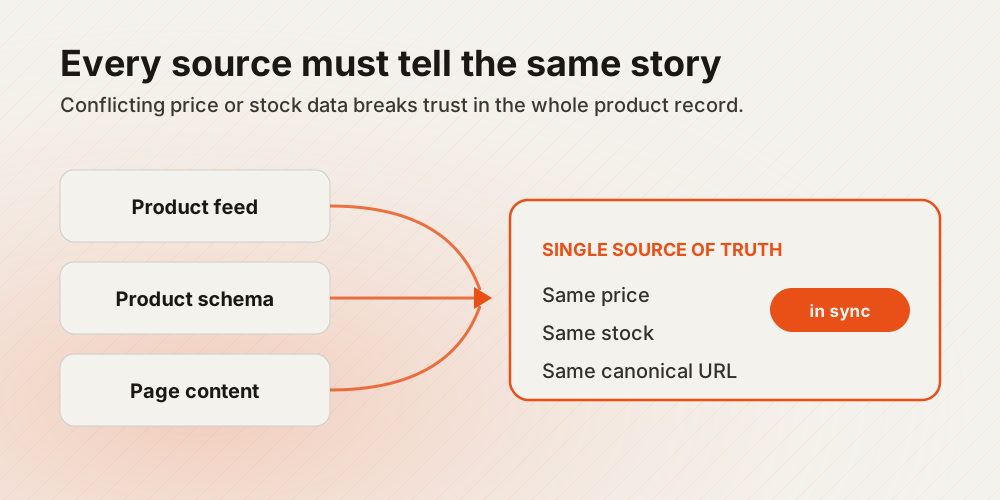
Product feeds, Product schema, stock and price synchronisation, canonical product URLs, and visible on-page content should carry the same information. Technical infrastructure often works in the background, but it directly affects product visibility in ChatGPT Search. Even when page content is strong, visibility and representation quality may be limited if the model or search layer cannot access the product correctly, detects the wrong canonical URL, cannot read structured data, or cannot capture current pricing information.
For this reason, technical checks should not be treated only as troubleshooting. Product page indexability, schema accuracy, consistency between the feed and product detail page, loading speed, mobile experience, image accessibility, and internal linking should be reviewed together. It is especially important to create a single source of truth for fields such as price, stock, variant, product name, and brand information. The aim is to make the product clear, accessible, current, and reliable for both users and machines.
Product Data Content Format and Page Structure for ChatGPT Search
Product descriptions, comparison tables, review summaries, usage scenarios, and FAQ sections can support ChatGPT’s product-related decision-making process. AI search systems do not rely only on long product descriptions. They need structures that allow different pieces of information to be interpreted together. For this reason, a product page should include not only a core description, but also technical specification tables, short benefit summaries, use cases, target user profiles, variant differences, and frequently asked questions.
These formats should not be used only to make the page look more complete. Every table, list, or short answer block should respond to a specific decision-making question. For example, structures that clearly answer questions such as “Who is this product suitable for?”, “How is it different from another model?”, or “Which feature matters most in the purchase decision?” can improve user experience and help AI systems separate product information more effectively.
Product Data for ChatGPT Search Implementation Priorities Table
The priority table below can be used to make the product data preparation process for ChatGPT Search more operational. The aim is not only to list tasks, but also to clarify how each action contributes to AI search visibility. Teams can use this table as a core framework for product data standards, technical checklists, content briefs, or monthly visibility reports.
For brands managing many products, categories, or markets, moving forward without prioritisation can reduce data quality and make measurement more difficult. For this reason, ownership, expected output, and tracking metrics should be defined from the beginning. This turns product data work from isolated product description updates into a regularly improving optimisation system.
| Focus Area | How to Apply It | AI Search Contribution |
|---|---|---|
| Identity data | Complete GTIN, MPN, brand, model, and variant fields. | Ensures the product is matched correctly. |
| Decision data | Clarify features, use cases, pricing, and review summaries. | Improves recommendation quality. |
| Page-feed alignment | Connect the feed and product detail page to the same source of truth. | Reduces the risk of inaccurate information and hallucination. |
| Prompt testing | Monitor how the product is described in shopping queries. | Helps validate performance in practical search scenarios. |
How Should Product Data Performance Be Measured for ChatGPT Search?
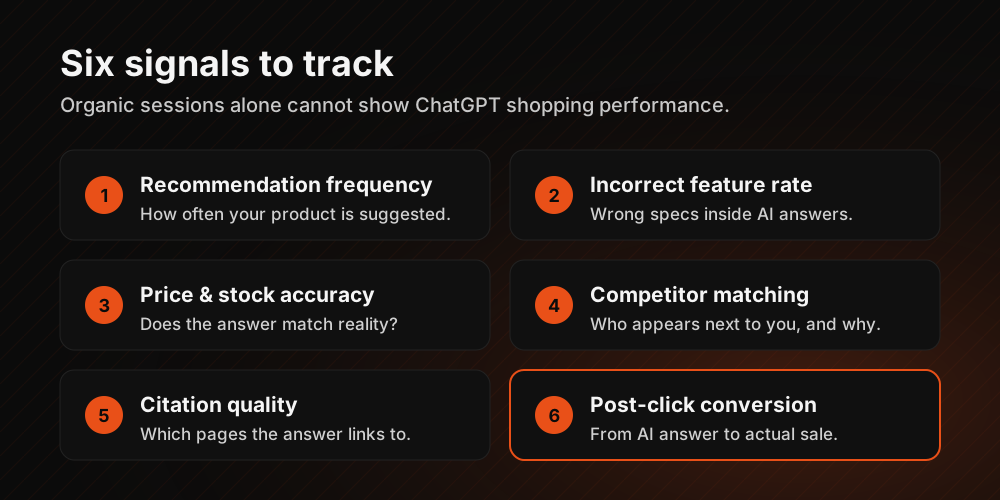
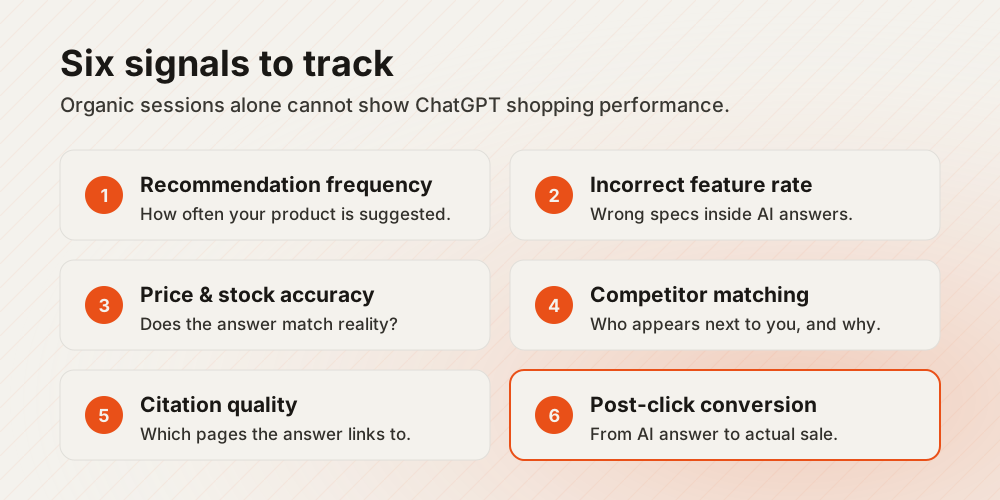
Product data performance for ChatGPT Search should be monitored through recommendation frequency, incorrect feature rate, price and stock accuracy, competitor matching, citation quality, and post-click conversion. AI search performance cannot be understood only through organic sessions or traditional ranking metrics. Users may see a product recommendation within an answer and shape their perception or decision without clicking through to the website.
For this reason, measurement should evaluate both visibility and representation quality. Target shopping prompts should be run regularly, and teams should track which answers recommend the product, which features are mentioned, which competitors are compared, and whether pricing or stock information is represented accurately. On the traffic side, Search Console, analytics data, referral sources, product page engagement, and conversion results can be used as supporting metrics. The healthiest approach is to report traditional e-commerce SEO metrics together with AI visibility metrics.
Risks and Quality Control Points for Product Data in ChatGPT Search
Missing variant data, inconsistent pricing, artificial descriptions, duplicate product titles, and weak review signals can cause products to be misrepresented in ChatGPT Search. These risks often do not come from a single product page alone, but from the wider structure of product data management. For example, a product page may be up to date while the feed remains outdated, the feed may be accurate while Product schema is incomplete, or the description may be clear while reviews and comparison content remain insufficient.
Because AI systems interpret these signals together, the quality control process should also be multi-layered. Product name, category, variant, price, stock, images, reviews, schema, feed, and on-page content should be reviewed regularly. Teams should also make sure that product descriptions are written to support real decision-making, not only to include keywords. This approach reduces the risk of inaccurate information, strengthens recommendation quality, and helps products be represented more accurately in answer engines.
An Actionable Roadmap for Product Data in ChatGPT Search
First, a product data dictionary should be created. Then the feed and product detail page content should be aligned, and finally quality control should be carried out using ChatGPT shopping prompts. The data dictionary should define how fields such as product name, brand, model, variant, category, GTIN, MPN, price, stock, description, use case, and distinctive features will be used. This reduces the risk of teams describing the same product differently across platforms.
In the second stage, product pages with high commercial priority should be analysed in terms of technical accessibility, schema accuracy, content depth, and feed alignment. In the third stage, missing formats should be completed, and product pages should be strengthened with comparison tables, FAQ sections, review summaries, use cases, and decision criteria. In the fourth stage, competitor visibility, product recommendations, and possible inaccuracies should be monitored regularly. This kind of roadmap turns product data preparation for ChatGPT Search from a one-time data clean-up task into a sustainable AI search optimisation process.