How to run a GEO analysis, and which tools to use
Measure how AI engines such as ChatGPT, Gemini and Perplexity understand and cite your site with a step-by-step GEO analysis framework and the right tools.

Being visible in the digital world no longer means being listed as a link in search results. With the rise of AI-driven search engines (ChatGPT, Gemini, Perplexity, Google AI Overviews), the target has shifted: the goal now is to appear as a "source" and an "authority" inside the direct answers AI presents to users. This is exactly where GEO (Generative Engine Optimization) analysis comes in.
What is a GEO analysis?
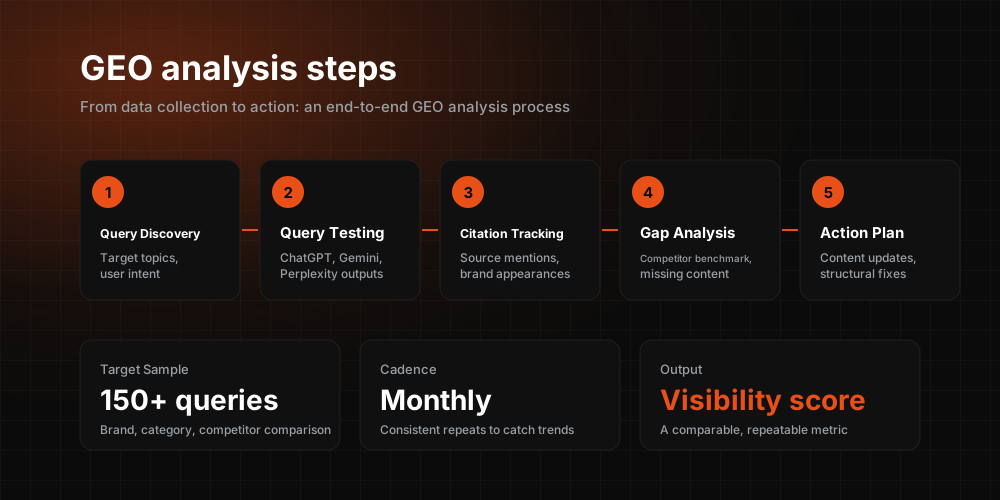
A GEO analysis is the evaluation process that measures how AI models (LLMs, or large language models) understand, synthesize and cite a website and its content. Unlike classic keyword tracking, it examines content depth, authority, semantic coherence and compliance with the formats AI flags as "reliable information". The aim is to get your brand recommended inside AI-generated answers.
How to run a GEO-focused analysis
- Content depth and authority check (E-E-A-T): AI references expertise, not surface-level information. Analyze whether your content answers only "what is" questions or also the layered ones: why, how, examples and evidence backed by data.
- Citation analysis: Examine how often trusted sources across the web reference your brand or content. AI tends to treat sources that other authorities mention as "real".
- Structured data and semantic coherence: Check how machine-readable your content is (Schema Markup). For AI to categorize your content correctly, the data needs structure: tables, lists and clear headings.
- Direct-answer compatibility: Test how well your content fits a question-and-answer format. AI prefers to lift and present the paragraph that answers the user's question most clearly and directly.
- Brand perception and sentiment analysis: AI models scan what the internet says about your brand. Analyze whether user reviews, forum discussions and social proof support a "positive" and "expert" perception.
- Visual and multimedia optimization: Next-generation search (multimodal search) reads both text and images. Check whether your image alt text and surrounding context help the AI make sense of the content.
Methods and tools used for GEO analysis
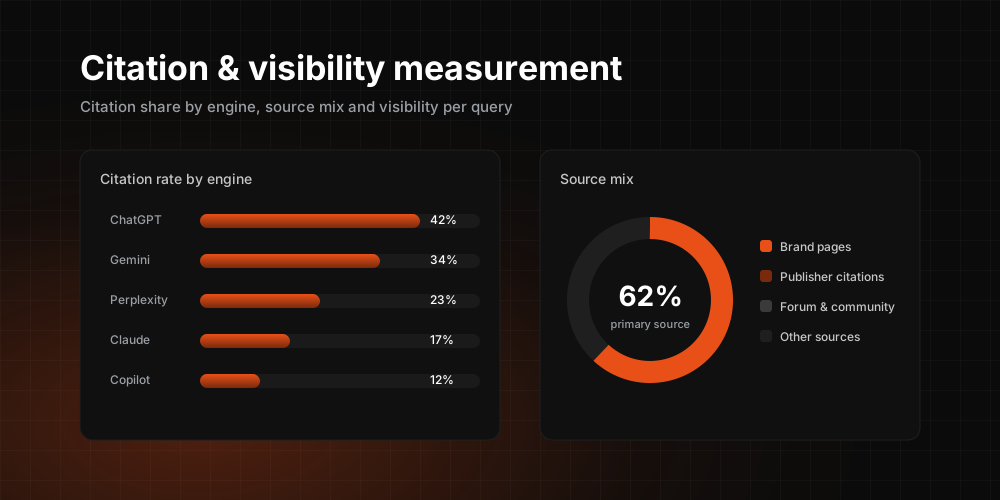
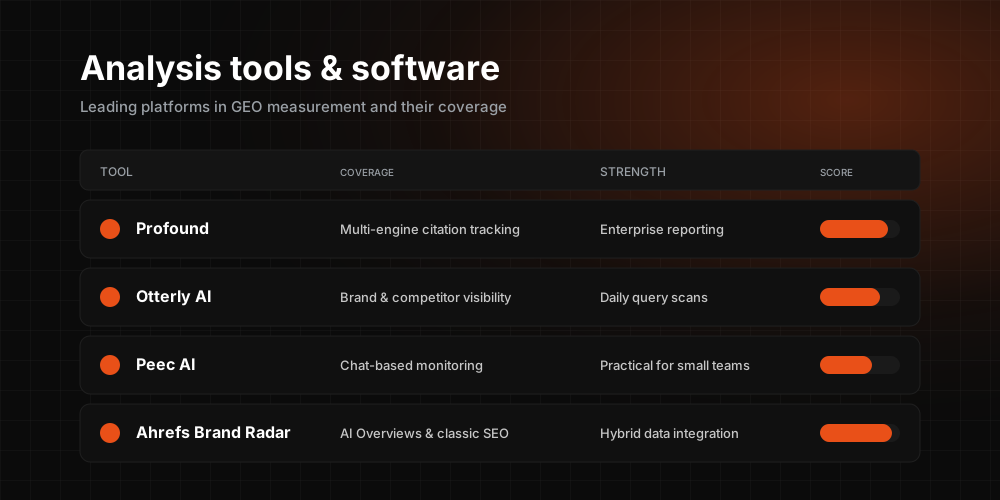
Because GEO is still a very young field, classic SEO tools are evolving and new ones keep arriving.
AI simulation and analysis tools
- Brantial (AI Visibility & Prompt Intelligence):
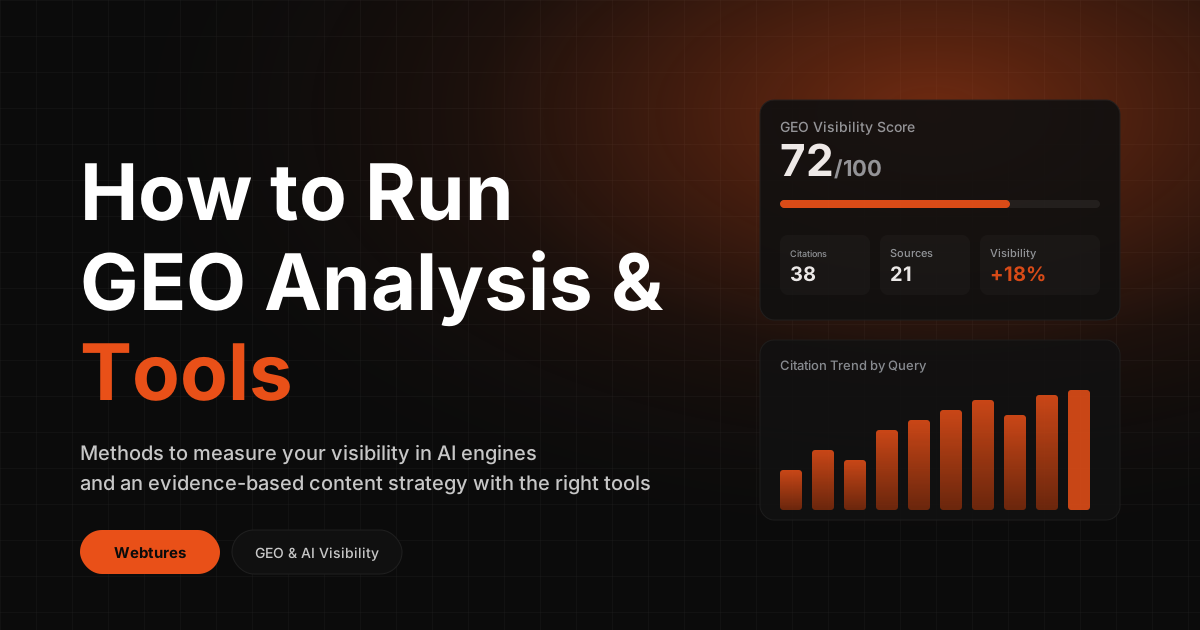
- Used to measure which prompts surface your brand in AI search engines such as ChatGPT, Gemini and Perplexity, in what context and against which competitors. It provides prompt-level visibility, citation frequency and contextual positioning analysis inside AI results, forming the basis for strategic decisions in GEO work.
- Perplexity AI, ChatGPT and Gemini: Manually testing how your brand and content appear in these engines is the most fundamental analysis. Run a query such as "What are the best sources on topic X?" and check whether your brand appears.
- Surfer AI / Frase: Used to measure the semantic depth of content and analyze whether AI judges it "comprehensive".
Technical and authority tools
- Schema.org Validator: Tests how well machines understand your content through structured data.
- Ahrefs / SEMrush (authority-focused): Used less for classic backlink tracking and more for monitoring brand mentions and references from authoritative industry sites.
User intent and semantic tools
- AnswerThePublic: Used to identify the conversational, natural-language questions users might ask an AI.
- Google Trends: Critical for catching the current, popular topics AI feeds on.
Why does a GEO analysis matter?
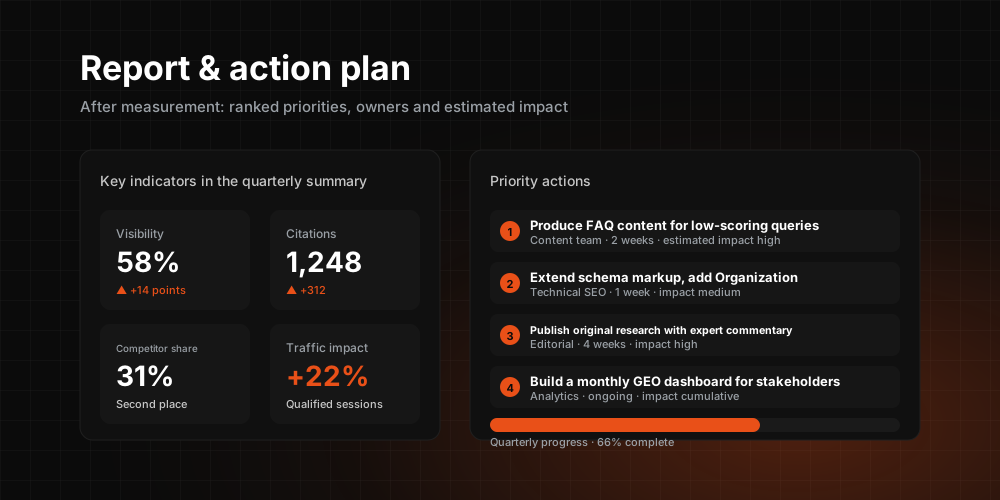
AI is fundamentally reshaping search habits. Users increasingly prefer reading the direct answer over clicking links.
1. Moving beyond "position zero"
Ranking first used to be enough. Now you have to appear inside the single-paragraph summary the AI generates. Sites that skip GEO analysis risk losing a large share of their traffic to zero-click searches.
2. Trust and brand recommendation
When an AI recommends a product or service, users perceive it as advice, not advertising. A GEO analysis gets your brand into that recommendation pool, which carries far higher conversion potential than classic advertising.
3. Preparing for a multimodal future
The search of the future will combine text, voice, image and video. A GEO analysis shows you how AI processes your content across these different formats.
How often should you run a GEO analysis?
Because AI models (the current versions of GPT, Claude and Gemini) update rapidly, GEO is a dynamic process.
1. After major model updates
When OpenAI or Google releases a new foundation model (the launch of GPT-5, for example), your brand's visibility can change completely. Run a comprehensive GEO analysis immediately in these periods.
2. After content strategy changes
When you change your site's content language or structure, an analysis is essential to understand how AI re-categorizes you.
3. When the market moves
When you notice competitors being recommended more often by AI (a loss of market share), it is time to revisit your GEO strategy.