How to Track Citations in GEO Strategies
Learn how to track citations in GEO strategies, why being cited in AI search matters and how tools like Brantial measure your visibility across LLM answers.

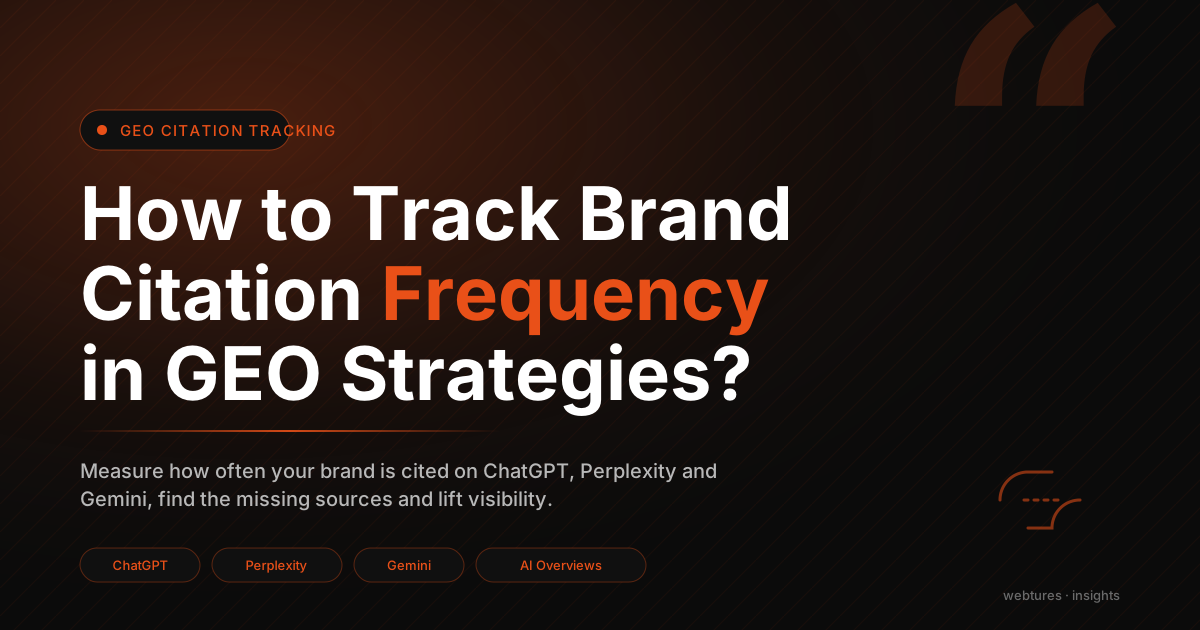

The rapid spread of AI search engines means brand visibility can no longer be measured by classic SEO performance alone; it also depends on how a brand is represented in AI-generated results. This is where GEO (Generative Engine Optimization) stands out as a new-generation strategy for optimizing how content is used by models such as ChatGPT, Perplexity, Google AI Overviews and Bing AI. One of GEO's most critical components is the citation: how often, and in what form, AI models reference a brand as a source of information. Citation tracking is an indispensable process for understanding a brand's authority in the AI ecosystem and strengthening its visibility strategy.
A short definition of GEO and citations
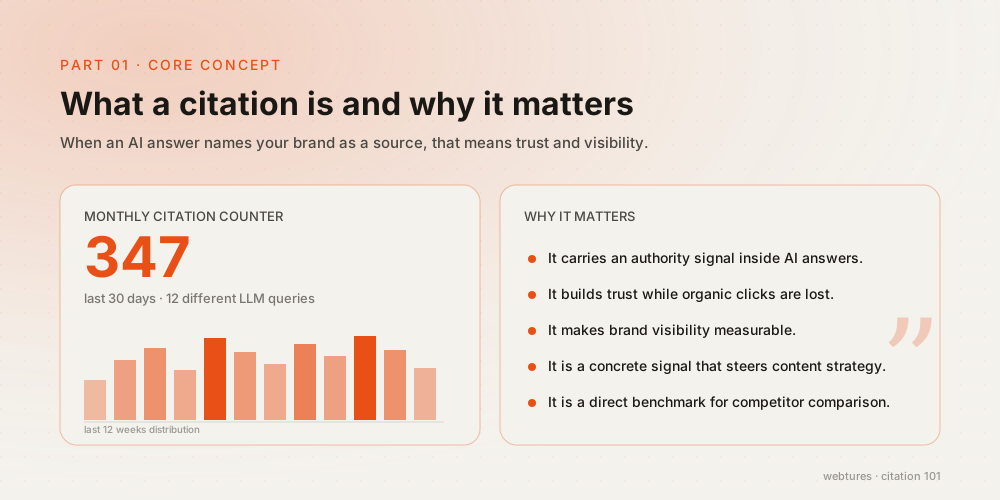
GEO (Generative Engine Optimization) is the optimization process that helps AI models perceive your content as more accurate, more reliable and more authoritative. Unlike classic SEO, it covers not only search engines but also AI systems such as ChatGPT, Perplexity, Google AI Overviews and Bing AI. The goal of GEO is to grow both the brand's visibility and its content authority within these systems.
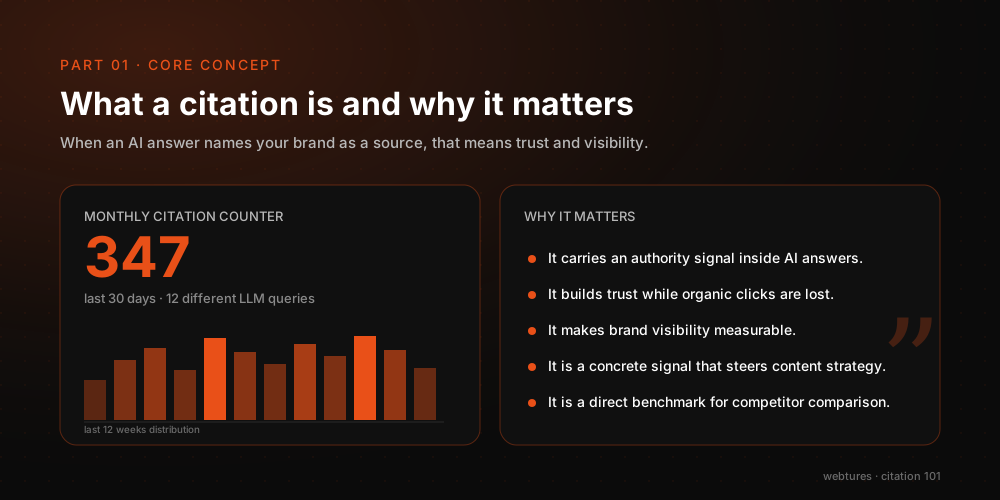
A citation, in turn, is what happens when an AI references a specific brand's information, directly or indirectly, while answering a question. The more an LLM trusts a brand's content, the more often it cites it. Sometimes the citation comes with an explicit source attribution, sometimes it happens implicitly. That is why citation tracking is considered a fundamental indicator of a brand's position in the AI ecosystem.
Why do citations matter in AI search?
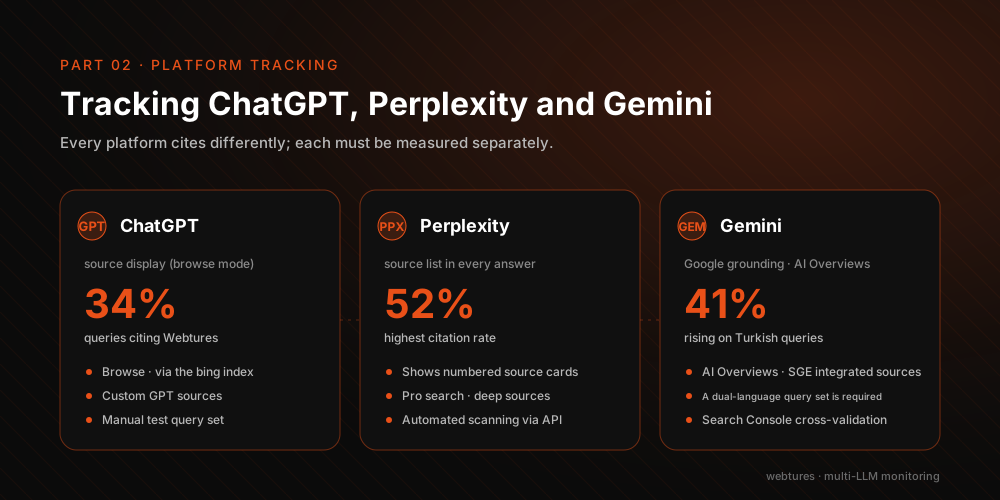
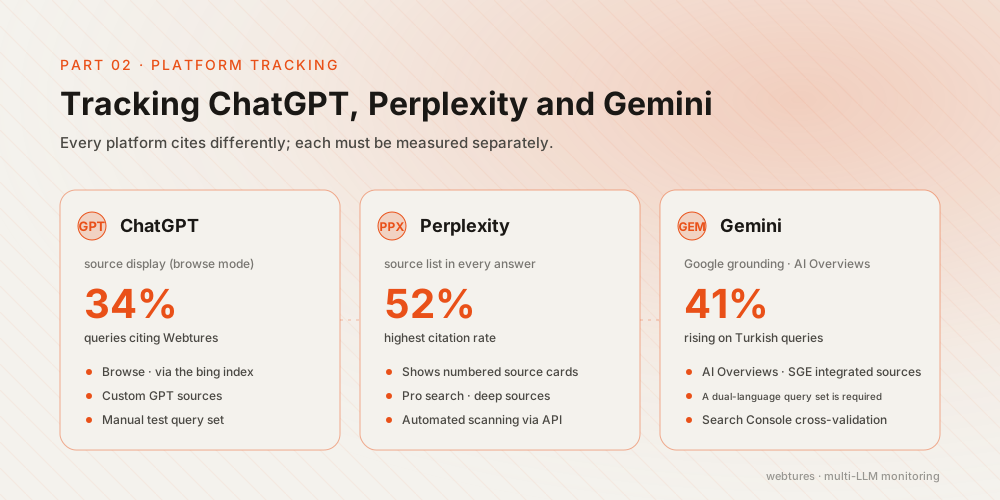
In AI search, citations are among the strongest signals directly shaping a brand's information authority. Which source an LLM leans on when answering a question determines the credibility of the answer, so models cite the content they trust more often. Citations play a critical role for both visibility and authority, because the sources AI selects appear in front of the user as the direct answer, and the ranking dynamics shift far faster than in classic SEO.
Being cited in AI results increases a brand's zero-click visibility. Even if the user never clicks through to the page, the content is woven into the answer by the model and the brand becomes visible. This strengthens awareness and supports long-term topical authority signals. Brands that AI models cite frequently tend to appear more often on the same topics. That is why citation tracking is regarded as one of the most critical stages of any GEO strategy.
What are the types of LLM citations?
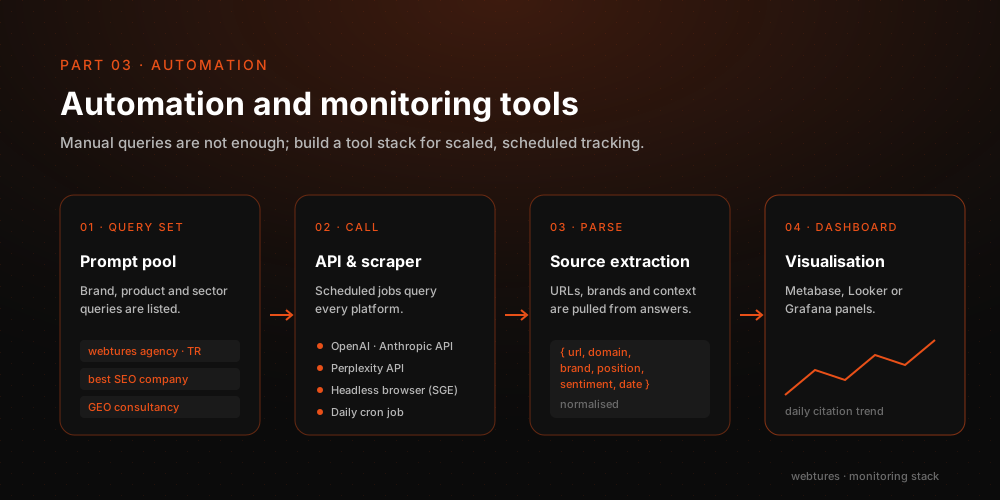
The way AI models cite content is far more varied than in classic search engines. LLMs do not simply reference a URL; they draw on text, structured data, entity information and brand authority to produce different kinds of citations. Knowing which type of citation you are earning lets you pinpoint exactly where your GEO strategy needs improvement.
Direct citation
A direct citation is when the AI explicitly names the brand as a source, either within or at the end of its answer. In this type, the model clearly points to the information it took from the brand's website. It appears frequently in Perplexity Search and ChatGPT Search results. Users see exactly where the answer came from, which creates a strong brand-authority signal.
Implicit citation
An implicit citation occurs when the AI draws on a brand's content without openly showing the reference. Google AI Overviews and Bing AI use this approach widely. Here the model may use the brand's data to build the answer but presents no visible source list to the user. Implicit citations matter especially for topical authority and are usually the result of strong entity signals.
Linked citation
A linked citation is a source presented as a link or snippet inside the answer. In this type, the model may link to the brand's page to support a specific claim or piece of information. Even without a click, brand visibility strengthens, and the page often takes on the role of a recommended source. Tools like Brantial track linked citations as a separate category.
How do you track citations in GEO strategies?
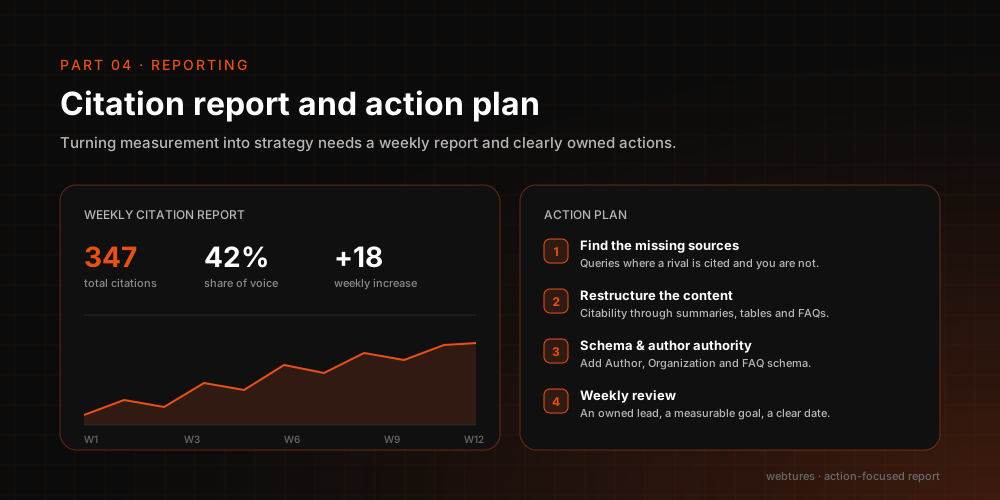
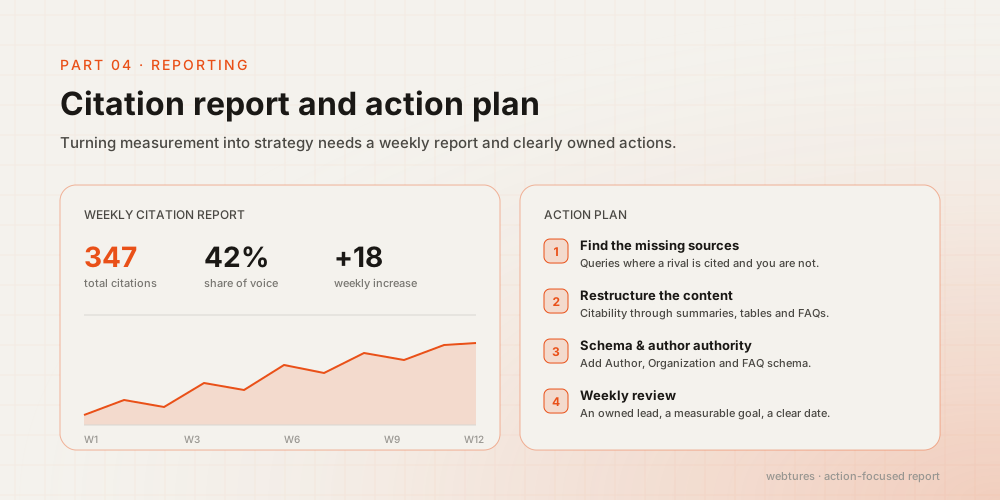
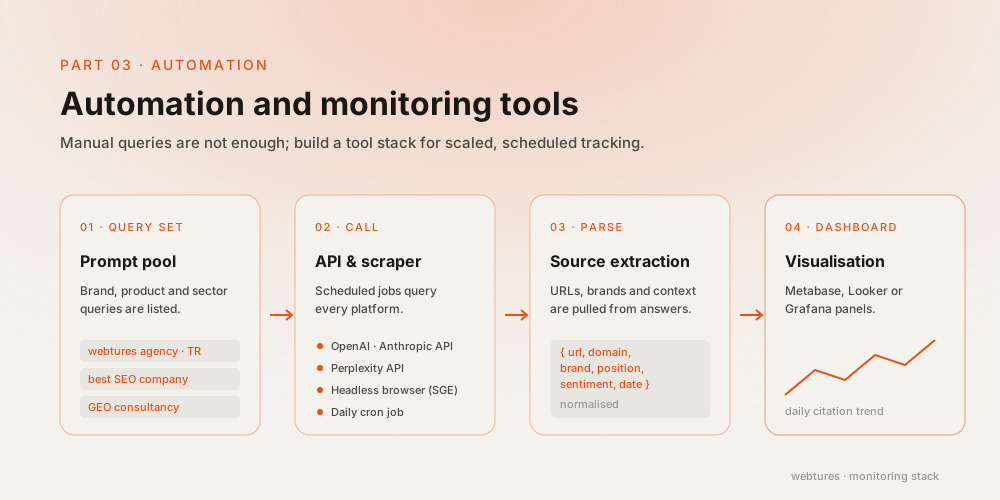
Citation tracking is not something classic SEO tools can handle, because AI models do not crawl and index results; they interpret content and regenerate it. Tracking citations therefore requires analyzing LLM outputs, running regular test scenarios and continuously measuring how much, and in what form, the brand appears in AI results. The most effective method here is using monitoring tools built specifically for AI.
Brantial's citation monitoring feature
Brantial is an AI Visibility Intelligence platform built specifically to track how brands are cited across AI search engines. Across systems such as ChatGPT, Perplexity, Google AI Overviews and Bing AI, the tool regularly reports:
-
Which queries your brand is cited in
-
The citation type (direct, implicit, linked)
-
How the brand name or URL is used inside the AI answer
-
Citation gaps between you and your competitors
-
The impact on zero-click visibility
This grounds the core building blocks of your GEO strategy in real-time data. Citation data is not just a way to understand visibility; it also delivers powerful signals for content improvements and authority-building work.
Prompt-based citation tests (scenario testing)
Another core part of citation tracking is running regular tests around key topics. Custom prompt scenarios are prepared for selected topics, and the brands AI models cite as sources are monitored. Prompt-based tests give clear answers to questions such as:
-
"Should my brand be appearing for this query?"
-
"Which content is the model drawing on?"
-
"On which topics are competitors cited more often?"
-
"Which content should be strengthened to increase visibility in AI results?"
This approach produces a roadmap for strengthening the content and entity side of your GEO strategy.
Understanding why citations happen with entity & schema analysis
Citations correlate not only with content quality but also with technical markup. AI models treat schema data and entity structures as critical signals of a page's reliability. When citations fail to appear, consider factors such as:
-
Missing or faulty schema markup
-
Inconsistent Author/Organization fields
-
Weak entity connections
-
Content not structured clearly enough for AI
Entity analysis reveals which pieces of content carry the most citation potential and strengthens the brand identity that AI references.
Key metrics for citation tracking
Analyzing citation data correctly is critical to understanding where your GEO strategy needs reinforcement. AI models do not weigh every content type equally, so you need to track how strong a signal each citation type produces. The metrics below are the core indicators for measuring a brand's AI visibility and identifying areas for improvement.
Citation frequency
Citation frequency is the core metric showing how often your brand is cited across AI engines. As it grows, brand authority strengthens and your content can expect more frequent references across a wider range of topics. Steady growth is the sign that your GEO strategy is on track.
Citation depth
Citation depth expresses how central the citation is within the AI answer. The more pivotal the citation's role in the answer, the more strongly the model is treating the brand as an information source. Citations placed in the opening of an answer or at a critical data point are strong authority signals.
Domain authority impact
This metric shows how much a citation contributes to the brand's overall authority. AI models tend to cite sources with strong domain authority more often. Growth in citation data signals that your domain authority is strengthening within the AI ecosystem.
Topic-level citation coverage
Topic-level citation coverage measures how often a brand is referenced within specific topic clusters. When AI models cite a brand frequently on a given topic, they perceive it as the authority in that area. Topic-based citation distribution is therefore a critical insight for any topical authority strategy.
AI zero-click visibility score
The zero-click visibility score measures the brand's presence within the answer served to the user. Even without a click, the brand's name, description or link appears inside the answer. In AI-based search, zero-click visibility has become a stronger authority signal than organic rankings ever were in classic SEO.
How should citation data feed back into GEO strategy?
Citation data should be treated not just as a visibility metric but as a powerful feedback mechanism that sets the direction of your GEO strategy. The patterns in how you are cited reveal which content AI models value most and where authority needs to grow. Integrating citation data into strategy correctly is what makes AI visibility rise in a sustainable way.
Start by analyzing the content that earns citations. Identify what it has in common: clear definitions, strong entity structure, sections with tables or data, and a clean, orderly content hierarchy. Then apply the same structural approach to content that goes uncited or underperforms. This process lets you reproduce the content formats AI models treat as trustworthy.
Citation frequency and type should sit at the center of your topical authority strategy. When a brand earns regular citations within specific topic clusters, it is the natural authority of that space. Study citation coverage maps to spot new content opportunities, and let citation data drive schema markup updates, stronger organization and author signals, and more AI-friendly content. That is how a brand's visibility in the AI ecosystem grows continuously and measurably.