How to Write Natural Language (NLP) Friendly Content for AI?
NLP-friendly content lets AI resolve meaning and context correctly. We cover how to write natural-language-friendly content for GEO in detail.

NLP-friendly content is content written so that natural language processing systems can correctly resolve meaning, context and the relationships between entities. AI search engines understand content not by counting words but by modelling the meaning of sentences and how entities relate to each other. So NLP-friendly content requires not keyword stuffing but building a clear, context-strong, entity-rich language. This article covers in detail how to write natural-language-friendly content and why it is critical for GEO.
How NLP Understands Content and What This Changes
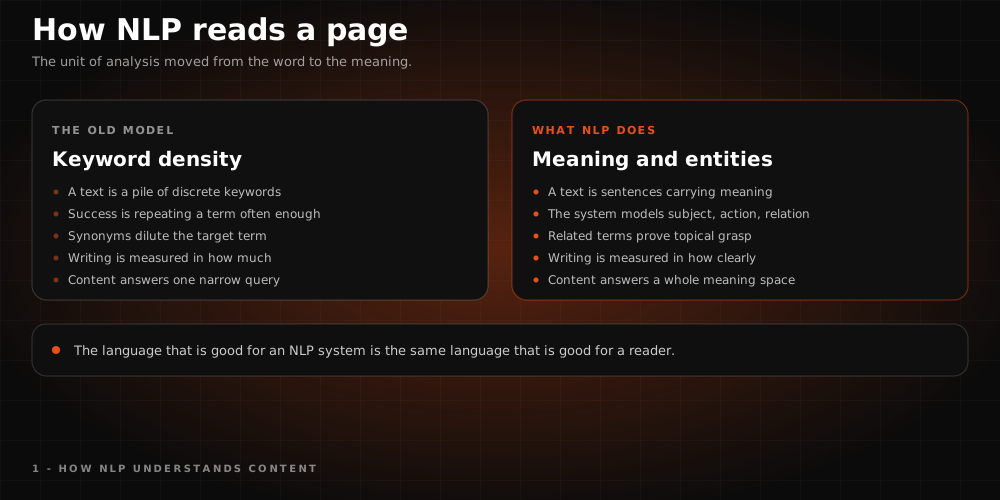
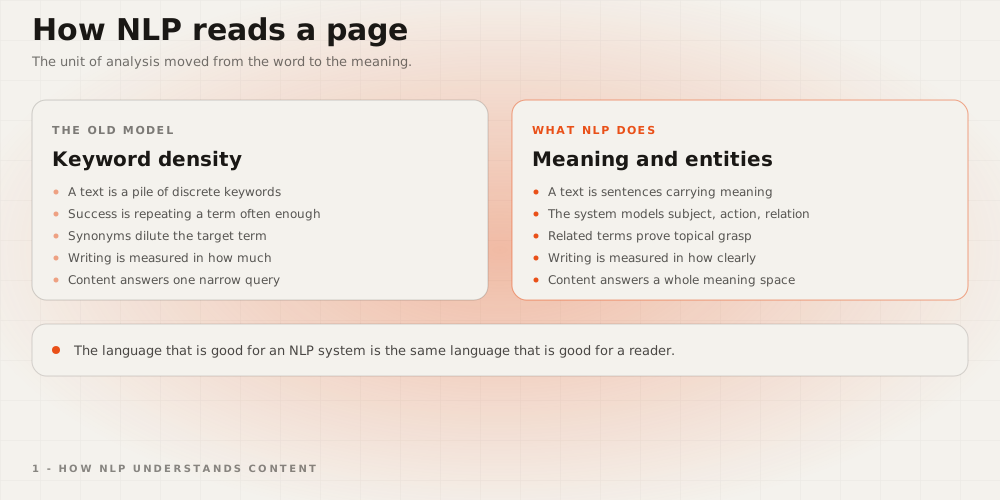
Natural language processing resolves a text not as a pile of discrete keywords but as meaning-carrying sentences and a network of interrelated entities. An NLP system models what the subject of a sentence is, what action takes place and how the entities relate to each other. This invalidates the old keyword-density logic: what matters is not repeating a word many times but treating that concept in the right context, with related terms and clear language. AI looks at not “how much” but “how consistently and understandably” you write.
This shift moves the focus of content writing from the word to meaning. For example, when explaining a topic, naturally using its related concepts, synonyms and contextual terms shows the NLP system that you grasp the topic holistically. This semantic richness makes the content address not just a single keyword but the entire meaning space of a topic. The result is that AI engines can match your content with a wider range of queries.
The Core Principles of Natural-Language-Friendly Content
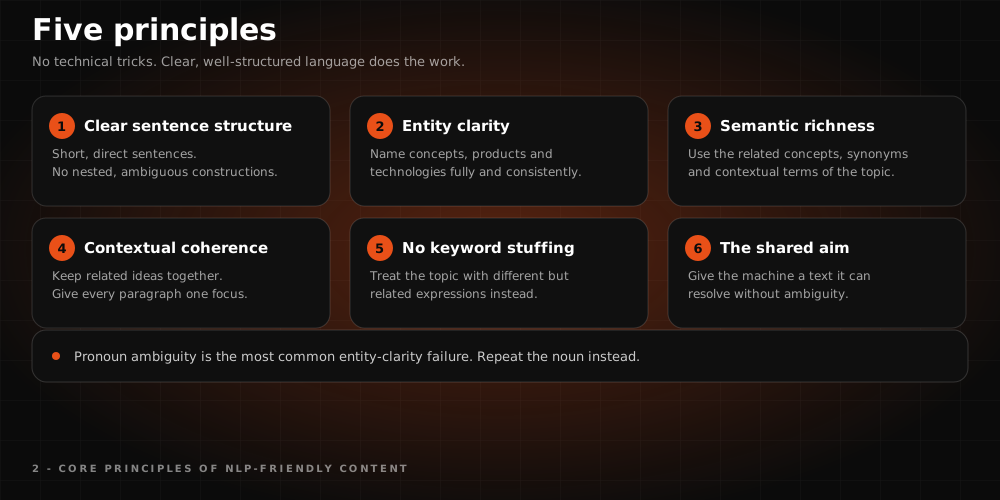
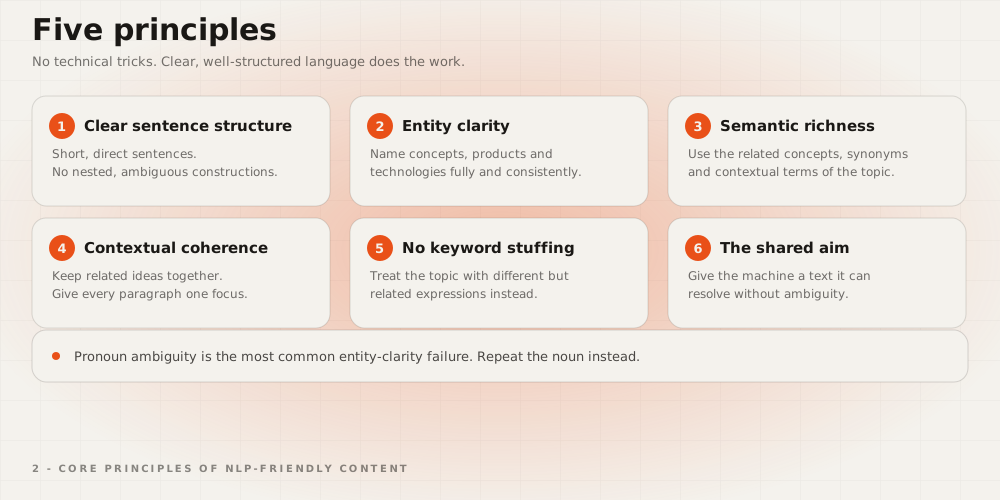
Writing NLP-friendly content is achieved not through complex technical tricks but through clear, well-structured language. The core principles are:
- Clear sentence structure: Build short, clear sentences; avoid nested, ambiguous long sentences.
- Entity clarity: Name concepts, products and technologies fully and consistently; avoid pronoun ambiguity.
- Semantic richness: Naturally use the topic’s related concepts, synonyms and contextual terms.
- Contextual coherence: Keep related ideas together; give each paragraph a clear focus.
- Avoid keyword stuffing: Instead of forcibly repeating the same word, treat the topic with different but related expressions.
The common aim of these principles is to give content a language the machine can resolve without ambiguity. Interestingly, the language that is good for NLP is also good for the human reader: a clear, consistent, well-structured text is one both a person and a model understand more easily. So NLP-friendliness is not an alternative to human-focused good writing but a natural result of it.
From Keyword-Focused to Meaning-Focused Writing
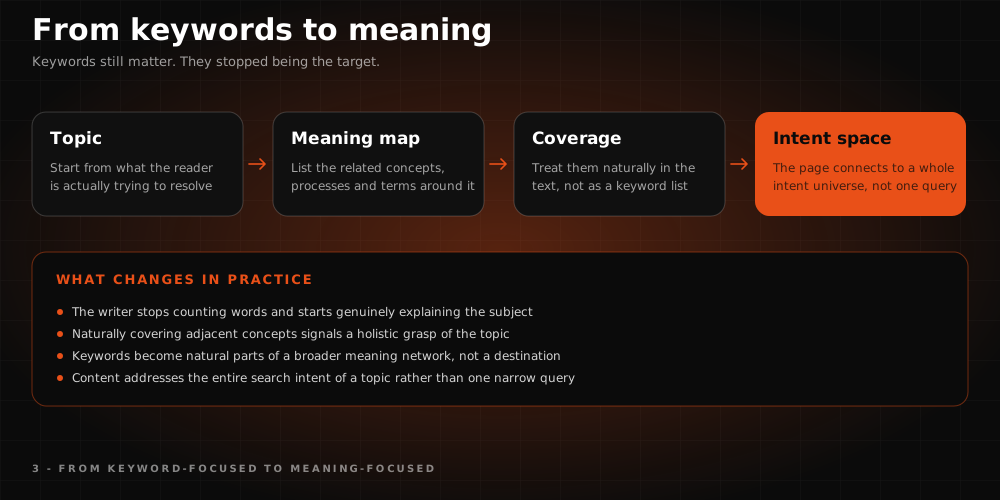
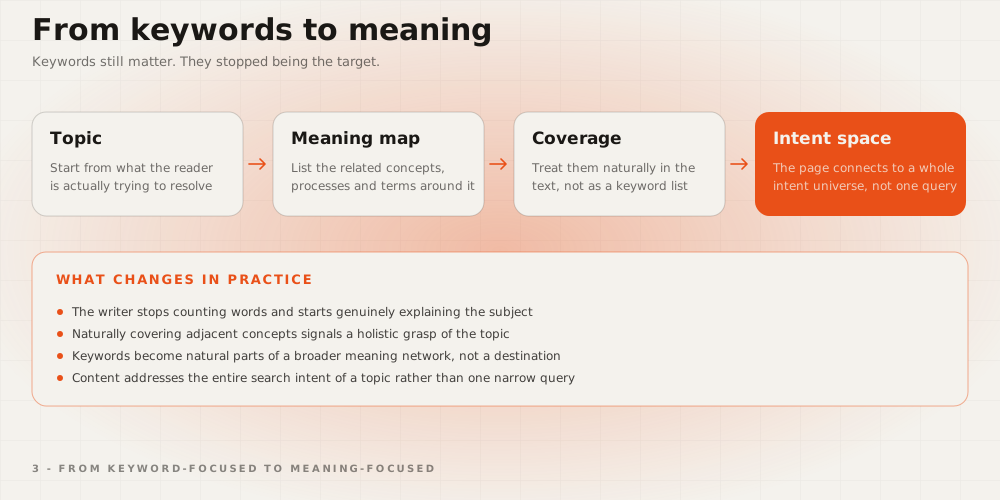
NLP-friendly content represents a fundamental break from the classic keyword-focused approach. Content used to be built on repeating a specific keyword at a target density; today AI understands how consistently and comprehensively a text treats a topic. This shift frees writers from counting words and directs them to focus on genuinely understanding and explaining the topic.
In practice, this means thinking of content like the meaning map of a topic. When explaining a concept, naturally treating the other concepts, processes and terms related to it shows the NLP system that the brand grasps the topic holistically. This approach connects content not to a single narrow query but to the entire search intent universe of a topic. Keywords still matter; but they are no longer a target but natural parts of a broader meaning network.
Connecting Meaning-Focused Content to a Holistic GEO Approach
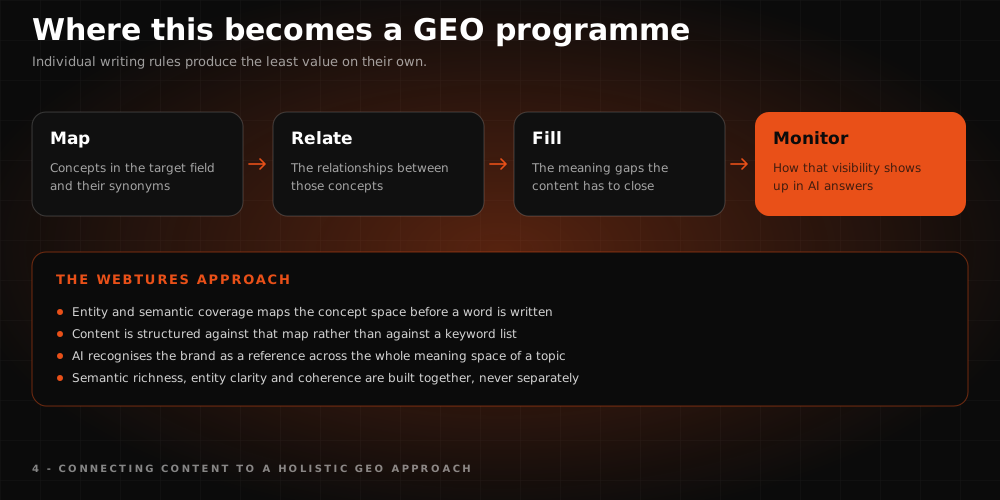
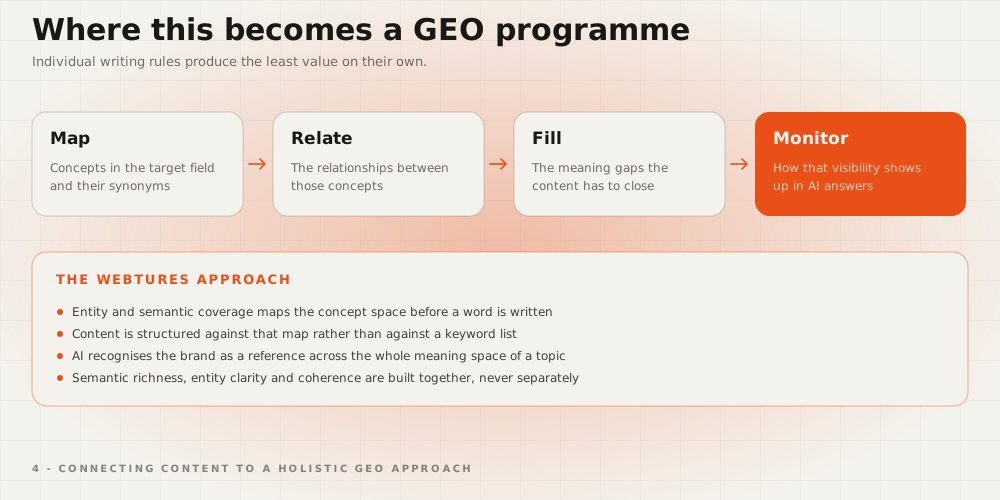
NLP-friendly content produces the most value through a holistic GEO approach centred on meaning and entity relationships rather than individual writing rules. When semantic richness, entity clarity and contextual coherence are built together, your content is recognised by AI engines as a trustworthy, comprehensive explanation of a topic. This transforms not a single text but the brand’s language and content standard.
Webtures systematises this meaning-focused approach within its GEO consulting service. In the Entity & Semantic Coverage phase, the concepts in the brand’s target field, their synonyms and the relationships between them are mapped; which meaning gaps the content needs to fill is determined. Webtures structures content according to this semantic map so AI recognises the brand as a reference across a topic’s entire meaning space, and continuously monitors how this visibility resonates across ChatGPT, Perplexity and Google AI Overviews. This way content moves from the old logic of keyword repetition to an entity-rich, measurable visibility strategy where AI resolves meaning correctly.
Frequently Asked Questions
Are keywords now irrelevant
No, keywords still matter; but their role has changed. Once targets to be repeated at a certain density, keywords today are natural parts of a topic’s broader meaning network. Content containing the relevant keywords shows the topic’s scope; but instead of repeating them forcibly, they should be used together with related concepts and natural language. So keywords are not a destination but components of meaning-focused content.
Do I need technical knowledge to write NLP-friendly content
Deep technical knowledge is not essential; NLP-friendliness is largely a result of clear, well-structured writing. Building clear sentences, naming concepts consistently and treating a topic holistically with its related terms are principles any good writer can apply. Technical knowledge adds value in advanced layers like semantic gap analysis or structured data; but basic NLP-friendliness is a natural extension of human-focused quality writing.