GEO Visibility Strategies for Local Businesses
The era of “blue links” on traditional search engine results pages (SERPs) has given way to direct answers from AI assistants.

The era of “blue links” on traditional search engine results pages (SERPs) has given way to direct answers from AI assistants. As of 2025, the new reality of digital marketing is built not on users scanning a list, but on AI models (LLMs) “recommending” the best option on the user’s behalf. For local businesses, this means being listed on maps is no longer enough; you have to be perceived by AI algorithms as a trusted authority, a source of digital truth.
Gartner’s projected 25 percent decline in traditional search volume and “zero-click” searches reaching around 69 percent show that businesses need to rebuild their strategies around the dynamics of Generative Engine Optimization (GEO).
From “keywords” to an “entity” first approach in local visibility
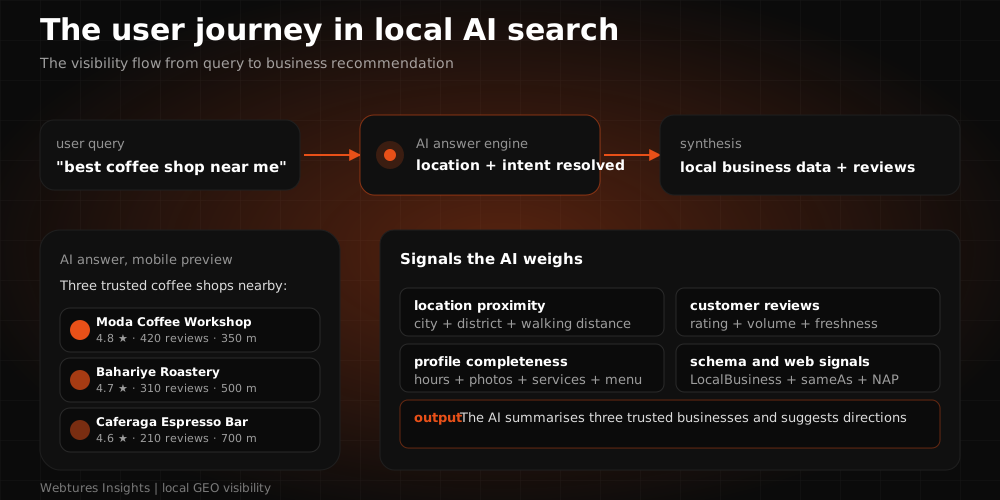
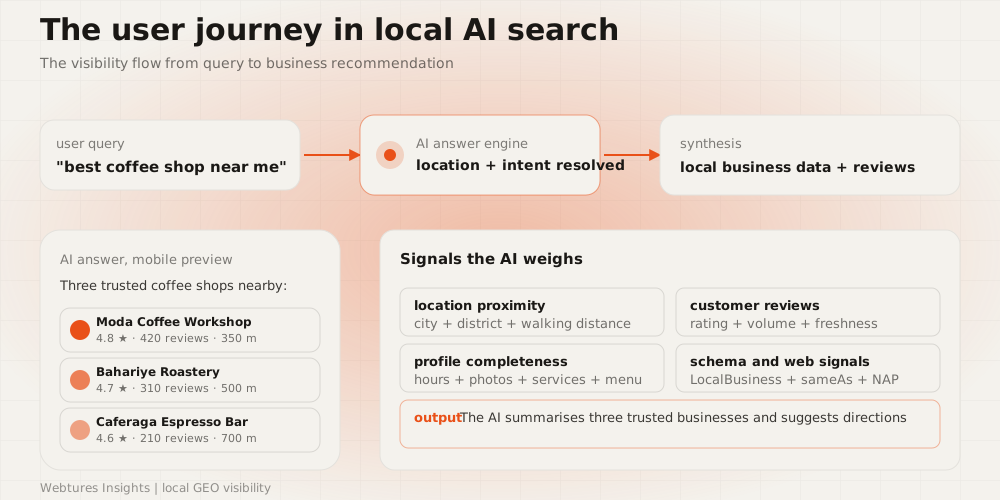
AI models (Gemini, ChatGPT, Perplexity) do not count words; they understand concepts and context. In local strategies, placing the keyword “Italian restaurant in Kadikoy” on the page is no longer enough. AI needs to recognize your business as an entity and make semantic sense of its attributes: atmosphere, menu depth, speed of service.
Local visibility in the GEO world rests on three pillars:
-
Contextual authority: How well the service you offer matches your location and the audience you serve. For a query like “quiet places for a business lunch in Istanbul”, AI does not look for the word “quiet” on your website; it looks at how often reviews and third-party sources mention your business in the context of being “suitable for business meetings”.
-
Structured data consistency: For LLMs to identify your business correctly, Schema.org markup and NAP (name, address, phone) consistency must be flawless from a machine-readability standpoint. Information should be served in a format AI can understand.
-
Digital footprint and citations: AI “cites” sources it trusts when composing an answer. Mentions of your brand on local news sites, industry directories, or authoritative blogs are the single most critical signal pushing you up AI’s recommendation engine.
Reputation management with semantic sentiment analysis
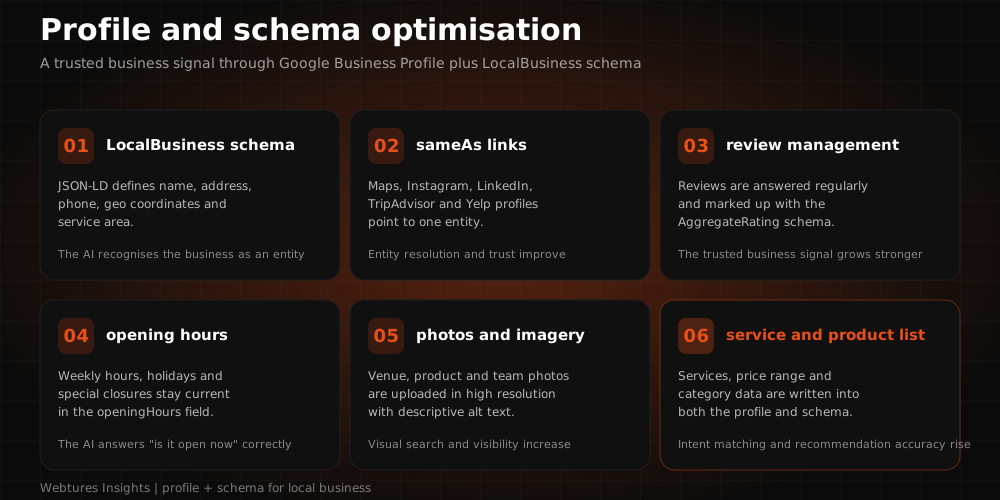
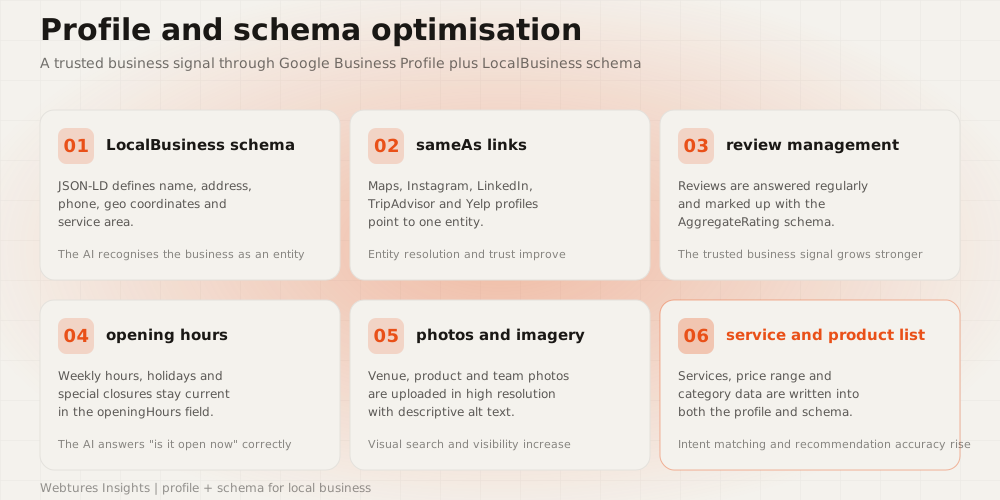
AI goes beyond star ratings; it “reads” and analyzes the content of reviews. In a search made through ChatGPT or Google AI Overviews, the user does not see “a 4.5-star business” but a qualitative summary like “service can be slow, but it has the best vegan desserts in the city”.
At this point, how businesses manage reviews has to change:
-
Encouraging detailed feedback: Ask customers not just for a rating but for reviews that describe their experience (for example, “the Wi-Fi speed”, “how hot the coffee was”, “the work-friendly atmosphere”). These details let AI match your business to specific queries such as “cafes with fast Wi-Fi”.
-
Sentiment analysis: Negative reviews can leave a lasting “label” in AI memory. Crisis management is therefore not just about apologizing; it requires semantic language that neutralizes the algorithms’ negative labeling.
Measuring and optimizing AI visibility with Brantial
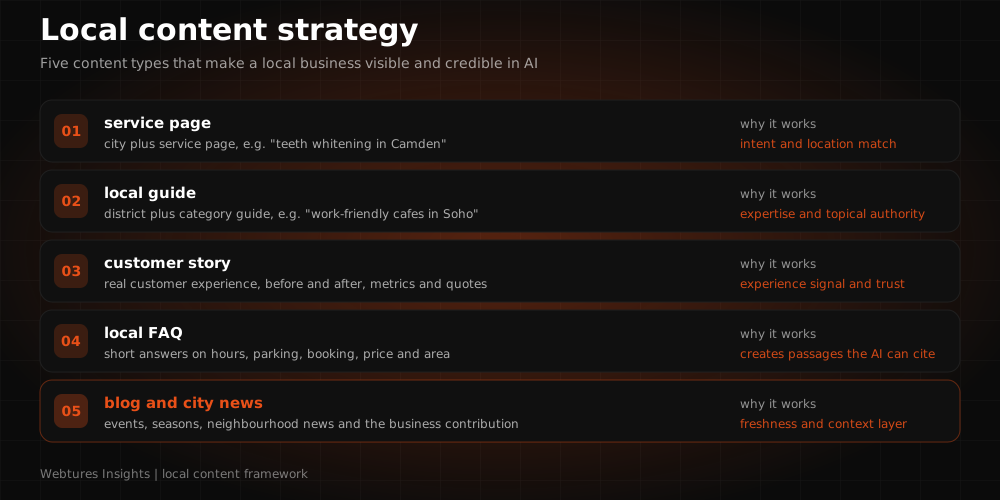
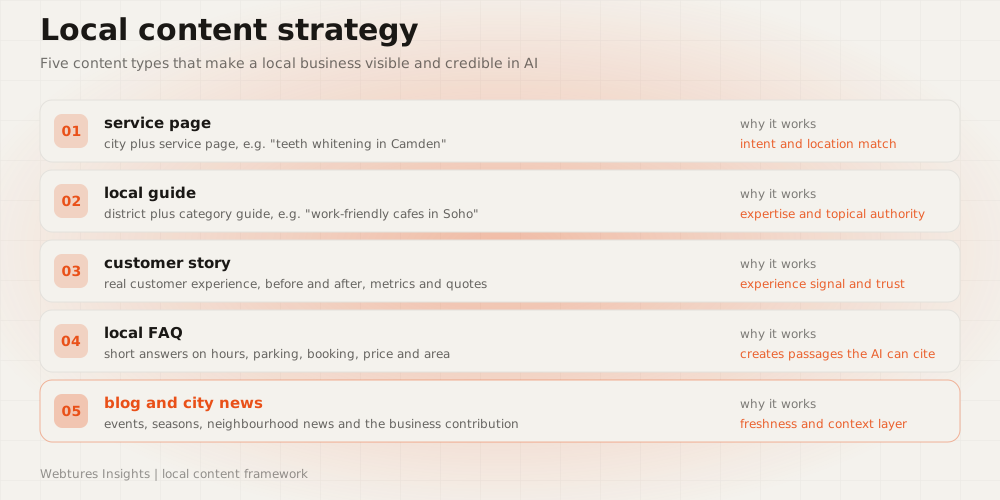
Traditional SEO tools fall short of measuring what AI models think about your business or which queries they recommend your brand for. Rank tracking has given way to “share of model” tracking.
Built on the Webtures vision, Brantial is a new-generation platform that analyzes brand visibility across AI engines such as ChatGPT, Gemini, Perplexity, and Claude. In AI answers, Brantial reports for your business:
-
How often you are recommended,
-
Which attributes (positive or negative) you are mentioned with,
-
For which questions you appear as the “single answer” compared with your competitors.
For a local business, using Brantial makes it possible to detect AI “hallucinations” (false claims) about your brand and manage your reputation on the principle of digital truth.
Multimodal content and visual search
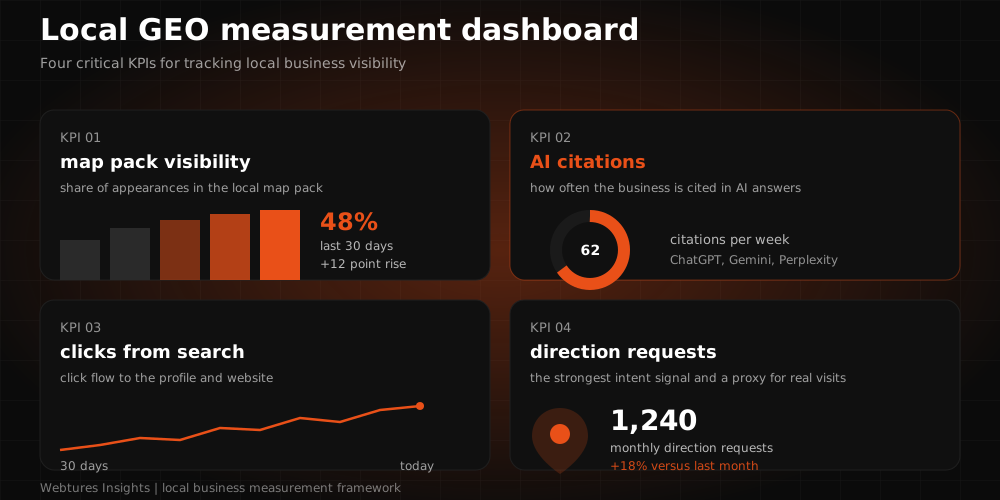
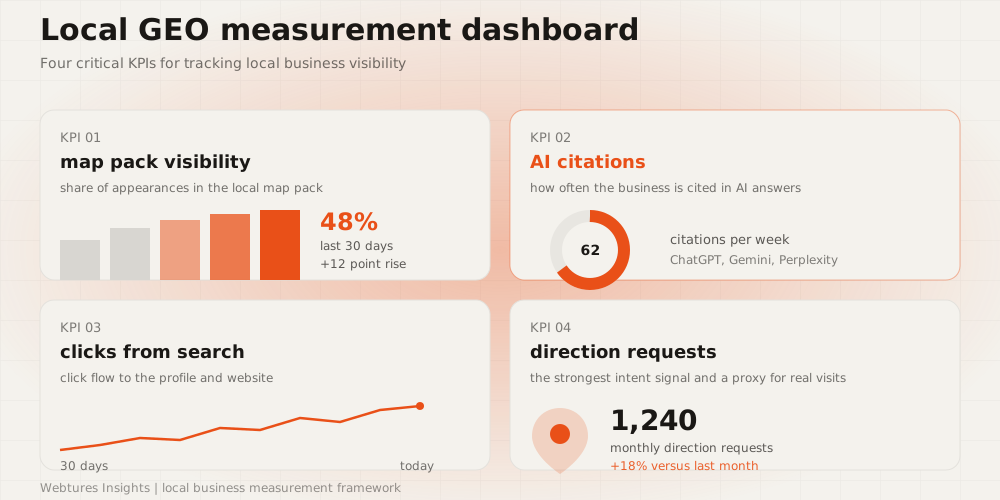
By 2026 projections, a significant share of searches is shifting away from text toward visual and voice queries. Technologies like Google Lens or OpenAI Vision let users scan a storefront sign or a dish to learn about a business.
In this ecosystem, a local business’s digital assets need to be “multimodal”:
-
High-resolution, well-labeled visuals: Menu items and interior and exterior photos of the venue should be optimized with file names and alt text that AI can identify.
-
Video content: Short videos that capture the atmosphere of the business help AI simulate the user experience and make more accurate recommendations to potential customers.
The GEO era is not about manipulating algorithms; it is about feeding the data pool they draw from with the highest-quality, most verifiable, and richest content available. Businesses should treat AI assistants not as an “intermediary” but as the most important “customer” they need to convince.