What is semantics? What does semantic GEO mean?
Learn what semantics means in GEO and how semantic depth, entities, and machine-readable structure earn your content citations in AI-generated answers.

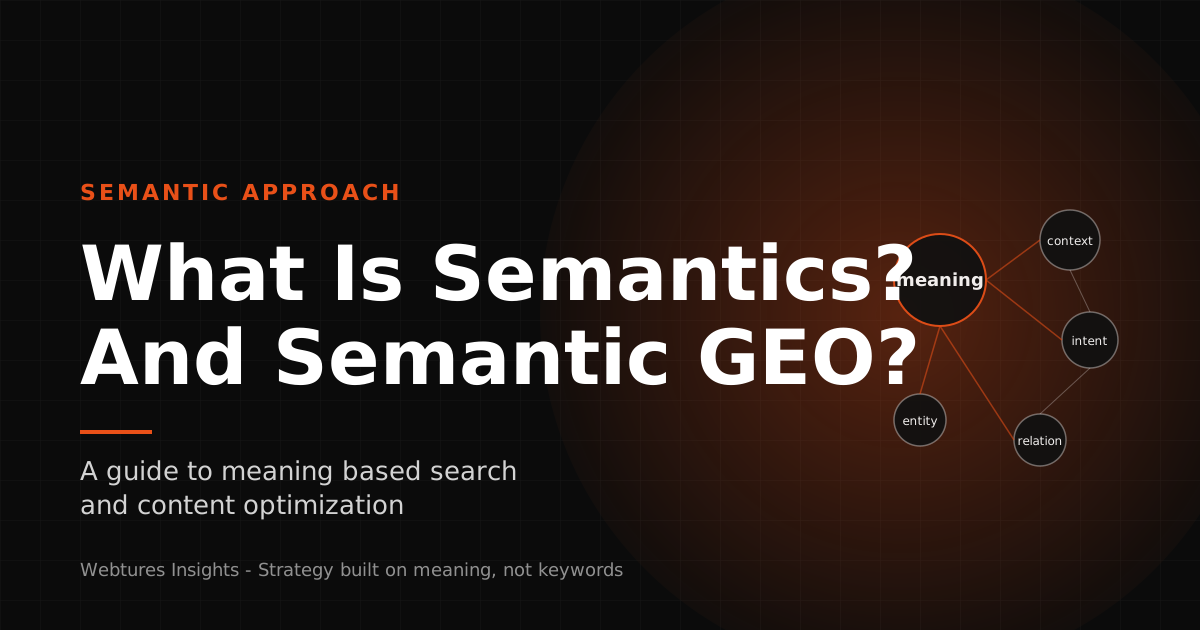
Semantics is the branch of linguistics that studies the meaning and context of words. In today's GEO (Generative Engine Optimization) landscape, however, semantics is the raw material of the "synthesized answer" that AI models (LLMs) crawl, analyze, and present to users. Content is no longer structured merely to rank; it must be built to be understood, verified, and cited by AI.
What is semantics and how does AI perceive it?
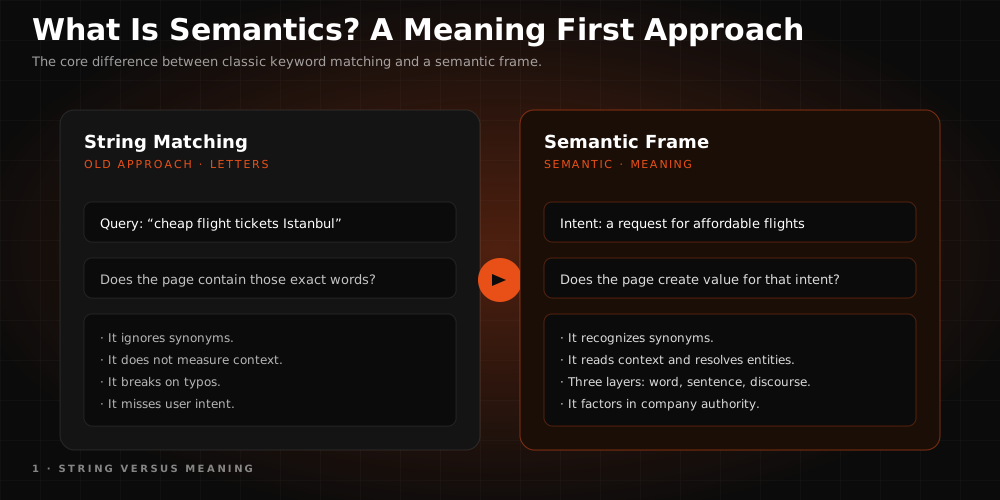
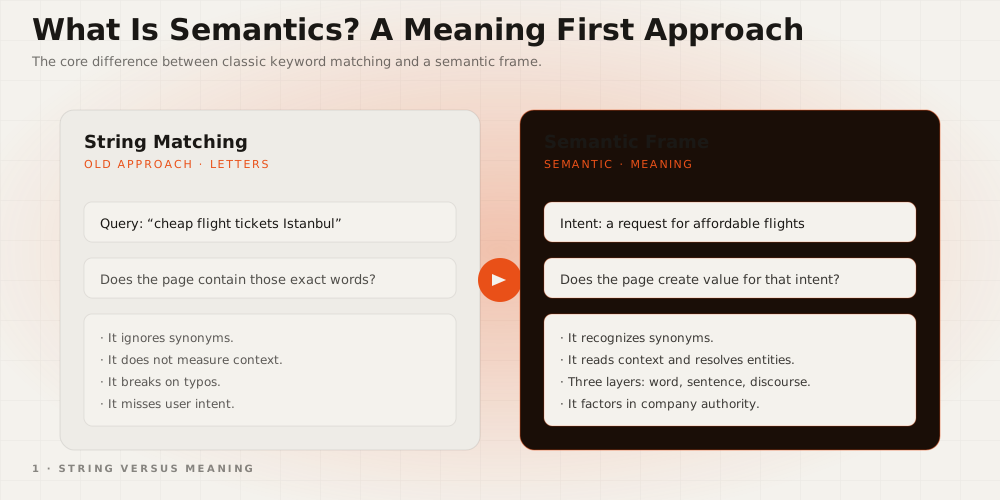
In digital marketing, the question what is semantics now goes far beyond "the dictionary meaning of a word." AI algorithms and generative search engines (Google AI Overviews, ChatGPT Search, Perplexity) do not evaluate words in isolation. They treat them as "entities" and examine their vector relationships with other concepts.
From a GEO perspective, semantics is a measure of how easily a machine can parse a text. When you use the word "Apple," GEO algorithms look at the surrounding context (technology or fruit?) to define the entity. If your content has the semantic depth and clarity that make this connection effortless for AI, its chances of appearing in generative results (AI Overviews) increase. Semantics is the core element that prevents AI "hallucinations" and gets your content flagged as a "trustworthy information source."
Semantics in the GEO context: machine readability
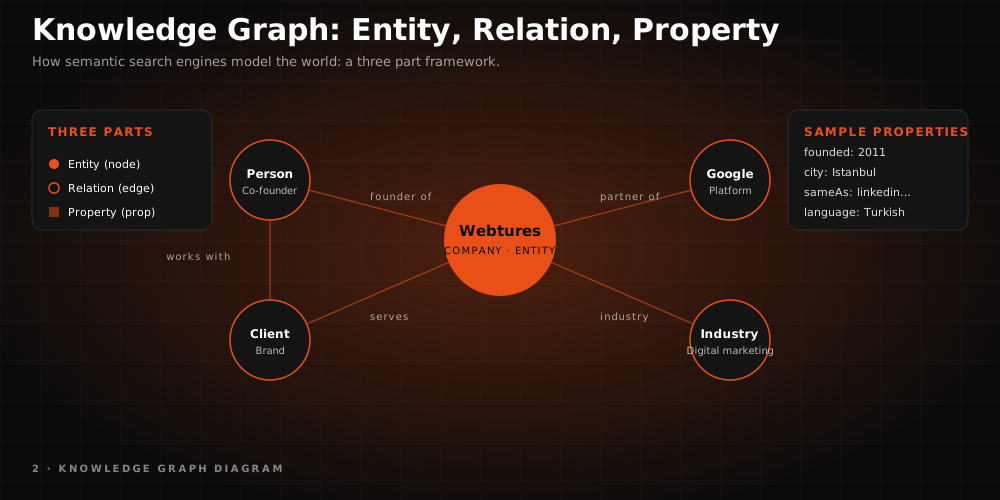
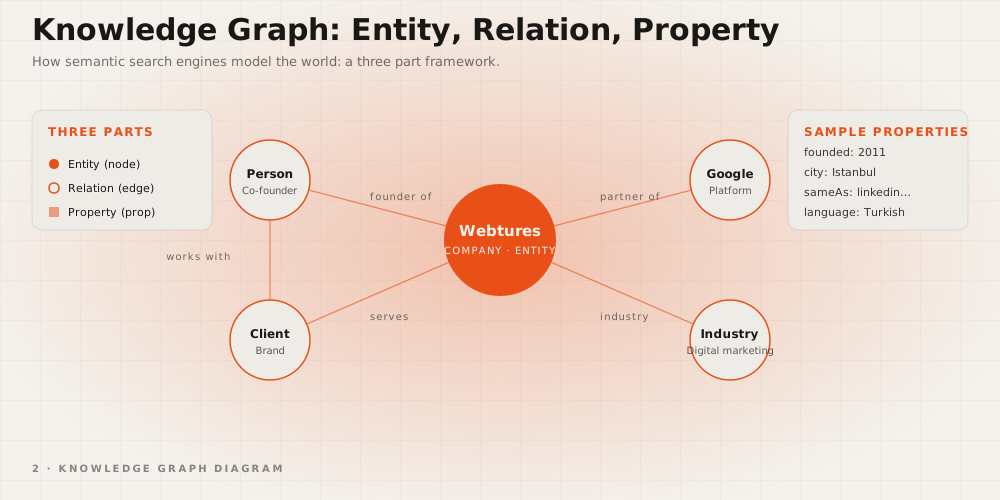
While semantic structure in traditional SEO was about keyword placement, in GEO it is about "information architecture." When AI generates a direct answer for the user, it prefers clear, hierarchical, fact-based semantic structures over complex, scattered text.
In the digital world, semantics now rests on two foundations:
- Contextual authority: Covering not just a slice of the topic but all related concepts around it (semantic vectors, not LSI).
- Structural clarity: Presenting information in a format AI can easily "chunk."
For example, for a "best running shoes" query, a GEO-based system does not simply look for pages containing the phrase "running shoes." It scans content where semantically related concepts such as "cushioning technology," "grip," and "marathon durability" appear and are clearly organized, then serves the user a synthesized answer.
Semantic ambiguity and the entity relationship
Semantic ambiguity is one of the toughest tests for AI models. The goal in a GEO strategy is to eliminate that ambiguity and send the machine clear signals. The word "tongue" can refer to an organ or a language. GEO-ready content teaches the machine the context within seconds through subheadings like "language learning techniques" and supporting entities such as "grammar" and "vocabulary."
If your content is semantically vague, AI will not consider it trustworthy and will leave you out of the answers it generates. GEO-ready content is content that leaves no room for guesswork, defines its terms correctly, and establishes relationships clearly.
What is the difference between semantic SEO and GEO?
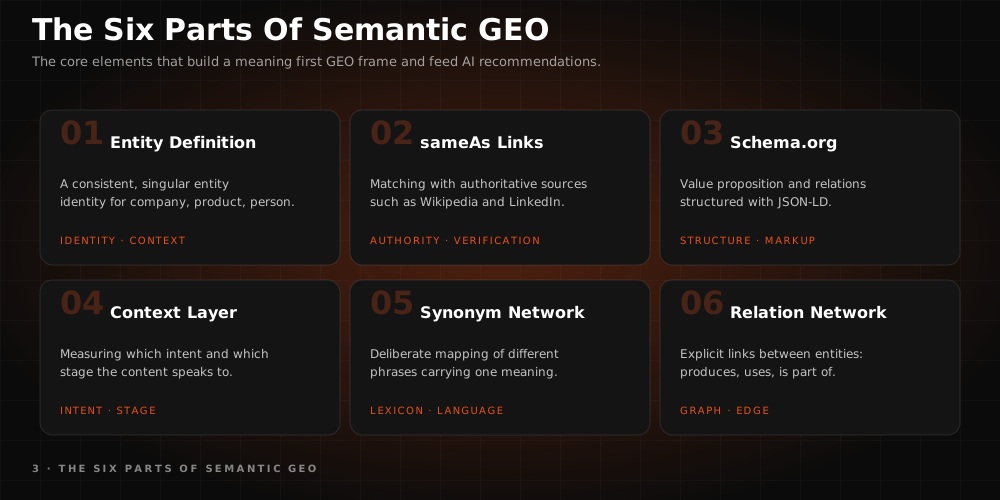
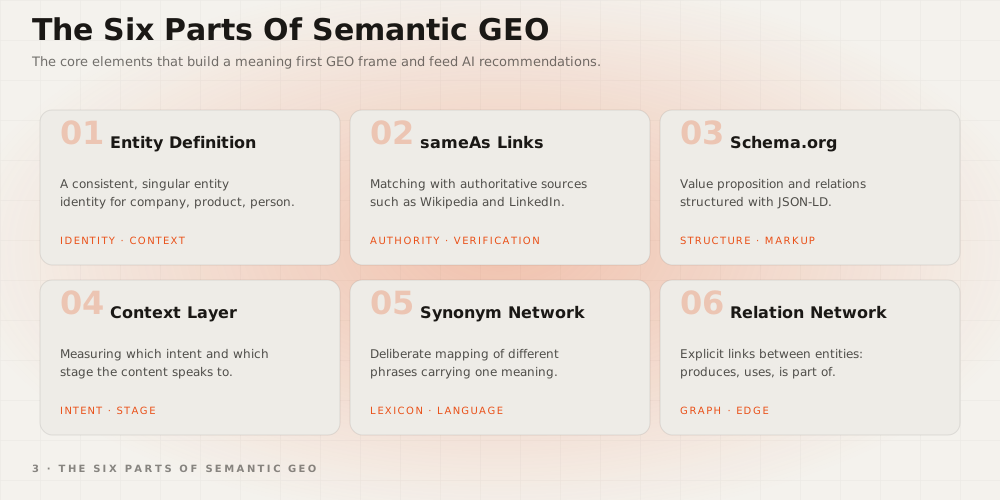
Semantic SEO and GEO (Generative Engine Optimization) share the same roots but pursue different goals. Semantic SEO aims to help search engine bots understand and index a page. GEO aims to have AI synthesize the information on the page and deliver it directly to the user.
In GEO, semantics means "information density," not "keyword coverage." What matters is how directly, how evidence-based, and at what level of expertise (E-E-A-T) your content answers a question. AI filters out fluff and focuses on the core substance. Semantic richness therefore means increasing meaning density, not word count.
How to create GEO-ready semantic content
Creating GEO-ready semantic content means speaking the language of AI assistants (Gemini, ChatGPT, Copilot). Here are the golden rules of GEO-focused content production:
- Give direct answers (the BLUF method): Using the "Bottom Line Up Front" technique, state the answer to the main question clearly at the start of the paragraph. AI rewards this clarity.
- Use quotes and statistics: Strengthen your content semantically with data, expert opinions, and statistics. This raises the content's "facts" score.
- Use structured data formats: Present information in lists, tables, and comparison charts rather than plain prose. These formats are easier for LLMs to process.
- Write entity-first: Use topic-related people, places, brands, and concepts as "entities" with accurate relationships in the text.
Semantic keywords and NLP (natural language processing)
Semantic keywords help NLP (Natural Language Processing) algorithms categorize content in a GEO strategy. For a "car tire" query, AI places terms such as "road grip," "seasonal performance," and "rubber quality" in the same vector space.
Simply repeating a keyword makes content look "shallow" in the eyes of AI. Using technical terms and related meanings that demonstrate depth positions your content at an "expert level" instead. GEO success comes from content written in plain language yet rich in semantic depth and coverage.
Semantic optimization steps for GEO
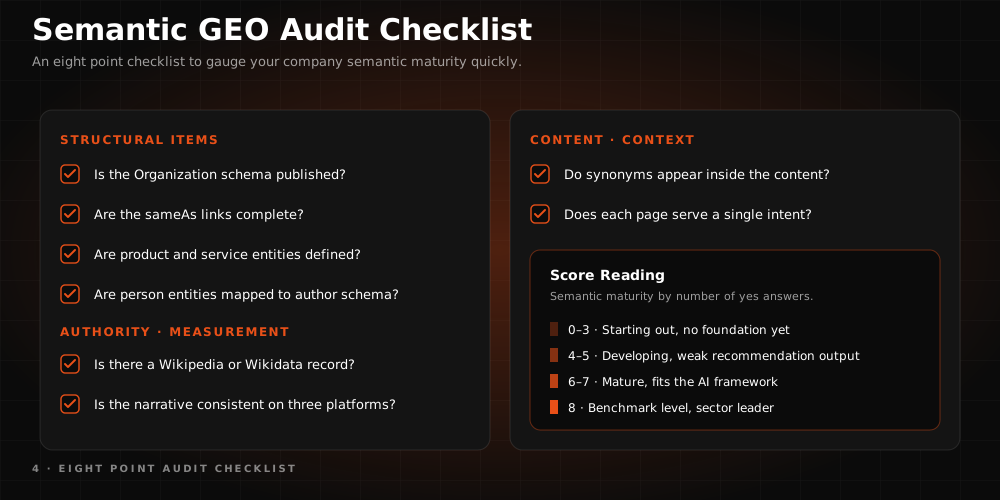
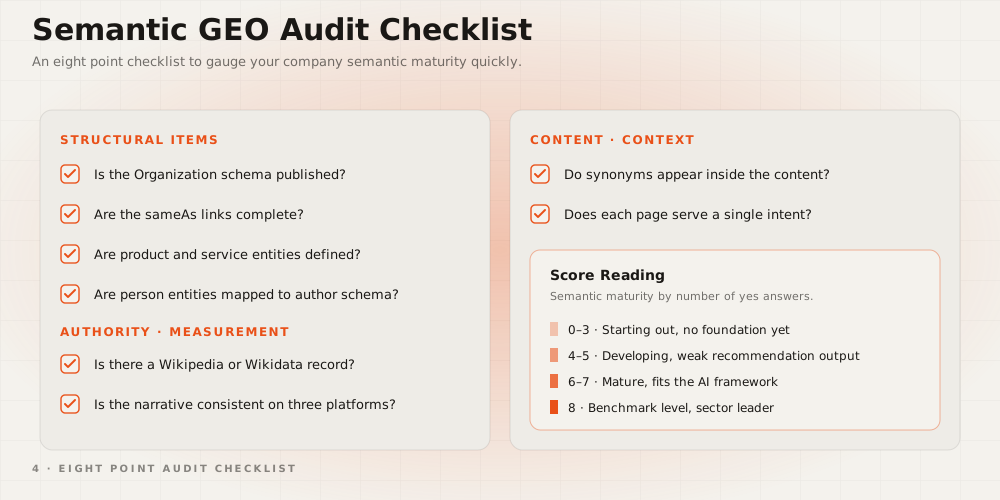
Semantic optimization is the process of making your content ready-to-consume for AI models. The following steps increase the likelihood of appearing in generative search results (AI Snapshots):
1. Focus on question-and-answer format
Turn the questions users are likely to ask into headings (H2 or H3) and provide a clear, direct answer immediately below.
2. Build topical authority
When covering a topic, address all of its subcomponents. Leaving no semantic gaps removes the AI's need to consult another source.
3. Connect technical terms and entities
Use industry terminology correctly. AI reads accurate terminology as an "expertise signal."
4. Use HTML5 semantic tags
The page's code structure should help AI parse the content into meaningful pieces.
| Aspect | Traditional SEO approach | GEO (AI) approach |
|---|---|---|
| Focus | Keywords | Context and entities |
| Goal | Ranking in search results | Appearing in the AI answer (citation) |
| Content structure | Long and keyword-heavy | Concise, clear, information-dense (information gain) |
| Success metric | Click-through rate (CTR) | Visibility and citations |
HTML semantic tags and AI literacy
HTML semantic tags are the snippets of code that whisper to AI bots "here is what this page is about" during GEO work. When an AI bot crawls a page, it looks at the meaning hierarchy inside the code, not the visual design.
For example, the
tag signals "this is secondary information, not a priority." Placing your content in a technically semantic order lowers the machine's cost of interpreting it and increases the likelihood of being chosen for GEO success.
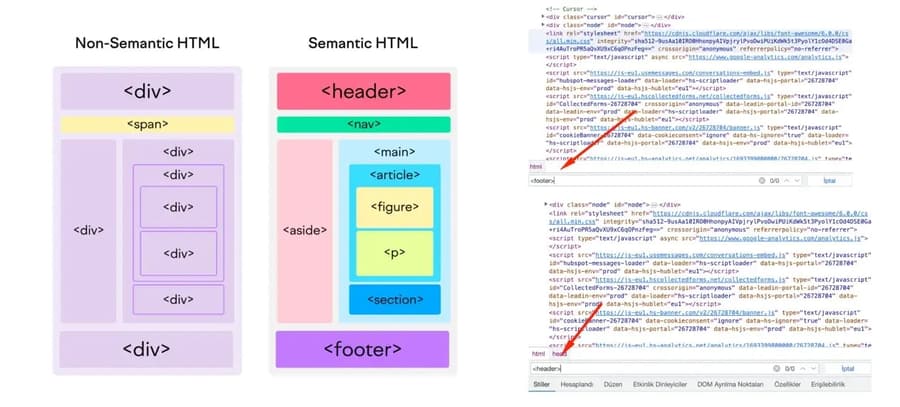
The table below summarizes the role of HTML tags in the AI interpretation process:
| Tag | What it means for GEO and AI |
|---|---|
| <main> | "Pay attention here, this is the source of the answer." |
| <h1> – <h6> | "This is the hierarchical structure and subheadings of the topic." |
| <section> | "I am transitioning to a different context of the topic here." |
| <figure> & <figcaption> | "This visual and its caption serve as evidence for the text." |